Book Reviews by Genre: Nonfiction
Review:
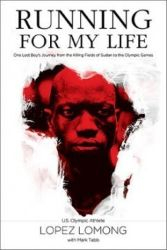
Reviewer's Name: CaraTrack athlete star and Olympian, Lopez Lomong, tells the story of his life in the killing fields of South Sudan, to a life of success and championships in the United States.
I feel like I cannot put into words how much this story affected me. The things Lopez Lomong lived through when he was a child is just unimaginable, but his mindset and the way he preserved through the hardship is so inspiring. I think this is a story everyone should read, as the struggle in Sudan and South Sudan is still occurring, and millions of lives are affected. Also, this memoir made me feel grateful for every little thing I have in my life, as I get to wake up every morning without the fear that I might not survive the next day. His story to become an Olympian is admirable, but I think the most important lesson he teaches is how to use your influence to help others and change your mindset to get you through hardship.
Genres:
Review:
Reviewer's Name: RyanI don’t usually spend much time reading, but when I picked up Guilt by Accusation, something about it immediately drew me in. From the very beginning, the story grabbed my attention and made me want to keep turning the pages. I was surprised by how quickly I got invested in the details and emotions behind the author’s experience. As I kept reading, I realized that Guilt by Accusation wasn’t just interesting—it was genuinely eye-opening and powerful. The way it explored false accusations and the impact they can have on someone’s life made me think deeply about truth and justice. Even though I don’t normally read much, this book completely changed my perspective and reminded me how strong a good story can be.
Genres:
Review:
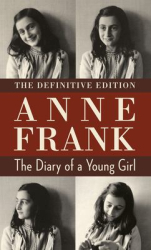
Reviewer's Name: XuejingThis book is Anne Frank's real diary from when she and her family were hiding during World War II. She writes about her life in the secret annex, her hopes for the future and freedom with the fear around her and her family. The book gives a powerful look into her thoughts without actually telling what eventually happens. I like this book because Anne's voice feels real. Some parts are emotional, but that was what makes it so unforgettable. I defiantly recommended to everyone who wants a meaningful true story.
Awards:
Genres:
Review:
Reviewer's Name: RyanI went into The New Rules of War by Sean McFate thinking it wouldn’t really be my type of book, but I was surprised by how much it pulled me in. Even though I don’t usually read military or strategy-focused topics, the way McFate breaks down modern warfare made the book a lot more interesting than I expected. His explanations are clear, and the real-world examples helped me follow along without feeling lost. By the time I finished it, I realized it was actually a really solid and eye-opening read. McFate offers a different way of looking at conflict today, and even as someone who doesn’t typically pick up books like this, I found myself wanting to keep turning the pages. Overall, it ended up being a much better fit for me than I thought, and I’m glad I gave it a chance.
Overall it was a good read and i would give it a solid 4 star review.
Genres:
Review:
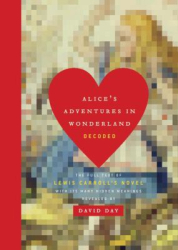
Reviewer's Name: XuejingAlice’s Adventures in Wonderland, Decoded explains the hidden ideas and references behind the original Alice in Wonderland story. I picked this book because I wanted to understand the deeper meaning of a classic I already knew. I liked how the author broke down symbols and themes in a way that made the story feel more interesting and smarter than I realized. What I liked least was that some parts were a little confusing or too detailed. Overall, the book surprised me and made me look at the original story in a new way.
Genres:
Review:
Reviewer's Name: Alexpicked up Atomic Habits hoping it would magically fix my life without me doing much work. Spoiler: it does not. But it does explain, very clearly and without yelling at you, why my habits are the way they are.
James Clear breaks down big life changes into tiny, almost embarrassingly small steps. Like, “put your gym shoes by the door” small. At first I rolled my eyes, and then I realized… yeah, that actually works.
What I appreciated most is that this book doesn’t pretend motivation is endless. It focuses on systems instead of willpower, which felt realistic and refreshing. The examples are practical, the science is easy to understand, and I never felt like I was being talked down to.
Did it turn me into a perfectly disciplined person? No.
Did it make me rethink how I approach goals and habits? Definitely.
Rating:
Educational, useful, and surprisingly readable — even if you only change one habit after reading it.
Genres:
Review:
Reviewer's Name: IanThe Myth of Sisyphus is a newer interpretation of the traditional story from greek myth. Camus tells about how someone can be happy even when they can only perform meaningless actions. Some of it can be a little hard to wrap your mind around with all of the philosophical language, but its a very fun read. It is very interesting to see interpretations from various different perspectives of the myth of Sisyphus, and it changes the definition of true happiness in certain situations.
Genres:
Review:
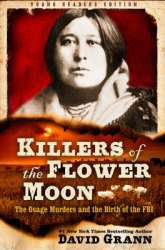
Reviewer's Name: XuejingI chose this book after seeing the movie adaptation announced, since I wanted to understand the true history behind the headlines. This non-fiction storyline investigates the chilling "Reign of Terror" in the 1920s, where members of the Osage Nation in Oklahoma were murdered one by one after oil was discovered under their land. What I enjoyed most was how David Grann writes like a novelist; the pacing is so fast that you forget you are reading a history book. However, the sheer level of injustice described was deeply upsetting to process. It definitely surprised me because I had never learned about this specific part of American history in school.
Awards:
Genres:
Review:
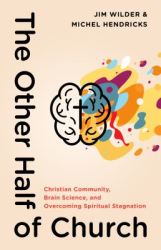
Reviewer's Name: Benjamin W. When I was first introduced to the book, The Other Half of Church, I thought it might cover topics similar to Thinking Fast and Slow where the authors would explore how neuroscience affects the religious experience that comes with attending / participating in church. While there was some discussion of these ideas, most of this text focused on the feeling of belonging that we get when we’re part of a group of like-minded individuals. This “hesed” appears to be vital for a healthy church, but it doesn’t really dive deep enough into the brain science that the early chapters promise.
Perhaps my expectation was that The Other Half of Church would get into how individuals can make snap judgements that can determine their initial desire to be included in a particular church, but then get deeper into the relational part of life with Christ by a focused attention on the Scriptures and prayer. A few of the early chapters address some of this, but about half-way through, the book pivots into how the larger organic church (not the individual) needs to deal with that feeling of belonging.
The discussion of the “hesed” was truly a useful topic to cover. Some chapters even dealt with shame and how it’s not necessarily a bad thing when correcting others to align them with the collective “this is who we are” mentality that comes with hesed. Ultimately, the church thrives on these feelings, which themselves are spawned from the way our brain makes connections with communities. However, I don’t think it quite addresses how that belonging can sometimes be a trap for churches looking to expand or enliven their congregations if they don’t address some of the cultural understandings of the modern church and how they might drive potential members away.
A useful primer on “hesed” and the feeling of belonging, I give The Other Side of Church 3.5 stars out of 5.
Genres:
Review:
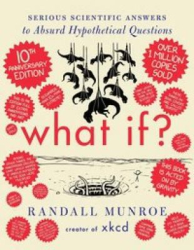
Reviewer's Name: CooperThis book is a collection of answers to crazy hypothetical questions. Randall Munroe, a former NASA robotics engineer, that is also a cartoonist explores many hypothetical and unique situations like what if you went swimming in a spent nuclear fuel pool or how many printers would it take to keep up with all the Wikipedia edits? This book is just endless joy to read with its charm and humor. I have read and re-read this book countless times and if you are a nerd that has interest in math and science I couldn't recommend any single book higher.
Genres:
Review:
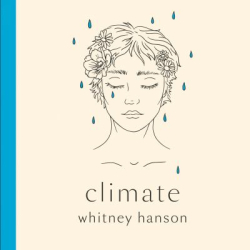
Reviewer's Name: AddyClimate is a poetry book that explores the difficulty and the beauty of navigating life. Hanson uses an extended metaphor to represent how our emotions are like weather and our overall wellbeing is like climate. I loved this book because it delves into the importance of recognizing each of our emotions. It gives the powerful perspective that maybe our ultimate goal should not be happiness, but the delicate balance of peace.
Genres:
Review:
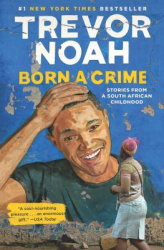
Reviewer's Name: CaraBorn during the time of apartheid in South Africa, comedian Trevor Noah tells the story of his childhood as a mixed boy in a time where having bi-racial parents was considered a crime.
This book was incredible! I had to read it as a summer reading assignment, and while books for school are rarely interesting, “Born a Crime” blew me away. For starters, Trevor Noah tells a story of inequality and injustice and writes of horrors I can barely imagine, and yet he writes with so much humor that it is very digestible. The life he lived and the way he grew up is so very different to me that it was at some points hard to fathom, but I felt like it opened my eyes in so many ways. The fact that apartheid only ended in the nineties is heartbreaking to me, but Trevor Noah talks about firsthand experiences living through the aftermath. While I knew vaguely who Trevor Noah was, his memoir filled me with the utmost appreciation for him, and his story will be one that sticks with me for a long time.
Awards:
Genres:
Review:
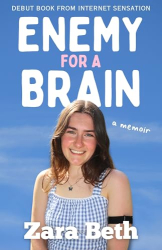
Reviewer's Name: ClaireEnemy for a Brain is a memoir by Zara Beth, disability rights activist, author, content creator, LGBTQA+ individual, and disabled herself. This book is about her life and the highs and lows in her life so far. We start reading about her primary, elementary, school life and end with her adult years so far. I really enjoyed reading this book because I found it fascinating learning about how one person can deal with so much and still lead a great life. I also love watching her content! I would recommend it to anyone, but especially people who might be going through some similar situations and/or are having a difficult time accepting themselves.
Genres:
Review:
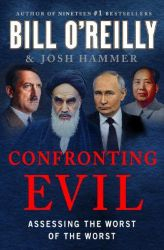
Reviewer's Name: Addelyn Genghis Khan. Henry VIII. Adolf Hitler. Joseph Stalin. These are some of the most sadistic and brutal historical figures of all time. In "Confronting Evil," these individuals and their evil deeds are examined in shocking detail as O'Reilly blends historical facts with a narrative structure, formulating a unique take on these historical figures' familiar stories.
I decided to read "Confronting Evil" because I enjoy learning about infamous dictators. However, I was sorely disappointed upon reading this book. Although the unique narrative style O'Reilly used when describing historical events was interesting at first, it became repetitive and tiresome after a while, with nearly every paragraph after a page break (with page breaks typically occurring three times per page) starting with something like "Henry VIII is hungry" or "Adolf Hitler is angry," making for an extremely choppy writing style. The structure of the chapters was choppy as well, skipping around each historical figure's lifetime (often going from their most shocking action, to their early life, back to the end of their life, then towards the middle of their career, and so on). I understand that this was a fresh take and meant to engage the reader, but it was honestly just confusing and left me feeling lost - a simple chronological order would have worked much better! I was also confused about the combination of well-known individuals like Genghis Khan and Adolf Hitler with large and loosely affiliated groups of people like slave traders, robber barons, and Mexican drug cartels. This didn't make sense to me at all, as it was hard for me to compare individuals who had committed mass genocides, killing millions, to rich billionaires who had no regard for those who worked in their industries. Personally, I think this information could have been split into two different books - one of "evil" individuals and one of "evil" organizations. Along with this, I also had a problem with the bias involved with the selection of these figures, which seemed haphazard and didn't make sense to me at all (Why include some infamous dictators and not others? Why devote an entire chapter to Ruhollah Khomeini and only briefly mention Saddam Hussein? They both lived during the same time period, were both dictators, and Hussein was responsible for the deaths of more people than Khomeini.). Overall, this bias and the unnecessary incorporation of O'Reilly's own political beliefs made this author seem biased and unreliable. Upon further research, I found that many other readers also complained about the historical inaccuracy (especially in the Henry VIII chapter) and lack of cited sources within this book, which explains a lot of the confusion I felt while reading it. All in all, this book is definitely not worth your time - if you are interested in learning more about infamous historical figures, I would recommend reading a different novel instead (possibly "My Favorite Dictators: The Strange Lives of Tyrants" by Chris Mikul).
Genres:
Review:
Reviewer's Name: AddisonThe Case for a Creator is a fascinating non-fiction read. In this book, Strobel recounts his travels across the country interviewing scientific professionals across disciplines, including cosmology, astronomy, physics, biochemistry, genetics, and consciousness. His goal was to investigate each of these fields to determine whether scientific evidence points towards or away from the possibility of an intelligent creator, or God. This book is, at times, a more difficult read, but it has been truly mind-opening. I would highly recommend this book to anyone, regardless of religious stance.
Genres:
Review:
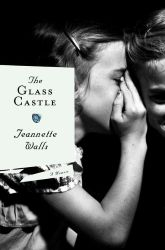
Reviewer's Name: Samuel, grade 11The Glass Castle is an amazing memoir that follows the life of a young Jeannette. Jeannette grows up in a very poor and dysfunctional household that lives a nomadic live. She moves from place to place making it hard for her to make friends other than her older sister and younger brother. Her parents often argue and find themselves living in places that could barely pass as a home. During the course of her life, she experiences many difficult events that make her even more resilient. Throughout the book there are also flash forwards which take place in New York City once Jeannette has gotten older and shows the dynamic of her family many years later.
This book is an excellent read! The storylines, plots and relationships between characters are very interesting to read. Coming from someone who is not very similar to Jeannette, Jeannette Walls has done an amazing job putting me in the shoes of someone like herself and opened my eyes to the life and struggles of people who are not like me and who struggle to afford basic necessities. This book will teach you a lot about how other people live, resilience, the strong bond of family and making anywhere a home. I would recommend anyone read this book!
Awards:
Genres:
Review:
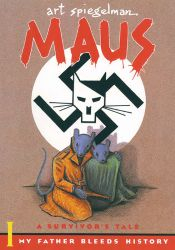
Reviewer's Name: Samuel, grade 11Maus is a graphic novel taking place over many countries during the Nazi occupation. Maus has an intriguing art style which includes countless amounts of symbolism. The decision to portray people as animals helps further the relationship and power structure during the Nazi occupation. Mice represent the Jewish people while cats, who are a natural predator of mice, represent the Nazis. Artie Spiegelman is a young cartoonist mouse who is eager to learn more about the history of his father Vladek who went through the holocaust as a Jewish person. This book is full intriguing story telling that includes Vladek recounting the life of a Jewish person in hiding during the Nazi occupation and the intricate relationship between Artie and his father Vladek as well as Vladek and his previous wife. The book dives deep into the different tactics and ways that Vladek used in order to evade the Nazi cats.
Before reading Maus, I was not a reader of graphic novels. Maus has shaped my perception about what a graphic novel can be. Maus uses stunning graphics to portray a meaningful, impactful and thought provoking plot. I was captivated while reading the book and often times found myself wanting to continuing reading. Those who are new to the graphic novel genre and those who are familiar with the genre will love this novel.
Genres:
Review:
Reviewer's Name: Addelyn"Educated: A Memoir" by Tara Westover is a breathtaking story. Westover writes about her childhood growing up in an extreme survivalist family surrounded by impossibilities and abusive relationships. She heartbreakingly explains every unbelievable detail of her life, and each twist makes it impossible for the reader to put this book down as betrayals, miracles, and tragedies occur. As you watch Westover go from not attending elementary, middle, or high school, to graduating from Harvard and Cambridge, this book will bring tears to your eyes with each page.
This book is one of the most impactful books I have ever read. Learning about Westover's life and the struggles she went through educating herself and forging her own path was both eye-opening and inspiring. The determination and courage that Westover develops as she describes the challenges and self-discovery she experiences is incredibly inspiring. This book is a heavy and heartbreaking read, but I highly recommend it and it truly deserves its title as a bestseller.
Awards:
Genres:
Review:
Reviewer's Name: Addelyn, Grade 10"On Tyranny: Twenty Lessons from the Twentieth Century" gives twenty tips for being aware of and defying authoritarian regimes in the modern world. Snyder flawlessly connects past dictatorships with modern examples in a riveting analysis of tyranny. This book will keep your attention from beginning to end, as each fact and analysis is interesting, relatable, and eye-opening.
I really enjoy reading books about dictators, because I am really interested in political science and how tyrants (and their ascension to power) are connected to different aspect of government and psychology. This book was honestly the perfect choice for those interests, as I was riveted to Snyder's writing from the moment I picked it up. This book is really small and concise - only about 100 pages - and each of the twenty tips are chock-full of real life examples of each point that Snyder makes. The details about authoritarian regimes and how they consolidate power are especially interesting, and the author is very concise with which instances he adds in, so it is not too dense or repetitive. If you are anxious about the current state of our world and interested in figuring out how you can take action, this is the perfect book for you even if you don't like non-fiction or political reads!
Genres:
Review:
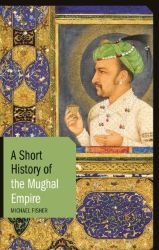
Reviewer's Name: KaliaIndia’s vast political and culturally advanced populations were constructed by its series of emperors, sultans, and inhabitants that used the conquered land for their own purposes. Many of its great emperors such as Babur, Jahangir, and many others studied the religious practices throughout the sixteenth century and onwards. Michael H. Fisher uses original sources to recover the astounding complexity of the Mughal Empire.
I was interested in this book because of its relation to the Mongol Empire built upon by Chingis Khan. Though some rulers fascinated in the early Mongol Empire the Mughal Empire has an entirely different feel and succession process. This book is a great book to read!
Genres:
Review:
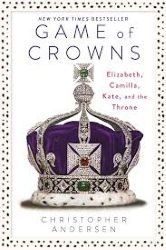
Reviewer's Name: KaliaGame of Crowns depicts the exhausting and pressuring lives of royals. Queen Elizabeth II, Camilla, Duchess of Cornwall, and Princess Kate. The ups and downs of their families and relationships are exhibited. #1 New York Times bestselling author Christopher Andersen explains differences between the three. Andersen's years as a biographer help him capture a detailed and almost first-hand perspective into the rivalries and bonds between the royal family.
I chose this book because of my interest in Princess Diana. Her death was really impactful for many countries and this particular book stood out to me because the author created a book specifically about Diana called, "The Day Diana Died." Although I had not read that book, I was sure that "Game of Crowns" would give a great perspective already about the late Princess of Wales. This is a must-read for anyone interested in the "drama" of the Royal Palace.
Genres:
Review:
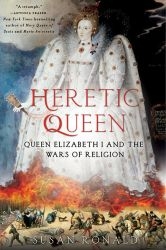
Reviewer's Name: KaliaA telling tale on several eyewitness accounts, Susan Ronald, a biographer, shares her knowledge and research on Queen Elizabeth I. Ronald's account is written with hope that readers will see Elizabeth better as a result. Susan wants to take her readers into what it is like to live in the Elizabethan England.
1554, the execution of Lady Jane Grey is underway at the order of Queen Mary I or Bloody Mary who faces her untimely death four years later. Elizabeth, the daughter of Henry VIII and Anne Boleyn, is the next heir to the throne. Elizabeth's coronation as a Protestant savior was heavily supported by England's people. The days of Bloody Mary were gone and a young new queen is introduced. Queen Elizabeth I, intelligent, prepared, and "heretic," is ready to face the wars of religion. Elizabeth's uses her notable political tools to navigate her reign and support England's future.
I picked this book due to my knowledge of Henry VIII, Elizabeth's father. His famous six wives is what enticed me to read this book. Surprisingly, I was met with rather two mentions of him in the entire book. I realized Elizabeth's life isn't defined by her father and her famous mother Anne Boleyn, but by the decisions she made during her forty four years as queen of England. I enjoyed hearing about her decisions for marriage and her desire for Sir Robert Dudley. Elizabeth's years as a virgin queen was very interesting too. The book cannot be totally predictable since it is history. This is the best nonfiction book I've read this year.
Genres:
Review:
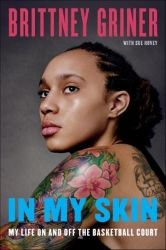
Reviewer's Name: KaliaBritney Griner is used to the endless pressure from her father, coaches, and peers. The WNBA star and Olympic gold medalist reflects on battles she has faced both on and off the court. Griner fights for social issues that started from her college Baylor University in Waco, TX’s homosexuality policy to her image on the Phoenix Mercury team with Dina Taurasi. Griner's ability to black out family drama and relationship struggles once she steps on the court really attracts readers. Readers are reminded to embrace who they are.
In all honesty, this memoir felt very close to home. I chose this book because of the real-life topics included. I enjoyed Griner's connection to her childhood. However, I would have been more intrigued on a deeper analysis on her detention in Russia, this book surprised me. I related to her emotional struggles and writing her feelings away. This book was one of the best books I’ve read this year!
Genres:
Review:
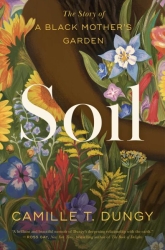
Reviewer's Name: EmilyOur relationship to where we live is so multilayered. As a fellow resident of the front range I savored how Camille Dungy ‘spoke my language’ as much as she brought aliveness to her own experience and our current, heartbreakingly fractured American existence. Highly recommend.
Genres:
Review:
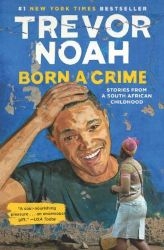
Reviewer's Name: Edda, Grade 12This book is very, very good. While I tend to steer away from biographies and non fiction literature, this book was very interesting and fun to read. Exploring Trevor Noah’s childhood-young adulthood, this book educates its readers on the racial and violent issues that occurred during the apartheid era within South Africa. This book is extremely well written and often times witty. It had me laughing, then crying, then laughing again. I really recommend it!
Awards:
Genres:
Review:
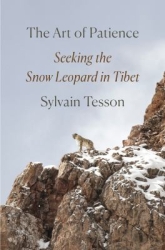
Reviewer's Name: NoraAn engaging adventure story that celebrates reverence for nature, curiosity about the world, bold explorations into the wild, and a poetic narration that is both reflective and inspiring.
Genres:
Review:
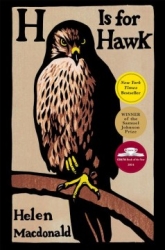
Reviewer's Name: NoraA book you can't put down, but have to in order to digest each chapter fully. Macdonald ties in the experience of grief with her study and work with the most violent falcons. Reflective, penetrating, psychic, and wise - Macdonald connects seemingly unrelated topics to the basics of the human condition - effortlessly, as if her words are music and poetry flowing in and out of various moments in time. A book you will want to re-read once you finish it. Truly an original piece of work!
Genres:
Review:
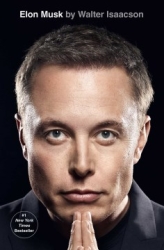
Reviewer's Name: RhythmElon Musk by Walter Isaacson is a tremendous book from start to finish. It captures the complete story of the billionaire and does not hesitate upon showing the many struggles he overcame to reach the level he is at today. It is completely unbiased and shows the many positives and negatives of Musk's personality. The amount of detail cannot be found within any other Musk paragraph. I highly recommend this book to readers with aspirations of starting their own business.
Genres:
Review:
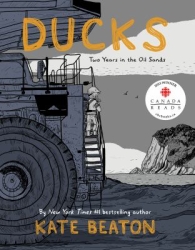
Reviewer's Name: Benjamin W.Having only really experienced Kate Beaton's web comic, Hark! A Vagrant and her sillier material, I was interested to see how a graphic novel of her life would play out on the printed page. I was shocked to find her somewhat whimsical style had so much emotion for a story that was assuredly a difficult one to tell. Ducks: Two Years in the Oil Sands is as gripping as it is frustrating that such working conditions remain this dangerous for women.
Telling the story of how Beaton paid off her student loans from art school in the fastest way possible, Ducks highlights the misogyny and sexism present in the (frankly) male-dominated field of petroleum. Working on the oil sands isn't safe in a physical sense, but add to that the "hanging with the guys" tropes that eventually lead to assault. It was hard to read sections of this book, knowing that men should be better than this. Beaton pours her trauma out on the page and it stuck with me in a way that only a graphic novel like this could convey.
I'd say that this book should be required reading for both men and women going into these fields, but I know it probably wouldn't change anything. There's too much inertia to effect the significant changes that would need to happen. This shouldn't lessen discussions about the depression, substance abuse, and suicide that men in these jobs endure, but instead highlight the tenuous strengths and inevitable weakness of humans pushed to their breaking points. For some, though, it is a lifestyle. For the lucky ones, they make it out alive in as little time as possible—which is still long enough to have lasting negative effects on their lives.
A deeply moving memoir about women working in a male-dominated field, I give Ducks 5.0 stars out of 5.
Genres:
Review:
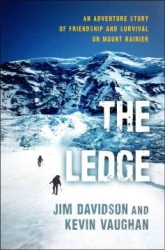
Reviewer's Name: Benjamin W. Humans are incredible creatures. There's a resilience for life that shows up in the most dire of circumstances. This is prevalent in many mountaineering books—especially the ones about climbing disasters. The Ledge is the harrowing real-life story of survival against the odds on Mount Rainier. Granted, most stories like this are usually framed with the benefit of hindsight, which can also highlight the risks that led to the disaster. It's amazing that anyone survived this situation, which is what makes this book an entertaining read.
There are a lot of extreme outdoor people in Colorado. My risk tolerance is usually low enough that I think what they do is crazy. I know it's easy to judge when things go wrong, so it s comforting that the situation that led to the titular ledge was mostly because of bad luck. An alignment of poor conditions can take even the most experienced mountaineers by surprise, just like it did here. I appreciate the decisions made in the moment were still the smartest options available.
While I wasn't wild about the back-and-forth framing of the disaster interspersed with flashbacks and exposition, it helped break up the intense sections where Davidson climbed out of the icy crevasse. I'm also glad that this book addressed the aftermath of the disaster, including all the PTSD and other mental effects associated with it. So many disaster books just stop at the point where they're rescued. That there was closure to the events that happened on Rainier helped to tell a complete story. After all, these are the things most people don't consider when dealing with the severe trauma involved with such a story of survival.
A harrowing tale of mountaineering survival, I give The Ledge 4.0 stars out of 5.
Genres: