Adult Book Reviews
Fiction
Nonfiction
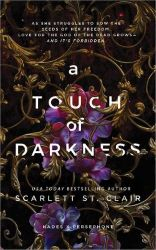
I really enjoy this book. The plot was put together quite well. There were definitely a lot of ups and downs with the characters emotions but it really got you more engaged. I had originally picked this book because I really loved the Never After series by Emily Mclntire. On Goodreads it gave A Touch of Darkness as a recommendation because they are both quite similar. Both of them are a dark romance, bad guy gets the girl, and enemies to lovers. I really related to the main character Persephone. She tends to be stubborn, frustrated, and independent which are all things I tend to struggle with. I really couldn't get enough of this book - I finished it with in a week. It is most definitely in my top five favorites and I highly recommend for those who also love books that fit into those categories.
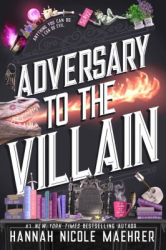
Following the shocking revelation in the last book of the series, Evie finds her life inconveniently impeded. As she adjusts to her new role and the way it awkwardly correlates to her relationship with her boss, a danger continues to lurk across Renedawn, and she might be the key to stopping it.
As are the rest of the books in this series, Adversary to the Villain was really fun. However, I couldn’t help but feel it lacked the same depth I was reading earlier in the series. Obviously, the story has expanded a ton, but now it seems hard to explain and too intricate for a lighthearted fantasy that the series originally read as. The author still has her jokes and lighthearted moments within the novel, but it feels out of place for the plot that’s developing. While I’ll still read the next book in the series and hopefully enjoy it, I’m a little disappointed in the way this series has progressed. However, the plot twist at the end did totally shock me, and I’m excited to see how that will play out later!
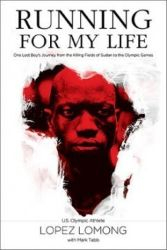
Track athlete star and Olympian, Lopez Lomong, tells the story of his life in the killing fields of South Sudan, to a life of success and championships in the United States.
I feel like I cannot put into words how much this story affected me. The things Lopez Lomong lived through when he was a child is just unimaginable, but his mindset and the way he preserved through the hardship is so inspiring. I think this is a story everyone should read, as the struggle in Sudan and South Sudan is still occurring, and millions of lives are affected. Also, this memoir made me feel grateful for every little thing I have in my life, as I get to wake up every morning without the fear that I might not survive the next day. His story to become an Olympian is admirable, but I think the most important lesson he teaches is how to use your influence to help others and change your mindset to get you through hardship.
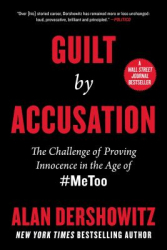
I don’t usually spend much time reading, but when I picked up Guilt by Accusation, something about it immediately drew me in. From the very beginning, the story grabbed my attention and made me want to keep turning the pages. I was surprised by how quickly I got invested in the details and emotions behind the author’s experience. As I kept reading, I realized that Guilt by Accusation wasn’t just interesting—it was genuinely eye-opening and powerful. The way it explored false accusations and the impact they can have on someone’s life made me think deeply about truth and justice. Even though I don’t normally read much, this book completely changed my perspective and reminded me how strong a good story can be.
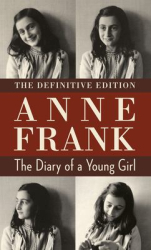
This book is Anne Frank's real diary from when she and her family were hiding during World War II. She writes about her life in the secret annex, her hopes for the future and freedom with the fear around her and her family. The book gives a powerful look into her thoughts without actually telling what eventually happens. I like this book because Anne's voice feels real. Some parts are emotional, but that was what makes it so unforgettable. I defiantly recommended to everyone who wants a meaningful true story.
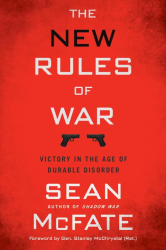
I went into The New Rules of War by Sean McFate thinking it wouldn’t really be my type of book, but I was surprised by how much it pulled me in. Even though I don’t usually read military or strategy-focused topics, the way McFate breaks down modern warfare made the book a lot more interesting than I expected. His explanations are clear, and the real-world examples helped me follow along without feeling lost. By the time I finished it, I realized it was actually a really solid and eye-opening read. McFate offers a different way of looking at conflict today, and even as someone who doesn’t typically pick up books like this, I found myself wanting to keep turning the pages. Overall, it ended up being a much better fit for me than I thought, and I’m glad I gave it a chance.
Overall it was a good read and i would give it a solid 4 star review.
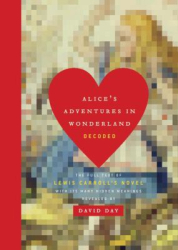
Alice’s Adventures in Wonderland, Decoded explains the hidden ideas and references behind the original Alice in Wonderland story. I picked this book because I wanted to understand the deeper meaning of a classic I already knew. I liked how the author broke down symbols and themes in a way that made the story feel more interesting and smarter than I realized. What I liked least was that some parts were a little confusing or too detailed. Overall, the book surprised me and made me look at the original story in a new way.
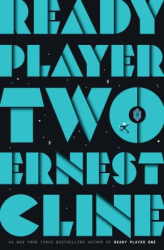
I understand that most sequels that weren't already planned as part of a larger series (or even a duology) are often just a cash grab for fans of the original work. Usually, I can forgive this if it allows me to spend more time in the world the author created in the first book. In the case of Ready Player Two, I think it goes so far into being a cash grab that it actually harms how I feel about the original Ready Player One .
While the internet and online culture has changed significantly in the nine years since the first book came out, there were only a few retroactive changes to the Oasis that recognized these shifts in modern technology. And while the main idea of the plot does take a natural next step from virtual reality to capturing a lived reality in digital space, none of the excitement of the original egg hunt is there because the ticking clock mechanic was mostly a consequence of the main character's poor decision making abilities. This, of course, is a huge carry over from the first book.
The biggest fault Ready Player Two commits is changing the character of Halliday from the awkward but well-meaning nerd into a full-blown incel villain. When this is combined with the tone-deaf and at times totally misogynistic Wade Watts, there's nothing in this book that makes me like the villain or the main character. And when solutions to dire circumstances don't feel earned, I just don't get the same magic out of this book like I did for the first one. Fortunately, if you're really curious enough to try this book, I've seen it sold at huge discount at a few different bookstores if you want to pick it up.
An egregious cash grab that ruins characters from Ready Player One, I give Ready Player Two 2.5 stars out of 5.
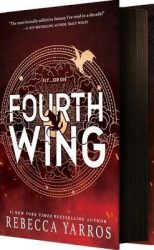
I picked up Fourth Wing thinking, “Okay, dragons are cool, but how intense can this be?”
Answer: very.
This book throws you straight into a brutal dragon-rider school where survival is optional and falling off a cliff is basically a pop quiz. The main character, Violet, is physically fragile but stubborn enough to keep going, which made me root for her immediately, mostly because everyone else seemed determined to kill her.
The dragons are easily the best part: sarcastic, powerful, and not remotely interested in human nonsense. The plot moves fast, the stakes stay high, and yes, there is romance, but it doesn’t completely hijack the story (thankfully).
Is it high literature? No.
Is it wildly entertaining, dramatic, and impossible to put down? Absolutely.
I finished it feeling emotionally attacked by fictional dragons and immediately wanted the sequel.
Rating:
Perfect if you like fantasy, danger, and characters who survive mostly out of spite.
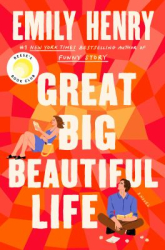
I went into Great Big Beautiful Life expecting something like a cozy beach read… and instead got emotional punches with a side of Southern charm that actually hit. It’s part romance, part mystery, and all kinds of beautifully messy people trying to make sense of their pasts and present.
What hooked me wasn’t just the slow-burn connection between the two journalists chasing the same story—it was how the town itself felt like a character: salty air, secrets tucked in every corner, and a few laugh-out-loud moments when someone says exactly the wrong thing at exactly the right time.
If you like books that make you care about characters enough to text your friend “read this now”, this one deserves a spot on your TBR pile. And don’t worry, there are swoony moments, but they’re earned with depth, humor, and just the right amount of “well didn’t see that coming.”
Rating:
A warm, witty, and genuinely touching novel that sneaks up on you.
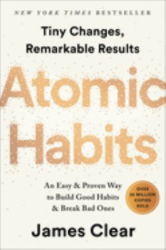
picked up Atomic Habits hoping it would magically fix my life without me doing much work. Spoiler: it does not. But it does explain, very clearly and without yelling at you, why my habits are the way they are.
James Clear breaks down big life changes into tiny, almost embarrassingly small steps. Like, “put your gym shoes by the door” small. At first I rolled my eyes, and then I realized… yeah, that actually works.
What I appreciated most is that this book doesn’t pretend motivation is endless. It focuses on systems instead of willpower, which felt realistic and refreshing. The examples are practical, the science is easy to understand, and I never felt like I was being talked down to.
Did it turn me into a perfectly disciplined person? No.
Did it make me rethink how I approach goals and habits? Definitely.
Rating:
Educational, useful, and surprisingly readable — even if you only change one habit after reading it.
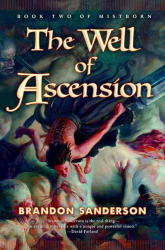
Even though it has been some time since I read The Final Empire , it is a testament to Brandon Sanderson that I could remember most of the details of this fantasy series when I got to the second book, The Well of Ascension. The magic system of burning different metals to provide a variety of super-powered abilities is such a unique idea that it easily sticks in my mind and is complex enough to explore further in this book.
While I love how Sanderson does his action sequences, I understand the need to lean more on political and religious intrigue in this second book to deepen the lore and world-building for the Mistborn series. Sanderson does a good job with these moments of loyalty and betrayal, and it shows the amount of thought he put into making this world realistic—at least in terms of how we understand our world’s politics and religions. However, unlike how Orson Scott Card did this in the Call of Earth series or Isaac Asimov did in the Foundation series, there don’t seem to be ties to real-world histories that weigh down what Sanderson is trying to do here.
Ultimately, Sanderson is a master of magic systems, and The Well of Ascension uses Vin to expand what allomancy can do. That Vin is the best character in the series so far is testament to how much she factors into the plot and the development of the magic system. The creative ways she uses her magic to move through the world is what makes the action sequences as entertaining as they are. I do hope I can get to the next book in the series sooner rather than later, just to see how things turn out for her.
Political intrigue mixed with great magical world-building, I give The Well of Ascension 4.5 stars out of 5.
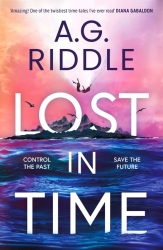
Solid time travel meets murder mystery. I was thinking about this book even when I wasn’t reading it.
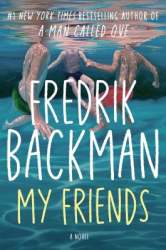
A love story that honors misfits and art and community. Beautifully written as one would expect from Fredrik Backman. Brings tears and laughs, and sometimes at the same moment.
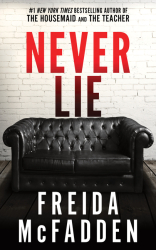
Although many people love her books, this one was just too predictable. I still think the plot is good but not shocking enough for a mystery. Great book to read on a road trip or flight, because it’s super fast paced.
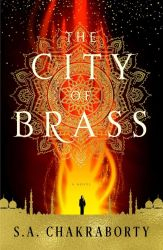
Set in eighteenth century Cairo, Nahri is a con artists who spends her days marking arrogant soldiers and planning her next meal. So when she accidentally summons the mythical djinn warrior, Dara, she sees her carefully planned life in turmoil. When he whisks her away to the magical city of Daevabad, Nahri discovers shocking secrets about her heritage and navigates complicated political affairs, as she also discovers that her companion may not be all he says he is.
The City of Brass is a high fantasy novel and made for a fun read! While I absolutely adore fantasy, the backdrop and the mythology in which this story is based made for a longer and more complicated read. The magic systems were intricate and the history of the djinn were incredibly complex. That being said, it’s clear that the author put her soul into writing this novel, as nearly everything was seamless! The characters were flawed and forced to navigate complicated political environments that challenged their personal morals, and the ending was crazy! I genuinely feel like all hope is lost now, I have no clue how the author can write two more books expanding the plot when so much happened just in the last 50 pages! If anyone is looking for a plot based high fantasy, definitely don’t sleep on this one, it was so much fun to read!
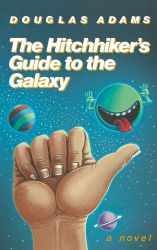
The Hitchhiker's Guide to the Galaxy is an absurdist space adventure comedy about a man named Arthur Dent who is taken to space on a crazy adventure. I enjoyed this book because it had lots of weird humor and laughs. I think the author did a great job designing zany characters. The only flaw is that sometimes the ridiculous comedy makes the plot nonsensical. Otherwise, this is a hilarious and fun read that I recommend!
Reviewer grade: 8
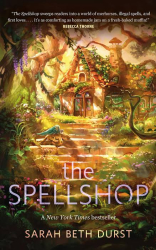
This is a cozy fantasy novel talking about a librarian who escapes a collapsing empire and opens a small spell shop on a quiet island. The story focuses on starting over, found family, and the comfort of simple magic rather than big battles. I chose this book because the idea of a magical shop and a calmer fantasy setting sounded relaxing and different. What I enjoyed most was the peaceful atmosphere and the relationships between the characters, which felt warm and genuine. Some parts moved slowly, but that fit the cozy tone of the story. Overall, this book was comforting, creative, and enjoyable, especially for readers who like fantasy without constant action.
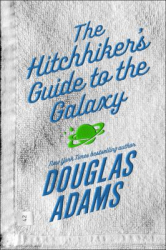
The Hitchhiker's Guide to the Galaxy is an absurdist space adventure comedy about a man named Arthur Dent who is taken to space on a crazy adventure. I enjoyed this book because it had lots of weird humor and laughs. I think the author did a great job designing zany characters. The only flaw is that sometimes the ridiculous comedy makes the plot nonsensical. Otherwise, this is a hilarious and fun read that I recommend!
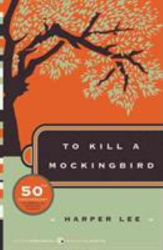
To Kill a Mockingbird is a novel set in the American South during the Great Depression. It follows a young girl named Scout as she learns about justice, empathy, and growing up. The story focuses on her family, especially her father, who stands up for what is right even when it is unpopular. I chose this book because it is a well-known classic and often recommended for its important message. What I enjoyed most was how the story showed serious topics through a child’s point of view, which made them easier to understand and more emotional. Some parts were slow, but the lessons about fairness and compassion made the book meaningful. Overall, this book was powerful and thought-provoking, and it made me think differently about right and wrong.
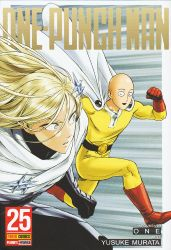
This volume introduces more Dragon Level monsters such as Nyaan and their capabilities to rival Class S Heroes. The Hero Hunter Garou is shown to be growing in power reaching levels far beyond his capabilities before. This is shown in his battle against Class S Puri-Puri Prisoner. Saitama encounters Class S Hero Flashy Flash as he goes deeper in the Monster HQ. Skeptical about Saitama's presence, Flashy Flash strikes at him. He is left shocked at his ability to react to his light speed blitz. Flashy Flash remembers Saitama as Genos' sidekick labeling him as a hero.
This is one of the best reactions of the Hero Association's recognition towards Saitama's strength so far, it delivers a satisfying conclusion that more and more Class S Heroes are recognizing his potential. I love the buildup towards Garou's inevitable growth towards being a Dragon Level Monster, being able to adapt more and more efficiently towards any opponent, and looking more monstrous as he progresses. A great buildup story overall for the upcoming big events. The portrayed art style really brings the feel of a difference between power in the manga, whether it be on speed or strength which creates a heavy impact on the characters' own specialized abilities.

The Myth of Sisyphus is a newer interpretation of the traditional story from greek myth. Camus tells about how someone can be happy even when they can only perform meaningless actions. Some of it can be a little hard to wrap your mind around with all of the philosophical language, but its a very fun read. It is very interesting to see interpretations from various different perspectives of the myth of Sisyphus, and it changes the definition of true happiness in certain situations.

Much like Ajax Penumbra 1969 helped fill in some of the lore for Mr. Penumbra’s 24-Hour Bookstore, Robin Sloan expounded on his book Sourdough with The Suitcase Clone. This short story doesn’t necessarily share any of the main characters from Sourdough, but it gives some insight about the mysterious “creature” that’s in the sourdough while also providing an interesting look into intellectual property theft when it comes to specific wines—which itself is reason enough to read this short story.
Sloan takes a somewhat unorthodox approach to the point of view here, which took some getting used to. His language bordered on being too flowery, and it lost me as to what was happening at least a few times. But in terms of straight vibes, The Suitcase Clone successfully gives off that eerie, otherworldly feeling that helps add to the mystery of this almost microorganism entity. Reading this story is what I would imagine taking mind-altering drugs would be like as one travels the countryside of France. It’s not something I would do personally, but I can see the appeal of it.
As it’s a distinctly different feel when compared to the standard analog/digital style Sloan uses in his other, full-length books, I’m glad this backstory wasn’t forced into the main plotline for Sourdough. You don’t really gain any huge revelations as part of this prequel story, but rather have a context for the weirdness that ensues in the main book this stems from. As a fan of this author, I’ll always read anything he puts out, but The Suitcase Clone almost feels too experimental for me to get my head around.
A trippy vibe that sets up some of the weirdness in Sourdough, I give The Suitcase Clone 3.5 stars out of 5.
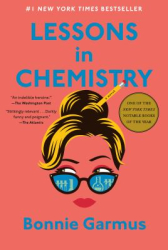
I picked the book Lesson in Chemistry because I'm currently taking Chemistry and this bright cover and its status as a PPLD top checkout caught my eye. The story follows Elizabeth Zott, scientist who ends up hosting a TV cooking show to teach women about science. I loved Elizabeth’s fierce intelligence, but it was frustrating to read about the blatant sexism she faced in the lab. I really related deeply to Elizabeth’s struggle for professional respect, making this one of my favorite reads of the year.
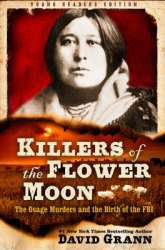
I chose this book after seeing the movie adaptation announced, since I wanted to understand the true history behind the headlines. This non-fiction storyline investigates the chilling "Reign of Terror" in the 1920s, where members of the Osage Nation in Oklahoma were murdered one by one after oil was discovered under their land. What I enjoyed most was how David Grann writes like a novelist; the pacing is so fast that you forget you are reading a history book. However, the sheer level of injustice described was deeply upsetting to process. It definitely surprised me because I had never learned about this specific part of American history in school.
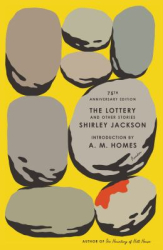
I chose this book because I had heard so much about the story and wanted to see if the rest of the book was just as haunting. The plot of the main story involves a small town gathering for an annual ritual that seems innocent at first but ends with a shocking twist that I truly did not see coming. What I enjoyed most was Jackson's ability to make the mundane feel terrifying, however some of the shorter sketches felt a bit unfinished compared to the other in the bunch.
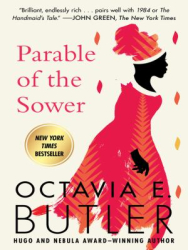
Even though it was written in the 90s, the premise of Parable of the Sower intrigued me because it was set in our near past of 2024. That its themes focused on the end of the world being brought about by climate change and wealth inequality was also eerily prescient enough for me to want to read how Octavia E. Butler thought things would play out in the “future.” Perhaps part of me wanted some amount of optimism; but ultimately, it’s just a depressing examination of current failures.
The first half of Parable of the Sower really paints a picture of some scarily accurate predictions for the state of society today. Even if people deny the effects of climate change, this book shows an even more extreme world that could be in our future if we do nothing to reverse it. Of course, climate change is really the exacerbating force that drives the wealth disparity present in this book into apocalypse territory. The depressing part of this book is how the only realistic solution is to give up and start over.
With the onslaught of awful things that happened in this book, it lost its entertainment appeal as the hits kept coming. Perhaps it was my desire for escapism—that it would give a way to fix these broken things that we currently have no control over—that ultimately wasn’t met. And while I agree the current system should probably be demolished and built from the ground up with empathy (or even “hyper-empathy”), I still think there are things we can also do to fight what’s happening. Even if this book predicted a lot of bad things , I hope we can work to make some good.
A gauntlet of eerily prescient bad news for modern times, I give Parable of the Sower 3.5 stars out of 5.
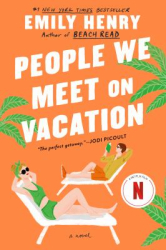
It was the most perfect, cheesy romance imaginable! While being unfortunately highly unrealistic, Poppy and Alex's story was so silly and fun to go along with. Honestly a refreshing read that wasn't too heavy but had enough weight to have a good plot!
Uncle Tom’s Cabin is one of those iconic literary texts that evaded my entire educational career. Remedying this, I have finally sat down to read this famous book, and I think more people would benefit from its narrative if they’re encouraged to read it as well. While the events are fictitious, the world Harriet Beecher Stowe paints with her words is probably closer to reality than most people at the time realized, thus educating people (mainly Christians) about how their beliefs should not be aligned with slavery in any way.
First and foremost, the format of Uncle Tom’s Cabin is still entertaining. The story itself is strong because it shares so many similarities with things happening in the lead-up to the Civil War. Things that most people of the time were likely ignorant of. We may take these events as common knowledge after all the history books that have been written about slavery, but to those in its contemporary era who didn’t know this was happening, it’s quite an enraging piece of literature that spurs one to action. The trick with reading it today is making sure to actually engage with the original material.
Partly because of all the adaptations of this work, some themes and characterizations are lost as people associate with the versions of Uncle Tom’s Cabin that ultimately form negative stereotypes for African Americans. I went into this book expecting these things but was pleasantly surprised to find that these characters really shined in their depiction of humanity. That there’s hope to defeat such an ugly beast of humanity’s greed makes me wonder if any other modern works will be written that expose things in a way to get the masses mad about what’s currently happening in our world.
A well-written exposé on the evils of slavery, I give Uncle Tom’s Cabin 4.5 stars out of 5.
This book follows the adventure of a misfortunate scholar named Humphrey Van Weyden. During a trip by boat he is knocked over board and finds himself saved and in the service of the unfeeling tyrannical captain Wolf Larsen. Throughout the book Van Weyden philosophically debates with his counterpart Wolf Larsen on kindness and intellect versus survival of the fittest. Van Weyden is eventually forced to confront Larsen and make his way back to civilization.
The book spends most of its narrative highlighting the absolute differences between the two main characters. Due to this focus the books story tends to be slower and sometimes repetitive. The book provides an excellent example of how environment shapes character and what beliefs are most important when confronted by challenge. The book has a compelling concept that unfortunately suffers from an excess of dialogue and not enough story progression or narrative.