Book Reviews by Genre: Nonfiction
Review:
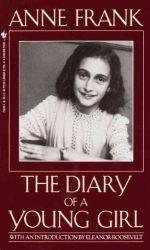
Reviewer's Name: Finn"Diary of a Young Girl" is the poignant and haunting diary of Anne Frank, a Jewish teenager hiding from the Nazis during World War II. Anne chronicles her life in hiding in Amsterdam, where her family sought refuge in a secret annex. Through her diary entries, she shares her hopes, dreams, fears, and frustrations, providing an intimate account of the daily struggles and emotional turmoil endured by Jews in hiding. I enjoyed the book; having experience the Covid-19 shutdown, the atrocity that she had to go through put my life into perspective. Sometimes what individuals go through is difficult, but is nothing compared to horrors experienced by others. I recommend everyone to read this book because it fosters a sense of humility in all that read it.
Genres:
Review:
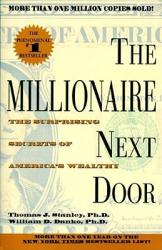
Reviewer's Name: FinnThe Millionaire Next Door is a collection of studies about the secretive habits of millionaires done throughout the course of Thomas J. Stanley's career. He juxtaposes making a lot of money with being wealthy: you can make an incredible salary, but to be wealthy you have to save that earned money. For example, in the book there are two examples: One is a man who has been living in the same small house for 20 years, drives a 10 year old truck, and uses a Casio Duro (an affordable watch). The other is a doctor who earns $700,000 dollars a year. The doctor has an enormous house, fancy new cars, and embezzles his wife with divine jewelry. Obviously, the doctor is rich, right? Incredibly, the doctor's net worth is less than "the regular joe's". The doctor's obsession with having consumer goods limits his net worth. His need to "fit in" necessitates him spending almost all of his net worth on tangible goods. From the outside, he appears rich, but on the inside he has little retirement savings and no mental bandwith to focus on the far future. Meanwhile, the man who has been living in the same house for 20 years has seen the value of his house triple. His affordable lifestyle allows him to not only live below his means, but to invest his time (not spent shopping) and money wisely so that he builds a fortune. The Millionaire Next Door teaches us that the typical millionaire as seen by society (fancy clothing, the "newest iPhone", etc) is not actually a millionaire, but rather an
under-accumulator of wealth with nonexistent sapience in regard to the future. I would recommend this book to those who want to be wealthy in the future because becoming wealthy does not occur overnight: it takes years of discipline, sacrifice, and integrity. And the best time to start on your financial journey to freedom is now.
Genres:
Review:
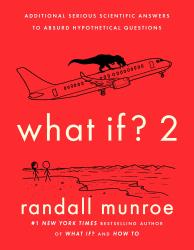
Reviewer's Name: Benjamin W. As a fan of XKCD, I've loved the What If? spinoff series despite how irregularly Randall has updated it. Considering there have only been five new posts in the last five years, and they were all in the months leading up to the release of this book, I needed a good dose of What If? Partly because it had been so long since I had read any What If? posts, all the chapters in this book felt fresh and hilarious. Now that I read through it, I'm sad that I'll have to wait another eight years for a third book in the series.
Randall always has a down-to-earth style of describing incredibly complicated scientific concepts. This means What If? 2 is quite educational once you get past the ridiculous premises that readers have sent in. It's also nice how each chapter is easily readable in a few minutes so that I could just pick it up and get a good laugh before moving on to something else. After all, this book is straight-up funny. This should come as no surprise—again—given the absurd questions readers asked Randall.
It felt like this book had more new content than the previous book in the series. This might not be true, but it felt that way because I hadn't read any of the posts that made it into this book in several years. This was my main qualm with the first book: that it was just a printed-out part of the internet. In this sequel, there weren't just new questions answered but also quick little sections that covered easily answerable questions (as compared to its predecessor's highlights of disturbing questions with no answers). Overall, I found it to be a fun read and I'm counting the days until What If? 3 comes out.
Hilarious and scientifically accurate answers to oddball questions, I give What If? 2 4.5 stars out of 5.
Genres:
Review:
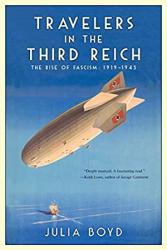
Reviewer's Name: DaveTravelers In The Third Reich tells the stories of some people who lived in Germany during the second world war. The book shows the horrors of life in Germany at the time by describing the hangings and executions through the eyes of the people that were there. It also talks about the politics and economy during the war and how it changed the lives of the German civilians.
Awards:
Genres:
Review:
Reviewer's Name: KateO'Neill's 20-year investigation succeeds at systematically breaking down an impressive amount of the infamous case's centrifugal details and characters, many previously unknown, untold or cast as insignificant. The guy's manic fixation is contagious. The only thing I found unnecessary was the frequency and extent to which O'Neill expressed self-doubt in the 'coda' sections of many chapters, second guessing "where it all goes." It doesn’t matter that there aren’t neat ends; his scrutiny has produced more than enough evidence not only to explode the popular understanding of the details surrounding the Manson story, but also suggest far-reaching implications for all of us in the process.
Genres:
Review:
Reviewer's Name: Benjamin Every successful author eventually concludes that they have something to provide for the neophytes of the craft. The problem is that the most insight any individual author might provide for someone who wants to get into writing stories has probably been said before. In Story Engineering, I was hoping for some useful tips on structure but instead was accosted with incredibly biased opinions from the author (and his obsession with a handful of books). He seems to think there is only one singular way to be successful and his book is the only way to understand it. I’m used to biased non-fiction, but not nearly this much of it.
I think that all writing methods have their benefits and downsides, but if you were to corner the author and ask him about pantsers (i.e., people who write by the seat of their pants via “exploratory writing”), he’d probably admit that they murdered his mother. In describing his successful publishing endeavors, I got the sense that the author didn’t realize that he was incredibly lucky to have achieved the successes he did, cementing in his mind that it was the only way to be successful. The irony is how he includes several examples of successful authors who follow the pantsing method and how their books still abide by this stringent Story Engineering structure.
When I see the idiom “burying the lede,” I often think of clickbait articles or newspaper columns that take forever to get to the point. This is the first time I’ve encountered burying the lede for an entire book. It takes forever for the author to get to the point, and by then it’s difficult to remember what we were even supposed to glean from it. There might be some useful information here, but it’s so bogged down in obvious things that every other author who has written a book on writing has already said.
No new writing tips in extremely biased non-fiction, I give Story Engineering 2.0 stars out of 5.
Genres:
Review:
Reviewer's Name: Benjamin W.When I started writing over a decade ago, I subconsciously modeled my story structures off the stories that I enjoyed. I didn't go into my first novel with the plan to make it the typical "Hero's Journey," and the result was far from it. The stories I was writing seemed to work, even if they didn't abide by the known structure many authors had used before me. The problem was, I didn't have a name for the style of story I was writing. After reading Gail Carriger's book, The Heroine's Journey, I can finally label the stories I write.
Carriger makes it clear that stories that follow the Heroine's Journey don't always have females in the lead role. Instead, the Heroine's Journey is the antithesis of the Hero's Journey. Where the Hero's Journey is about individual achievement and sacrifice, the Heroine's Journey is more about building community to tackle a problem larger than any one individual. There are a lot of YA works out there that hold to the Heroine's Journey much more than the Hero's Journey, which is probably why it can hold its own in today's society.
As with most books on writing, there are plenty of examples provided in The Heroine's Journey. This helped me identify where I was using this structure in my writing, since these comp titles correlated with what I had already written. My only qualm with this book is in some of the formatting. There were quite a few moments where I couldn't tell if the author was trying to emphasize a point, use a quote from one of the books she had written, or just break up the pages of normal text with something different. Still, if you can get past these odd moments, there is a lot of truth within these pages.
A non-traditional story structure with a proven track record, I give The Heroine's Journey 4.0 stars out of 5.
Genres:
Review:
Reviewer's Name: Benjamin W.People will always ask successful writers how they do what they do. What tricks do they have? What techniques make their writing timeless? Kurt Vonnegut is definitely a successful writer, so we'd want to know how he writes so we can apply his lessons to our own work. I picked up this book thinking it was like Stephen King's On Writing , not initially realizing that this book was released over a decade after his death. Consequently, this book was a disappointment.
I would say that Vonnegut did not actually write any of this book. If he had, I'm sure it would have been much shorter. Instead, we get a pseudo-biography of the man who wrote such classics as Slaughterhouse Five and Cat's Cradle. This is a book written by Suzanne McConnell. And while she may have been close enough to Vonnegut to glean a few extra writing tips, his writing already contained most of these portions of advice. It's nice to have them collected here in one place, but they are so diluted by anecdotes from his life as to almost be hidden in this book about how to write.
It's almost ironic that they titled this book Pity the Reader. I pity any neophyte writers who are looking to one of the greats of American literature for any sage advice. Over a decade after Vonnegut died, this book feels like a cash grab. A flashy bit of literature with his name on it, meant to sell copies to the unwitting weekend novelist or stay-at-home mom who writes on the side. He probably would have hated it, if for no other reason than him not seeing any profits from it.
A misleading book that takes advantage of Vonnegut's name, I give Pity the Reader 2.0 stars out of 5.
Genres:
Review:
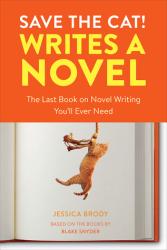
Reviewer's Name: Benjamin W. I had already written a dozen manuscripts by the time I read Save the Cat! Writes a Novel. Most of my plots had come fairly easily to me, but as a father, I now have less time to spend on planning novels. The plot of the last trilogy I drafted felt unfocused, so I knew I needed some way to re-structure my unedited and unwritten novels from here on out. When I asked my writer friend to suggest a few books to help me, she gave me this one to read. I am now a changed man.
I had already heard of this book from a few other writers who use its method, but now I truly understand the appeal. Looking back on the books I had written, I was already using parts of the Save the Cat structure subconsciously. Fortunately, now that I had the full picture of this writing technique, I easily outlined a few novels that were banging around in my head. Save the Cat helped me figure out the climax of a third act. It also helped me realize the spot where I wanted to start a book was actually the start of Act 2.
Save the Cat is good for diagnosing why a plot isn't working as much as it is to guide a new plot into a strong outline. There are plenty of examples included in this book (maybe too many, all things considered) that are mostly from books that any avid reader of popular literature has already read. Yes, following Save the Cat might give your plot a "formulaic" feel, but it's a formula that has clearly worked for decades.
A useful method to diagnose and build plots, I give Save the Cat! Writes a Novel 4.5 stars out of 5.
Genres:
Review:
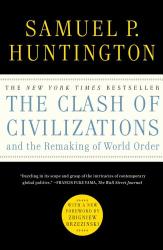
Reviewer's Name: Shahbaz M.The book Clash of Civilization and Remaking of World Order is written by Samuel Huntington and published in 1996. The author served at Harvard University for almost 5 decades as a Professor of Political Science. He also served in President Jimmy Carter’s administration as Director of Security Planning for the National Security Council. This book is one of the finest works and is divided into five sections.
Section 1
The central theme of the book is culture and cultural identities which are shaping the post cold war world. Culture includes our ancestry, religion, language, history, values, and institutions. Cultural identity is most meaningful to most people. Following the end of the Cold War, we will witness a conflict of civilizations rather than a clash of countries. States are in cooperation with a common culture and are in clash with states of diverse cultures.
Huntington goes on to say that civilization is the broadest cultural entity. Like culture, civilization also includes values, norms, and institutions. Civilizations have existed throughout human history. . Idea of civilization was conceived by 18th-century French thinkers as the opposite of the concept of barbarism. Civilization has no set boundaries and it is mortal but long-lived. They evolve and also endured. Empires rise and fall, governments come and go, and civilizations remain and survive political, social, economic, and even ideological upheavals. There are different civilizations like Sinic, Japanese, Hindu, Islamic, Orthodox, Western and African.
All societies share common and basic values and if we integrate all those certain basic values, it becomes universal civilization. One civilization shares thing with another civilization Viz innovation. The most significant aspect of civilization is language and religion . If a universal civilization is emerging, then there should be an emerging universal language. English is considered to be lingua Franca. Lingua France is a tool for communication rather than a source of identity and community. Talking about religion, the writer remarks Muslims win out. Christianity spread primarily by conversion, Islam by conversion and reproduction. The proportion of Muslims in the world increase dramatically.
Section 2
In section 2, Huntington believes that western civilization is the most powerful civilization, with the ability to influence other civilizations’ politics, economies, and security. West civilization operates an international banking system, controls all hard currencies, provides the majority of the world’s finished goods, dominates international capital markets, is capable of massive military intervention, controls all sea lines, and dominates international communication. Non-western people admire the economic prosperity, technological sophistication, military power, and political coherence of western societies.
In the second half, we have a dark side of western civilization. West’s share of world political, economic, and military power went down relative to other civilizations. West victory in the cold war produced not victory but exhaustion. West’s major inner problems are stagnating population, unemployment, slow economic growth, huge government deficit, a declining work ethic, and low saving rates. Non-Westerners are also better civilized and better educated.
Then Huntington moves on to economics. East Asia’s economic development has been one of the most significant in the globe during the twentieth century. First began in Japan in the 1950s then extended to four tigers( Hong Kong, Taiwan, South Korea, Singapore) and then China. Five civilization including Russia exists in East Asia. Huntington predicts China’s economy will overtake the United States as the world’s greatest in the twenty-first century. Asians believe their economic success is due to their better culture than that of the West. Comparing Asian and Western values, Dr. Mahatir Muhammad said Asian values are universal values, and European values are European values.
Section 3
In today’s world, cultural identity will determine country alignment and antagonism. . Suppose during the Yugoslav war, Russia supported diplomatically to Serbia while Muslim countries supported Muslims Bosnia with arms and funds not because of any interest but because of cultural kinship and affinity. In the past during the cold war countries formed associations and partnerships because of their security interest, power balance, and their ideologies. People make friends with those who have the same ancestry, language, religion, and values and repel themselves from those with different ones. And because of these cultural differences, Europe hesitates to include Turkey in European club and Asians feel reluctant to include Australia in Asia. We all are different. Mahathir Mohammad says, Asians generally are modulated, devious, non-judgmental, and non-confrontational while Australians are direct, blunt, outspoken, and insensitive.
Every civilization has a core and central state that leads the civilization. It influences the world order and it guides that particular civilization. A core state acts as a big brother while member states act as young siblings. In Asia, China is a significant player. Chinese companies own businesses in the Philippines, Singapore Taiwan, Thailand, Malaysia, and Indonesia. In this way, they dominate the economy. Overseas Chinese help to make China Great. They live outside but they invest heavily in China. In Europe, Russia plays a dominant role. Muslim republics of the former USSR rely on Russia for finance and security. Armenia is backed financially and militarily by Russia in its fight against its Muslim neighbor. Russia also governs Ukraine from Moscow. In the Muslim world, Turkey, can’t lead because of its attachment to secularism. KSA can’t because of its small population which makes it dependent on the west for its security. Pakistan can’t lead because it has a poor status and suffers internal ethnic and regional conflicts. It also has a history of political instability and unrest.
Section 4
An early chapter of Section four is about the west and its relation with the rest of civilizations, weapons proliferation, and immigration. West believes non-western should adhere to their values of democracy, free market, limited government, and human rights. Non-western aspire to be independent of western policies. They like their own because the West obeys hypocrisy and double standards like non-proliferation are preached for Iran and Iraq but not for Israel. Westerns are the antagonist of Muslims and Sinic societies and this helps Muslim and Sinic societies to join their hands against the West. The enemy of my enemy is my friend.
Huntington talks about weapons proliferation. It is said that if you have a nuclear weapon, the US won’t fight you. Nuclear weapons pose a menace to the west. China and Russia have ballistic missiles capable of reaching Europe. North Korea, Pakistan, and India also have the capabilities to target the west. Terrorism and nuclear weapons have made non-western countries powerful . These are their assets against the West. The prerequisite goal of the west is not nonproliferation but counter-proliferation.
About migration, Views of the western change over time. Sometimes they prefer immigration when they have a labor shortage. But sometimes they won’t allow non-western to become western. Immigration is a threat to their language, values, and culture. The Westerners feel they are not assaulted by the army and weapons but by migrants who don’t speak their language and follow their culture. Western especially French can accept black Africans but not Muslim girls who wear headscarves.
In the later chapters of this section, the author discusses fault line wars. Fault line wars are the wars fought between states belonging to different civilizations. Rivals have different religions. Possession of territory or control over people are the possible causes of conflict. Massacres, rape, terrorism, and torture become common in these conflicts. For example In Bosnia and Herzegovina, Muslims have fought a war with orthodox Serbs and also engage in violence with catholic Croatians. During the Soviet Afghan war, Muslims Mujahideen from different countries like Pakistan, Afghanistan, Azerbaijan, and Sudan fought against the Communist Soviets. Muslims Azeris fought with Christian Armenians over control of Nagorno Karabakh. There was a war between Muslims and Christians in Sudan. There are riots between Muslims and Hindus in Kashmir. There is violence between Muslims and Jews in Jerusalem.
Section 5
Huntington concludes and keeps west civilization at the top of all civilizations because it fosters the westernization of non-western societies and modernization. Modernization includes urbanization, industrialization, literacy education, health, and socialization In terms of economy, technology, and scientific research, the West is at the apex. Western believes non-western should follow their values, institution, and culture because they are superior. Arthur Schlesinger mentions ideas of liberty, political democracy, rule of law, and cultural freedom, these all are European notions, not Asian. Further, In the future, we will have inter-civilizational battles and we can avoid them only if core states of major civilizations don’t intervene in conflicts. A civilization will surpass all civilizations if it is rich in religion, art, culture, tradition, language, values, literature and technology.
Genres:
Review:
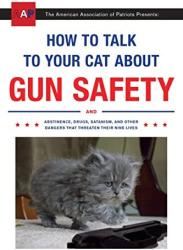
Reviewer's Name: Benjamin W.I had seen this book cover on the internet a few years ago and found it to be an amusing concept. When I ran across the paperback version of this book at a thrift store, I bought it and gave it a read. Presented by the fictional "American Association of Patriots," How to Talk to Your Cat About Gun Safety is a satire parody of right-wing and evangelical pamphlets that seek to inform readers of the "right" way to do something. In this case, talk to your cat about gun safety.
This book is actually a collection of a few different pamphlets that cover a variety of topics, including safety for guns, sex, online, and the apocalypse. To its credit, if you didn't realize this was satire, you'd think this book was being serious. Perhaps this is more an indictment of how crazy some people have become since 2016. Unfortunately, this is one of the only gimmicks this book has, and it does it to death. I'm impressed that most of the advice is actually accurate, but that's because it almost reads like a pamphlet you'd hand parents trying to talk to their teenagers and just did a find-and-replace to change "teen" to "cat."
I enjoyed the humor for the first few chapters, but by the end, I was mostly skimming, trying to get through it. There seemed to be a quota of cat puns the author tried to force into this book, with at least one or two of these eye-rolling jokes occurring per page. Since this is the other gimmick this book has, there isn't much more to it than the amusing title and concept.
An amusing satire gimmick, but not much else, I give How to Talk to Your Cat About Gun Safety 2.0 stars out of 5.
Genres:
Review:
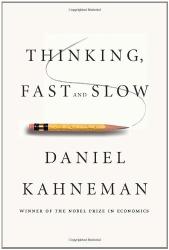
Reviewer's Name: Benjamin W. We all make choices. Every day, from the banal to the life-altering, we can break these choices down into two different ways of thinking. It's amazing to me how this psychological subject presented in Thinking, Fast and Slow is so intuitive, but so difficult to control. Daniel Kahneman does a superb job bringing this topic down to the layperson level with plenty of examples and quizzes to show the reader how we can literally change an impulsive decision into a logical one.
Thinking, Fast and Slow opened my eyes to the two systems that influence every decision I make. The quick-thinking "System One" runs on emotions, whereas the slower "System Two" takes time to examine a situation thoroughly before deciding. The amazing thing about these systems is that sometimes the intuitive System One is correct—meaning that it can sometimes be easy to overthink a problem. What's even more fascinating is seeing how easy it is to switch our thinking from System One to System Two when we need an answer from the brain instead of the heart.
If I find this book at a used bookstore, I'll likely pick it up as a reference. I read it as an audiobook, so I could not do many (if not all) of the exercises detailed in it. This is yet another case of a non-fiction book being better in a physical format. Still, I gleaned a ton of useful information from it for the 20 hours I spent listening to its concepts. Even if you're not interested in psychology, I'd recommend reading this book merely for the insight into how you (and those around you) come to decisions.
An eye-opening look into the psychology of decision making, I give Thinking, Fast and Slow 4.0 stars out of 5.
Genres:
Review:
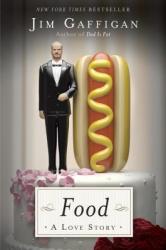
Reviewer's Name: MaggieThis was a light and hilarious read, though probably not a good choice if you are looking for something more informational. Jim Gaffigan is a great comedian, and the care he put into organizing this book about food is evident. It was nice that Gaffigan didn't take himself too seriously in each chapter. Since most autobiographies that mention food discuss more negative pressures of food culture, this book turned it around into a positive ode to food, a reminder to never feel bad about fueling your body with good food. Unexpectedly, it was also a reoccurring theme for Gaffigan to discuss the fear of not being a good enough parent and other anxieties about social norms that relate to food. Pick up this book if you are already a Jim Gaffigan fan or you just need a comforting book.
Grade 12
Genres:
Review:
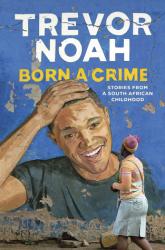
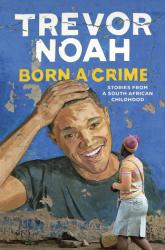
Reviewer's Name: MaggieEach page of this book was a joy to read, as it gives readers a glimpse into how different cultures affect the children who grow up within them. Trevor Noah is a talented comedian and an even better storyteller. Each narrative in the book felt like I was experiencing the moment with him, as he struggles with his identity in the boundaries of apartheid. The way Noah describes his mother- strong, resilient, yet strict from a place of love- is a very realistic concept that many people don't discuss. Parents aren't perfect and grow with their children, but it's their true intentions that determine whether or not they are really doing what's best for their child. I also found it fascinating how Noah communicates having to choose between two races that he isn't truly apart of. I highly recommend reading Born a Crime because of the lesson that everyone is more connected than they realize, and where you grow up shouldn't restrict who you grow to be.
Genres:
Review:
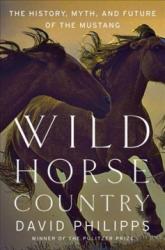
Reviewer's Name: MalachiWild Horse Country, written by two time Pulitzer Prize winner and Colorado native David Philipps, is a masterpiece of investigative journalism. Philipps goes to every corner of the country to explore the current state of one of the final remnants of the Wild West: Mustangs. Even without a previous interest in wild horses and their current happenings, readers will be immersed in the stories of how they came to be, the people who have saved them, the people who haven't wanted them saved, and the people who have failed to do anything at all. Philipps explores the situation so fully, and immerses himself in the journey of learning, but still somehow manages to create a book that is unbiased and logical, rather than one based in the individual perspectives he sought out to chronicle in his book's pages. Each story, each piece of research and investigation, is captivating and beautifully written, but even more impressive than the stories and investigation themselves is the way the book can inspire a reader to do something. Not only within the situation of the wild horse, but in the everyday situations that surround us, Philipps inspires readers to learn.
Genres:
Review:
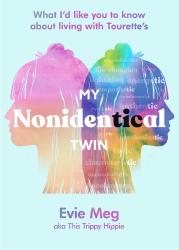
Reviewer's Name: AbigailI enjoyed this nonfiction book a lot. This book was very informative of what Tourette’s Syndrome is. The author, Evie, walked the readers through the pros and cons of having Tourette’s Syndrome.
I follow Evie on social media platforms and see this journey documented through there too. However, her channel is not as informative as this book. I love how this book brings awareness to Tourette’s Syndrome and the people who suffer from it.
If any reader wants to be more aware of this condition, I recommend reading this well written autobiography by Evie Meg.
Genres:
Review:
Reviewer's Name: SophiaI picked this book because I follow the author on Instagram, her page is called Juggling the Jenkins. She is very real and down to earth and talks about her book online. The book is her real life story of her adult life. She talks about how hard her life became after she went to jail for being a drug addict. The stories of the things that happened to her while she was in jail, made me cry! I think she is a very strong woman and reading her story made me want to be better. I am going into the 9th grade.
Genres:
Review:
Reviewer's Name: Sophia"Make Your Bed" is a very inspiring book. I really liked that the author was in the Navy snd wrote this book based on a speech that he gave at a college graduation. The thing that I liked most about the book were all of the advice he gives that everyone, even teenagers, can make little changes in your life that can change how you feel about yourself and your life. It reminds you that even if your life is not going the way you want it to, you can always take small steps towards being happy. I am going into the 9th grade and I think my friends should read this.
Genres:
Review:
Reviewer's Name: Sofia“Screenwriting is Storytelling” written by Kate Wright, forwarded by Arthur Hiller, is a diverse, and engaging introduction to screenwriting with many lessons in plot and character development. Evaluating dozens of popular movies and providing insight into the art of creating a story, Wright gages screenwriting past simply making a scene eligible to an actor or director and expands the concept to the very origin of a script, the story. From this, Wright not only guides the reader through the process of making a handsome script, she as well includes the detailed aspects that create a subtle, yet concise, deeper meaning of a story.
The almost rigid, scrupulous manner Wright orders a story into, can be a well-fit reference book for those who have no issue abiding by a stricter structure, but can also be a downside for those who prefer a more Dan Harmon approach—following a simple guideline—with room for some wiggles.
Either way, the information Wright provides is undeniably useful. I’ve found a deeper appreciation for film/story genres that—frankly—I’ve never been much a fan of, and it’s through the arduous journey of creating a script from the ground-up, that a story can be truly appreciated, which Kate Wright does a fantastic job at being the tour guide.
Genres:
Review:
Reviewer's Name: FinnMoneyball, written by Micheal Lewis, is a narrative, nonfiction novel based on the miraculous 2002 season of the Oakland Athletics. Micheal Lewis was inspired to write about the Oakland A's because of the statistics behind the game. He realized that even though the Oakland A's had one of the lowest budgets in the MLB at the time, they were winning an unusually high number of games. What Micheal Lewis wanted to know was: why was the cost-per-win so low in comparison to other teams? Was the Oakland A's performance a fluke, or was it not?
Billy Bean, the general manager for the Oakland A's and his trusty statistician, Paul DePodesta can answer both. Billy realized that he had to look at the game differently to obtain an advantage over other teams. All the "good" players followed the money, leaving the unpicked players for the teams that could not afford the good ones. The problem was that Billy Bean could not afford the good ones. Paul DePodesta found a way to search through the seemingly useless pile of players to find stars. He realized that some player's traits, such as batting average, were overvalued in the market, while some, such as on-base percentage, were undervalued. DePodesta saw that a player, in the eyes of the market, with a low batting average was worth more than a player with a high on-base percentage. He realized that he could buy high quality players for less, and that is exactly what he did. I liked the book because it has interesting statistics in it, and it also highlights the ingenuity that went behind one of the best seasonal records in the MLB.
Genres:
Review:
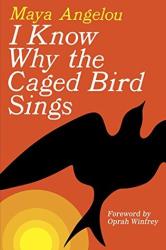
Reviewer's Name: FinnI Know Why The Caged Bird Sings, written by Maya Angelou, is an autobiographical account of Angelou's childhood. When Maya is a young child, her parents divorce. After the divorce her parents send her and her brother, Baily to Stamps, Arkansas to live with their Grandmother, where her Grandmother, affectionately referred to as "Momma", runs a convenience store. Angelou, despite her self-consciousness, appears to have had a great childhood growing up in the store. After about five years, Angelou's dad unexpectedly comes in and takes Bailey and her to their mother, who was living in St. Louis. While there, Angelou is molested by her mother's boyfriend. The boyfriend is quickly murdered and Angelou feels responsible for the death.
I liked to book because Angelou highlights how anyone can do what they set their mind to, and even in bad situations a human can grow immensely.
Genres:
Review:
Reviewer's Name: IsabelI first read this book after it was recommended to me by a teacher, and needless to say, it instantly became a favorite.
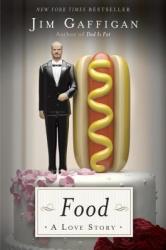
Food: A Love Story is the second hilarious memoir by comedian Jim Gaffigan about - you guessed it - food. It covers the culinary distinctions throughout geographical regions of the United States, the difficulty of eating healthy in a world of delicious junk food, the conspiracy that lead to the creation of the Chimichanga, the shame at eating at McDonalds without children, and more. This book has it all. I highly recommend this book to anyone and everyone who wants a good laugh.
Reviewer grade: 9
Genres:

Review:
Reviewer's Name: MaggieWith all that goes on in the world, politically and socially, it is important to seek out resources and educate yourself on the topics you care about. This book was that for me. I like how the author used her credibility as a doctor to share facts about abortion while also opening up a platform for individuals to tell their deeply personal stories. This book is heavy and heartbreaking and empowering. I can't recommend it enough.
Grade 12
Genres:
Review:
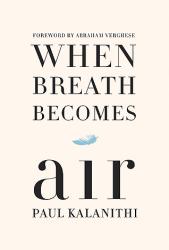
Reviewer's Name: FinnWhen Breath Becomes Air is an autobiographical, nonfiction, story of Paul Kalanithi, a man who has worked his whole life to pursue his dreams. Kalanithi is a top neurosurgeon-neuroscientist a couple years away from graduating medical school. Even before graduating, million dollar offers pour in for Kalanithi to head new, top research facilities. However, disaster strikes: lung cancer. Kalanithi talks about his progression from seeing people in the patient's chair to being the one in the chair. Throughout his journey, Kalanithi informs the reader of the life cycle, the importance of hard work, and most importantly, family and love.
Genres:
Review:
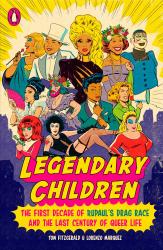
Reviewer's Name: MaggieIf you're looking to get educated on LGBTQ+ history, this is a great book to try. I loved hearing about some of the most influential figures of the LGBTQ+ movement and their impact on others. They persevered even through backlash from events like the AIDS epidemic and built a community where everyone is welcome to be themselves. Some parts can get slow to read, but the authors use modern language and humor to appeal to a variety of audiences and make history more entertaining. This book is so empowering, give it a try!
Genres:
Review:
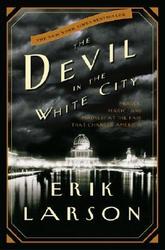
Reviewer's Name: MaggieThis is a compelling story of the popular World's Columbian Exposition in Chicago and the serial killer who took advantage of it. Set in the late 1800's, David Burnham and H. H. Holmes receive equal attention in alternating chapters between the fair's fascinating architecture and the growth of a heartless killer. I liked reading about the trials and errors of the fair and technology in the 19th century. Also, Holmes' terrifyingly calm demeanor added suspense to what would happen to his victims. It is a cool turn-of-the-century book, but the shift between monotone construction and graphic murders was an interesting style that isn't for everyone.
Grade 11
Genres:
Review:
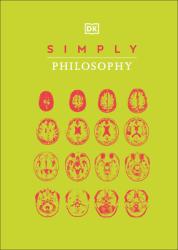
Reviewer's Name: KelseySimply Philosophy is a collection of different ideas and concepts about a ton of topics, also showing different points of view.
This book remains one of my favorites because it takes ideas from famous philosophers in history, and then explains them in ways that are easier to understand. It uses helpful graphics and real-life examples to explain detailed concepts. One of the ideas I liked the most was from René Descartes, explaining why humans can never be sure that anything except their consciousness exists. The book was also very organized, putting similar ideas in the same sections.
Genres:
Review:
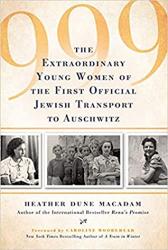
Reviewer's Name: MaggieI wavered between a 4 and 5 star review here, but my reviews are based on storytelling ability, not necessarily how little I enjoyed hearing about the details of Auschwitz. This author did a fantastic job of telling the stories of nearly 1,000 women while letting some of their personal accounts lead the pace and tone. Though the characters were hard to keep track of at some points, there was constant clarification of individuals to develop empathy for the girls in the Holocaust. There was also some groundbreaking information on the sexist disparities between records of the female experience in Auschwitz- as soon as you think life couldn't have been worse for these prisoners, it is revealed that women were treated the absolute worst. Definitely worth the read if you can stomach the tragedy.
Genres:
Review:
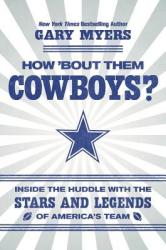
Reviewer's Name: AnanthHow ‘Bout Them Cowboys is a great sports book. It gives a detailed description into the inner workings of arguably one of the greatest sports franchise’s. This book contains fantastic football stories and interviews with the Cowboys owner, former players, and fans of “America’s Team.” I really enjoyed learning about the history of the Cowboys. And I chose this book because I am a huge football fan. I would recommend this book to any sports fan who wants to learn more about the football business. Throughout this book, I could sense the loyalty and commitment that great players feel to their Dallas Cowboys.
Genres:
Review:
Reviewer's Name: AlexaBorn A Crime is the story of comedian Trevor Noah's childhood in South Africa. Each chapter follows a certain theme and features a lesson which Noah learns and takes with him as he grows up. Noah confronts darker, more serious topics with an endearing sense of humor and a resilient perspective, making the autobiography wise, poignant, funny, and heartfelt.
Trevor Noah's mother was the most influential person in his life. Being born to a black mother and white father during South Africa's apartheid, he was a "crime" under the law, but his mother made sure that he still had all the opportunities that other children did, and even more. She gave him knowledge and experiences, taught him how to respect women, and never stopped laughing. As Noah vividly portrays his mother, she comes alive on the pages of his autobiography. His story is also her story--of love, loss, pain, and joy.
This is a book that everyone should read. It speaks to the complexity of racism and its lasting consequences, but it is also entertaining and engaging. Noah tells stories of sadness and hardship alongside funny anecdotes that will make readers laugh out loud.
Awards:
Genres: