Book Reviews by Genre: Nonfiction

Review:
Reviewer's Name: Benjamin W.I’ve written blog posts and recorded vlogs about writers who seem to rely on spell check to make sure they’re using the right word. Most of the time, they probably didn’t have an adequate editor to review their manuscript and thus didn’t check whether or not they were using the right word (even if the wrong word is spelled correctly). With the state of the printed word slipping year after year, a book like How to Tell Fate from Destiny should be a standard reference on any writer’s desk. Although, many of the words covered in this book are slowly changing due to idiomatic circumstances.
It is slightly encouraging to see examples provided in this book from reputable sources (like well-known newspapers and magazines) that still have these common errors in their writing. If anything, these examples prove how difficult it can be to distinguish the correct word usage over the more familiar word usage. Granted, many of the “correct” words don’t sound right to the common ear. However, those who want to show they are professional via their writing need to hold to these steadfast style guides and usage manuals (many of which are referenced throughout).
One of my qualms with this book is the large amount of semi-obscure vocabulary it covers. There were plenty of pages filled with words I had never seen and will likely never use in my writing. Perhaps this book is best used by those who consider themselves “literary” writers and thus end up using words that sound much loftier than they are. If anything, this book proves that professional writing abides by the idiom of “keep it simple, stupid.” Many of the Mark Twain quotes contained in this book say as much.
A useful resource for writers, especially those with a grandiloquent vocabulary, I give How to Tell Fate from Destiny 4.0 stars out of 5.
Genres:
Review:
Reviewer's Name: Kyle YThis non-fiction book is a great guide full of life improvement tips.
In this book, Chris Prentiss guides you through different strategies on how to be the best you, how to be the happiest you, and so on. The author teaches you different ways to be happy based on many Chinese philosophies and personal experience. What I liked about this book, was how simple it was. The methods presented by the author can be done by anybody and doesn’t require anything else, yet, he still shows how effective his methods are through telling stories about successful friends of his who listened to his advice.
Reviewer Grade: 7
Genres:
Review:
Reviewer's Name: Kyle YThis guide provides an interesting approach to improving your life at home with a danish concept called hygge. In this book, different and interesting danish methods are presented, including how to make the most of your time with loved ones, what to avoid when participating in hygge, how to make your house a more relaxing atmosphere. Towards the end, there is a cookbook sharing many of the author’s favorite danish dishes. I found this book very helpful at giving ideas on ways to make your living space more relaxed and inviting, using things like lighting, plants, and cleanliness. In conclusion, I think this would be a nice book for anyone looking for ideas to throw a family reunion or looking to be a little more relaxed.
Reviewer Grade: 7
Genres:
Review:
Reviewer's Name: Rosina R.Lincoln's Last Trial was a fantastic read and I could not recommend it more. The book follows Robert Roberts Hitt, a steno man - one who records what is said during a trial. His latest job is a trial where Peachy Quinn Harrison was accused of murder. Abraham Lincoln, a well-known lawyer, is hired to defend him. This trial's victory is what ended up launching Lincoln into the presidency, and was the presidential candidate's last murder trial. Everything said in this book is true, but it is written in the style of a fictional book, making it an easy read for anyone. As the author follows Hitt in the buildup to the trial and during it, he discusses various things relating to the events occurring at the time. This makes the pace of the book fairly slow, as lots of information is given in-between events, but it is certainly worth it. Lincoln's genius as a lawyer, the advice he gave to law students, and details only his friends would know (he kept papers for cases in his hat!) are all revealed. Overall, I would definitely recommend this book, especially if law, history, and government are of interest.
Awards:
Genres:
Review:
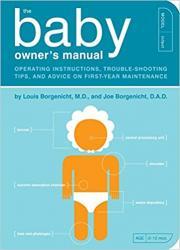
Reviewer's Name: Benjamin W.You might be shocked to learn that some men do read the instructions. There have been numerous products that I have purchased over the years which necessitated a read-through of the instructions provided. Usually, these were items of extreme complexity or of thorough interest to me to require fully understanding the items before beginning to use them. The Baby Owner’s Manual might seem like a humorous fusion of a parenting book with a repair manual for a vehicle, but somehow the fusion of these two works better than I would have ever expected.
Published by Quirk Books (who have created other genius mash-ups like Pride and Prejudice and Zombies and Shakespeare’s Star Wars ), The Baby Owner’s Manual takes the complicated and frightening task of keeping a newborn alive and presents the necessary information in a format that any guy can understand. In fact, aside from a few choice substitutions that make a baby seem more like a car than a human, I’d probably keep this book as a useful reference any time something I don’t know how to handle comes up. This will likely be often considering my first child is due near the end of the year.
The only qualm I might have with this book is that some studies have come out since 2003 that have changed a few suggestions the book gives these new parents. Of course, any well-prepared parents will probably be able to pick these inconsistencies out and follow the more current recommendations. In the
end, though, the direct and straightforward method this book uses to convey its information makes it far more useful than just as a gag gift (I’m looking at you, How to Traumatize Your Children).
An instruction manual every man should read, I give The Baby Owner’s Manual 4.5 stars out of 5.
Genres:
Review:
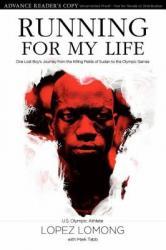
Reviewer's Name: Megan T.Lopez Lomong is a phenomenal runner. When he runs, he feels as though he is free and it is the one thing that gives him immense amounts of joy. However, Lopez didn't always start out in the spotlight. In fact, his story begins in a South Sudanese war camp. "Running For My Life" is the incredible story of one boys journey from awful refugee camps to the 2008 Beijing Olympics. This nonfiction story is told through Lopez himself making it a thrilling autobiography. I personally love this book because my brother was an Eritrean refugee and when he came to America, he got a scholarship for running. I don't know what it is about that particular sport, but it definitely changes lives as shown through Lomong's book. Even if you are not a fan or sports or running, "Running For My Life" teaches valuable lessons and helps us to empathize with others. It shows that love can be found everywhere in the world. Trust me when I say that you will not be bored with this book. Lopez constantly has a good attitude in life even if his best meal of the week is eating out of a trash heap (which actually happens in his refugee camp). Lopez goes with his friends to watch the Olympics on T.V at a rich man's house back in South Sudan. He sees a man holding the flag of America, tears streaming down his happy face. From that moment, Lopez decides that he wants to be that man. He wants to win an Olympic race and make his country proud. I mean he already has the running skills considering that the boys in the refugee camp have to run 18 miles in order to go play soccer!
Lopez has a spiritual journey throughout his life and his faith never wavers. Three older boys helped Lopez escape a war camp when he was six. When they got to safety, the boys disappeared. Lopez is convinced that the boys who helped him were angels. This story like no other will move you and inspire you to follow your dreams. Lomong proves that no matter who you are or where your from, you can do anything through Christ who gives you strength.
Genres:
Review:
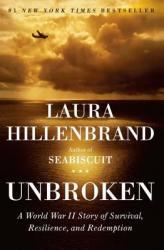
Reviewer's Name: PaytonUnbroken, is a book of suffering, friendship, strength, and journey's throughout life. The story takes place in the Pacific War of WW2, following the struggle of Louie Zamperini. Louie's life starts out "untameable" drinking, stealing, and running from the cops at the early age of 10, he cause quite the mischief in his home town of Torrance, California. Later on in high school Louie is going down the wrong path, until his brother turns him around and sets him on the path of becoming an Olympic runner. Louie runs in the 1936 Berlin Olympics and places 8th. Next thing you know World War Two breaks out, Louie joins the Army Air Corp and becomes a bombardier of a b-24 plane.
Next in the story, whilst on a rescue mission the "Green Hornet" a faulty B-24 crashes into the pacific ocean, taking Louie and his flight crew with it. Mac, Phil, and Louie survive the initial plane crash and face many challenges at sea. Mac dies along the way, but Louie and Phil survive 47 days at sea before being captured by the Japanese. Phil and Louie are quickly put into a Japanese p.o.w camp, where they are abused, tortured, overworked, and starved.
To avoid spoilers, I won't go further into the story, and if Louie and Phil survive or not. I HIGHLY recommend this book, it's a great eye opener for PTSD, and the Pacific side of WWII, along with intense suspense, struggle, and development of the main characters. Laura Hillenbrand does a great job or portraying this hero and survivor's story.
Genres:
Review:
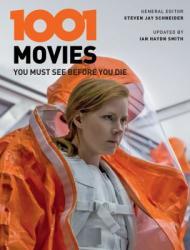
Reviewer's Name: Benjamin W.As a movie aficionado, it was only a matter of time before I picked up this book. At the time, the 5th edition covered most of the films that were out at the time, but I do realize there are more recent versions of this book that include some of the latest hits of the last decade. Not one to use this book as a simple desk reference, I took the time to sit down and read through the reviews of these 1,000+ movies. In the time since buying this book, I’ve managed to increase my percentage of films seen, but there’s still a long way to go.
Even before I started reading this book, I had already seen a good portion of the movies mentioned, many of which won critical awards for their achievements. With a concerted effort, I’m now sitting at 42% of these 1001 movies seen in my short lifetime. Having read the reviews of the rest of them, I can honestly say there are still plenty of films out there that pique my interest. Many of these cinematic masterpieces are merely unwatched because I haven’t gotten around to them yet, despite their cinematic accolades.
Overall, though, there were times where I’d watch a movie contained on this list and wonder, “why is this here?” 1001 films is a lengthy list, so there was undoubtedly going to be “filler” on this list. Then again, everyone’s tastes are different. While I feel movies were missing from this edition (likely removed from previous versions to make room for newer ones), it’s still a robust set. Not everything is “artistic” or “award-winning,” which is fine because, as the book mentions, “Sometimes you want a nice steak, and sometimes you just want a greasy hamburger.”
A robust set of cinema, I give 1001 Movies You Must See Before You Die 4.0 stars out of 5.
Genres:
Review:
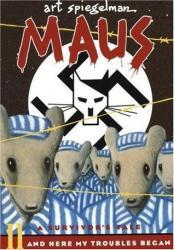
Reviewer's Name: Maddie K.Maus II, the sequel/continuation to Maus, continues the story of Vladek Spiegelman told by his son in the form of a comic book. This book is amazing because, just like the first, it uses an animal metaphor to easily show the reader who is who in the story. Maus II takes a darker turn because Vladek is now in the depths of Aushwitz. I love these books and their creative outlook on the War and the Holocaust. No other historical book has made me this intrigued and want to continue reading.
Genres:
Review:
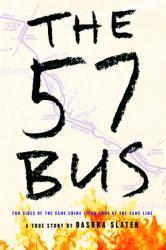
Reviewer's Name: Steven LThe book, The 57 Bus, by Dashka Slater, is quite the moving novel. The author does a great job of solidifying the main characters, Sasha and Richard, and develops there characters in a beautifully realistic way. The sudden transition for just normal everyday life to a calamity also flows well with the book. The fact that this story actually happens is also very interesting. Overall, The 57 Bus is a fantastic book and I would recommend it to anyone. The novel is a decent length but will have you engrossed in it until the end.
Awards:
Genres:
Review:
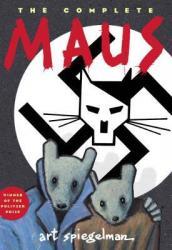
Reviewer's Name: Maddie K.Maus 1 is a fascinating graphic history of the Holocaust and what Jewish people went through. Artist Art Spiegelman uses a variety of metaphors to depict his fathers experience as a Polish Jew during the Holocaust. I found this book incredible because it uses an animal metaphor like Animal Farm to give a deeper insight into the story. This graphic history, much like a graphic novel, uses lights and darks, white and black, and special images to draw the reader in and help them understand the hardships Vladek Spiegelman faced. I loved this book and think it is a must read book for everyone.
Genres:

Review:
Reviewer's Name: Rob A.Stuff Matters is a nonfiction book on material science. The author explains everything about 6 different materials that make up our world. He goes through the history, how its made, and what is made from it. The author explains in a way that makes it a very interesting read. I found this book because I thought that the cover looked very interesting, and I it was also recommended to me by my friend. This is a great book to read if you are interested in the world around you. I would recommend it for ages 12-14.
Reviewers Grade: 9
Awards:
Genres:
Review:
Reviewer's Name: Steven LNight, by Elie Wiesel, tells of the story of the main protagonist Eliezer and the many tragedies he faced in German concentration camps during World War II. The protagonist narrates the entire book in a first-person and unbiased manner, which exposes the emotional truth of the Holocaust and provides an autobiography of the real author’s experience during the war. Eliezer, the main protagonist and counter part to the real Elie Wiesel, is forced to approach his ever-changing relationship with friends and family, many conflicts and struggles, and a plethora of situations that threaten his existence throughout the book. His reactions to these various obstacles exhibit the Holocaust survivor’s unique traits that set him apart from other Protagonists. Like Eliezer, every character in the book is developed fully with vivid traits that the real Elie remembers about them. The autobiography is fascinating and tells a compelling story while informing the reader about what really happened during the Holocaust, and I would reccomend it to anyone.
Grade: 9
Awards:
Genres:
Review:
Reviewer's Name: KristinaI have been looking to develop my leadership skills over the past year or so and this title was on the Sergeant Major of the Army's reading list a couple years ago. While I feel as though most leadership books tend to overlap themes and some key points, author Sinek did a great job of providing well recognized examples for each idea he attempted to convey. His references to large company names and groups helped make the ideas practical and applicable to real world situations.
I appreciated that he seemed to get the idea for his title from military members; I don't think there are many places where leadership skills exemplified and decisions are that crucial. Sinek's ideas were easy to grasp, and easily applied if you are sitting in a leadership role. I will say, not currently being in a leadership role, I found it interesting to apply what I read to the leaders I have now. There are things that I'm frustrated with that I haven't been able to put a finger on and this book conceptualized what I have been feeling. I have been able to verbalize to my
leaders some ideas and perhaps improve morale for the staff.
The version I read was the expanded version that had added chapters for the Millennial generation. I was born at the very beginning of the Millennial years, however I do not identify with that generation. I have had the opportunity to lead multigenerational groups. I have often found myself aggravated when dealing with Millennials, however this book offered some wonderful insight on how to lead them and how you might utilize the unique set of skills and passions that identify that generation.
I greatly appreciated this book and the practical spin it put on some of the ideas that I have already read about. It clarified some old ideas and offered some new. I would absolutely recommend this book for anyone who finds themselves in a leadership role.
Genres:
Review:
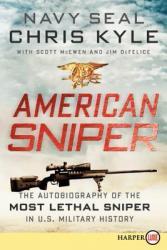
Reviewer's Name: Nam TAmerican Sniper is the biography of the most lethal sniper in the United States military, who was apart of the United States Navy SEALs. The biography encompasses the story of Chris Kyle, to which it describes the story of both his military tours and his own personal/civilian life. This autobiography adheres towards the intriguing events that Kyle experienced within his life.
American Sniper was a very well written book that did a great job describing the embellishments and challenges that Kyle faced, when he was a SEAL or just a civilian. Personally, the book is one of the best that surpasses many other titles that I have read. I highly recommend it to other readers.
Awards:
Genres:
Review:
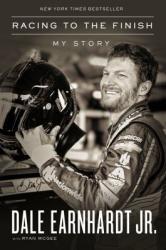
Reviewer's Name: Robin H.Many know the name Dale Earnhardt Jr. but you don’t need be a fan of his or even a race fan to enjoy (or listening to, as I did) this book. It’s an eye opening perspective of cause, effect, and recovery from concussions of a driver who suffered many in his career. Athletes of all ages and every contact sport and our military are suffering concussions every day and are struggling with the symptoms. Mr. Earnhardt frankly discusses his stubbornness over admitting he had an issue and the inner struggle between his career, family, fans and team. He brings up the advances in concussion recovery over a time and the advances in the therapies to aid in the recovery.
Genres:
Review:
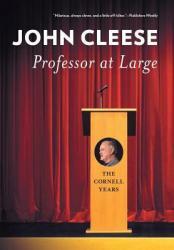
Reviewer's Name: CatherineAs a John Cleese fan, it was fun to be able to learn of another of his endeavors - serving as a Professor at Large at Cornell for 10 years! The texts in the book are a collection of some of his lectures over the years. They, of course, elaborate on many of his performance experiences but they also provide a broader view of his other interests.
All the Monty Python group are intelligent and creative, so it is no surprise that Cleese's intellect has been engaged on many fronts over the years. He is also much like his character in comedy in not suffering fools gladly or otherwise. I was pleased to note that he became quite involved in many different schools of learning while on the Cornell campus, and contributed to the thinking of both students and staff.
There is some repetition of topic, but as the student body would experience a turnover over the years, I would expect that important topics would emerge again anyway.
This was a fun and informative read. Since it was a series of lectures, it was easy to pick up and put down without losing the gist of things.
Genres:
Review:
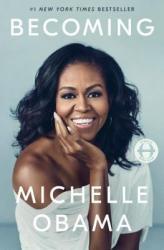
Reviewer's Name: CarrieIn Becoming, former First Lady Michelle Obama shares the journey of her humble roots growing up in the South Side of Chicago to becoming First Lady of the United States. The book paints a picture of a woman who has struggled with the question "Am I good enough?" for much of her life, but has persevered through her doubts. It also gives a picture of Barack Obama's political aspirations and rise to the Presidency. Even for those who disagree with Obama's politics, the book depicts the portrait of a man who entered politics because he truly desired and believed he could make the US a better place to live, and shows both Barack & Michelle Obama's commitment to public service. In that sense, it prompts the reader to stop & consider, what are my core values, and what am I fighting for to make the world a better place? It's an inspiring read when considered through this lens.
Genres:
Review:
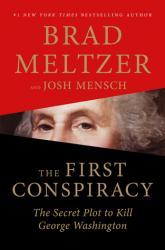
Reviewer's Name: Peter CIf you think you knew everything about the American Revolution, then this novel will prove you wrong. Taking place in the most critical era in America's history, this novel details a very unknown story about George Washington. The story follows him and his group of Life Guards, soldiers tasked with protecting Washington's life, as a conspiracy rages around them.
And unbeknownst to Washington, his Life Guards are now tasked by the British with killing the future president. The novel poses a very thought-provoking "What if?" question that provides for a very intense and hard to put down historical non-fiction novel. The novel provides insight into not only this virtually unknown story, but also shows the reader how close the US was to losing the Revolution. This novel is one of the best historical non-fiction books I have read. I would highly recommend to history buffs, fans of non-fiction, or anyone looking for a good read.
Genres:
Review:
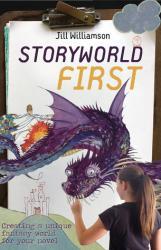
Reviewer's Name: Gillian P."Storyworld First" is an amazing writing book that covers everything a fantasy writer needs to create a spectacular world in their novels. This in-depth book is great for crafting three-dimensional settings, characters, and themes that will leave a lasting impression on readers. I highly recommend this book just for the enormous amount of detail alone -- you can literally create your novel's world from the ground up with this book (climate, language, religion, population, etc.) Not to mention, the author Jill Williamson is apart of Go Teen Writers, a website dedicated to helping teen writers improve their work -- this book is like the best of their website wrapped into one package! If you are a writer (even if you don't write fantasy or sci-fi), I highly recommend you pick up this book. It will change your writing forever.
Grade: 12
Genres:
Review:
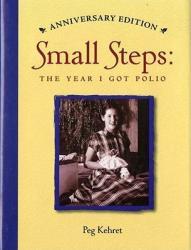
Reviewer's Name: Oriana O."Small Steps: The Year I Got Polio" by Peg Kehret is an interesting autobiography that gives insight to what people with Polio experienced. The main character, Peg, faints one day during school and has a high temperature so she is taken to the hospital. There she is diagnosed with Polio. This news is devastating to Peg and her family but Peg's family decides to stay positive while Peg is sad. Throughout her journey Peg gets better with the support of her parents.
I would recommend this book. "Small Steps: The Year I Got Polio" is sad but also heartwarming at times. I read this book because it is a battle book. I couldn't relate to any of the characters, however the emotions Peg felt could be related to a lot of other people. The book isn't predictable at all. It is not the best book I have read this year but I would still recommend this book as it is still good.
Genres:
Review:
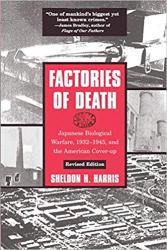
Reviewer's Name: RachelThis book is for the historian who wants to know more about what happened in the world in the 1930-1940's. We all know about WWII. Most of know about the Nazi Concentration camps. A few know of the human experiments done by the Nazi's. But did you know that Japan was doing human experimentation as well? Did anyone know that Imperial Japan was active in Bacteriological and Chemical Warfare? This is an in depth look at the people behind the atrocities and those behind the cover-up. The author even talks a little about why we know little about Japanese human experimentation and a lot about Nazi Concentration camps.
I found this book enlightening and thorough. My overall view of the world during this time period is filling out and becoming more complete.
Genres:
Review:
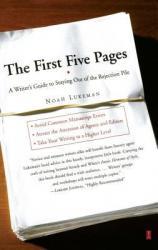
Reviewer's Name: Benjamin W.As a writer who is looking to submit to agents soon, I was hoping The First Five Pages would give me some insight into the hook that could lead to the acceptance of my book. Additionally, as an individual who also creates and publishes short story anthologies, I hoped this book would give some useful advice for writers to keep their stories out of the rejection pile. Unfortunately, while this book is almost 20 years old, much has changed since its initial publication. Everyone has computers. Word processors and other tools are in abundance. Nobody prints out manuscripts anymore.
Split into three sections and a total of 19 topics, this book doesn’t so much tell an author how to avoid rejection from agents and publishers as much as how to write. I will say from personal experience that the one topic on formatting is the most important topic to pay attention to, especially since
I’ve rejected tons of submissions that don’t follow the guidelines—albeit for additional reasons besides the formatting ignorance. There might be some tidbits in this book that will help an author create a manuscript worth accepting, but they’re buried in so much basic advice that most beginning authors will probably miss them.
This is the crux of the problem with this book: it’s not meant for authors who are ready to submit. There’s no nuance in the examples contained in this book, which doesn’t help anything when the topics are so rudimentary as to make me wonder why anyone who still has these problems with their manuscript is submitting to agents and publishers in the first place. If these writers hadn’t already heard the advice to “show, don’t tell,” then there’s no way they’re far enough in their writing career to be able to create a submittable manuscript.
Basic writing advice for authors who probably aren’t ready to submit to agents or publishers anyway, I give The First Five Pages 2.0 stars out of 5.
Genres:
Review:
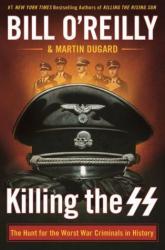
Reviewer's Name: Peter CBill O'Reilly and Martin Dugard are known for writing some fantastic historical novels, and Killing the SS upholds that idea. It is the latest installment in O'Reilly and Dugard's Killing series. This novel tells the story of the global postwar hunt for Nazi war criminals and how they were brought to justice, or how they escaped altogether. The big four written about were Josef Mengele, known as the Angel of Death, who was the physician at Auschwitz and performed horrific medical experiments on the prisoners; Adolf Eichmann, charged with managing the mass deportation of millions of Jews to death camps; Martin Bormann, who was in charge of legislation and domestic matters regarding Nazi Germany; and Klaus Barbie, who was known as the Butcher of Lyon due to the fact that he personally tortured and killed thousands of Gestapo prisoners in Lyon, France. The book itself is a fantastic read, as it is suspenseful, engaging, and is the history buff's dream. I would recommend this novel to anyone who loves history, or anyone who is a fan of the Killing series.
Awards:
Genres:
Review:
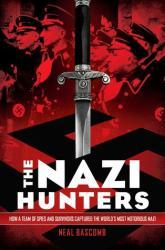
Reviewer's Name: John B. Adolf Eichmann, a notorious Nazi responsible for the deaths of millions of people during the holocaust, disappeared without a trace after the war ended. An Israeli group of spies, known as the Mossad, along with other key allies carefully locate and capture Eichmann in an attempt to bring him to a fair trial in front of the entire world. Several of the members of the mission survived concentration camps and nearly all of them had lost family there. Thus, they were determined to complete their mission, even if it lasted fifteen years and took them to the other side of the world. I highly recommend this non-fiction adventure to anyone interested in the holocaust or looking for great a spy thriller.
Awards:
Genres:
Review:
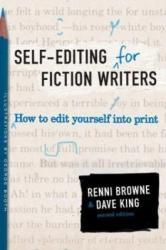
Reviewer's Name: Benjamin W.Even though this book was published 25 years ago, its advice for aspiring authors is timeless. From those just starting to veterans still polishing their craft, Self-Editing for Fiction Writers is perhaps even more relevant today than when it was initially released. After all, the pre-eminence of self-published authors has spawned a plethora of poorly-written and amateur works that seriously need some form of editing. On the plus side, the more self-published authors who take the advice in this book and put it to good use, then perhaps there will be less of a stigma against them in the future.
Breaking down the editing process into 12 distinct parts, this book shows the reader—through numerous examples—how a lousy piece of prose can be edited into something much more palatable. That being said, there are a lot of examples, some of which take up multiple pages. Occasionally, the errors are
shown in bold print, which would probably have been helpful in other sections as well, instead of relying on the reader to pick out the problems they just learned how to fix. It also would have been beneficial if the answers to the exercises were placed immediately after each section instead of in an appendix.
It is encouraging to note that this early-90s book recognizes that writing conventions change over time. While many authors want to write “the great American novel,” the definition of what that is has morphed over time as different forms of media have shaped the landscape. Despite all this, there were certainly many chapters that I was able to use to recognize weaknesses in my writing, as well as techniques that I have since become proficient in, merely to be reminded what my writing used to be like.
An excellent guide for authors of all skill levels, I give Self-Editing for Fiction Writers 4.0 stars out of 5.
Genres:
Review:
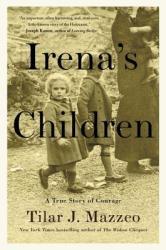
Reviewer's Name: Maddie K. This book tells the true story of Irena Sendler, a Polish woman who saved 2,500 children during the purging of Jewish people from Warsaw during World War II. This book details the trials and tribulations faced not only by Irena but the people and children of Warsaw. The underground network formed by Irena and her many friends allowed thousands of children to be placed with different families and continue living rather than being sent to German camps. I was truly awed by the courage described in this book and the measures taken by the people of Warsaw to save the lives of children who weren't even theirs or their friends. The horrors of World War II are indescribable but the necessity of remembering it is imperative, especially when stories like this are nearly unheard of
Genres:
Review:
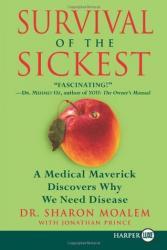
Reviewer's Name: Steven LSurvival of the Sickest, by Dr. Sharon Moalem, is a book that talks about the surprising connections between disease and longevity. The author does a great job of changing the reader's understanding of illness and presenting a new view of our bodies. While some people may find biology and other sciences boring, the book applies to everyone. The information is conveyed well and in a way that isn't just straight facts and boredom.
Overall, I would recommend this book to anyone, especially those who are into biology.
Genres:
Review:
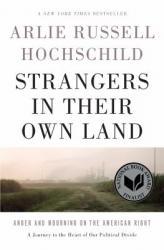
Reviewer's Name: JayThis is a must read for those seeking to understand the current political climate in the United States: particularly how those who support Donald Trump and often vote against their own well-being view the world. Hochschild is a sociologist from UC Berkeley who set out to resarch this very circumstance and connundrum. Hochschild gains access to Tea-Party and Trump Supporters in Lake Charles, Louisiana, establishes relationships with several people far from her West Coast and intellectual liberal leanings, and manages to get deep enough into their lives and personal histories to develop and describe empathic understanding of their political views. Hochschild remains objective as she delves deeply into attitudes and feelings of those with whom she disagrees culturally and politically. Her effort to help the reader understand that the most important wall we face is an Empathy Wall is enlightening and highly interesting reading.
Genres:
Review:
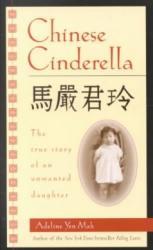
Reviewer's Name: Oriana O. The true story "Chinese Cinderella" is about a young Chinese girl named Adeline who faces the struggles of being unwanted and unloved. Adeline is seen as bad luck because her mother died after she was born. Her stepmother, Niang, hates her and favors all other siblings besides Adeline. Adeline achieves academic awards and good grades in hopes to make her family proud however they still see her as nothing. Throughout the book she faces many different problems all relating to her family mistreating her. Adeline is even sent to an orphanage at one point due to her friends coming to her house to throw a party for her. Not only does she face physical issues, but Adeline faces mental and emotional issues. Despite these issues, Adeline stays strong until the end and continues to try her best.
I read this book for a book report and was not at all disappointed."Chinese Cinderella" was sad but heartwarming. During multiple points in the book I cried. Adeline's feelings are very relatable and real. I thoroughly enjoyed the book."Chinese Cinderella" is in a genre of books I do not generally read however I was surprised and actually liked it. It is one of the best books I have read this year; I would definitely recommend it.
Awards:
Genres: