
History of Regional History & Genealogy
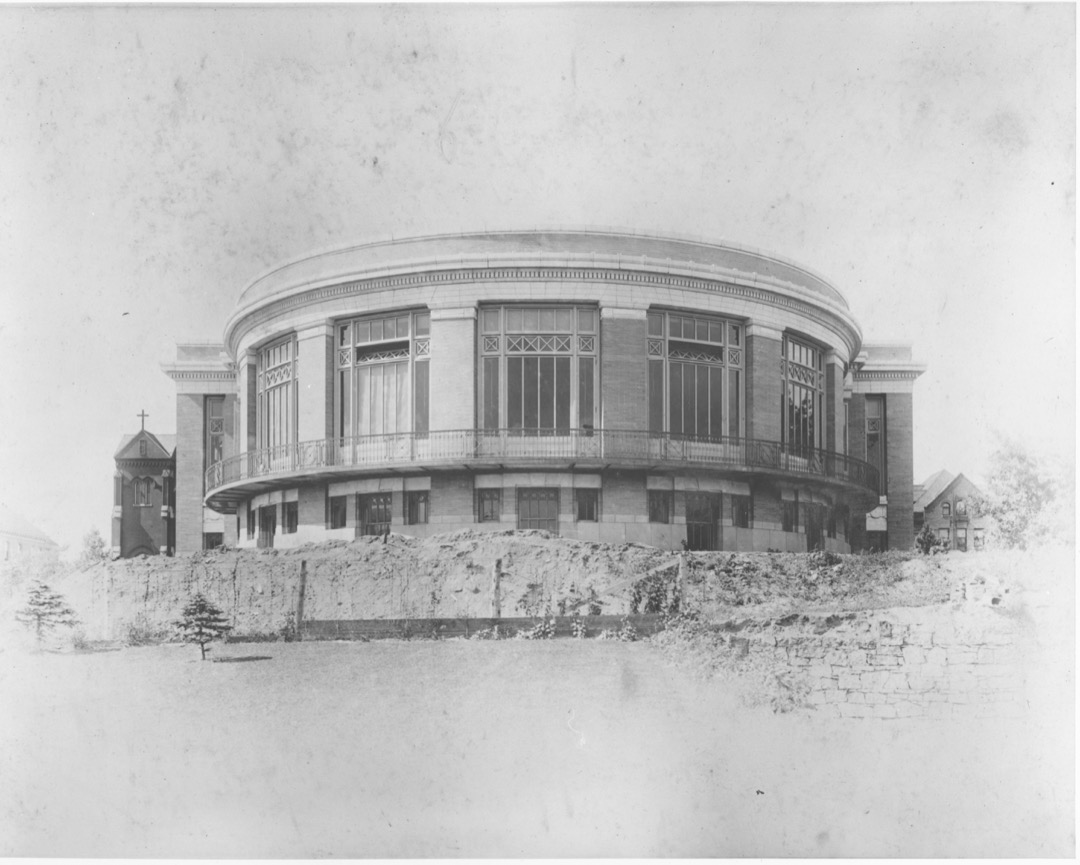
The Carnegie Library that today houses Regional History & Genealogy has a story every bit as layered as the archives it preserves.
In 1903, Colorado Springs’ city council voted to establish a public library to replace the Social Union’s modest lending library. Almost immediately, the city turned to Andrew Carnegie’s national library program for support. That June, city founder William Jackson Palmer donated a prime piece of land, and by July, Carnegie provided a $60,000 grant. A national design competition followed, won by Boston architect Calvin Kiessling, with Gillis Bros. handling construction. On March 11, 1905, the new library opened its doors. Lucy Baker, once the Social Union librarian, became the city’s first official librarian, with Margaretta Boas as assistant. Boas later rose to head librarian in 1926, a post she held until 1948. From day one, the Carnegie library building served not just the city but the whole county through ever-shifting contracts with El Paso County.
The basement began as an unfinished space, even serving for a time as living quarters for janitor J.R. Stewart. In 1921, it took on new life when the El Paso County Medical Society moved in, outfitting the area as their own “medical library” and even adding a door for direct entrance from outside—all rent-free for 25 years. When they moved out, Margaret Reid, who had succeeded Boas as head librarian, expanded library services into the room, converting it into the periodicals department. What had once been an overlooked basement was now fully integrated into the library’s daily functions.
By the 1950s, Reid was spearheading expansions to meet the demands of a booming postwar population, but the old Carnegie building was bursting at the seams. With the formation of Pikes Peak Library District (PPLD) in 1964, the need for a new central facility became unavoidable. There was a hitch: Palmer’s original deed stipulated the site must always be used as a library—or revert to the Colorado Springs Co.. Selling or leasing was out of the question. Salvation came in 1966, when banker Chase Stone announced the El Pomar Foundation would donate $2.2 million for the construction of a new central library on the site of the Marksheffel Garage next door, which was demolished to make way for what became Penrose Library. This allowed the District to build the modern space it desperately needed while keeping the Carnegie building in active use as a library, in compliance with Palmer’s deed.
Penrose Library opened in 1968, and the following year the remodeled Carnegie building reopened as the “Palmer Wing.” It was designed to function in a supporting role to Penrose Library. The upstairs rooms were converted into meeting spaces and an auditorium, while one room in the basement—the former Medical Society quarters, now periodicals room—was designated as the “Colorado Room” to house the library’s growing western history collection. In the mid-1970s, Director Kenneth Dowlin expanded the scope of the Palmer Wing by moving Penrose Library’s genealogical collection into the wing’s Colorado Room. In 1977, he made two announcements to the Library Board of Trustees. He had hired Nancy Loe as the first local history librarian, and Maggie II—the computer that would power “Maggie’s Place,” an early contribution to online public access—had arrived. As Penrose Library looked ahead to the digital future, the Palmer Wing was establishing itself as the steward of the region’s past.
By the 1990s, the building’s evolving purpose had rendered the 1969 renovations outdated. A sweeping restoration in 1999, again supported by the El Pomar Foundation, returned the Carnegie to its 1905 grandeur while adapting it for a modern role as the Regional History & Genealogy department, the primary purpose of the building to this day. The Robert Hilbert Nonprofit Resource Center shares the space, and alongside it the building continues its cultural mission through its historical collections: the archives, the extensive photo holdings, the large history collection upstairs, and the genealogical resources. At the heart of it all is the former Colorado Room, now home to the department’s archival collections, which define the building’s modern role as the keeper of our region’s documentary heritage.
What began as a city library serving all El Paso County remains a cultural anchor: a keeper of stories, a hub for researchers, and a place where our region’s past is alive and ready to be explored.