Staff Book Reviews by Genre: Nonfiction
Review:
Reviewer's Name: Nicole E.John Glatt does a great job in laying out this heinous murder, based on a true story. Managing to lay out a timeline with both moves and medical complications, Glatt exposes a mother who went to great lengths to do everything she could to create publicity for her sick son. The photos in the middle of the book, as heartbreaking as they are, make a much heavier impact if you wait until you've completed the book to look at them.
Genres:
Review:
Reviewer's Name: Nicole E.John Glatt is a very skilled investigative journalist and author. This book describes in chilling words the recall of "missing" girls in a small town and the murderer who tries to help "find" them along the way. As usual, Glatt's thorough research exposes the situation in depth. His delicate use of imagery gives all of the information you need to visualize his crimes without being a huge trigger for those with PTSD.
Genres:
Review:
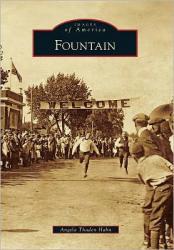
Reviewer's Name: Susi W.Living, working or driving by a community, one can take for granted that each location has a history or story to tell. Since I've been working at Fountain Library for the past two months, I decided it was time to learn about its history. Orignially, it was home to tribes of Ute Indians that roamed and lived off the land. Around the time of the Civil War, Rhode Island native, Thomas Owen found some well water acreage in an area aptly named "Fountaine qui Bouille" which translates to "The Fountain that boils." What follows is a pictorial history of how this community developed, from farming to ranching, and train transporation of goods, to the arrival of "Camp Carson" that was built during WWII. Like every other town, Fountain has a rich history and long time residents that are proud of their community, including the author who is a native in the neighboring area. A recommended read if local history is your cup of tea.
Genres:
Review:
Reviewer's Name: AlyssaWow...reading this book will take you on a spiritual journey unlike any other. If the idea of becoming more mentally and emotionally free, mindful, concious, happy and self-actualized interest you, then give this #1 New York Times Bestseller a read today!
Awards:
Genres:
Review:
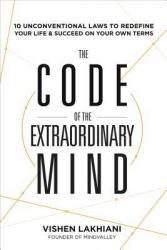
Reviewer's Name: AlyssaWritten by the founder of the successful online learning platform MindValley, this book will change your life, or at least spark a bit of self-reflection. Vishen takes the reader through 10 life-redefining laws leading to success, which are then divided into 4 parts. Part I explains how we have each been shaped, for better and for worse, by our culture and childhood. In Part II, the reader is challenged to either accept or modify what was brought to the surface in Part I. Part III is entitle "Recoding Yourself" and delves into mindfulness, discipline, "bending reality," goal setting to lead to lasting fulfillment every time and other compelling topics. Finally, Part IV provokes the reader to find their quest, and change the world. This is one of the most worthwhile self help books I have ever read and I recommend it to anyone wanting to change their life, thinking patterns, or habits for the better.
Awards:
Genres:
Review:
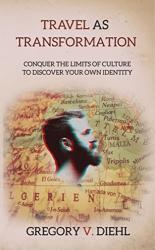
Reviewer's Name: AlyssaPart travel, part philosophy, part self help, this book is certainly a compelling read. Gregory Diehl shares his unique perspective and riveting accounts from his time spent traveling around the world. He describes in depth how his experiences and sometimes dark and uncomfortable lessons he learned while living in multiple countries around the globe have shaped his unique identity. He also challenges readers to examine the lessons in self discovery they too have encountered when traveling and to experience immersion in other cultures in order to develop a more well-rounded identity and life experience.
Genres:
Review:
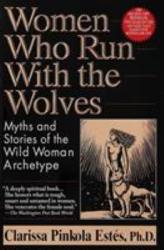
Reviewer's Name: AlyssaCentered around the "Wild Woman Archetype," Dr. Estes examines what it means to be a "Wild Woman," the expectations placed upon women in society and the consequences of ignoring the wild feminine nature within. The book certainly has a different approach to imparting knowledge and experience, but her tales of ancient myths and stories will make you feel as if you are sitting around a cozy campfire with an old friend. If you want to better understand the Wild Woman Archetype, an empowered and liberated side of women, I would recommend giving this classic New York Times bestseller a read.
Awards:
Genres:
Review:
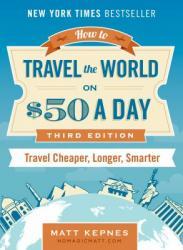
Reviewer's Name: AlyssaThis book is jam-packed with helpful tips and tricks for making travel affordable and more accessible to individuals living on a budget. Whether you travel seldom or regularly, this book will get you excited about the various ways to save big money on trips that may have previously seemed financially out of reach. Want to plan a trip to India? Skip to the chapter specific to the country or region where you want to go for highly specified money-saving advice. I found myself jotting down a long list of notes to refer back to when planning for my next trip. Give it a read if you enjoy traveling and saving money while you do it!
Genres:
Review:
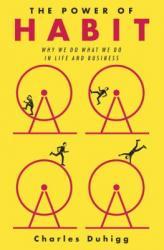
Reviewer's Name: Melina D."The Power of Habit" by Charles Duhigg is a great read if you are interested in changing your habits or changing your company's habits for the better. Duhigg guides the reader through how habits work in life and in business. What makes "The Power of Habit" a good read, though, is Duhigg's remarkable talent for storytelling. The narratives Duhigg presents are both informative and heartfelt. The stories are what make this book a real page turner, but when coupled with Duhigg's insights about habits, the book is both enlightening and informative.
Genres:
Review:
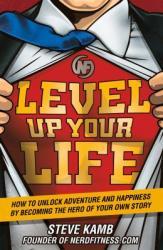
Reviewer's Name: LisaSteve Kamb’s book Level up Your Life is one of those rare self-help books that manages to be a page-turner. As an avid gamer, Kamb’s approach to gamifying goal-setting really resonated with me, and his journey from “shy, risk-averse nerd” to diving with sharks on the Great Barrier Reef inspired me to start my own bucket list.
One thing to keep in mind before picking up this book is that a substantial portion focuses on achieving fitness-related goals. Kamb is, after all, the founder of a Nerd Fitness, a website geared towards helping gamers and comic book fans have fun getting fit. Although my own reasons for reading Level up your Life weren’t related to fitness, I enjoyed this section all the same. Still, I felt it was worth noting since this book isn’t specifically marketed as a fitness resource.
With that said, the principles Kamb discusses can be applied towards accomplishing any goal, whether it’s learning a language or writing a book. And indeed, Kamb includes stories from members of his own community (the Rebellion) which show them using gamification to do everything from designing apps to traveling around the world.
While Kamb’s primary audience is undoubtedly gamers and comic book fans, I would wholeheartedly recommend this book to anyone interested in self-improvement.
Genres:
Review:
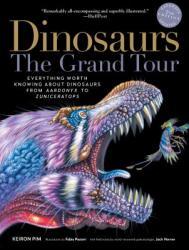
Reviewer's Name: LisaDinosaurs: The Grand Tour is a remarkably well-encompassing resource, covering everything from polar dinosaurs (yes, you read that right) to a dinosaur three times taller than a giraffe. The information is presented in such a way that a layperson can follow along without feeling overwhelmed by scientific jargon. The author even included a pronunciation guide for the dinosaurs’ tongue-twisting names.
One of the main selling points of this book is the fact that it’s currently one of the most up-to-date resources on dinosaurs, with a publication date of 2019. Considering how quickly the field of paleontology continues to evolve, resources that were up-to-date ten years ago soon become... well… prehistoric. Notably, it’s also the second edition and has been expanded and updated since the original was published in 2016. Since I didn’t read the first edition, I can’t comment on how the two editions compare, but from what I can tell, you’ll be hard pressed to find a more cutting-edge resource on dinosaurs.
The illustrations are also nicely done, especially the color pieces that encompass two pages. It should be noted that most of the illustrations are not in color, so if you’re looking for a coffee table book, you might be disappointed. Still, the illustrations are beautiful as a whole and complement the text nicely.
Speaking of color, Pim explains how scientists have used fossilized pigment cells to determine both the colors of certain dinosaurs and the physical advantages these colors might have conferred. Considering this topic has been a source of mystery for many years, this section was particularly illuminating.
Finally, the quizzes peppered throughout the book are engaging and help you retain what you’ve learned. The author also includes an answer key at the back of the book, so if you don’t feel like hunting for the answer, you can always cheat.
Overall, I would recommend this resource to anyone interested in dinosaurs and paleontology in general.
Genres:
Review:
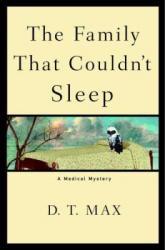
Reviewer's Name: LisaThe Family that Couldn’t Sleep is a bit of a misnomer. Although the underlying thread revolves around a mysterious and terrifying disease called fatal insomnia, multiple chapters are devoted to other diseases, including bovine spongiform encephalopathy (better known as mad cow disease) and kuru (a fatal neurodegenerative disorder thought to be caused by cannibalism). All of these conditions are caused by mutations in prions, which are proteins of the central nervous system.
Most of the information on these diseases is fascinating, though some of the more technical information might require several re-reads if you’re a non-specialist (like me). Also, if you picked up this book wanting to learn exclusively about fatal insomnia, you might find yourself wanting to skip some of the other chapters.
Even so, this book provides a fascinating look at the tragic nature of fatal insomnia, especially the Italian family genetically predisposed to it. You’ll find yourself both sympathizing with them and horrified by the unrelenting nature of the disease.
I would recommend The Family that Couldn’t Sleep to anyone who is interested in prion diseases or epidemiology in general.
Genres:

Review:
Reviewer's Name: LisaYou might know Richard Preston from his nonfiction thriller The Hot Zone or Micro, a techno-thriller Michael Crichton started before his untimely death in 2008. Although the subject matter of The Wild Trees is very different from these works, it continues Preston’s trend of combining scientific detail with narrative finesse. Specifically, this book focuses on the California redwoods, but readers will learn as much about the redwoods themselves as they will about the men and women who study them. Steve Sillett, for instance, started climbing redwoods freehand without any equipment to break his fall. Considering some redwoods are nearly 400 feet tall, this feat is as awe-inspiring as it is terrifying.
This book also provides fascinating detail on redwood canopies, which house salamanders, copepods (a type of crustacean), and even other trees! Thanks to Preston’s meticulous research and eye-popping descriptions, readers will feel like they’re exploring the redwoods alongside him.
The Wild Trees is a must-read for anyone who loves the redwoods or nature in general.
Awards:
Genres:
Review:
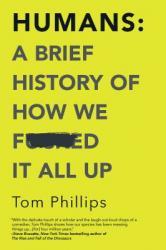
Reviewer's Name: Joe P.A thoroughly entertaining account of how far modern humans have come and how often they messed it up in groan-worthy ways despite best intentions. Journalist and humor writer Tom Phillips relies on sound scholarship to inform, entertain and maybe demoralize (in a funny way) the reader. Examples run the gamut from a Chinese emperor who stored gunpowder in his palace then hosted a lantern festival, the inadvertent forensics pioneer/lawyer defending an accused murderer who proved to the jury that the victim may have accidentally shot himself by accidentally shooting himself, the Austrian army that attacked itself one drunken night, and other equally spectacular blunders of modern times.
Genres:
Review:
Reviewer's Name: LisaRaise your hand if you’ve ever done something awkward. Now, raise your hand if you enjoyed that moment.
I’m willing to bet there’s not a single person in the world who would raise their hand in response to the second question. All of us hate awkward moments because they’re… well… awkward.
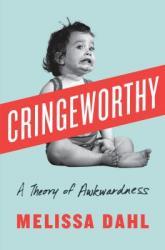
But in her hilarious book Cringeworthy: A Theory of Awkwardness, Melissa Dahl proposes that we learn to laugh at our awkward moments. In doing so, we can feel less alone.
Sounds pretty interesting, right? But Dahl goes one step further. She says that by actively seeking out awkward activities, we can diminish the power they have over us.
Some examples of these deliberately awkward activities include singing “Mary had a Little Lamb” in public, going to a crowded restaurant and asking a group of complete strangers to listen to your maid of honor / best man speech, and reading an embarrassing entry from your diary out loud to a live audience.
If the idea of doing any one of these activities sounds terrifying to you, you’re not alone. Indeed, the book opens with Dahl feeling like she’s in a waking nightmare as she reads an entry from her middle school diary out loud to a live audience.
But as Dahl later explains, these deliberately awkward activities are a form of exposure therapy prescribed by cognitive behavior therapists to help their patients navigate the realm of social anxiety. And it’s in anecdotes like these that the book’s strengths really shine through, as Dahl does an excellent job of balancing her own experiences of awkwardness with the more scientific aspects of social anxiety. The result is a book that’s both refreshingly honest and unusually grounded for a topic as seemingly trivial as awkwardness. Highly recommended for anyone who’s ever experienced the
discomfort of awkwardness (which is everyone… right?)
Genres:
Review:
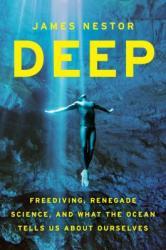
Reviewer's Name: LisaJames Nestor’s book Deep: Freediving, Renegade Science, and What the Ocean Tells Us about Ourselves is both literally and figuratively the most breathtaking book I’ve ever read. It’s literally breathtaking because it’s about freediving, AKA diving sans scuba equipment, an activity as awe-inspiring as it is dangerous. (Side effects may include death, blood squirting out of your nose, mouth, and eyeballs, and paralysis.) Herbert Nitsch, the world’s self-proclaimed “deepest man” dove more than 800 feet on a single breath without using a scuba tank. And he lived to tell the tale.
Deep is also figuratively breathtaking because it reveals some of the most awe-inspiring facts about our ocean that you’ll ever read. Freediving is the only way to see sperm whales up close and personal. These behemoths' brains are shockingly similar to our own and allow them to communicate using a click-based language. Resulting studies have even shown that sperm whales have their own culture and distinct accents.
But freediving with sperm whales is, naturally, not without risks. Sperm whales’ clicks are so loud, their pulsations can literally kill us. One intrepid freediver found his hand temporarily paralyzed when a sperm whale greeted him with a click.
Deep is the rare sort of nonfiction book that reads like a thriller novel. Every page is chock-full of awe-inspiring revelations that will make you look at the sea with a sense of wonder typically reserved for children. Scientific journalism has never been this entertaining.
Awards:
Genres:
Review:
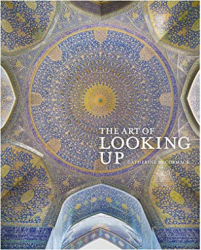
Reviewer's Name: MeganThis book is about famous and not so famous ceiling art around the world and it has beautiful pictures and some awesome explanations about how the art lands into one of four categories: Politics, Religion, Culture, and Power. It is a really great book!!!
Genres:
Review:
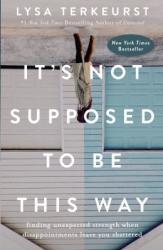
Reviewer's Name: MeganThis book was amazing. From a Christian standpoint, Lysa really gets into disappointments in the faith that I feel people are too shy to talk about. It is a very honest book with personal accounts of disappointments and fears. It isn't preachy, it is matter-of-fact. I have a hard time with general christian books because they can often times sugarcoat or completely ignore the stuff no one wants to talk about; so this book was very promising and refreshing!!
Genres:
Review:
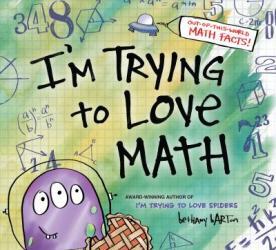
Reviewer's Name: Carol Using abundant humor, Bethany Barton makes this book about math interesting to all. Her facts and explanations show how math is used in our everyday lives and why it’s important. Math is used all around the world and even in space. We used math when we bake cookies, make music, and explore. It’s part of many of the patterns we see in nature. Since math is part of so many of the things you already love, you may just already love math.
Genres:
Review:
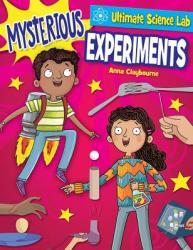
Reviewer's Name: CarolThere’s nothing magical about these experiments – just everyday science. Experiment with raisins, sugar cubes, eggs, and more. You can just use simple materials that you already have around the house to test things out and learn something too.
Genres:
Review:
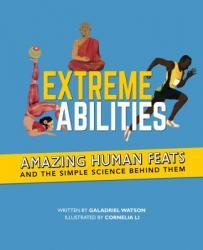
Reviewer's Name: CarolRead this book to learn about the science behind a variety of amazing feats! Do you want to learn about super strength? What about speed demons? These abilities and many more, and showcased and explained in this book. You’ll be astounded and learn something too. You can also test your abilities on some of these feats.
Genres:

Review:
Reviewer's Name: CarolCheck out the amazing experiments in Experiments with Movement by Anna Claybourne. You’ll learn to use everyday materials to make things fly and zoom! You’ll learn the basics of how things move, the basics of vehicle transportation. You’ll also be environmentally friendly as you reuse and recycle materials. Will you make a balloon-powered car, an air-powered rocket, or maybe an air blaster? Check out this book and get started!
Genres:
Review:
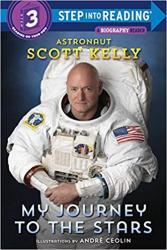
Reviewer's Name: CarolThis Biography Reader tells us the story of Scott Kelly, one of the two brothers that have flown in space for NASA. He tells stories of growing up and how problems and experiences in his youth prepared him for his travels into space. He tells us about his year at the International Space Station including how he lived and the work he did. Be prepared to be inspired to reach for your own dreams!
Genres:
Review:
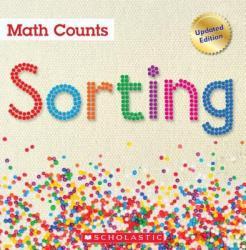
Reviewer's Name: CarolLearn about sorting as you read this book. You’ll learn simple ways to sort of pile of things and how to further sort a group. You’ll get some sorting practice and see some sorted groups. You’ll learn about different sets and what they might include. This book is a fun introduction to sorting a variety of things.
Genres:
Review:
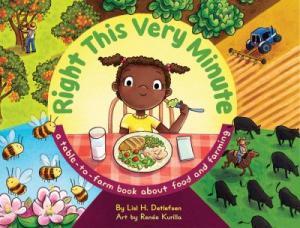
Reviewer's Name: CarolDo you know where your food comes from? Each meal (or snack) you eat comes to you compliments of a farmer. This simple book details the stories of the varied food that children are eating. You’ll learn about the breakfast of pancakes, orange juice, and maple syrup and the trail mix snack. You’ll also learn about the lunch, dinner, and dessert and where they come from. This book doesn’t stop there. It encourages you to think like a farmer and begin to grow your own food.
Genres:
Review:
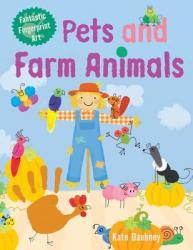
Reviewer's Name: CarolUsing some paint, pens, and your fingers, you can make amazing fingerprint art! This title in the series concentrates on animals – both pets and farm animals. You can experiment with making lizards, fish, and birds or create a variety of bunnies and chinchillas. There are many animals to choose from. Which ones will be your favorites?
Genres:
Review:
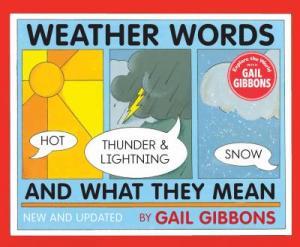
Reviewer's Name: CarolGail Gibbons has another winning book with her updated Weather Words and What They Mean. She uses simple language to explain weather terminology and meteorology. You can learn about temperature, air pressure, moisture, and wind. Our weather is always changing. Learn about what causes the changes and how they might affect us. Also, learn some interesting weather facts. Remember to heed storm warnings and be careful in serious weather.
Genres:
Review:
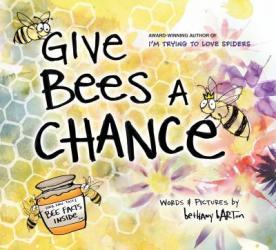
Reviewer's Name: CarolMany of us don’t appreciate the amazing things that bees do for our world – we’re much too afraid of being stung! This book is for bee-phobics. In an interactive way, Give Bees a Chance tells about different kinds of bees, types of honeybees, bee anatomy, and honey. You’ll also learn why bees sting and the impact that bees have on our food chain. Please, please, please Give Bees a Chance!
Genres:
Review:
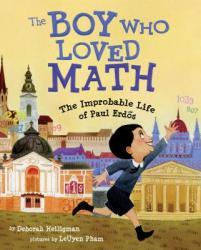
Reviewer's Name: Carol Once there was a boy who loved math. He loved math so much that he spent all of his time thinking about numbers. He spent so much time with math that he couldn’t do many things that ordinary people do. The biography tells the story of Paul Erdos, one of the greatest mathematicians, and how he found his way in the world sharing his ideas and love of math.
Genres:
Review:
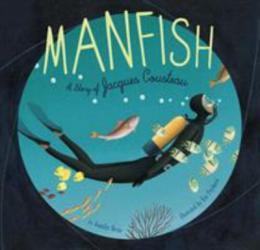
Reviewer's Name: CarolThis biography of Jacques Cousteau uses beautiful pictures to illustrate the text. It introduces us to the tiny baby born in France and names Jacques. It chronicles his love of water and how his passion for the ocean developed. It shows us how he dreamed to becoming a “manfish” with the ability to breathe underwater and explore. He grew to be one of the greatest oceanographers in the world and a champion of the sea. The book is both inspiring and magical.
Awards:
Genres: