Book Reviews by Genre: Adventure
Review:
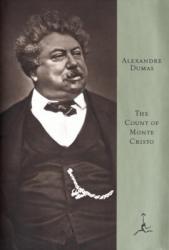
Reviewer's Name: Haley J. "The Count of Monte Cristo" by Alexandre Dumas is a fantastic whirl-wind of unforgettable characters and interweaving story-lines that left me awestruck and yearning for an even deeper glimpse into this world of treachery, romance, adventure, and mystery. This book is as deceivingly witty as it is over-flowing charisma and has nestled its way to a special place in my heart as one of my favorite novels of all time.
The novel starts out with a scenic over-look of an Italian waterway in Marseilles as it carries along a lofty ship named Pharaon with one passenger in particular who is unlike any other named Edmond Dantès. A dashing young and honest man dawning with potential who has just returned with news that will change the course of his life, and the lives of many others, forever. He is falsely accused of traitorous activity and is sentenced to life on a prison located on an island off the coasts of Marseilles forcing him to leave behind his family, his friends, and the love of his life Mercédès. This marvelous tale unfolds within the walls of this prison and among its outer-walls as Dantès attempts to make a dashing escape with a kind mannered preacher. But, this is only the beginning of his tale. As the life of Dantès unfolds, so does the life of the many others who have been lucky enough to fall into his life.
This novel is truly unforgettable as it follows not only the life of Edmond Dantès, but also the lives of his lover, best friend, family, and even his partners from his shipping company. Filled to the brim with treacherous plots, revenge, heartache, mystery, and pirating; it also contains young love, faith that knows no bounds, and families filled with the knowledge that blood truly is thicker than water.
I would recommend this book to anyone looking to fall in love with not only a menagerie of unforgettable characters, but to a reader who is looking to fall head-first into a world that they will find themselves cherishing forever.
Many blessings and happy reading : ),
Reviewer Grade Level 11.
Genres:
Review:
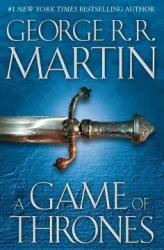
Reviewer's Name: Ethan M“A Game of Thrones” by George R.R. Martin tells the tale of various clashing households and their quest to conquer control over the seven kingdoms. Set in a distant, but vaguely familiar medieval-Europe, the story bears parallels to England’s “War of the Roses,” while also introducing its share of unique fantasy elements. As the reader progresses through the book, they follow the politics of the Iron Throne- a metaphor representing the complete and utter control a King possesses in a feudal government system. Furthermore, the reader tracks 8 character perspectives, which are alternated through passing chapters.
As the King rides north to Winterfell to meet with his trusted vassal, and friend, Eddard "Ned" Stark, he strikes up an agreement to anoint Eddard as the hand of the king. Reluctant, Ned follows the King back to the South, but as the plot continues to unfold, Eddard learns of a secret unbeknownst to the King and some of his most trusted advisers. With the death of the King and the ruin of Eddard’s house, war rages in Westeros- as several characters attempt to strike their claims on the Iron Throne.
I initially picked this book up after finishing J.R.R Tolkien’s, “Lord of the Rings” series and have been pleasantly surprised with it. Many fantasy readers have speculated that the literary masterpiece of Tolkien’s novels could not be out done, but I am now inclined to disagree. I thought the book was well-crafted and engaging as an intermediate to advanced reader. However, I would file the complaint that the book moves a bit slow for my taste. Some may lose interest in its plot, especially considering the sheer volume of the book series. The old-language also adds to this effect, as it may cause some readers to struggle following along.
Overall, I would say that this book is certainly worth a try for someone who enjoys medieval-fantasy novels. Admittedly, it will take a while to read and is certainly no small undertaking, but by sticking with it, I found myself enjoying every page more than the last!
Grade 10
Awards:
Genres:
Review:
Reviewer's Name: Benjamin M. WeilertIf you’ve been following along recently, you’ll know that I’ve been on
a bit of a “movie” kick when it comes to the audiobooks I’ve listened
to. While there are plenty of movies based on books, I haven’t really been
one to read novelizations of movies. That being said, I’ve found the
writing style in my own novels to be a bit of a novelization of the ideas in
my mind, since I usually try and describe scenes in a cinematic way. At any
rate, I was expecting a story that held close to the film, and this book
certainly delivered on that promise.
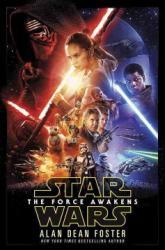
I’ll admit that the more I think about the plot and characters of The Force
Awakens, the more I find that it almost exactly matches the events of A New
Hope. However, there were some weaknesses in the first installment of the
Star Wars franchise that I feel are addressed in this recent installment.
Sure, all the elements are there, but they’ve been mixed around into
different characters, settings, and conflicts that add a bit more depth to
the story than the archetypical one presented in A New Hope. As a reboot, The
Force Awakens does an excellent job of calling back to what made the original
great, but doing so in a way that is still different enough to provide
interesting twists and questions.
One thing I do like about this version of the story, compared to the movie,
is the “deleted scenes” that help explain some of the plot holes from the
film. Maybe these scenes hindered the flow of the movie (or weren’t
important enough to include) but they certainly helped me understand the
story a lot better now that I know about them. Finally, while I know that
many films have “enhanced audio” for blind people, I’d almost recommend
these people listen to this audiobook instead. The music, sound effects, and
even many of the actors’ voices all are used at a pace that’s much slower
in order to really grasp what’s happening with the story.
A fantastic audiobook that faithfully captures everything (and more) that
made the film great, I give Star Wars: The Force Awakens 4.5 stars out of 5.
Genres:
Review:
Reviewer's Name: Benjamin M. WeilertWhat a world we live in! It’s exciting to see a self-published book receive
such attention, eventually becoming a New York Times bestseller! Truly, if a
writer is talented enough with a good enough story, they can make it in this
over-saturated market. And while some of my love for this book comes from my
hopes of eventually being “discovered” as a self-published author, most
of it comes from my love of scientific realism in fiction. Truly, this is
more of a challenge than world-building in a fantasy genre, because in order
for it to be believable, it must obey the laws of physics.
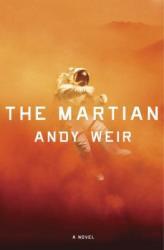
But let’s get down to brass tacks here. There is no doubt that Andy Weir
did his homework on this book. In fact, some sections almost read like the
output section of a very complicated spreadsheet (which I certainly
appreciate, on a personal level). Even with the technical detail to keep the
story grounded in science, the successive cause-and-effect events that
eventually lead to the climax of the story give the reader equal amounts of
elation and heartbreak right along with the protagonist, Mark Watney. Still,
the problem solving accomplished in this novel merely proves how smart we are
as a species today, and how the vast knowledge of the universe has catapulted
us into the very realistic scenario portrayed in the pages. In fact, Weir’s
methodical approach really gives the reader a scale of how big an operation a
trip to (or from) Mars would be.
Even though the science is front and center, the whole reason we read these
almost intimate logs of a Martian astronaut is because the characters are so
well written. With a humor and spunky attitude that help alleviate his dire
situation, Watney almost comes across as a genius “everyman” in that most
of his solutions could be arrived at with a little bit of thought and
ingenuity. And while the majority of the book centers around Watney’s logs,
every minor character has a depth and expertise that helps to propel the
story forward.
A fast and fun read full of excitement and ingenious science solutions, I
give The Martian 5.0 stars out of 5.
For more reviews of books and movies like this, please visit
www.benjamin-m-weilert.com
Genres:
Review:
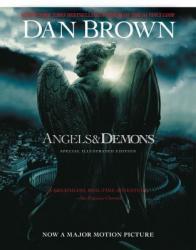
Reviewer's Name: Benjamin M. WeilertWhile Angels and Demons is not nearly as popular as its sequel, the famous (if not infamous) The Da Vinci Code, the elements which led to its successor’s success are certainly all contained within this first book in the Robert Langdon series. Of course, just because you have the materials to build a nice house doesn’t mean that it magically becomes a mansion. Despite containing many of the elements that made The Da Vinci Code so good, Angels and Demons feels a little underdeveloped in quite a few areas.
First, the protagonist, Robert Langdon, is supposed to feel like an “Indiana Jones”-type character, but with a specialty like symbology as his background, I just can’t buy the action-hero transformation of this everyday academic. Add to this the almost repetitive nature of his “discoveries” wherein he makes an assessment, then goes to the location of the assessment only to find that he didn’t think of it in the right way and thus requiring the whole plot to shift gears as he rushes to the new location. He eventually had better predictions, but by then it felt repetitive.
Secondly, the whole “treasure hunt” to find the antimatter (of which I feel CERN is a more recognizable name than it was back in 2000) seemed to take a back burner to the parallel plot of the pope’s death and finding his replacement. It is hard to focus on both plotlines, especially since both of them had pretty predictable endings. Finally, the romance aspect of this novel seemed quite forced, even to the point where the final scene of the book felt like it was ripped out of a James Bond story. Wherein a modicum of charm from the male protagonist makes his female counterpart swoon with undying affection that wasn’t in any part of the prior plot.
A rough start to the Robert Langdon series, I give Angels and Demons 2.5 stars out of 5.
Awards:
Review:
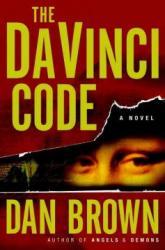
Reviewer's Name: Benjamin M. WeilertWhat a difference three years makes! Even though it contains all the same tropes and motifs that Angels and Demons did, The Da Vinci Code eliminates the fluff and focuses on the strengths of these individual pieces to create an enthralling adventure through Christian history. I will admit that I first read this book because I was curious about the controversy that surrounded it. While Dan Brown is a fantastic storyteller, and many of his connections and links to Christianity made sense, I still maintain that, at its core, The Da Vinci Code is just well-written fiction.
This time around, Robert Langdon is much better suited for the task of finding the “Holy Grail” instead of being a glorified Roman tour guide. His expertise in symbology certainly helped to drive the plot forward, even if it sometimes was in a misleading direction for the sake of a twist. I did appreciate how, even if a clue didn't immediately come into play, it became useful later to help round out the plot. It wasn’t just a series of “find me a rock” exercises but had a parallel set of intersecting strings and subplots that drove the story forward to its exciting conclusion.
And while the female protagonist was much more developed than the one in Angels and Demons, the villains also had more depth to them as well. Instead of a few individuals using the name of a huge organization like the Illuminati to create the conflict, a singular man with a singular goal helped to create the “chase” that propelled Robert Langdon across Christendom to find the Holy Grail. While both The Da Vinci Code and Angels and Demons share almost identical plot structures, the former shows that the execution of such a story is precisely what makes one a great read and the other an exercise in eye-rolling.
An exciting treasure hunt filled with fictional historical connections, I give The Da Vinci Code 4.0 stars out of 5.
Awards:

Review:
Reviewer's Name: Benjamin M. WeilertWhen I first heard about Ready Player One (2011) years ago, I was excited an author would even try to capture the spirit of the hardcore pop culture lover. After I received a hardcover copy of that book for Christmas, I devoured every word and loved every moment of it. This was why, when I saw Ernest Cline had written another book appearing to be in the same vein of Ready Player One, I had to buy it and give it a read. This book was Armada.
Unfortunately, I was not nearly as impressed with Armada as I was with Ready Player One. In Armada, the pop culture references were there, but almost to the point of oversaturation. There were plenty of references I didn’t understand because I haven’t encountered the source material, which was somewhat frustrating. Furthermore, what made the references entertaining and fun in Ready Player One was that they were tied to unravelling the mystery and linking each clue to the next one; in Armada, they were merely the mating call of the nerd.
And while Armada has a few scenes of immersive action that are incredibly well written, the plot is quite lacking. The first “reveal” (if you can call it that) was predictable and the motivations of the antagonists were weak at best, almost as if he had written himself into a corner and didn’t know how to resolve the story in a satisfying way. In fact, the huge numbers of pop culture references actually made the story seem less original, as it pretty much came across as Ender’s Game (1985), and the narrator told you as much.
A story with a potential it never quite lived up to and a shadow of the author’s previous book it could never come out from underneath, I give Armada 3.0 stars out of 5.
For more reviews of books and movies like this, please visit www.benjamin-m-weilert.com.
Genres:
Review:
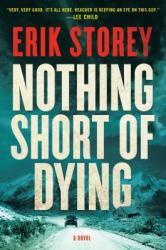
Reviewer's Name: AlanThis book has recommendations from heavy hitters like Lee Child and Jeffrey Deaver that make it sound like the greatest thriller they've ever read. I picked it up based on a good review and the Colorado setting, which I usually enjoy. Disappointing all the way around. Generic tough guy antics and prose that fails to capture the feel of Colorado's high country do not add up to the second coming of Elmore Leonard. And this guy's a native, so we can't blame it on the out of state writer doing it by the numbers. For a much better written crime story with a Colorado setting, read The Painter by Peter Heller.
Genres:
Review:
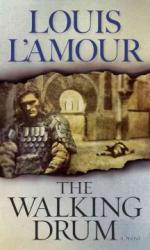
Reviewer's Name: Grace O. The Walking Drum by Louis L’Amour is the story of the twelfth
century adventurer Mathurin Kerbouchard and his journey to find and rescue his father who had been captured at sea. His journey takes him all across Europe and into the Muslim world, a world of culture and science that is much different than the squalid life of Europe. It is a lively story, full of exciting characters, vivid description of life in the Middle Ages, and daring exploits that climax at the infamous Valley of the Assassins. Throughout the book are many historical facts thrown in by Kerbouchard as he narrates his travels which I found interesting, but someone who is simply looking for an adventure book might find them tedious. I would definitely recommend this book to someone who loves history and travel, because it satisfied some of my own wanderlust with its vivid description of the splendors of an age long gone.
Reviewer Grade: 11
Review:
Reviewer's Name: Kai K.This was a great book. I would strongly recommend it to anyone who is curious about what happens after star wars episode VI and VII. It does a great job about filling in the gap between those two episodes. It is about a small diverse group of people: a lady named Norra, her son, a bounty hunter and an imperial defector who take the fight right to the empire and attempt to stop it's reign once and for all. The empire has been severely weakened when the rebels blew up the death star for the second time and the imperials are having a summit meeting to gather together and regroup their forces and attempt to map out the future for the empire. Meanwhile the rebels have renamed their selves the New Republic and are attempting to bring democracy back to the galaxy but still have the problem of the empire's remaining forces. Even though the death star has been destroyed once and for all, the empire still has a few remaining star destroyers and a super star destroyer that are challenges for the rebels. Overall, this was a great book and it is defiantly a must read for any Star Wars fan.
Reviewer Grade: 7
Genres:

Review:
Reviewer's Name: Nicole B.In The Hobbit, the prelude of The Lord of the Rings, the main character is a hobbit named Bilbo Baggins. He lived in a lovely hole carved into a hill and he lived a wonderful, luxurious life, with second breakfasts, and fun parties. That all changed when a mysterious wizard named Gandalf and a troupe of dwarves came into his house one morning. The dwarves told him of the horrible dragon named Smaug who had killed all the other dwarves and stolen their home. Now Bilbo must venture to the Misty Mountain, fighting goblins, evil wolves and spiders on the way to slay the dragon who terrorizes everything in it's path. Will he succeed or die on his perilous quest? Find out by reading this book. It is filled with creativity and cleverness. I would recommend it for anyone who liked Lord of the Rings. It is a great book.
Reviewer Grade: 8
Awards:
Review:
Reviewer's Name: PhilipI’ve been following Sam Sykes on twitter for a while, and given my affinity for both well-crafted fantasy worlds and action-adventure stories, it was only a matter of time before I picked up a copy of The City Stained Red, the first book in Sam’s Bring Down Heaven series.
At almost 650 pages, The City Stained Red is a doorstopper of a book, but a fast, fun, vicious read. The book follows Lenk, an adventurer that some readers may recognize from Sykes’ previous series, The Aeon’s Gate Trilogy (though reading that series first is by no means a prerequisite for Bring Down Heaven). Lenk has finally decided that he’s done with killing, and wants to put aside his sword and pick up what he believes will be a normal life in the trade hub city of Cier’Djall. He and his friends, Denaos the thief, young wizard Dreadaeleon, khoshicht (Sykes’ clever take on elves) archer Kataria, healer/priestess Asper, and dragonman Gariath have killed scores of people and monsters. With the money owed to them for their services, they could happily retire from their violent lives. However, the man who owes them is not so easily found.
Cier’Djall is a massive, sprawling city, and the wealthy who rule over it have made their gold by selling silk produced by enormous spiders. However, the beautiful silk-draped spire that towers over the city leaves long shadows. In darker corners of the city, some of the poor are disappearing, and the ruling fashas may be to blame. Two rival churches seek to position their armies within the city, and tensions are running high as negotiations between them loom. Then, there’s the small matter of the local thieves guild and their ongoing conflict with a new but powerful cult that claims to have demons backing them. This is reality in the city where Lenk hopes to find Miron Evenhands, the priest at whose behest they have been doing what they do best. Cier’Djall is a bonfire piled high, drenched in oil, and awaiting a spark, and Lenk and his friends are unwittingly bringing lit torches through the gates.
The City Stained Red takes a page from A Song of Ice and Fire by presenting chapters from the perspectives of each member of Lenk’s band of adventurers. After arriving in Cier’Djall, they split up to try to located Miron, each using their unique skills and connections to make their way through the city. Denaos has connections from his previous life in the thieves guild, the Jackals. Dreadaeleon seeks the assistance of the Venarium, the wizard’s alliance. Asper, a follower of the same church as Miron, travels to the various temples in the city. Kataria finds herself in Shichttown, a slum where the non-humans try to live out of the way of the fiercely racist upper class. Gariath attempts to gather information from another dragonman who works as a bodyguard for one of the fashsas. Lenk is trying to cope with the fact that his pursuit of retirement may lose him the closest thing he’s ever known to a family. None of them are remotely ready for what they find.
After a footwar between the Jackals and the Khovura cult spills from the back alleys into the streets, every faction with an interest in controlling the silk trade comes out of their corners swinging, and Lenk and company can do little more than hope to survive.
I absolutely loved this book. Sykes blends dark humor and trope deconstruction beautifully. I’m already reading the sequel, The Mortal Tally, because I couldn’t wait to see what happens to these folks next. Reading about these characters is like watching my college Dungeons and Dragons group in action. There’s violence and bloodshed, but also fervent emotion. It’s a wonderful thing.
Review:
Reviewer's Name: Nicole B.Journey To The Center Of The Earth is a wonderful book. In it, the main characters Axel and his uncle find a mysterious message in a book saying that if you descend into the crater of Sneffels before the kalends of July, you will find a passage to the center of the earth. Putting aside all hesitations, they begin their journey and explore the depths of the earth.
Will their journey succeed or will they die in vain? Find out by reading this book. You will not be disappointed! The only bad part is that it's a bit unrealistic. Overall, this is a great book.
Reviewer Grade: 8
Genres:
Review:
Reviewer's Name: Dominique R.Actual Rating 4.5
This book leads right in connecting to The Adventure of Tom Sawyer. Huck was one of Tom's friends and the story is now based around him. He soon was adopted with many things coming along after with a man named Jim. There is a lot of action and things that can really trigger the emotions. Symbolism is a really good thing to look out for in this novel.
Reviewer Grade: 12
Review:
Reviewer's Name: Dominique R.Actual Rating 4.5
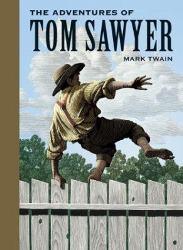
The Adventures of Tom Sawyer, by Mark Twain, is a pretty good novel. The main character of course being Tom goes through a series of interesting things. He witnesses things he probably shouldn't have and spends a lot of time with his small group of friends. He faces a lot of adventures and risky things throughout. This book is good especially if you read The Adventures of Huckleberry Finn after.
Reviewer Grade: 12
Review:
Reviewer's Name: Jacob U. Actual Rating: 2.5
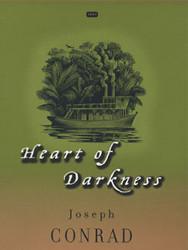
Heart of Darkness is a classic book by Joseph Conrad that is deep, heavy, and somewhat disturbing. I probably would have given this book more stars if it were not for the immense amounts of dialogue and a maddeningly complex storyline. I did find what the book was actually about interesting, however, trying to follow along with what was happening with all the detailing and talking practically made my brain come out my ears. So, in spite of the complexity, I will sum it up as best as I can. Here’s basically what happens: The book begins with the narrator (presumably an unnamed sailor), along with several others, listening to a man named Marlow tell a story on board the Nellie, a sailing vessel. Marlow tells them a story about when he was a young man working a job as an ivory transporter on the Congo. Through an ivory trading expedition, he develops an interest in a man named Kurtz, who seems to have a godlike power over the natives. Through talking to several others, he discovers three main things about the mysterious Kurtz: that he is in poor health, that he has tons of ivory, and, according to one source, that he may be trying to steal the manager’s job. Marlow and some of Kurtz’s acquaintances then take a boat to bring relief to the man, but are attacked by the natives. They later learn that the natives attacked them because they were worried that Kurtz would be taken away from them. I will not give away any more as it may ruin the story, but it is a somewhat tragic one. I would recommend this book to people who like books that are deep and thought provoking, and can comprehend complex plots and conversations.
Reviewer Grade: 7
Genres:
Review:
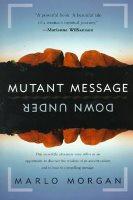
Reviewer's Name: Selena Z.This is a fascinating and controversial tale of one woman’s experience in Australia traveling with an Aboriginal tribe. She leaves the hotel one morning to attend a meeting with the tribe and ends up on a three-month trek through the outback. Whether the account is 100% true or not, the message can be relevant and provocative: that our society is pulling us away from our true nature and our innate connection with the environment. I really enjoyed the different lessons from the Aboriginal tribe and how perceiving our society in a totally different light can be very beneficial. This is one of the books I have read that stays with me long after I have read it and that I continually ponder, so I would definitely recommend this to anyone looking for a thought-provoking read.
Reviewer Grade: 12