
Early Literacy & Parenting Resources
A child’s earliest experiences have lifelong impacts and benefits. There are five easy things you can do together to help your children enter kindergarten ready to learn: Talk, Sing, Read, Write, and Play.
Click through the tabs below to learn how each activity benefits your child and ways to practice at home and when you're out and about.
Quick Links

Talk
Why is talking with children important?
Children are communicating with us before they are even able to talk, and it is important that we respond to and interact with them!
The number of adult words your child hears is important but the back and forth exchanges between you are even better. Even the youngest children can do this: when your baby babbles and coos this is their way of being part of the conversation, so make sure you respond to keep it going!
What can you do?
- For the infant not yet talking, narrate their day! For example, what are they going to wear, what are they going to eat, where are they going and what will they do there?
- Use wordless picture books to engage your child to talk about the story.
- Trade your phone for looking and observing the world around you and talking about what you see with your child!
- Interested in building your child's brain through talk in a no-cost, 8-week program offered by PPLD? Visit LENA Start to learn more.

Sing
Why is singing with children important?
- Singing slows down language so children can hear different parts and sounds of words. This is an important pre-reading skill!
- Children develop listening skills that help them hear the rhymes and rhythms of language.
- Songs have repetition which is key to early language development.
What can you do?
- Sing while changing your baby's diapers or getting them dressed.
- Make music with things you have in the house: pots and pans, spoons, boxes, cups. Clap or crawl around with your child to the beat of the music.
- Sing a familiar song faster...and faster...then slower...and slower.
Looking for songs and rhymes to share with your child? Try these favorites!
- Storyblocks - Songs and rhymes that build readers.
Come sing and rhyme with us at Baby Time, Toddler Time, Storytime, and more!

Read
Why is reading with children important?
- Reading with your child is the best and most important way to help them get ready to read.
- When you read with your child, you introduce them to new words and help build their vocabulary. The more words they hear now, the easier it will be recognize those words later when they are learning to read.
- Ask open-ended questions while reading. (Questions that invite more than one-word answers.) Talk about what is going on in the story and pictures.
What can you do?
- Show your child that reading is important and fun. Be a reading role model and let your child see you reading!
- Read together everyday and talk about the books you read.
- Ask open-ended questions while reading. (Questions that don't have yes or no answers.) Talk about what is going on in the story and pictures.
- Be excited about the story, even if you've read it a million times! Repetition is good for your child's brain.
- Make books available everywhere! Have books located in a spot where your child can reach without assistance.
Looking for more ways to introduce your young child to books and reading?
- PPLD Reading Lists - Find book suggestions for all ages and stages here.
- Programs Ages 0-5 - Come to one of our many early literacy programs at a library near you!
- The Importance of Bedtime Reading - Even independent readers benefit from time spent reading with a parent.

Write
Why is it important for children to practice writing?
- Children usually learn to read and write at the same time. The more practice they have doing both before they can read and write, the more likely they are to have an easy transition.
- Writing helps children learn the purpose of reading - the letters can communicate information.
- When children draw, scribble, and color they are strengthening the small muscles in their fingers. These muscles help them develop fine motor control that they will need to hold a pencil to write letters and words.
What can you do?
- Give your child frequent opportunities to write and draw as soon as they can hold a crayon. You can also purchase large, chunky crayons and egg-shaped crayons that are easier for little hands to hold onto.
- When you write lists or notes, show them to your child and tell them what you are doing.
- Engage the small muscles in your baby's fingers and hands through tummy time.
- Fingerplays build fine motor skills and writing skills.
Try some fingerplays to strengthen your child's pre-writing skills!
- 5 Plump Peas Fingerplay - Fingerplays like this help children develop fine motor skills which are necessary for writing!
Scissors are your friend!
Properly using scissors is a complex skill that takes several years of progression for young children to master, but is an important part of their development. The squeezing and open/close motion of using scissors helps strengthen small hands for handwriting, using utensils, and getting dressed.
- OT's Guide to Scissor Skills - An occupational therapist's guide to using scissors with children of different ages and stages.
Make tummy time a part of your baby's daily routine!
Learn how to use tummy time to strengthen your baby's neck, shoulders, arms, and trunk. Soon they will need all those muscles to be able to sit up and draw, scribble, and write!

Play
Why is it important for children to play?
- Children learn about language through different kinds of play. They also learn to problem-solve, cooperate, and take turns when playing with others!
- Through play, children tell stories, use their imagination, and learn to think symbolically which are important pre-reading skills.
- Play is a way for children to process and practice what they are learning.
What can you do?
- Play with your baby by letting them grasp a baby toy, rattle, or egg shaker. Soon they will discover the movement causes something to happen!
- Playing with your toddler increases your parent-child bond and helps you learn their interests so you can offer them activities they like. This will help increase your opportunities to talk back and forth and learn new words.
- Use play time as a chance to talk and help increase your child's vocabulary by asking questions that require more than a one-word answer and by adding on to what your child says or is interested in.
- Play with blocks! Blocks help build math, science, and motor skills and are enjoyed by a wide range of ages.
The way your child plays will change as they grow and develop new skills.
Learn more about the six stages of play and ways to support your child's development.
- The Six Stages of Play Development - How kids learn to play.
Developmental Milestones
Your child’s early skills are growing faster than they ever will again. How they move, speak, learn, and play offer important clues about their development. Developmental milestones are things most children (75% or more) can do by a certain age.
These milestones are meant as a general guide, not a complete checklist. If you have concerns about your child’s development, trust your instincts – don't wait. Talk to your child’s doctor and ask about developmental screening.

By two months:
- Look at your face
- Make sounds other than crying
- Hold head up when on tummy

By four months:
- Smile on their own to get your attention
- Make sounds back when you talk to them
- Hold a toy when you put it in their hand

By six months:
- Laugh
- Take turns making sounds with you
- Roll from tummy to back

By nine months:
- Look when you call their name
- Lift their arms to be picked up
- Sit without support

By twelve months:
- Wave “bye-bye”
- Look for things they see you hide
- Pull up to stand

By fifteen months:
- Copy other children while playing
- Look at familiar objects when you name them
- Take a few steps on their own

By eighteen months:
- Point to show you something interesting
- Try to say three or more words besides “mama” or “dada”
- Climb on and off a couch or chair without help

By twenty-four months:
- Notice when others are hurt or upset
- Point to things in a book when you ask
- Eat with a spoon

By thirty months:
- Play next to other children and sometimes with them
- Say words like “I”, “me”, or “we”
- Show they know at least one color, like pointing to a red crayon when asked, “Which one is red?”

By thirty-six months:
- Talk well enough for others to understand, most of the time
- Draw a circle when shown how
- Use a fork

By forty-eight months:
- Pretend to be something else during play
- Say sentences with four or more words
- Hold crayon or pencil between fingers and thumb (not a fist)

By sixty months:
- Do simple chores at home, like matching socks or clearing the table
- Use or recognize simple rhymes (hat/cat; ball/tall)
- Write some letters in their name
Brain-Building Tips for Little Ones

October & November 2026
Sharing books with your child helps prepare them for reading independently. Make reading time fun and interactive by talking about what you see on the pages. Ask your child to predict what will happen next! Repeating favorite books strengthens vocabulary and comprehension, and builds a lifelong enjoyment of reading.
BABY
- Read books with elements from baby's own world. When you see a word like "Mama," point to both the picture and the real Mama; and to baby too! This helps them connect words to the people and things around them.
- Let baby hold and explore books on their own, even outside of story time. Building an early interest in books supports literacy down the road.
TODDLER
- Get inspired by silly jack-o'-lantern faces! Look for funny expressions in pictures or books and try to recreate them together. Who can make the silliest face?
- Before you start reading, look at the cover together. Ask your child what they think the book might be about.
PRESCHOOLERS
- Pumpkin starts with the letter P! How many other things can you name that start with P?
- Get into the spirit of the season! Pick a book with a few spooky elements and talk about how the characters might be feeling: Scared? Happy? Silly?
DO!
Point to the leaves below and identify the colors with your child. Run your finger below the name of the color at the same time you say it. Using words like "gold" instead of "yellow" might seem intimidating, but can actually help build our vocabulary early on!

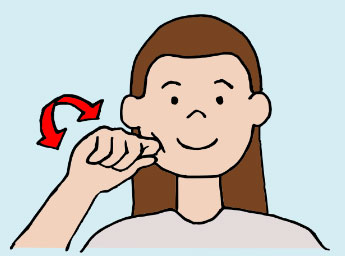
SIGN!
Sign: Apple
Hand shape: "X" shape with right hand.
Body space: At cheek.
Memory aid: As if twisting an apple stem at the "apple" of your cheek.
Parenting Resources
Did you know that all 4-year-olds in the state of Colorado qualify for 15 free hours of preschool per week? Some 3-year-olds may also be eligible!
Interested in registering your child for preschool but unsure of where to start? Click the links below to learn more about Universal Preschool in Colorado and El Paso County.
-
Adoption Choices of Colorado is a private, non-profit adoption agency licensed by the state.
-
Adoption creates supportive, loving families for children, teens and adults. There are three types of adoption: adoption from foster care, international adoption and private domestic adoption. Most adoptions in the United States are through the foster care system. Learn more about adoption in Colorado through this site.
-
American Adoptions is a full-service adoption agency that provides domestic adoption services, unplanned pregnancy counseling and home study resources.
-
Raise the Future connects youth waiting in foster care with stable adults.
-
This site will help you learn what to do if your child is being bullied.
-
Kidpower is dedicated to working together to build cultures of caring, respect, and safety for everyone, everywhere.
-
The vision of Peaceful Households is to ensure a safe, nurturing and predictable environment for children and their families.
-
Guide to Shopping with Your Special Needs Child
Detailed guide to making excursions with your special needs child and dealing with sensory overload. From blogger Rob Gorski, parent of three children on the Autism Spectrum.
-
Home Accessibility Checklist: What You Need to Know
A home accessibility checklist from the United Disabilities Services Foundation.
-
HCP is a care coordination program for children and youth with special health care needs.
-
Kaufman Children's Center- Special Needs Grants
The Kaufman Children's Center has compiled a list of grant information from various organizations.
-
Connecting families of sons and daughters with disabilities or special healthcare needs to emotional and informational supports.
-
PEAK Parent Center is a nonprofit that works every day to ensure that all people with disabilities are fully included in their neighborhood schools, communities, employment, and all walks of life.
-
An organization to provide respite and specialized care for children and adults with disabilities and special needs.
-
TRE is proud to offer a wide variety of supports and services for people of all ages who have intellectual or developmental disabilities.
-
The THRIVE Center exists to provide parents with information and training about disabilities; parent and children's rights under the IDEA (Individuals with Disabilities Education Act) and other relevant laws; and resources.
Early Intervention
-
Child Find for children ages 3 through 5 years old is part of the public school system in Colorado to identify children suspected of having a delay in development as early as possible.
-
Council for Exceptional Children
The Council for Exceptional Children is a professional association of educators dedicated to advancing the success of children with exceptionalities.
-
Provides support services to people with intellectual and developmental disabilities.
-
TRE: The Resource Exchange - Early Childhood Services
TRE Early Intervention is provided to Colorado families at no cost in El Paso, Park, and Teller counties, regardless of income or insurance, by an experienced team of dedicated professionals.
Autism & Asperger Syndrome
-
Autism Society of Colorado is a non-profit organization whose mission is to improve the lives of all Coloradan's touched by Autism.
-
Autism Speaks is dedicated to promoting solutions, across the spectrum and throughout the life span, for the needs of individuals with autism and their families through advocacy and support; increasing understanding and acceptance of people with autism spectrum disorder; and advancing research into causes and better interventions for autism spectrum disorder and related conditions.
Down Syndrome
-
The Arc promotes and protects the human rights of people with intellectual and developmental disabilities.
-
Colorado Springs Down Syndrome Association
Providing support and encouragement to families of children with Down syndrome.
-
National Down Syndrome Congress
The National Down Syndrome Congress is a national not-for-profit organization that provides individuals, families, and health care providers information and support about Down syndrome, as well as advocating with and on behalf of individuals with Down syndrome.
-
National Down Syndrome Society
Leading organization that offers support to people with Down syndrome, their families, friends, teachers, and coworkers, and educates the general public about Down syndrome.
-
Rocky Mountain Down Syndrome Association
Rocky Mountain Down Syndrome Association assures inclusion and enhances independence of people with Down syndrome. This association provides education, resources and support in partnership with individuals, families, professionals, and the community.
ADHD
-
Parents guide to ADHD
-
Children and Adults with Attention-Deficit/Hyperactivity Disorder (CHADD) is the nation's leading nonprofit organization serving people affected by ADHD.
-
A resource for parents whose children, ages 3–20, are struggling with learning and attention issues.
-
A nonprofit whose mission is to build strong, stable, and secure military families so they can thrive.
-
Volunteers at the Armed Services YMCA create custom-made photo transfer quilts and pillows to help with the separation of deployment.
-
Local organization that offers deployment counseling for children.
-
Decoded Kids: Tantrum or Meltdown?
Learn the difference between a tantrum and a meltdown, and tips for how to respond.
-
Disciplining Kids with Trust and Respect
Learn proper and effective ways to discipline.
Age appropriate techniques to discipline your child.
A licensed professional counselor explains why shaming can backfire, and shares tips on how to talk with kids and guide their behavior.
-
Career Guide for Moms Re-Entering the Workforce
Comprehensive guide to returning to the workforce as a full-time mom.
-
Flexible Job Ideas for Stay-at-Home Parents
11 flexible job ideas with the stay at home, business-oriented parent in mind.
-
Colorado State Foster Parent Association
CSFPA is a voice for all foster, kinship and adoptive families in Colorado. They provide education programs, support referrals, and advocacy.
-
List of resources for foster care organizations through El Paso County.
-
Kids Crossing was created by foster parents for foster parents. They are determined to provide a safe and caring home for every foster child.
-
Helping Children Cope After a Traumatic Event
Tips for supporting children with trauma from the Child Mind Institute.
-
Helping Children in Traumatic Experiences
Sesame Street Workshop provides printables, videos, and more for parents and caregivers to use to help children in traumatic experiences.
-
Child Welfare Information Gateway
Family-centered services for incarcerated parents, their children, and families focus on parenting programs, family strengthening activities, nurturing of family relationships, community supports for families during incarceration and following release, and gender-specific interventions.
-
Coping with Incarceration: Supporting young people with incarcerated family members
Rainbows for All Children connects youth with support to navigate grief and heal from loss.
-
Discover printables, videos, and more on topics to help your child cope with incarceration of a loved one .
-
A resource to provide support services to children of incarcerated parents and their families.
-
Grandfamilies.org serves as a national legal resource in support of grandfamilies within and outside the child welfare system.
-
Grandparents Raising Grandchildren
Tips for connecting to resources from Colorado State University
-
Provides parenting support and education to families so they can do the best job they can in raising their children.
-
This site is a tool for strengthening families by providing family support, parent education and knowledge in one accessible location.
-
A free, one-on-one program that supports moms and dads in the comfort of their own home. First Visitor provides emotional support, connect parents and caregivers with free community resources and share information on health, nutrition, safety and important developmental milestones.
-
Healthy Children: American Academy of Pediatrics
Looking for general information related to child health or for more specific guidance on parenting issues? This website is backed by 67,000 pediatricians committed to the attainment of optimal physical, mental, and social health and well-being for all infants, children, adolescents, and young adults.
-
Provides free counseling to all women and couples experiencing an unplanned pregnancy.
-
Nurse-Family Partnership (NFP)
Free, one-on-one nursing support for first time parents and their children.
-
Parents as Teachers builds strong communities, thriving families and children that are healthy, safe and ready to learn.
-
A non-profit organization to help families work through pregnancy loss.
- Postpartum
-
Children's Hospital Colorado supports pregnant women and women struggling with mood and anxiety issues after delivery, as well as their families.
-
Nutrition Guide for Postpartum and Breastfeeding Mothers
Nutrition guide for postpartum and breastfeeding mothers from Love One Today.
-
Postpartum Support International
This resource is dedicated to helping families suffering from postpartum depression, anxiety, and distress.
-
The Center on Colfax's Family Program provides a safe, welcoming way for LGBTQ families to meet and have fun together.
-
Human Rights Campaign- Explore: Parenting
HRC provides current resources that address the many potential paths to parenthood as well as tools for issues facing LGBTQ-headed families or LGBTQ youth.
-
Rainbow Families – LGBTQ Parenting Resources
Rainbow Families supports, educates, and connects LGBTQ families, parents, and prospective parents with educational programs and other resources.
-
The Center on Fathering is is equipped to help dads and families understand and fulfill their essential role in the life of a child.
-
National Fatherhood Initiative
Explores ways to help fathers enhance their parenting, relationship, and co-parenting skills.
-
Parents Without Partners provides single parents and their children with an opportunity for enhancing personal growth, self-confidence and sensitivity towards others by offering an environment for support, friendship and the exchange of parenting techniques.
-
This is a non-profit organization committed to educating, equipping and empowering single parents with resources, practical assistance, emotional encouragement and social networking to better their lives, and those of their children.
-
This site provides resources available in Colorado Springs.
-
Advocates for Youth works alongside thousands of young people here in the U.S. and around the globe as they fight for sexual health, rights and justice.
-
Centers for Disease Control and Prevention
Resources for teens and parents.
-
Power to Decide, the campaign to prevent unplanned pregnancy, works to ensure that all young people—no matter who they are, where they live, or what their economic status might be—have the power to decide if, when, and under what circumstances to get pregnant and have a child. We do this by increasing information, access, and opportunity.
-
Teen Pregnancy from Medline Plus
Trusted health information for teens.