Review:
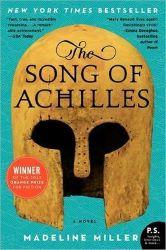
Reviewer's Name: Caroline"The Song of Achilles" by Madeline Miller is a stunning and deeply moving retelling of the Iliad that captivates from beginning to end, earning a solid 5 stars. Miller skillfully weaves a tale of love, friendship, and heroism, focusing on the relationship between Patroclus and Achilles. The narrative beautifully explores the complexities of their bond, providing a fresh perspective on the legendary characters. Miller's prose is both lyrical and evocative, effortlessly transporting readers to the ancient world. The emotional depth and nuance she brings to the characters make this retelling a triumph, resonating with readers on a profound level. "The Song of Achilles" is a masterpiece that seamlessly combines rich storytelling with timeless themes, earning its well-deserved 5-star rating.
Awards:
Review:
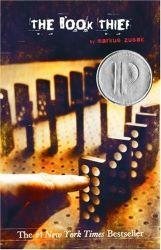
Reviewer's Name: CaraThis book was awesome! I had to read it for school, but I ended up really loving it and the way Markus Zusak wrote it. This book takes place in Nazi Germany and follows a young girl named Liesel who loves words and stories but can’t read. The book is interesting because the narrator isn’t Liesel and it isn’t in third person, instead it’s narrated by Death himself. Through Death, we learn about Liesel’s development and the environment she is living through. We watch as she gets older and continues her love for stories and writing. While this story can be heartfelt, the focus still takes place in Nazi Germany where all kinds of tragedies were taking place and made me tear up more than once. This book was amazing but it’s something you have to read slowly because of all the figurative language and metaphors being described at once. You have to think about what Death is telling you and then compare it to Liesel’s story. I loved this book but I was ready to cry by then end of it because of all the events taking place.
Awards:
Genres:
Review:
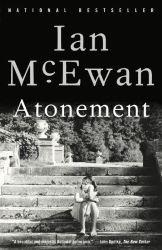
Reviewer's Name: Rose"Atonement" is the story of thirteen year old Briony and her misunderstanding of the world. It begins in the Tallis household in 1935. Obsessed with fantasy and books, she sees sinister motivations in the blossoming romance between her sister and the son of the family's house cleaner. When something terrible happens, Briony makes a mistake that will change the lives of everyone around her.
The characters in this story are all well developed, but Briony is the stand out in this regard. Her motivations straddle the line between clearly defined and mysterious. She has a clearly defined character, dramatic, self centered, and eager to please. Cecilia and Robbie are less defined, but still sympatheic and interesting. I found Robbie slightly unpleasant in the second half of the book, but it was understandable considering the circumstances.
The plot cannot be properly discussed without getting into spoilers. However, it unfolds in a clear manner. All the plot points are set up before they happen, and given proper foreshadowing. At the end, there is a plot twist. Since I highly recommend this book, I will not be spoiling the twist. However, I will say that it makes everything else that happened in the book unclear (in the best possible way).
This book contains a depiction of rape, extreme violence, and rather gruesome hospital scenes. If any of these subjects upset you, I would not recommend this book. If you are able to handle these topics, and you appricate books that focus on pyschology and character exploration, I would definitely recommend this book.
Genres:
Review:
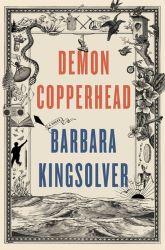
Reviewer's Name: LuciaThe sole way to describe Demon Copperhead by Barbra Kingsolver is a long, dark coming-of-age narrative. Demon Copperhead, born and raised in the southern Appalachian mountains by a single drug-addicted teenage mother, is seemingly designed for failure the moment he was born. Throughout his childhood, Demon confronts an abusive stepfather, an addicted mother, exploitive fosters, and selfish friends. As he faces a life of mistrust, inadequacy, and poverty, Demon relies on his wits to survive. While the book is lengthy, there is never a dull moment or lull in the plot, and the characters within the narrative are dynamic, adding depth to the story. The writing style effectively lures the reader into the constructed world of Lee County.
Genres:
Review:
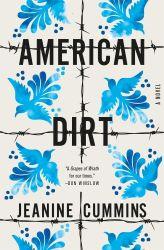
Reviewer's Name: LuciaAgainst all odds, Lydia and her son, Luca, survive a brutal cartel massacre, leaving them with only one option: to embark on a dangerous and arduous journey to seek safety in the United States. American Dirt by Jeanine Cummins is a harrowing story about the survival, resilience, and hope of migrants fleeing north to the United States. Cummins skillfully captures the hardships, fears, and hopes of these characters, providing a window into the harsh realities faced by those making the perilous trek north. American Dirt humanizes the migrant experience by creating empathetic and multifaceted characters, illustrating the diversity within the migrant community and their shared aspirations for a better future.
Awards:
Genres:

Review:
Reviewer's Name: AshleyI loved this book! The detail in these stories was terrific and made the book a lot easier to follow. The story was entertaining and kept you on the edge of your seat at some parts. My only dislike about this story is that in the beginning of the book when Patroclus is naming all of the different Greek gods and demigods and such, so many names did get a bit confusing. It was a bit hard to follow but only lasted for about the first chapter and was an easy read after that. I rated this book 5 stars because the Greek mythology base in the story was very interesting, and you grew to love the characters as you read it. It made me smile, laugh, and cry. Genuinely a great book. In my opinion, this book is meant for young adult readers, I would say 15+ in my opinion. It does contain some violence but nothing too graphic and one brief sexual content scene but does not go into much detail. Would definitely recommend it!
Genres:

Review:
Reviewer's Name: EllaScott O'Dell's novel, Island of the Blue Dolphins, is a fantastic book about a girl named Karana who has to learn to survive on an island all by herself. She goes through many sad and painful experiences, but also exciting and interesting ones. Karana meets many animals, and has to make a new life on her own at the island. I think this was one of the best books I have read this year, because of its unique plot and thrilling events. I definitely recommend this book to anyone who loves animals, survival, and adventure.
Reviewer Grade: 8
Awards:
Genres:
Review:
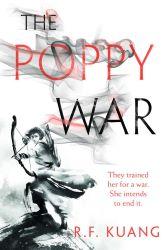
Reviewer's Name: LuciaWhen I picked up The Poppy War by R. F. Kuang, I sought a good, possibly wonderful, fantasy book, as one would expect from a New York Times best-selling author. What I was not expecting was to be enlightened and disturbed to the same degree within its 544 pages. Now let me back up; The Poppy War is a historical and grimdark fantasy that draws its plot from mid-20th-century China, with the main conflict based on the Second Sino-Japanese War. The book provides insight into the brutality of war and its aftermath. While the book is based on the Second Sino-Japanese War, the author does a wonderful job constructing an immersive plot and charming characters taking creative liberties to make the book a story of its own. I would highly recommend this book.
Awards:
Genres:
Review:
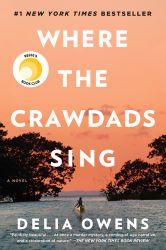
Reviewer's Name: FinnWhere the Crawdads Sing, written by Delia Owens, detail the fictional account of Kya and her survival in the marsh of North Carolina. After her mother is beat one too many times by her father, Kya's mother leaves, leaving Kya to fend for herself - against her abusive dad and the wilderness. Kya learns the value of self-reliance, she falls in love with the marsh and its functions and importance to the ecosystem. She also, however, feels the urge of having human company, and her adventures of falling in love (and back out) are incredibly detailed and heart wrenching. My favorite part about this book was the imagery; the way simple things, like leaves falling off of a tree, were described it felt as if I was standing right next to Kya, watching the leaves fall with her.
Awards:
Genres:
Review:
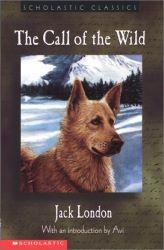
Reviewer's Name: Finn"The Call of the Wild," written by Jack London, is a novel set in Yukon, Canada during the Klondike Gold Rush. Buck, a rather large, domesticated dog, is stolen from his comfortable life and sold into the brutal world of sled dog teams in the harsh wilderness. Buck quickly learns to adapt to his new environment, tapping into his primal instincts as he navigates the challenges of survival. He forms a bond with John Thornton, a kind-hearted prospector, but Buck never feels free, and he contemplates breaking his friendship with John Thornton to escape into the wild. I enjoyed the book because I am an animal lover and I liked reading about the events that Buck endured. Subsequently, I would recommend this book to animal lovers because, after all, it is about a dog and his strive for freedom.
Genres:
Review:
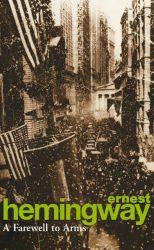
Reviewer's Name: FinnA Farewell to Arms, written by Ernest Hemingway, details the account of Frederic Henry, a medic for the Italian army during the Italian campaign of World War One. He is sent to the front lines of the war, and while he is eating dinner, a bomb explodes over him and he is injured. During his recovery process, he falls in love with Cathrine Barkley, an English nurse. Henry soon desires to leave the army and will do so in any means possible so that he can escape and be with his Ms. Barkley. I enjoyed the book because it was quite satirical, except the humor was quite advanced, so I would recommend this book to teenagers and adults. Overall, however, it was grammatically unique and I believe that I have become not only a better reader from reading this book, but a better writer as well.
Genres:
Review:
Reviewer's Name: RoseWARNING: This reveiw and this book contains discussion of sexual assult.
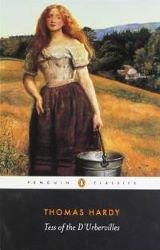
Tess of the D'urbervilles is an excellent book. It tells the story of Tess Durbyville, who's father has become obessed with the idea of their noble heritage. After an incident with the carriage, the family is left in financial peril. Tess agrees to work for her supposed relations. However, this leads her into the arms of Alexander D'urberville (who is not actually related to her).
Tess herself is a great protagonist. She's well defined as a dreamer who is devoted to her family. Both of these traits help her, but cost her dearly. Alexander is a more complex antagonist than you'd first assume, while still being hatable. Angel Clare is a good character as well, he has well defined traits, but I was not able to end up liking him. He admits to not being a Christian, and not believing in all of the doctrines of the Bible (just to clarify, almost all of today's Christians would take issue with the way Angel treats Tess). Furthermore, he openly admits to his parents that he does not have the same beliefs he does. Yet, he still abandons Tess because of these beliefs (that he doesn't have).
That brings me to the major problem. Tess is constantly thinking about how Alexander is her true husband, and how she is ruined. While these are realistic things for someone in her predicament to think, I felt that the book does not take a strong enough stance against these beliefs. If it wasn't for this, I would have given the book 5 stars (if I had the option, I would have given it 4.5). Tess of the D'urbervilles has excellent prose, shocking twists, tragic moments, and great character progression. If you are not uncomfortable reading about sexual assault and you enjoy classic literature, I would recommend this book.
Genres:
Review:
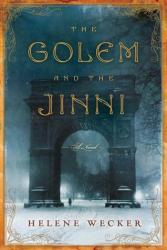
Reviewer's Name: RyderThe book, "The Golem and the Jinni" was a fantastic book for several reasons. However, before I get to those reasons, I'd like to explain more about how I chose this book. I was in need of a book for entertainment. Typically, I like to investigate what books are similar to others that I have enjoyed before I visit the library, but this visit was more impromptu. A book was grabbed off the shelf, and I began to read it.
As for the book itself, I enjoyed the historical accuracy the most. Although I was not alive during the described time period, I enjoy the subtle nuance in architectural designs and consistent description between different characters (albeit with a different view for each character; Saleh obviously doesn't describe location unless it reflects faces, until... a spoiler). I enjoyed the inconclusive details the least; without spoiling too much, a lot of the information explained about a Golem's behavior simply never matters, or never comes up. When I first catalogued the details provided to me, I assumed that at least some of it would be relevant to the plot. The vast majority never was. The book was still surprising; the information dump near the climax was amazing for how much it concluded, even if I still complain about the information that was never resolved. The characters are relatable because they aren't relatable. Social situation are difficult for both the Golem and the Jinni, albeit for different reasons. This isn't one of the best books I've read this year, but I'll give it a 4/5 for amazing descriptions of the setting and lovable characters.
Reviewer Grade: 10
Awards:
Genres:
Review:
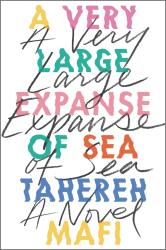
Reviewer's Name: SamahThis book suffered from a lot of major flaws, ranging from one-dimensional characters to confusing (and silly at times) plotlines. Mafi not only leans into harmful stereotypes, but she further exaggerates them and emphasizes them as the norm. The relationships between chatacters are largely shallow, their development rushed, and their personalities bland. I remember next to nothing about these unremarkable characters. This book is an infuriatingly simple tale of stereotypical people following a messy and illogical story, and I advise readers to avoid it whenever possible. The greatest strength of this book is its relatively short reading time.
Genres:
Review:
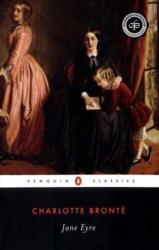
Reviewer's Name: AddisonCharlotte Bronte's Jane Eyre is one of my favorite pieces of classical literature that explores the human experience through the story of an orphaned young woman, Jane Eyre, who remains steadfast in her beliefs despite the challenges she faces. Bronte's writing style is emotional and descriptive, immersing the reader in a detailed and symbolic representation of 19th century England. The novel's structure is well-crafted, with each chapter building upon the last to create a story that is hard to put down once you're reading. The character development is impressive, with Jane and supporting characters adding depth and complexity to the narrative. The novel explores universal themes of love, morality, and social class, making it a timeless classic that truly can resonate with any reader. Jane becomes a relatable character throughout the novel as she overcomes a variety of issues, and I found most of the drama she was involved in to be both intriguing and entertaining. Overall, Jane Eyre is a must-read for anyone who appreciates a good story or classic literature, especially one that explores coming-of-age and romantic ideas. Personally, this is one of my favorite novels across any genre as I have read it multiple times.
Reviewer Grade: 11.
Genres:
Review:
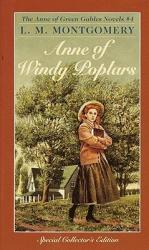
Reviewer's Name: KatherineWhen Anne finishes her schooling at Redmond, she decides to start a new life away from Green Gables. She finds herself in her tower room at Windy Poplars, befriending two old widows, Aunt Kate and Aunt Chatty. She arrives at Windy Poplars looking for a job. She gets one as the principal of Summerside High School. Anne is then made aware that she was not the person they wanted as the principal, but they couldn’t find anyone better. Over time, Anne also becomes friends with the housekeeper, Rebecca Dew. Anne loves her students, but she greatly misses her lover, Gilbert Blythe, who is currently in medical school. Anne of Windy Poplars is a book in the Anne Of Green Gables series. It was less interesting and active than the other books, but it had a decent plot. I am a person who likes action and drama, but this novel did not satisfy me. Contrasting to the other books in the series, it was very drawn out and not very suspenseful. It left me with the urge to not continue reading. I want a book that makes me want to read more and never stop, but this did not meet those expectations. The only reason I kept reading was to keep the series going. I finally finished the book, and I’m glad I did. The storylines following Anne of Windy Poplars were much more interesting, but the books later on had flashbacks and connections to it.
Genres:
Review:
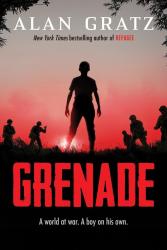
Reviewer's Name: LockeAlan Gratz, bestselling author of Projekt 1065 and Refugee, returns with another thrilling novel about the human side of war. The novel follows two protagonists, the young Japanese conscript Hideki and the teenage American Marine Ray. As World War II rages on, the pair are brought closer and closer together without either being aware, until suddenly their paths cross in one ultimate twist of fate.
Grenade is a gateway for middle school readers to understand the complexity and horrors of war without being pushed towards a more adult story like Saving Private Ryan. The story shows that despite the Japanese and Americans fighting each other at war, the soldiers battling are just people underneath the uniforms (or lack thereof). Gratz weaves mature themes with easily comprehensible language in a way that I find increasingly rare for young adult authors, and it serves his purpose well. As an older reader, I find myself coming back to Grenade for its gripping storytelling and the nuanced characters it conveys. I believe Grenade is a must-read for those interested in history and a perspective not often seen in the United States.
The story of two conflicting ideologies and the events bringing them together, Grenade is a masterfully crafted story of the horrors of war and the importance of understanding others' perspectives.
Genres:
Review:
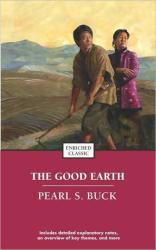
Reviewer's Name: AbigailThe Good Earth follows a man named Wang Lung accompanied by his wife, O-Lan. This story is told surrounding China in the early 20th century told in a classic rags to riches tale. Important themes are told through this story to express what China in the 20th was going through and challenges the people had to face. Some of these themes include the oppression of women and man’s relationship with the earth.
I have to admit, the first time I read this book I didn’t really like it. After talking to someone about the book, I decided to read it again and recognized its importance. Not only is the book informative, but it’s also an all around good book. There are many different plot points and character development pieces that go into this story. While reading it, it made me think… is this what people had to endure in China in the 20th century? Knowing this, it pulled at my heart strings a little bit. I absolutely love this book and would recommend.
Reviewer Grade: 8
Genres:
Review:
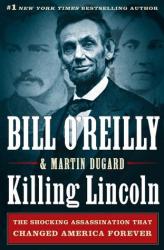
Reviewer's Name: FinnKilling Lincoln, written by Bill O'Reilly, is a historical fiction novel detailing the account of the Civil War and the events that led up to the assassination of Abraham Lincoln. The narrator takes the reader along a tale of battle, and a timeline of Booth growing more and more anti-Lincoln until he finally decides to buy a gun and shoot Lincoln. I enjoyed the book because there is so much information, it's almost as if the narrator were there, writing everything down in the present. I would recommend this book to anyone who likes history, as well as anyone who is possibly enrolled in a history class.
Genres:
Review:
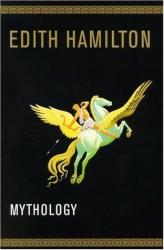
Reviewer's Name: FinnMythology, written about Edith Hamilton, creates a timeline and family tree of the Greek gods and demigods. The book is based in small sections, so it is essentially a collection of assorted stories. For example, there is a section called "The Great Heroes before the Trojan War", and in that section there are specific synopsizes on Perseus, Theseus, Hercules, and Atlanta. I enjoyed the book because you can read it 5 minutes at a time because it does not take long to read a section. I recommend the book to mythology and history lovers alike.
Genres:
Review:
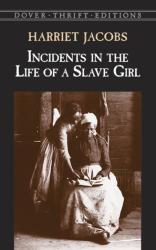
Reviewer's Name: FinnIncidents in the Life of a Slave Girl, written by Harriet Jacobs, is a memoir of the oppression of slavery that Harriet faced as a slave. The book starts off talking about the pleasantries of childhood, but when her owner dies, ownership of her is shipped over to Dr. Flint, who ends up being a predator and wants to procreate with Harriet. Harriet refuses, but Dr. Flint becomes so demanding that Harriet turns fugitive. Ironically, Harriet hides for seven years at her grandmother's house, just across the street from Dr. Flint's plantation. Eventually, an opportunity arises for her to escape North, and after doubts, she does and is successful. In the North, she works hard to bring her family out of slavery, and one of the ladies that she works for purchases her and sets her free. The tale is brathtaking story of relentless perseverance, grit, and tenacity.
Genres:
Review:
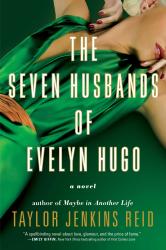
Reviewer's Name: TishaI had heard a lot of wonderful reviews about this book and the book definitely met every one. The book focuses on the scandalous life of the mysterious and legendary actress Evelyn Hugo as she retells the story to unknown journalist Monique Grant. During her retelling, the story unfolds that connects everything, leaving the readers still wanting more. I was happily surprised reading and would love to get the chance to be able to experience the story for the first time again. I enjoyed the old timeliness of Hollywood and the resemblance to Judy Garland and Marilyn Monroe. If you want to be engrossed by a book with twists and turns till the end, then this book is for you!
Reviewer Grade 12
Genres:
Review:
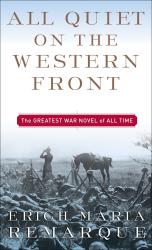
Reviewer's Name: LuciaAll Quiet on the Western Front by Erich Maria Remarque can solely be described as an ingenious masterpiece. The book, a historical fiction novel, was written in 1928 about German soldiers' experiences during World War I; Remarque used his experiences as a german soldier to accurately portray the terror of war. The main characters, Paul Bäumer, Albert Kropp, Franz Müller, and Ludwig Behm, are remarkably realistic and, throughout the book, go through changes caused by the nature of war, essentially turned into humans run by animal instincts. Throughout the book, Remarque ripes away any possible notion of romantic ideas relating to war and perfectly encapsulates the true terror of war. Overall, I wholeheartedly believe that everyone should read this masterpiece.
Genres:
Review:
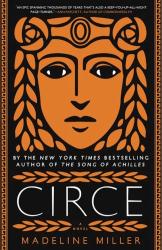
Reviewer's Name: HannaCritically acclaimed author Madline Miller takes on Greek mythology in a way never done before. In her novel Circe, a lonely child, born from the sun god Helios and a nymph mother, tries to find her way within a world where she does not quite fit. Her father is too powerful to relate to, and her mother wishes Circe had not been born. Not to mention, Circe’s siblings dislike her greatly, and make her life insufferable. It is only when her father, Helios, sends her away to a secluded island where she cannot leave, that she finds the missing piece she has been looking for all her life. Filled with secret romances, magic, sea monsters, mysterious sailors, and man-pigs, Circe is a novel that will wreck your heart and leave you angry for justice. Her isolation is familiar to us all, and reminds us of the importance of loving ourselves. This is a must read!
Reviewer - Grade 12
Genres:
Review:
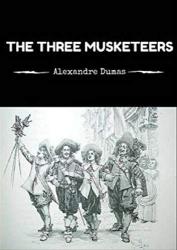
Reviewer's Name: SamahDespite its lack of general theme, Dumas' The Three Musketeers is a beloved classic. The story follows a young man D'Artagnan as he serves under M. de Treville, the head of the French king's musketeers (Athos, Porthos, and Aramis). As he spends more time with the musketeers, D'Artagnan is caught up in the convoluted politics of the king and jealous cardinal. Somehow, however, in the epic tale of adventure, companionship, romance, and betrayal, Dumas' message is lost to the fast-paced plot. His use of dialogue is masterful in creating realistic suspense between characters; not in all 600+ pages is there a dull moment. Overall, however, The Three Musketeers is best read for an interesting story and nothing else. The main cast is well-developed and serve as contrasts to each other. Although the plot itself is well-constructed, the events lack any greater relationship to each other beyond causation. When I picked this book up, I expected the adventure to follow some sort of formula to parallel D'Artagnan's personality; his personality, however, has little impact on the general plot. Dumas' talent in diction and ability to tell a story is evident, and The Three Musketeers was an enjoyable read, as long as you know what to expect.
Grade: 11
Genres:
Review:
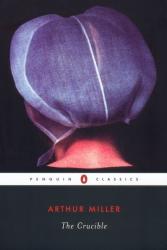
Reviewer's Name: OleksandraHysteria, spreading throughout Salem, Massachusetts in the 17th century. Teenage girls, being accused of witchcraft for dancing in the woods. A puppet with a needle that can cost someone’s life. Agreeing on execution in order to protect the good name for your family. Mass trials on people being suspected of doing magic. Sounds crazy? Welcome to the world of The Crucible.
The play by Arthur Miller takes us to Salem in a period of witch trials. Everything starts pretty prosaic: a girl named Abigail wants to get love from a local farmer, John Proctor. As it often happens, she finds a love potion the easiest way to reach the desirable goal, however, she, her friends and the family slave Tituba get caught on doing this ritual late at night.
Nobody wants to be punished. Nobody will believe a slave over his own daughter or niece. Considering these two statements, Abigail decides to avoid a punishment by accusing Tituba and the entire list of other women in a town of being witches.
And here is when things start to go heels overhead. Like a huge snowball that captures everything that is on its way, panic enhances more and more people around. Men and women are being executed for no true reason. Even an expert in demonology is invited to take part in the case. And in all this chaos Abigail makes another attempt to get a chance for a future together with John Proctor.
The action develops dynamically in the play, and the characters add more tension to the plot with their bright personalities. You can’t stay indifferent. You either love or, more likely, hate them. A lot of situation are ironic and absurd, however, the play tastes bitter, when you realize how many people had to struggle because of someone’s stupid wish and lack of responsibility.
The book refers a lot to the time of McCarthyism, which had impacted the author’s life in particular. It makes a strong impact on the audience, especially, in the end, and leaves the readers with a lot of questions: Do people change? Is reputation worth sacrificing your life? Whom to believe and what to deny?
Reviewer Grade: 11
Genres:

Review:
Reviewer's Name: NabhanyaThe Book Thief starts in January 1939, in Nazi Germany. The main character, Liesel, was traveling on a train with her mother and brother when her brother suddenly dies. Liesel was only nine at the time, and the wound that was inflicted then, she would bear forever. At her brother's burial site, she stole a book for the first time, earning her the name "The Book Thief". Her story is told from the perspective of Death, who is depicted as an immortal being with feelings and a heart.
Liesel then traveled to Himmel Street, where she lived with her foster parents for the remainder of the book. Liesel made new friends, finds a family, and overcomes the grief caused by her brother's passing there. But most importantly, she discovered the power and impact of words there. The power of words is the central theme or message of The Book Thief.
Throughout the book, Liesel steals more books and becomes braver and more mature. Initially, she was a child who didn't know about all the beauty and ugliness in the world. But as the plot developed, she experienced more of the brutality of WW2 and found her role in her community. After she learned to read, she started to spread the love that was caused by words to her neighbors, by reading out loud during air raids. She also learned to love and understand people better.
The author, Markus Zusak, used the symbolism of colors to illustrate a picture of the world that Liesel lived in. For example, when Death described a scene, the sky was always a different color or texture. When describing a bloody battlefield, the sky was described as plasticky, to show the stillness and emptiness that was caused by the death of soldiers.
I highly recommend this book to readers looking for a thought-provoking and intense book. Liesel's and the other characters' lives were presented in a very relatable way, which will make readers question their own attitudes on life and the world.
Genres:
Review:
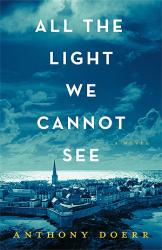
Reviewer's Name: JaalaAll the Light We Cannot See by Anthony Doerr is a historical fiction novel that is set in World War II. This book focuses on two characters Marie-Laure Leblanc and Werner Pfennig. Marie-Laure is a blind girl in France that relies on her father to help her live her life. Werner is a genius German who gets drafted by the Nazi’s to build and find the enemy with radios. These two conflicting worlds will soon crash into each other in the most heart wrenching way possible. I recommend this book to anyone who enjoys history or suspense.
Jaala 12
Genres:
Review:
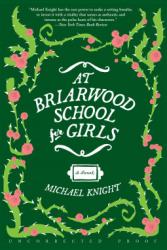
Reviewer's Name: EveLenore Littlefield is a student at the Briarwood School for Girls. She plays basketball. She loves history. She goes out with friends. She's pregnant. Throughout the novel she will seek aid from an isolated history teacher, an intense coach turned play director, and a ghost that's been waiting for her call. But in the end, it'll be up to her to take the next step forward.
Despite never reading extensively from the genre, I believe this book is the epitome of southern gothic. It has a lazy purpose to it, a meandering story structure that maintains its tension. The characters are all disillusioned, which is contrasted starkly by the idealistic and energetic schoolchildren around them. This book is really good if you enjoy this sort of thing, otherwise there's a chance the plot could strike you as slow or boring. I personally really liked it, especially the use of prose to bring meaning and intent to the setting. Another great thing about the novel is the story-within-the-story, meaning the play that Lenore Littlefield participates in, that beautifully mirrors and enhances the significance of Lenore's situation and the themes of the novel. The only reason I gave this book four stars was that the ending felt out of nowhere to me, but looking back that was probably the authors intent.
All in all, this book was a very good supernatural southern gothic. I'd recommend it to anyone who likes great characters, interesting story structure, amazing prose, and a heartfelt story!
Reviewer Grade: 12
Genres:
Review:
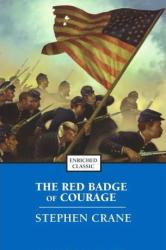
Reviewer's Name: LoganThis book was a fascinating piece of literature. The author described war in more of a psychological format, as in the effect of war upon the mind, then a physical format. It reminded me of Robert A. Heinlein's Starship Troopers in its attention to the mind of a soldier. Many Civil War veterans would get a shock meeting Mr. Crane because they thought he had been in the Civil War when he hadn't. It was interesting how Crane referred to the main character, Henry Fleming, as "the youth". He uses similar naming for the other characters, like "the tall soldier," and "the friend." I enjoyed the book, and I'm impressed at how Crane, according to actual soldiers, so acutely described war on a minute-to-minute basis, when at the time of writing, he hadn't ever been in battle. This book almost felt like an experiment of Crane's, like he was just exploring new ideas. The result was international fame and a famous landmark of American fiction.
Reviewer Grade: 9
Genres: