Award Books by Genre: Other Award(s)
Review:
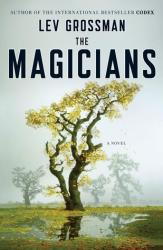
Reviewer's Name: AntwaanThe Magicians is the first book of the "Magicians Trilogy" and is also the source material for a SYFY television show.
The story follows Quentin Coldwater, a young man fascinated by the stories of Fillory and Further, as he progresses through a secret school for the magically inclined known as Brakebills. As he goes through his years at the mystical school, leaving his old life behind, he learns to do magic and blooms new connections with fellow attendees at the school: Eliot, Penny, Alice, Janet, and Josh. After all of them graduate, things turn more magical and dangerous than he could have imagined as a new world is opened before his eyes.
The premise of the book is different than I would have expected for a fantasy book about a magic school (this is not the same as Harry Potter!), and it adds much more than simply school life. While a good chunk of the book is within the walls of Brakebills (and somewhat slow for my tastes), it does a good job of building the world of magic. Quentin himself seems decently relatable to me, though his character did annoy me at times. Watching him interact with the other characters is nice to see as their different dynamics interact with each other. The overarching conflict, from what I observed, is kind of lacking. The threat for the characters appears in one chapter and then disappears without much significance for the remainder of the story and the way it was handled seemed anti-climatic to me. However, I look forward to seeing how everything follows in the next book, especially after the last chapter!
Reviewer's Grade: 11
Review:
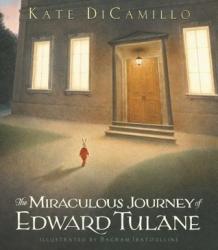
Reviewer's Name: KelseyThe Miraculous Journey of Edward Tulane is a book from the very unique perspective of a toy rabbit. Edward is a narcissistic, cold-hearted rabbit, incapable of love, until something unspeakable (by Edward's standards) happens to him and his life takes a drastic turn. Over the course of his "life", he meets many different people, all in need of him, whether he likes it or not.
The first time I heard about this book was when one of my elementary school teachers read it aloud to the class. And when I reread it just recently, it almost made me cry for the second time. I love this book and it remains one of my favorites because of multiple reasons, including its interesting perspective and excellent development of characters. Each and every one of them seem like actual, real, living people.
Awards:
Review:
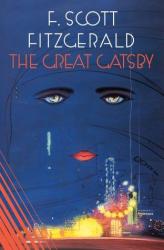
Reviewer's Name: MakaiaThis Book Is truly a classic, this I book that we've all read either as a assignment or for fun. This book was set in the Jazz era of New York, this novel tells the story of a self-made millionaire Jay Gatsby and journey to finding the love of his life Daisy Buchanan who also is a very wealthy women. In this novel we start out with a man named Nick who is also Daisy's cousin, he is basically the narrator of it all. He walks us through how he met Jay, and their journey finding daisy. Throughout this story we go through happiness, loss, and love, and it all unfolds out to be a really great novel. So if you like a tragic love story, I think this book is for you.
Awards:
Genres:
Review:
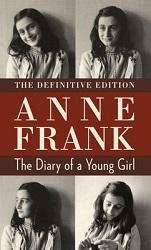
Reviewer's Name: Michelle YThe Diary of a Young Girl is a series of diary entries written by Anne Frank, a young girl who recounts her experiences during the Holocaust. Anne writes her experiences using memorable quotes, and even through her tough experiences, still manages to write with a sense of hopeful optimism, and Anne's belief in the world and humanity are both inspiring and tear-jerking. Anne writes in the voice of a young girl but also writes in an astonishingly real and mature way. Reading her diary entries will educate all readers on what it was truly like to live through the Holocaust, and will help those who want to be informed to be more educated on the event. The Diary of a Young Girl carries out the message of hope and teaches readers the horrors of history. All age groups should most definitely read this novel, as it holds majorly valuable lessons and will hopefully teach all audiences not to repeat our past mistakes.
Awards:
Genres:
Review:
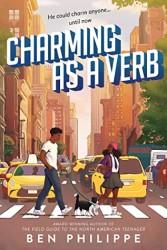
Reviewer's Name: Eve"Charming As A Verb" follows Columbia-ambitious professional dog walker Henri, who works hard at the prestigious FATE academy to secure his future. When intense classmate and neighbor Corinne Troy threatens to expose the fraudulencies of his dog walking business, Henri is forced to help her increase her social standing to boost an application to a dream school of her own. Before long, the two of them become close, but will their college ambition tear them apart?
This book states what it is right on the cover: charming. The atmosphere of the book is calm and cool, easily laying out a protagonist with sparkling personality and quick wit. The setting is a hectic but homey New York, the perfect set for a cautionary tale on doomed ambitions. The characters and dialouge feel real and grounded, with their own flaws and quirks that keep them loveable and relatable. The plot is relatively slow-paced, but still draws in the audience with the underlying tension of college admissions. The book was fairly standard for its genre, but it does stand out with the conflict at the end. In short, near the end of the book the protagonist does something the audience finds unthinkable, but is still understandable after all that we've grown to know him. And the consequences afterward are realistic and dire, really nailing the lesson of the story home. I only had a couple criticisms. The first was that the love interest of the story was so over the top that she sometimes came off as a caricature rather than person, although this was improved over time. I also felt that the ending didn't fully follow through the consequences of the conflict, making it a bit flat.
All in all, this was still a really good book, which I'd definitely recommend to anyone who likes well written romance, fun characters, and cute descriptions of dogs.
Awards:
Genres:
Review:
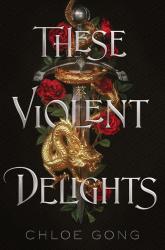
Reviewer's Name: MaggieThis book does a wonderful job of educating readers about history of the 1920's in Shanghai while still being an action-packed and entertaining story. The plot of two gang heirs clashing as they each work to solve the mystery of an unleashed monster in the city is unique and captivating. I love the devotion of each character to protect their loved ones and battle the conflict of values in Shanghai. This book also keeps readers on their toes. The moment I felt like the story was predictable, it proved me wrong! The longer read is worth it for being immersed in these characters' experience. I look forward to reading the sequel.
Genres:
Review:
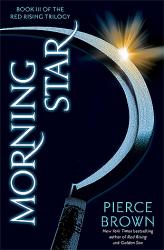
Reviewer's Name: NneomaAfter a year being tortured by Adrius Augustus, better known as The Jackal, Darrow has escaped capture and resumed his campaign against the tyrannical rule of the Sovereign of the Society. But Darrow isn't the man he was a year ago: he's been broken down, dehumanized, and kept in a dark cell for over a year, and now has more doubts than ever. The people he thought were his best friends betrayed him, and the last time he saw the woman he loves, she was walking away from him after learning the truth about his Carving. While Darrow knows that he is likely the last chance at destroying the Society and bringing peace, his own self-doubts and struggles could be the thing that gets him killed.
Compared to the first two books of the trilogy, this book's plot is slower and admittedly, harder to get through. I did appreciate how there is more of a focus on Darrrow's growth from a teenager to a man, and his overall growth in shifting from fighting for himself to fighting for others and a better world for everyone, not just the Reds. However, the book is lengthy and I felt there was an unnecessary amount of "fluff" and plot points that weren't relevant to the overarching plot of the novel. The ending was nice (if not bittersweet), and I'm content with where each of the characters ended.
Genres:
Review:
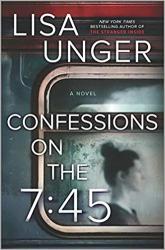
Reviewer's Name: AnanthConfessions on the 7:45 was an excellent read. Selena barely makes the 745 train home, when she sits next to a strange woman whom she she makes an instant connection. This is when Selena confessed that her husband is having an affair with the nanny. And the strange woman listens and relates to Selena’s confession. Shortly after this train ride home the nanny goes missing. And a police investigation is launched. Was Selena’s husband involved? Or did does change woman have anything to do with? This book is a gripping novel that focuses on marriage and revenge. I picked this book because the book jacket seemed interesting. Confessions on the 745 is full of plot twists and will keep the reader on the edge of their seat. I really enjoyed the plot twists and the in depth descriptions of the character’s personality’s. I would highly recommend this book.
Grade 12
Genres:
Review:
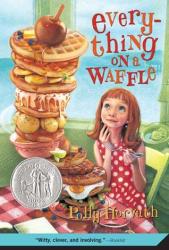
Reviewer's Name: KatieI rate this book five stars. The book tells the story of Primrose Squarp, a presumed orphan. Throughout the story she continues the search for her missing parents, despite disapproval from others. I relate to Primrose in her determination and courage. I would recommend this book to any of my friends, and it is in my top three books of all time.
Awards:
Review:
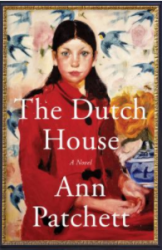
Reviewer's Name: K.H.I enjoyed this audiobook quite a bit during long commutes - Tom Hanks' soothing voice envelops you as he tells the story of Danny & Maeve as they grow and experience many of life's common hardships, and the many lines that can be traced back to The Dutch House. I am partial to books with observable character development, and I felt that was seen for a few characters within the novel. I would recommend this book.
Genres:
Review:
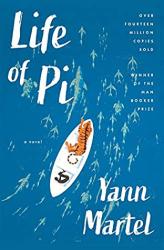
Reviewer's Name: KatieI rate this book three stars. The book tells the story of Pi, a young boy who escapes a sinking ship full of animals onto an escape boat. The only problem is, he is stuck with a tiger on the escape boat. The book explains the journey Pi takes to tame and live with the tiger. I can relate to Pi in the sense that we will step up to incredible levels when necessary. I would recommend this book to anyone.
Awards:
Review:
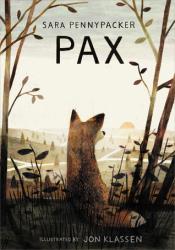
Reviewer's Name: Jordan“Pax” is a story about a boy and his fox. Peter has been taking care of Pax since he was a small kit. Over time Peter and Pax became very close. Peter’s father makes him leave Pax in the forest because Peter has to go live with his grandfather. Pax can’t go with Peter to his grandfather’s. After arriving at his grandfather’s house Peter realizes the mistake that he made, he decides to go after Pax. Pax who is hundreds of miles away is still holding out hope that his boy will come back, learns a couple of things about life, and makes a few friends. Peter makes a friend on the way and learns many things on his journey. Both of them want each other but will they find each other again, over hundreds of miles?
“Pax is an amazing, emotional book. It tells an amazing and eloquent story. By showing both Paxs’ and Peter's points of view you become very attached to them and you desperately want Peter to succeed. It portrays a relationship between a human and an animal beautifully. The ending made me feel many emotions. In my opinion, the ending was beautiful but if you really look at it it could be called rush with the way it was written. The ending was amazing and undesirable but at some point in the book, I knew that it would end that way. The book shows change so well, from Peter and Volas's relationship to Bristle and Pax's relationship, and just the characters in general. The writing describes everything and it was a beautiful writing style. We don’t know where the book takes place so things that are brought up in the book throw you for a curve. We don’t see what happens with Peter’s grandfather due to the ending. This book was beautifully written and it touches your heart, while some events in this book are unlikely, so much of this book will remind you of real-life. This is a book about change and it is so applicable to life. “Pax” is definitely a book to read when you want a book that will touch your heart and make you feel many emotions.
Review:
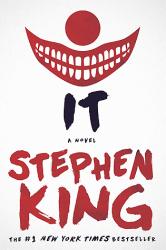
Reviewer's Name: AlexisIf you love a nice touch of supernatural horror in your life, you have to check out IT by Stephen King. Follow the story of young Bill Denbrough as he tries to discover what happened to his younger brother, Georgie, after his disappearance with his friends: Richie Tozier, Stanley Uris, Eddie Kaspbrak, Beverly Marsh, Mike Hanlon, and Ben Hanscom, while discovering a much darker secret under Derry, Maine. This book has everything you could possibly ask for in a horror novel with a strong bond of characters, a very unique villain, and enough variety that leaves you loving both the teenage and adult perspectives of the story. I love the concept of seeing both a child and adult perspective of the novel, it is a very unique concept, worth the 1000 pages. However, it only gets 4 stars in my book due to the constantly changing perspectives that seem to jump back and forth along with many questionable moments throughout the book. However, if you are looking for a book that will keep you reading for a while and love horror, It is the book for you.
Reviewer Grade: 12
Awards:
Genres:
Review:
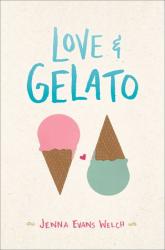
Reviewer's Name: MichelleLove & Gelato follows Lina, a high schooler who's sent to spend her summer in Italy with her father, due to her mother's dying wish. While at first Lina is apprehensive and scornful of this trip she'd reluctantly taken, and wishes to be back in America, she then finds her mother's old journal. And with the help of Ren, a local Italian boy she befriends, they recreate Lina's mother's experiences in Italy. And as Lina spends more time in Italy, she learns that her father, Italy, and Ren, may not be so bad after all.
Overall, this story was a pretty cute teen romance novel. I enjoyed reading about Lina's adventures in Italy, and seeing her get closer to Ren. However, I wouldn't say that there's anything exceptional and amazing about it, since it just seemed like a pretty average romance novel that you'd expect it to be. I would probably recommend this book if you're in a reading rut, or just want something easy and entertaining to quickly read.
Reviewer Grade: 11
Genres:
Review:
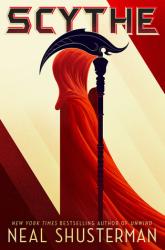
Reviewer's Name: MichelleIt's hard to express how beautifully written this book is. A novel that follows a dystopian plotline where the world has found a way to eliminate all diseases and achieve immortality, from start to finish, Shusterman keeps you hooked. We meet two teenagers, Rowan and Citra, both of whom are selected to become "Scythes," people whose jobs are to randomly kill, keeping the population under control. While the plot sounds intriguing, the way Shusterman tells the story makes it even more so. The extensively detailed world-building that was created in this story was beautiful and made the novel seem thought-provokingly realistic. I couldn't wrap my head around on how the author could think up of such creative details, such as the rules all Scythes must follow, and the premise of "splatting" and "gleaning." While the novel is supposed to be fantasy, it's written in a way that seems all too realistic. The way Shusterman writes makes all of his characters come to life, and the small details he injects into characters makes them seem shiveringly human. While reading, I completely could understand each and every character (even the minor ones) and their actions. Every single character in this novel is written in a completely realistic way-- fatal flaws and all.
The plot twists also completely awed me. Scythe is one of those novels that sprinkle in tiny minor hints that may seem insignificant at first, but come together to form a huge, whopping plot twist. I can honestly say that before actually reading the twists, I would have never guessed any of them. The plot also flowed very naturally, so much so that all the twists included all seemed to be important, and not just stuck in for shock factor. Lastly, I thoroughly enjoyed the journal entries written before/after each chapter, and when reading them, I was awed at the depth and meaning included in them. It's pretty rare for a book to make you think so hard, but this book was one that made me contemplate many, many things. I would recommend this book for anyone, and although it's listed as Teen Fiction or YA, I believe that due to the very meaningful way this story is written, anyone can read this novel, also including the next two books included in the trilogy.
Reviewer Grade: 11
Genres:
Review:
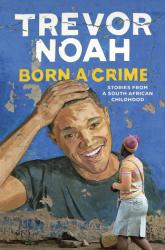
Reviewer's Name: AlexaBorn A Crime is the story of comedian Trevor Noah's childhood in South Africa. Each chapter follows a certain theme and features a lesson which Noah learns and takes with him as he grows up. Noah confronts darker, more serious topics with an endearing sense of humor and a resilient perspective, making the autobiography wise, poignant, funny, and heartfelt.
Trevor Noah's mother was the most influential person in his life. Being born to a black mother and white father during South Africa's apartheid, he was a "crime" under the law, but his mother made sure that he still had all the opportunities that other children did, and even more. She gave him knowledge and experiences, taught him how to respect women, and never stopped laughing. As Noah vividly portrays his mother, she comes alive on the pages of his autobiography. His story is also her story--of love, loss, pain, and joy.
This is a book that everyone should read. It speaks to the complexity of racism and its lasting consequences, but it is also entertaining and engaging. Noah tells stories of sadness and hardship alongside funny anecdotes that will make readers laugh out loud.
Awards:
Genres:
Review:
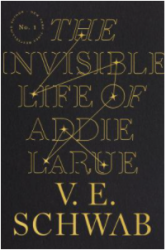
Reviewer's Name: Sarah T.I was completely enthralled with this book from start to finish. Not only is Schwab's writing style elegant, making it easy to disappear in the book and forget that time exists, but the story: Addie LaRue selling her soul for immortality with the price of forced to be forgotten by everyone who meets her, was every bit as enticing as any other action-packed fantasy novel. And although she is cursed to be forgotten, her life changes when she walks into a ragged bookstore, only to be surprised when a young bookkeeper remembers her. With romance, dark magic, and heartbreaking twists, this book was impossible to put down.
Genres:
Review:
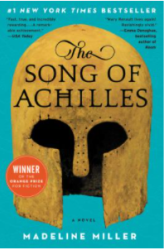
Reviewer's Name: Sarah T.I initially picked this book after seeing all the clout it was getting, as I'm sure many have noticed, it's popularity is unmatched. I walked into reading the story with a raised eyebrow, unsure if it would live up to its hype. It did. The story closely follows the Greek invasion of Troy after Helen is swept away by Paris, and if you have read the Iliad, then I am sure you already understand the plot. What differs from the work of Homer, however, is the pace at which Miller writes and the story she pushes. It is a beautiful rendition of war, love, and heartbreak. Between fighting battles and training with Chiron, Miller shows the sides of these famous heroes we all guessed at but never saw-- from running along a sun-warmed beach to tearing out hair, you will never be as deeply connected to characters as you will while reading this. My favorite part about this book was how beautiful Miller's incredible prose and the scenes that are forever engraved in my head: Thetis touching the chin of Achilles, Patroclus's hands on the gold of well-known armor, and a stone memorial built on the greatest hill, two figures standing side by side nearby it. This is not only one of the top book's I've read this year, but nearly the best book I've read in my entire life.
Junior-11
Awards:
Genres:
Review:
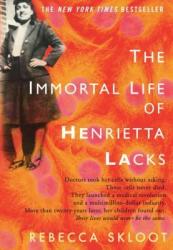
Reviewer's Name: EthanThe Immortal Life of Henrietta Lacks, written by Rebecca Skloot, is a book detailing the life of Henrietta Lacks. Henrietta Lacks unknowingly donated her cells to one of the most important fields of research, cancer cures. Her tumor cells, also known as “HeLa”, are extraordinary in that they replicate fast enough to create a whole new human in under 48 hours. This book is fascinating in more than one way: it explores the history of her and her cells, and it explores some gray areas in rights to cells and parts of dead entities. Instead of focusing just on one topic and one family, it expands to include many that have had to deal with bio material rights. I personally found this an interesting but slightly disturbing read. I recommend reading this one to learn about the history of cell rights and their gray areas.
Genres:
Review:
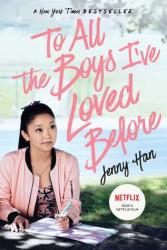
Reviewer's Name: BeatrizI chose this book because it is a genre I like to read, romance. This book was romantic and very funny. I was hooked throughout the entire book, and the plot twists just never seemed to end. To All the Boys I’ve Loved Before is a story about a girl named Lara Jean. She writes love letters to boys that she’s loved, but she has never sent them. And one day, someone found them and sent them. One of the five boys, Peter Kavinsky, proposes that he and Lara Jean should fake a relationship because he wanted to make his ex jealous. The story follows their fake relationship as it grows into something more and Lara Jean realizes more things about herself and Peter. At first I thought this book might be a bit predictable, but it surprised me as it was not. There were plenty of plot twists to the story that kept me interested up until the end of the book. I really recommend this book to romance lovers and people who like realistic fiction.
Reviewer Grade: 8
Genres:
Review:
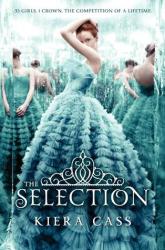
Reviewer's Name: MichelleThe Selection by Kiera Cass is a teen-romance novel, following protagonist America Singer. America, along with 34 other girls is chosen to compete in The Selection. The Selection is a chance for these girls, coming from all sorts of social classes to seize a position in royalty. But for Prince Maxon, The Selection is a chance for him to find true love. We join America and the other girls as they journey to the royal palace to meet the Prince and compete for a chance to become future Queen of the kingdom of Ilea.
When I was reading The Selection, it reminded me a lot of the premise of The Bachelor. 35 girls all competing for the hand of a handsome prince? Sounds pretty much like the plot of a reality TV show to me!
And just like a reality TV show, I found myself completely hooked on this series. There was drama, romance, friendships, and even a hint of politics in this first book of the series. And even though some parts of the novel felt very cheesy and overdone, I couldn't help but want more. The Selection is the sort of book that you pick up for some lighthearted fun, just as you would binge a trashy reality TV show. While I definitely wouldn't recommend The Selection if you want something deeply moving, I'd make sure to give it a try if you're looking for something easy and fun to read to get you out of a reading slump.The Selection by Kiera Cass is a teen-romance novel, following protagonist America Singer. America, along with 34 other girls is chosen to compete in The Selection. The Selection is a chance for these girls, coming from all sorts of social classes to seize a position in royalty. But for Prince Maxon, The Selection is a chance for him to find true love. We join America and the other girls as they journey to the royal palace to meet the Prince and compete for a chance to become future Queen of the kingdom of Ilea.
When I was reading The Selection, it reminded me a lot of the premise of The Bachelor. 35 girls all competing for the hand of a handsome prince? Sounds pretty much like the plot of a reality TV show to me!
And just like a reality TV show, I found myself completely hooked on this series. There was drama, romance, friendships, and even a hint of politics in this first book of the series. And even though some parts of the novel felt very cheesy and overdone, I couldn't help but want more. The Selection is the sort of book that you pick up for some lighthearted fun, just as you would binge a trashy reality TV show. While I definitely wouldn't recommend The Selection if you want something deeply moving, I'd make sure to give it a try if you're looking for something easy and fun to read to get you out of a reading slump.
Genres:
Review:
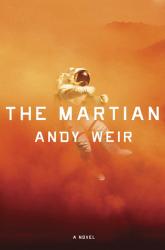
Reviewer's Name: LockeThe Martian is a novel by Andy Weir about a lone astronaut trapped on a foreign planet, surviving solely off of his wits and knowledge. Andy Weir's premiere story is a tale of persistence, ingenuity, and the human need to help one another.
Mark Watney is an incredibly charismatic protagonist, and the fact that this is so obvious even without direct dialogue between him and other characters makes Weir's writing even more impressive. The format of the novel is unique, with Watney mostly speaking through logs of his time on Mars, before the perspective switches to his colleagues on Earth in a more common third person perspective. Although this format doesn't sound like it could be exciting, the book can be thrilling at times, as problems continue to stack up, making Watney's return to Earth more unlikely each time.
Overall, The Martian is a gripping story and a treat to adult fans of science fiction.
Genres:
Review:
Reviewer's Name: Kaile V.Well that escalated quickly.
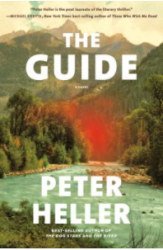
Here we are just floating along fly fishing with our main characters, when BAMMM - some bat-* crazy stuff goes down in the last 15-20% of this book. Sure, we’re given warnings along the way that something sinister is afoot, but there’s sinister and then there’s… whatever this is.
If you haven’t read Peter Heller before, The Guide does have the stylistic hallmarks of his novels. Restrained length, staccato sentences, and a slight dystopian undercurrent. It’s the not-too-distant future, and strains of the coronavirus are still part of everyday life. Much like there are flu seasons, now there are COVID seasons. (Talk about a bleak bummer!)
The titular guide of The Guide is Jack, a semi-tragic character who appeared in Heller’s 2019 book, The River. There’s enough of that backstory sprinkled throughout this follow up that it can be read as a standalone should you choose. Jack is now 25 and working at a chichi lodge in Colorado teaching fly fishing to rich peeps. He and the woman (young and beautiful, of course) he’s guiding sense that something is strange about the place and begin to investigate. Heller must have watched a Scooby-Doo marathon during lockdown in 2020. Meddling kids can always save the day, amiright?
Even if the resolution of the novel gave me whiplash, The Guide still managed to be my favorite so far from this author. Outdoorsy types will enjoy the setting and poetic language about fishing, and thrill seekers will get their payoff with the bonkers ending. I guess you could say Heller reeled me in with this one. (I'm here all week, folks!)
Awards:
Genres:
Review:
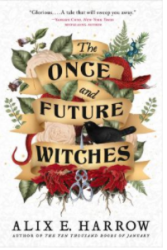
Reviewer's Name: AmandaThis is a beautiful story that has been waiting years to be told. It is the story of three sisters who are broken apart by an abusive father. They are pulled back together as if by magic. The sisters are so different and the way they experience the story is told so amazingly well. It is not a light read, but it is almost a profound experience when you do sit down to read it. Enjoy!
Genres:
Review:
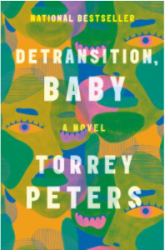
Reviewer's Name: Courtney C.Offering a nuanced understand of identify and lived experiences, Peters poses the question, “What constitutes family?” The complexities that accompany transness, family, and self expression are explored beautifully in the book.
Genres:
Review:
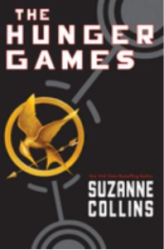
Reviewer's Name: Rachel L.Catniss Everdeen is the young girl in District 12 who comes from poverty and hunting. When the Annual Hunger Games start their draft picks, Catniss volunteers as tribute to spare her sister. She has always had talent with a bow and arrow for hunting for food to provide dinner for her family. Catniss uses her skill to win the Hunger Games and eventually eliminate President Snow, the background of the merciless games. I loved the intelligence put into the book of the making of the games. Because of the fighting, there is some violence and gore, but it’s still family-friendly and can be read comfortably. I would recommend this book to anyone who loves quick thinking and thought-out mystery. Hunger Games is intriguing, well-planned, and is an all-time favorite for my family.
Genres:
Review:
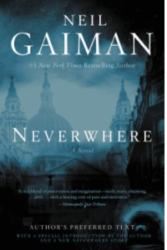
Reviewer's Name: Benjamin W.Neil Gaiman has written a lot of different books. His writing has been hit-or-miss for me, but nothing that's truly middle-of-the-road average. That was until I listened to Neverwhere. I appreciate how Gaiman narrates most of the audiobooks of his works that I've listened to so far, and Neverwhere was in line with the narration quality I expect from him. However, the content felt so mediocre that I honestly wouldn't have been surprised if it came from any other different British authors like Terry Pratchett or Douglas Adams (both of which are talented writers, mind you).
There's a distinct flavor of British comedy that comes through in the absurdist naming of characters and places in Neverwhere. Perhaps it's why I felt this book was so generic. It's your classic "Institutionalized" story where a man has (what seems to him) a stable life, only to have this life upended by a fantastical parallel world introduced by a character he eventually ends up falling in love with. While his interaction with this "London Below" made the main character invisible to his old life, he takes far too long to realize that the status quo he seeks is no longer desirable to him.
Maybe it's that I don't connect with these kinds of stories. They just seem so "meh" with bland characters trying to go back to their bland lives that it's always so obvious to the reader their life would be so much better in this new reality. Of course, I probably wouldn't pursue this fantastical new reality given the choice in my own life, but that's beside the point. Neverwhere contains all the trappings of this type of story, which is certainly entertaining for a bit but gets annoying the longer the main character refuses to change into their new selves.
An average institutionalized story with average British humor, I give Neverwhere 3.5 stars out of 5.
Awards:
Genres:
Review:
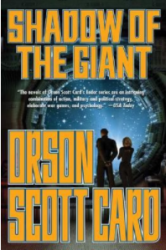
Reviewer's Name: Benjamin W.I'm glad Ender Wiggin's crewmates had this side series to explore their identities. While most of these characters were in the background of the Shadow series until now, Shadow of the Giant finally gives them time to shine on their own. After all, after three books focusing on Bean, it's nice to see the geopolitical drama unfold between these young tactical geniuses. I can definitely appreciate the storytelling that fills in the gaps between Ender's Game and Speaker for the Dead .
With Achilles being killed off in the previous book, Shadow Puppets , the principal antagonist of the series left a vacuum on the world stage that was inevitably going to be filled by Ender's Jeesh. And while these individuals had aged to the point of young adulthood, I can't deny the clever game they played with entire nations so they could position themselves in stations of power. It's entertaining to read about these military and political maneuvers in a fictional context, mostly because things would probably play out similarly in the real world if the situations presented themselves.
Still, Shadow of the Giant needs to include a side-plot with Bean. There's not much to say here other than it was an adequate stringing along that left room to conclude the series in the next two books. That being said, everything else about this series was so well wrapped up by the end of this volume that I'm sure Shadows in Flight won't have the same feel as the previous entries in this series without including Ender's Jeesh and Peter Wiggin's rule as Hegemon. If you want to stop reading the series here, I wouldn't blame you.
A great wrap-up of global affairs with room to continue Bean's story, I give Shadow of the Giant 4.0 stars out of 5.
Awards:
Genres:

Review:
Reviewer's Name: MackenzieThe Inheritance Games is about a 17 year old named Avery who mysteriously is put into someones will and inherits billions of dollars. But, she has to live in the owner of the will's house for a year with his four grandsons. Within the year, Avery goes through a series of riddles to figure out why she was the random person chosen to inherit this mans fortunes. He could have chosen any of his family members, but he chose her. Battling some hate and jealousy, Avery works with the boys to figure why it was Avery and not the family.
I loved this book! It was such an amazing book! The mystery of what would happen next kept me intrigued the whole time. I could not put down the book! I reccomend this book to anyone and everyone who can read!
Genres:
Review:
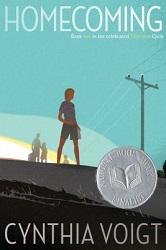
Reviewer's Name: CooperThe main plot of Homecoming begins when Dicey, Maybeth, James, and Sammy Tillerman are abandoned by their mother at a mall parking lot in the town of Peewauket for unclear reasons. Their father had already left them previously, so after many financial difficulties they were forced to take a trip to receive aid from their Great Aunt Cilla in Bridgeport, Connecticut. They were left with limited money, not enough for a bus, to somehow make their way to Bridgeport. Led by 13-year-old sister Dicey, they must rely on their wits and survival skills to pave the way to their home. Upon arrival, they hit roadblocks. Despite this, they are able to make more money and discover the valuable information their grandmother lives in the small town of Crisfield, Maryland. They are unsure whether or not she is safe because of the instability that runs in the family. Without anything to lose, they decide to make their way to Crisfield in a second attempt to find their home.
I really enjoyed this book because of how they hooked me in really well by creating an atmosphere of desperation and mystery. For example, "why did their father leave?" or, "was their grandmother crazy?" The even better part about this is at the end of the book, it spun up the story very well for a book in a series. Most books in a series, in my opinion, leave you wanting too much at the end of a book. This one just left us with a few key questions left to answer. One of the characters that I felt like I related to, or rather that I hope to relate to, was a character named Windy. Windy was a student at college who took the Tillerman's in when they needed him the most. He was extremely kind towards them and better yet, he did it in a humble way. I hope I can be like this character so I can shine brightness into someone's life that needs it someday. I believe, even though the year is young, that this will be one of the best books I will have read this year. This book was an amazing tale, which I would recommend to anyone in eighth grade or higher.
Genres: