Book Reviews by Genre: Science Fiction
Review:
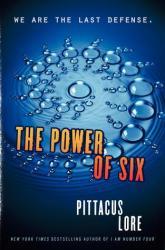
Reviewer's Name: John BThe sequel to I am Number Four is just as thrilling and action packed as the first. John, Sam, and Six set out as fugitives and work to find the others as we meet Seven. Seven is also known as Marina and lives in a convent/orphanage in Spain while she convinces her Cepan to rejoin the fight and develops her legacies. Complete with numerous battles, close escapes, incredible powers, and fun characters, The Power of Six is an excellent read for any middle or high schoolers.
Genres:
Review:
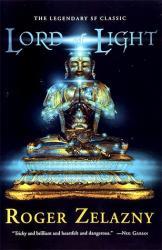
Reviewer's Name: EvanLord of Light, winner of the 1968 Hugo award for best novel, is a fascinating excursion into a expertly crafted science fiction world involving both Hindu mythology and the struggle to free humanity from the oppressive rule of false gods. This book is exciting as well as thought provoking and an overall interesting read. The characters are well flushed out, the setting is both believable and fantastical, and every instant of the book engaging. For those not familiar with Zelazny's writing style, the book may become confusing at certain points. However, the reader is never lost completely and can easily catch back up with the story. This book is a must read for those interested in the science fiction genre.
Awards:
Genres:
Review:
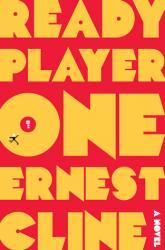
Reviewer's Name: Liam GWade Watts, a high school student like any other, starts his journey off in the slums of a world on the verge of economic and social collapse. In an attempt to escape the seemingly bleak world, many turn to the Oasis, an augmented version of virtual reality where the impossible is possible and people can become something other than what they are in the real world. The creator of the Oasis meets his untimely death due to a terminal illness, and in turn leaves behind his fortune and most prized possession, control of Oasis. The catch is, all you have to do is find his little “Easter Egg” within the vast world of the Oasis by finding keys linked to his favorite pastimes, such as old arcade games. It having been a long time since the announcement of this and now leads found, very few still pursue the egg. Wade Watts is one of them.
After discovering the first key on an online school’s virtual planet, Wade and the many others he meets along the way race to find the egg before the other hunters and the huge corporation, IO; in this science fiction world designed by Ernest Cline. I greatly enjoyed this book due to the vast worlds within his virtual one that he has illustrated for his audience.
Genres:
Review:
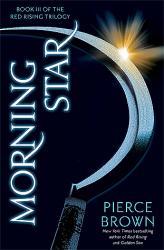
Reviewer's Name: Liam GDarrow was captured and his identity revealed, the leader of the Sons of Ares was killed, and now the future of rebellion looks bleak. Darrow, now in a state of grief and failure, his body withering away as he waits for his execution, is rescued and given a second chance to realize Eo’s dream; to topple the corrupt society that stole everything from him. Now the leading force and face of the rebellion, Darrow has many struggles that await him in the final book in the Red Rising Trilogy. I greatly enjoyed this book due to how the many underlying plots are tied off in the end of the series as well as the resolution of each character’s internal struggles. Pierce Brown builds on many previous sub plots that as the reader you might forget, marvelously tying this book in with the rest of the series.
Genres:
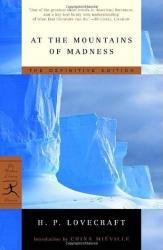
Review:
Reviewer's Name: Peter CH.P. Lovecraft is commonly known as one of the titans of horror, one of the pioneers of the genre who influenced people such as Stephen King, and has even inspired several video games, such as Bloodborne. At the Mountains of Madness is considered Lovecraft's magnum opus, his best work to date. It is a novella telling the story of a small group of geologists, aviators, and explorers who travel to Antarctica in search of unique rock specimens. While there, however, they encounter several horrors, including unearthing ancient specimens known as Old Ones, a decadent, purely weird city built by the Old Ones themselves, and even giant albino penguins. This novella is truly horrifying, as the suspense Lovecraft is able to build through usage of the setting is gripping. If one is looking to begin reading Lovecraft books, this one is a great entry point, as it introduces the reader to the Old Ones, the Necronomicon, and even Cthulhu himself. I would recommend to anyone who loves horror novels, or anyone who wants to read Lovecraft.
Genres:
Review:
Reviewer's Name: Oriana O."Animal Farm" by George Orwell is about a seemingly normal farm that turns against their farmer. The animals take over the farm with the help of their leaders who are pigs. After all the humans are gone from the farm they continue under the rule of the pigs and create a system of rules to follow as a guideline for their new life. Everything goes well until one of the pigs, Napoleon, uses the dogs he trained to remove the other leader, Snowball, from the animal farm. With Snowball gone Napoleon takes complete control of the farm. He alters the rules made by Snowball, abuses his power, and makes poor decisions that negatively affect the other animals. One of their rules/guidelines was that humans were evil and not to be associated with.
Napoleon breaks that rule many times starting with making a trade of wood with another farm run by a farmer. They get scammed from the exchange with the human, but that doesn't stop Napoleon from dealing with humans. He goes to the extent of not telling the fellow animals the truth and putting all pigs above everyone else. From there things get progressively worse until Napoleon eventually befriends the humans along with the other pigs. They become so much like the humans that it gets to the point that the pigs are basically humans.
I would recommend the book. "Animal Farm" is interesting and in my opinion is in a sense satire, so I really enjoyed it. I read this book because I was planning on reading 1984 by the same author for a BTS theory and wanted to read other books by George Orwell. I kind of could relate to some of the animals because when they disagreed with Napoleon they brought up good points, but no one listened to them. The ending is very surprising and the book isn't predictable.
Awards:
Genres:
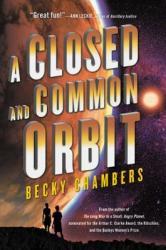
Review:
Reviewer's Name: Benjamin W.After the refreshing sci-fi The Long Way to a Small, Angry Planet , I was ready to follow the crew of the Wayfarer to their next adventure. Unfortunately, the sequel, A Closed and Common Orbit, decided to take a path more akin to The Godfather Part II (1974). Instead of following the main characters of the first story, this sequel delved into the new life of the AI now known as Sidra, while also interspersing a quasi-related prequel story of one of the new characters introduced in this book. Fortunately, these two stories were well paced against each other.
Even though I feel readers could pick up this book without having read The Long Way to a Small, Angry Planet, there are certainly a few details about the diverse races found in this universe left out of this book—probably for the sake of brevity. This didn’t necessarily detract from the enjoyment of A Closed and Common Orbit, but having that previous knowledge certainly helped to bring these alien creatures to life in my mind. Still, the main characters are basically humans, so the interactions with the aliens would be the main reason to know how these creatures communicate.
While this book is only tangentially related to the one that proceeded it in the series, the universe the author has created is solid enough to support a few more additional stories like the ones found here. With fewer characters to focus on in this book, A Closed and Common Orbit was able to dive deep into some pretty heavy topics, including child slavery and artificial intelligence. The writing still retains its casual dialogue style that genuinely helped bring these few characters to life. If anything, the author’s writing is what will keep me coming back to this series.
A mostly unrelated, but still expertly written sequel, I give A Closed and Common Orbit 4.0 stars out of 5.
Genres:
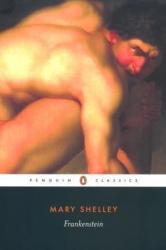
Review:
Reviewer's Name: Peter C. The classic tale of mystery and horror is also one that is an extremely entertaining read. While it may not be the scariest novel ever, the mere ideas that it presents are certain to make one a bit uneasy. The plot is iconic: Victor Frankenstein, aspiring philosopher and scientist, creates a horrifying monster out of dead bodies and reanimates it from the dead. The monster then goes on a murderous rampage after being rejected by his very creator. The novel is very good, and the message it presents, of not overreaching for knowledge, is a timeless one. The only downside to this icon of horror is that some chapters tend to drag, and have little purpose. However, this is not a huge detriment since the rest of the novel is so entertaining. I would recommend to thriller or horror enthusiasts.
Awards:
Genres:
Review:
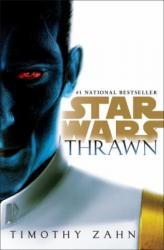
Reviewer's Name: RachelThis book was amazing. It is a must-read for Si-Fi and Star Wars fans.
Awards:
Genres:
Review:
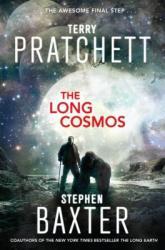
Reviewer's Name: Benjamin W.By the time I reached the end of the Long Earth series, I had a revelation. With the bounding conditions of the universe being that there are multiple worlds accessible via stepping and that no iron can pass between worlds, the ideas to explore these multiple worlds are almost endless. My revelation was that this series would have been better as an anthology of short stories from a collection of authors, instead of a handful of semi-disjointed novels that didn’t ever quite know what they were doing. The story never shined through, instead of feeling like a distracted three-year-old who wants to explore the potential of other worlds.
While I felt the series was starting to succeed in telling coherent and solid plots, this book removed that forward progress. When nearly one-third of the first part of the book seems to be comprised entirely of summary and recaps of the last four books, you know there’s not a lot of original ideas present in this one. And while minor tangents like the Johnny Shakespeare side-plot were amusing, they were loosely connected to the main plot at best. Even this main plot didn’t feel like it had enough time spent on it, as the main character of Joshua Valienté seemed to spend most of his time distracted on other worlds with unique trees instead of exploring the Long Cosmos that this book was supposed to be describing.
Even though this book was released after Terry Pratchett's death, it was clear he still had some of his influence on the plot and characters. Unfortunately, as was the case in the other books of the series, his contributions seemed to be fairly obvious, as they were the ones that didn’t quite fit in with everything else and just managed to be silly in an otherwise scientific exploration of new worlds.
The final book in a series that should have been an anthology, I give The Long Cosmos 2.5 stars out of 5.
Awards:
Genres:

Review:
Reviewer's Name: Benjamin W.After the events that take place in The Long Mars , I was expecting the next book in the series, The Long Utopia, to be about the CEO of the Black Corporation and the settlement he established to help him live longer. Instead, I got a story that had little to no connection to the previous plots. That being said, at least there was a story with a projected conclusion instead of merely a series of random events that eventually led to the sudden destruction of some location (as had been the case up until now).
While I did appreciate some of the back-story for Joshua Valienté, there wasn’t anything in Joshua’s behavior or motivations in any of the previous books that indicated that he was even interested in learning about his past. I also was pleased that some of the “limitations” of this universe were brought back, or at least provided as a reminder to the reader. It honestly doesn’t make sense to me that these parallel worlds would have the kind of technology available to them without the use of iron. The fact that the material workarounds were never explained is probably the most frustrating part to me.
As I mentioned already, the stronger story in this book helped keep me invested in the characters, not only as they tried to figure out what was happening, but as they tried to determine how to stop it. Unfortunately, none of the consequences in this universe seem to hold any weight. Lobsang can “die,” but there are still plenty other versions of him around. The Next can be mostly exterminated, but then the next book just glosses over the attempted genocide. In the end, though, I can’t honestly tell you what the titular “Utopia” of this book was, and that’s disappointing.
A slightly above-average chapter in the Long Earth series, I give The Long Utopia 3.0 stars out of 5.
Genres:
Review:
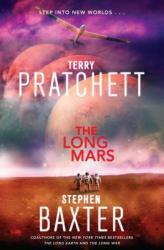
Reviewer's Name: Benjamin W.While the previous two entries in this series seemed to be disjointed in their writing styles, The Long Mars seemed to iron out some of these discrepancies . . . finally. In The Long Earth and The Long War , you could almost pinpoint the sections that Terry Pratchett wrote and the sections primarily written by Stephen Baxter. By The Long Mars, there are still a few moments of Terry Pratchett’s goofiness, but they are few and far between. Consequently, the narrative of The Long Mars seemed a lot more consistent than its predecessors.
Of course, this doesn’t necessarily mean that The Long Mars is absent of problems. While there was plenty of exploration of these parallel universes, the ones that were deemed necessary enough to describe didn’t add anything to the plot. In fact, I felt like this book could have been much shorter if these thought experiments that explored how parallel universes would function were cut out entirely. If these momentary breaks in the action were tied to critical moments or conflicts, then I could see their necessity. As they are right now, you could remove almost every one of them and still have the same basic story.
The scientist in me did like the broader examination of what to do with multiple universes, like easily visiting Mars. These concepts were touched on in the previous books, but now they felt a lot more fleshed out. Similarly, I felt like the characters were a lot more interesting, especially the dynamic between Sally and her father. Sure, there were probably a few too many plot lines to follow, but at least I cared about the characters now. I’m also not sure if the ending was supposed to mimic its predecessors, as that was one of my frustrations with The Long War: an almost identical ending to The Long Earth.
A significant improvement in the Long Earth series, I give The Long Mars 3.5 stars out of 5.
Awards:
Genres:
Review:
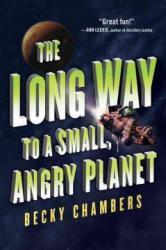
Reviewer's Name: Benjamin W.One of the biggest qualms I have with a lot of modern science fiction is that it’s not nearly imaginative enough. I believe most of this stems from the fact that modern sci-fi authors were influenced by franchises like Star Trek and Star Wars, where even the aliens are basically humanoids with different skin color. In The Long Way to a Small, Angry Planet, author Becky Chambers takes a great leap forward for sci-fi by exploring what it would be like to work on a spaceship with a variety of different species. Needless to say, there are plenty of “cultural” adaptations that one would need to make in such a situation.
Unfortunately, because the characters are so interesting, the main plot takes a back seat for the majority of the book. Instead, the reader is treated to a series of almost “episodic” moments between the crew that act as excellent exposition, but take up most of the space of the book due to the size of the crew. Aside from that, there were a few crew members that initially didn’t stand out, and it took me a while to realize they were two different people. I also can see how Kizzy could come across as “cute and energetic,” but I found her mostly to be childish, obnoxious, and annoying (she got on my introvert nerves).
In the end, the inclusion of lots of aliens with different cultures allowed for a simple way to include more non-traditional relationships in the book as well. With plenty of LGBTQ+ referenced in this book, none of it came off as judgmental, but it will still be a little jarring for people who aren’t used to reading books with these themes included in them. Still, the heart of science fiction is exploring the new and unknown, which this book does excellently. Fans of Firefly will probably be the most satisfied with this series, as the eclectic crew presented here seems to mirror that show’s charm and personality.
A sci-fi book that finally includes aliens that aren’t so human, I give The Long Way to a Small, Angry Planet 4.0 stars out of 5.
Awards:
Genres:
Review:
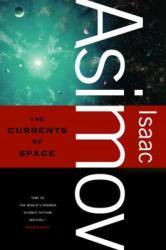
Reviewer's Name: BenjaminFor the first time, it seems that I’m reading a series backward. Of course, it was also written a bit backward, which explains why I’m going about it this way. While Pebble in the Sky was the first book in this series, it actually comes at the end of the narrative. A year later, Isaac Asimov would write the prequel, The Stars, Like Dust , which was then followed by a book that fit between the two. The Currents of Space is that book. Fortunately, there isn’t much tying this book to Pebble in the Sky, other than the universal setting for the events to take place.
It is encouraging that Asimov’s writing was able to improve in two short years between his first ever novel and this follow-on prequel. The Currents of Space has a distinct main character, apparent conflict, and well-timed plot revelations. The focus of this book helps to describe a somewhat interesting and thrilling scenario, even if it’s peppered with lots of clichés that are still present to this day. The “amnesiac expert” is by no means a new or unique storytelling device by today’s standards, but it may have been interesting back in the 1950’s.
Despite the improvement in Asimov’s writing, there were still a few choices that I felt were perhaps due to the weaknesses in Pebble in the Sky. In his first book, it was difficult to grasp everything that was happening. In The Currents of Space, one of the characters does an exposition dump that amounts to a recap of the first two-thirds of the book. While there was some added info to this information that led to the satisfying conclusion of the plot, it still seemed unnecessary if the reader was paying attention up to that point.
An improvement over his previous work in the series, I give The Currents of Space 3.0 stars out of 5.
Genres:
Review:
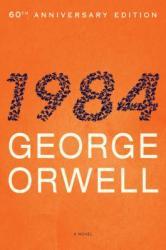
Reviewer's Name: Mckenna R.1984 is a timeless classic about a dystopian future where war is constant and you are constantly watched and carefully studied by an ominous force called the Thought Police. Everyone is expected to completely devote themselves to The Party (the ruling government) and believe everything they say. If the Thought Police detects the slightest amount of dissonance in a citizen, they disappear and, according to The Party, cease to exist - and never existed. One party member, Winston Smith, has been rebelling against the Party in thought only for years. Now, he finally gets enough courage to stand up for what's right. Will Winston be able to stop the tyrannical rule of The Party or will it all be in vain? Find out in 1984!
Genres:
Review:
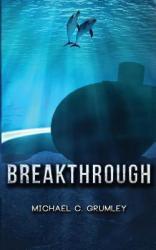
Reviewer's Name: Camille OliverAll four of these books (Breakthrough; Ripple; Leap; Catalyst) are fast paced, incredible adventure/mystery's, creative, fascinating with wonderful characters both human and animal. Michael is a great author. Can't wait for the next book in the series.
Genres:
Review:
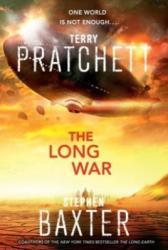
Reviewer's Name: Benjamin M. WeilertYou think with an inciting incident as extreme as the one at the end of The Long Earth , the follow-on book, The Long War, would be an exciting series of battles. If you thought that, you’d be wrong. Instead, authors Terry Pratchett and Stephen Baxter take the Speaker for the Dead route by aging the main character of the first book by at least a decade and throwing in heavy doses of non-human racism (speciesism?). For a book that has “war” in the title, there isn’t much war at all. This is disappointing for many reasons.
Sure, there’s still plenty of neat science fiction ideas presented here, but The Long War exhibits the same problems that were present in The Long Earth. First and foremost, the wit and humor of Terry Pratchett is hardly to be seen in this book, only occasionally popping up to add levity to a situation. Secondly, there’s so much exposition that the book “tells” instead of “shows,” that it almost becomes a bore to read. Finally, with so many subplots strung together, it was difficult to know precisely what was going on, who these characters were, or why I should care.
I’ll still probably suffer through the rest of this series since I don’t have to think very hard when I’m listening to the audiobook. The fact that I want to get through this five-book series as quickly as possible says something, though. The real problem is that the ideas and settings presented here could have been great. If the end of the first book had transitioned seamlessly into this one, causing the people who could “step” to rise up against those who would perform the despicable act that affected datum Earth, then we’d actually have a war on our hands instead of . . . this. Don't even get me started on the ending, which I'm pretty sure had a good paragraph of dialogue copied from The Long Earth.
An overly long book with little to no war, I give The Long War 2.0 stars out of 5.
Genres:
Review:
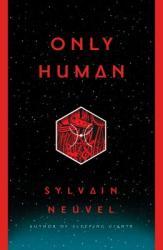
Reviewer's Name: Pauline E.Third in a trilogy, the Themis story is as gripping in this last novel as it was in the first two, the characters as real as any you've met personally. The story wraps up the trilogy with the end of the robot story. The why, who and where of it are answered and addressed. It's a particularly emotional book in that the main characters finally duke it out over their deep disagreements and yes, work something out. I'm hoping Sylvain does another series as his science fiction writing is entrancing and gripping and exciting. All the reasons for reading a good book.
Genres:
Review:
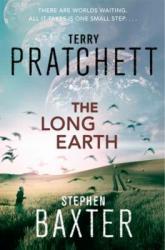
Reviewer's Name: Benjamin M. WeilertHaving read a few of Sir Terry Pratchett's books before, I am no stranger to the randomness of his writing style. Usually, he has some character or object that just doesn’t fit in a normal narrative, but he manages to work it in with an explanation that’s both natural and makes sense. However, this only works if Pratchett has control over the entire story. Unfortunately, as is the case in The Long Earth, the randomness that Pratchett brings to the table sticks out like a sore thumb from the rest of the mostly sci-fi story. For instance, does an artificial intelligence have to be a reincarnated Tibetan motorcycle repairman? If you want to take the story seriously, probably not.
In the end, this book seems to be mostly written by Stephen Baxter, with only a smattering of Pratchett’s charm thrown in occasionally for levity. I haven’t read any of Baxter’s other books, but I’m not sure if I’d want to, considering how The Long Earth was put together. First off, the entire book seems to be an exposition dump about “stepping,” which is the process wherein people can move from one parallel universe into another. None of the narratives seems dedicated to anything in particular. With no goal in mind, the story will often get distracted away from the main character during little vignettes that explore some of the potentials of the multiverse theory presented therein.
I did appreciate the amount of thought that went into the limitations and peculiarities of stepping between parallel Earths, but when that’s the only focus of the book, it tended to get repetitive. So often, I’d be listening to this audiobook and realize that there wasn’t much dialogue between these characters; they were mostly spewing out more explanation about the Long Earth in a series of expository dumps of information.
A book full of sci-fi exposition, I give The Long Earth 2.0 stars out of 5.
Genres:

Review:
Reviewer's Name: Benjamin M. WeilertAs I pulled together some of the information for this review, I became aware that Pebble in the Sky was Isaac Asimov's first novel. To be honest, that explains a lot. I’d read a few Asimov books before— I, Robot being a personal favorite—so I was a little disappointed with this story. If anything, it showed Asimov’s potential for bigger and better stories, or at least stories that were a little more focused. As it is, Pebble in the Sky provided the groundwork for prequels and some of Asimov’s best writing, but it remains fairly rough in comparison.
Some of the ideas in Pebble in the Sky are certainly noteworthy, including an age limit for humans and telepathic abilities. We also see here the ability of science fiction to address social issues as well. In this case, racism was the topic du jour, which was definitely in the early edges of revolution in 1950. And yet, the political commentary wasn’t nearly as subtle here as it could have been. Furthermore, while the more fantastical ideas presented here had some merit, their execution probably needed a little extra work. It’s a good first book, but it’s far from perfect.
It’s weird to me that I found a book by Isaac Asimov so mediocre, but I suppose that merely accentuates how great an author he eventually became. His future works would subsequently have the greater depth of thought that went into their premises and science, but as Pebble in the Sky shows us, that wasn’t always the case. There almost seem to be too many ideas crammed into this book to allow adequate time to explore each one. Consequently, when it jumps around from one subplot to another, it can be a little easy to get lost in the transition.
Isaac Asimov’s adequate first novel, I give Pebble in the Sky 2.5 stars out of 5.
Genres:
Review:
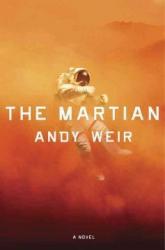
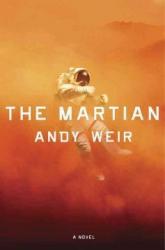
Reviewer's Name: Sabrina J.The Martian is a stunningly captivating sci-fi book set in the near future. The main character, Mark Watney, is stranded on Mars and must fight for his survival. I picked this book because I love science fiction, and this is by far the best science fiction book I have ever read. The most impressive aspect of The Martian is its scientific realism; every little detail is rooted in real science. I cannot believe the amount of research and fact-checking that must have gone into writing this book. I think this book would be appealing to people who like science, as well as people who just like a good fiction read.
Reviewer Grade: 12
Genres:
Review:
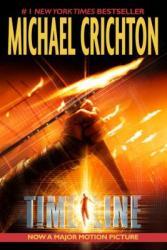
Reviewer's Name: BenjaminIt’s been a while since I read any Michael Crichton. I thoroughly enjoyed Jurassic Park —and to a lesser extent, The Lost World . I enjoyed the action and the science that went into creating these stories, helping to educate as well as entertain (kind of like my own writing style, if I do say so myself :D). For Timeline, the science in question is more quantum in nature, but I felt the explanations given were sufficient to arrive at a time-travel narrative, even if it did require a small amount of scientific hand-waving. Also, a lot of my perceptions about the dark ages were completely flipped around through this book’s meticulous details.
Even though I liked the scientific and historical sections of this book, there were undoubtedly some weaknesses I cannot overlook. First of all, Crichton seems to like hammering home the idea that science as an entertainment business is a bad idea (a la Jurassic Park) but the corporate sub-plot seemed a little less thought out and didn’t play too much into the grand scheme of things. As for the main plot itself, it seemed distracted most of the time, rarely remembering why these characters were sent back in time in the first place. Some of the characters weren’t even that compelling either, which didn’t help.
I wanted to like this book more, but by the end of the narrative, I got the sense that this was more akin to an action-movie screenplay or video game plot than an actual book. The countdown to the climax was a little hard to keep track of earlier in the book, and it didn’t provide the needed tension early on that it did near the end. Plus, the characters were usually the ones calling out the timestamps anyway, making it mostly redundant. In the end, there were some neat ideas regarding quantum physics, time travel, and history that makes Timeline an educational read, even if it is only once.
A Crichton book heavy in action, but light on plot, I give Timeline 3.0 stars out of 5.
Genres:
Review:
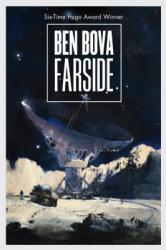
Reviewer's Name: BenjaminI had never heard of this author before picking up this audiobook to read—I just thought the title and cover looked neat—but apparently he’s been writing science fiction for a few decades now. It shows. While I’m not entirely certain that this 20th part in the “Grand Tour” series connects to any other parts written before it, Farside does stand by itself as a story. Unfortunately, the story’s not that good. It almost seems as though the “old rules” of golden-age sci-fi live on through this author, which allowed for this misogynistic piece of fiction to be written in the new millennium.
Much like Fire with Fire , there seems to be some sort of checklist that authors trying to imitate the pulpy origins of sci-fi are using to create their modern works. These tired tropes need to stop. Especially the tropes that have to do with the blatant sexism. None of the sex in this book had any grounding in reality or common sense: it all seemed to happen merely to check an item off a list. If these stories are allegedly set in the future, then why aren’t the characters acting “more woke” than the people who exist today?
While I did appreciate the interesting scientific ideas presented in this book, the “mystery” that evolved out of it was confusing at best. It didn’t seem clear why the antagonist—who seemed to almost appear out of nowhere—did what they did, thus leading to the peril of the people on the moon. I also found the repetition in this book to be slightly annoying. When I kept listening to the audiobook and wondered if it had somehow skipped back to a previous section when a fundamental concept was repeated, almost verbatim, then there’s obviously a problem with the exposition in the writing.
An artifact of the antiquated and sexist “rules” of golden-age sci-fi, I give Farside 2.0 stars out of 5.
Genres:
Review:
Reviewer's Name: Anneka S.The Martian was a great book, and I loved it! This book is about a man (Mark) that goes to Mars. when a sand storm hit the HAB hard Mark and his crew decide it is to dangerous to stay or the MAV will tip. When the crew make it to the MAV they realize that mark is not with them. They want to find him but it is just not safe. Mark is stuck on Mars with no means of contacting Earth. Can he survive?
Genres:
Review:
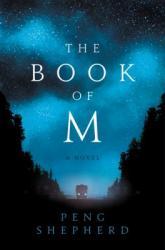
Reviewer's Name: TawnieThe Book of M is a beautiful dystopian novel about the power and beauty of memories and the pain that comes from losing them.
One day in a market in India, a man loses his shadow for no apparent reason anyone can explain. Shortly after, the man begins forgetting everything he ever knew, but in its place receives a strange and new power. This phenomenon of the lost shadow, soon becoming known as The Forgetting, spreads throughout the world and transform it into a strange dystopian world that is hardly recognizable.
The two main characters, Ory and Max, have escaped The Forgetting so far until one day, Max loses her shadow. Fearing that the more she forgets, the more dangerous she will become to Ory, she flees across a dark transformed world. All the while holding a tape recorder, on which she records her thoughts and feelings of the journey, and her experience of forgetting. Meanwhile Ory, not wanting to give up the little time they have left, follows her, embarking on a strange journey of his own.
The novel swivels back and forth, every other chapter, between his journey and hers. Max’s chapters to me were the most poignant, the most powerful. The recordings of her experiences on her journey, and the emotions she experiences as she fights against this inevitable loss, and slowly forgets everything, made me want to mourn with her for all she was losing. The emotions portrayed by Max’s character came across so real and raw, and anyone dealing with someone who is suffering from Alzheimer’s will be able to sympathize with this very real portrayal of what it’s like for them to forget everything about who they are. This novel is a tear jerker for sure!
Meanwhile Ory’s desperate attempt to find the woman he loves, is a testament to his hope in their survival and his belief in renewal, both for his wife, and I think on a deeper level, the world that was ravaged by the Forgetting. However, as his journey progresses, he is confronted with the reality of this new and dangerous world, and as he begins to adapt to this new world, he realizes that nothing will ever be the same again.
Filled with beautiful prose, strong character development, and peppered with details of a classic dystopian novel, this novel is a testament to the dystopian genre. Peng Shepherd does so much more than just tell a classic dystopian story, though. While it has all the classic elements of dystopian story, her portrayal of Max’s character almost made the novel read like a memoir but feel like a psychological thriller. Yet the existence of magic, and the way it shaped much of the spine of the story, took her novel into the realm of magical realism. The portrayal of war and action took her novel into the realm of an adventure story. Yet the stories focus on the female main character of Max, took the story into the realm of woman’s fiction. However, Max’s musing on her loving relationship with Ory, made the story delve into the realm of a romance. Taking her readers across a large geographic space, different cultures, different people, and different genres, she attempts and succeeds in a telling an ambitious and complicated story that seeks to display the power of the human spirit and ask what it is, to be human.
This story is beautiful, poignant, powerful, dark, filled with adventure, romance, and magic. The long story short, it has something for everyone. This book comes out June 5 but you can put it on your holds list today! If you haven't, please do! You won’t regret it!
Thank you to William Morrow a imprint of Harper Collins Publishers for an ARC of this beautiful novel in exchange for an honest review!
Genres:
Review:
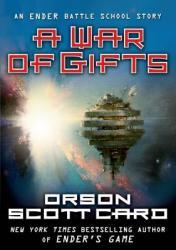
Reviewer's Name: BenjaminSide stories are a somewhat odd occurrence in the literary world. They’re essentially like the “deleted scenes” from movies: they don’t add to the plot, even if they are interesting by themselves. A War of Gifts is a side story to Ender’s Game that finds the reader back at the battle school during Ender Wiggin’s training period. While Ender’s Game is a tight piece of science fiction, with no room for a Santa Claus sub-plot, A War of Gifts does require some knowledge of the source material in order to understand this sub-plot.
I am always in awe of Orson Scott Card’s ability to take some of the most basic ideas and make them the most profound, most philosophically-intriguing debates. In the case of A War of Gifts, we have a fundamentalist Christian who was taught that the more commercial aspects of Christmas (like Santa Claus, for instance) are pure evil. Butting up against this characters’ beliefs are a few homesick recruits who unwittingly bring his ire upon them for celebrating a holiday in a way that might be construed as “religious.” The conflict comes in defining the activities that do or do not abide by the school’s “no religion” policy.
The debates of both sides are so well-described and thoroughly thought out that such a silly conflict suddenly becomes a multi-faceted problem with no easy solution. The reader also gets to see an Ender Wiggin who certainly has hints of his piercing personality that becomes present in the subsequent installments in the series. The specifics of A War of Gifts don’t lend themselves to being included in Ender’s Game, but it’s a delightful visit back to the world created therein. For fans of the series, they won’t be disappointed. For people who haven’t read the original story, A War of Gifts might be best saved for later.
An engaging side-story in the world of Ender’s Game, I give A War of Gifts 4.0 stars out of 5.
Genres:
Review:
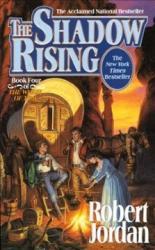
Reviewer's Name: Peter COne would begin to think that, this being the fourth very long book in a series that is known for it's long books, that the books would start to drop off a bit. But no, they seem to just get better! The Shadow Rising is the fourth book in the Wheel of Time series, and it's bigger, longer, and more actionier than ever. The book has two main side-plots within it. The first revolves around Perrin going back to the Two Rivers to help his people fend off the Trollocs and Whitecloaks that are becoming more dangerous, and the second revolves around Rand going into the Waste to unite the Aiel, fulfilling another piece of the prophecy. There are also side-plots with Elayne, Nynaeve, and Egwene and the Black Sisters, and those are equally as good. There is more characters development here that there has been in a book yet, especially around Mat, Elayne, Nynaeve and Egwene, and the book is very good for it. The battle sequences are just as good as before, and the magic is top-notch. The book is quite long, though, and it can get quite boring sometimes, so do be warned. All in all though, this is a very, very good addition to the Wheel of Time series. Recommend to: fans of fantasy, WoT lovers.
Genres:
Review:
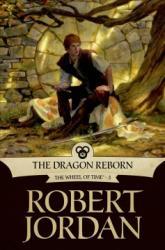
Reviewer's Name: Peter CThe Wheel of Time is an incredible series with incredible novels within them. The Dragon Reborn, the third book, continues this trend of epicness, and while it sin't as good as the Great Hunt, it is certainly an extremely good book and a great addition to the series. The plot revolves around Rand al'Thor, one of the main protagonists, going to the Stone of Tear to claim Callandor, or the Sword that Cannot be Touched in order to fulfill the next part of the Prophecy of the Dragon that will lead to him ultimately destroying the Dark One. The book has it all: plenty of action, magic, romance, and fantasy to keep you entertained throughout. One thing that I really liked about this book was the further development of Mat Cauthon as a character, and I really began to like him a lot more in this book, and he is a very likable and well rounded character. The third main character, Perrin Aybara, does begin to drop off a bit, but I still find him an enjoyable character. One main issue with this book is the fact that this book didn't really need it's own book; if this book and The Great Hunt were combined into one book, I think that it may have been better like that. Still, I can't really complain since this series is just so good! Recommended for: fantasy lovers, people who like really long, epic series.
Genres:

Review:
Reviewer's Name: Peter CThe Eye of the World can be considered a masterpiece in it's own right, and was an incredible introduction into this sprawling universe of the Wheel of Time series. The second book, however, the Great Hunt, improves upon the first book in almost every aspect. Gone are the chapters that go nowhere and the filler sections. The action also really begins to ramp up in this second installment, something that was sorely lacking throughout the first book up until the very end. The plot in this book revolves around the search for the Great Hunt of the Horn, something that was mentioned very frequently in the first book (one side note that I would like to add is the amount of foreshadowing in this series--things from book one are mentioned all the way in book 14! It is just incredible). The Horn is aid to be able to bring dead heroes and soldiers back to life. The good guys want it for their own use, and the bad guys want it too. There are also some side-plots that don't pertain to the Hunt itself, but I can't complain about that since they are so engrossing in their own right. Again, I would recommend this series to fantasy lovers of people who like long, epic book series.
Genres:
Review:
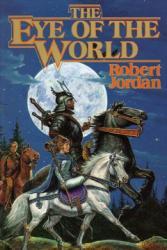
Reviewer's Name: Peter COne of the most celebrated fantasy book series of all time, The Wheel of Time series has been critically acclaimed, and the first book, The Eye of the World, is no exception to the praise. The book itself is about the journey of a small group of villagers that must try to destroy Ba'alzamon, the Dark One, who threatens to rule time itself. Firstly, Jordan's world building is impeccable. His attention to detail is accurate, his characters are unique, the world he creates feels alive, and the magic system he creates is one of the best ever put to paper. While the book is very similar to the Lord of the Rings in it's overall themes, the book brings a multitude of creative ideas to the table and carves out it's own very special and individualistic space in the fantasy genre. I would highly recommend this book, and series, to anyone who is a fan of high fantasy, or for anyone who is simply looking for a great series to keep themselves occupied with.
Genres: