Book Reviews by Genre: Science Fiction
Review:
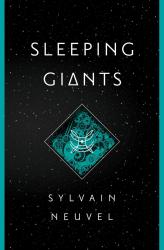
Reviewer's Name: RyderSylvain Neuvel's "Sleeping Giants" is the first book in a series of three fantastic novels about alien technology and what it means to be human. This book was lent to me by my father, so I knew it had to be amazing. I was not wrong in that assumption. My favorite part about this book is likely the most divisive part: the format. This book is explained in an interview format, between each character and a mysterious interviewer that is developed further in the later installments of this series. At first, I wasn't sure if I would like how jarringly different this format is; sometimes it is noticeable when the author wanted to convey some important information, but the constant interview made the information difficult to show. It wasn't exclusively interviews; occasionally a mission log was used for variety's sake. My least favorite part of the book is actually what wasn't included in the book. It sounds picky, but I think that this book had room for more. The cliffhanger, while masterfully executed, came too soon. Not enough happened before the book ended, so I was left immediately scrambling to acquire the other 2 books in the series. The book, and especially the series as a whole, is absolutely surprising at nearly every step. Characters assumed narratively immortal die, and enemies turn into friends that save the world in the third book. Each character had interesting flaws and contrasting personalities, so each character introduced to us through the mysterious interviewer felt like someone you could meet walking down the street. All in all, this book is definitely one of the best books I have read this year.
Reviewer Grade: 10
Awards:
Genres:
Review:
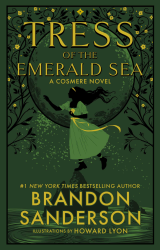
Reviewer's Name: RyderThe book "Tress of the Emerald Sea" was a brilliant standalone book set in Brandon Sanderson's "cosmere" (his unique term referring to the general world where most of his books take place). I didn't actually choose to read this book; my uncle lent me this book because I love nearly all of Brandon Sanderson's books. After reading this magnificent book, I am very thankful for his generosity. I enjoyed the development of the protagonist, Tress, over the book the most. Tress stays kind throughout the entire book, but her bravery develops as she grows from a timid cup collector to something I don't want to spoil, but she gains a massive amount of bravery in the pursuit of kindness. I didn't enjoy the ease at which the final boss was dealt with, but the conclusion was relatively tidy and neat. This is the type of book where I constantly need to ask myself, "How did the author think of this"? Spore oceans that kill you but still float ships? Cup collectors creating chaos? Nothing was offensively predictable, and the little twist right at the end reminded my instantly of Studio Ghibli's Spirited Away's little twist at the end regarding the protagonist's parents. I won't say this has been the best book that I've read this year, but that is only because the year is still young and Brandon Sanderson's kickstarter had 3 other books in it.
Reviewer Grade: 10
Genres:
Review:
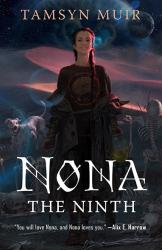
Reviewer's Name: EveNona the Ninth is the third book in the Locked Tomb series. It was an unprecedented addition, as the series was originally meant to be a trilogy that would end with Alecto the Ninth. And after reading this book, I couldn't imagine the series any other way. This book takes a step away from our principle protagonists and inter-planetary conflict to zoom in on Nona, a young woman who has technically only been alive for six months. She is a great teacher's aid, a fantastic dog watcher, and a caring friend. As her city crumbles around her and the secrets of her origin begin to come to light, Nona must keep trust in herself and the people she loves if she hopes to make it to her birthday.
I've seen a lot of reviews comparing this book to the first two in the series. In my opinion, there is no comparison to be made between any of them. The first is a thriller mystery in a nightmare castle with newfound friends. The second is a psychological horror story that occasionally becomes a soap opera. The third is slice of life, and the most heartbreaking of all three. I agree fully with the choice to make this a separate book, instead of trying to cram this into a climactic series ending. The series needed time to breathe from the revelations and consequences of the first two books, and to develop many of the wonderful side characters. On this note, the side characters in this book ruined me. They are constantly hilarious. They are perpetually heartbreaking. They have so much love for each other and it tears me apart. They are also fantastically developed, to the point where the thought of losing any of them almost stopped me from finishing the book. A large part of what made them special was seeing them through Nona's eyes, which was a fantastic combination of naively loving and strangely perceptive. Speaking of which, Nona's perspective was a special treat. Throughout the series, the author usually increases tension and intrigue by seriously limiting someone’s perspective. Previously this had been by outside parties hiding information or the unreliability of the narrator, but Nona being a mental six-month-old was a special treat. She attempts to relay everything with accuracy, but with limited experience and vocabulary the audience is forced to experience everything with fresh eyes to try to see it for what it is. Beyond all this, the story shined in all the usual departments for this series. The humor was exceptional, probably the funniest the series has been since the beginning of Gideon the Ninth. I particularly enjoyed the dream sequence narrations, as they were beautiful, insightful, and insanely funny. Sometimes I feel like Muir makes nearly every one of her characters funny so they can rip your heart out later with a little extra oomph. The worldbuilding continues to be a harrowing endeavor in the best way, as you have to take the time to figure it out for yourself with what little glimpses the book gives you. The only complaint I feel like someone could make about this book is that the pacing was pretty slow in the beginning to establish the ensemble cast, but I loved every minute of it so I can’t complain.
In conclusion, this book is another triumph for the Locked Tomb trilogy, and I can’t wait to see what comes next! I’d recommend this book to anyone who loves found family, slice of life stories, lots of explosions, zombie princes, and dogs with too many legs!
Reviewer Grade: 12
Awards:
Genres:
Review:
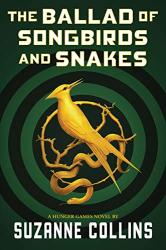
Reviewer's Name: AddisonThe Hunger Games: The Ballad of Songbirds and Snakes by Suzanne Collins is a masterful prequel to the wildly popular Hunger Games trilogy. Set 64 years before the events of the first book, The Ballad of Songbirds and Snakes explores the origins of the Hunger Games and the rise of the villainous President Snow. The main character, Coriolanus Snow, is a fascinating and nuanced character, with his motives and actions constantly shifting throughout the novel. His relationship with his fellow tribute, District 12's Lucy Gray Baird, is particularly compelling, with Collins exploring themes of loyalty, trust, and love in a way that is both nuanced and emotionally resonant. The plot of The Ballad of Songbirds and Snakes is both gripping and thought-provoking. Collins deftly weaves together political intrigue, personal drama, and action-packed set pieces to create a narrative that is both thrilling and emotionally engaging. The Hunger Games themselves are particularly well-done, with Collins using them as a vehicle to explore the darker side of human nature and the impact of power and privilege on individuals and society. Collins's descriptions of the Capitol and the districts are vivid and immersive, offering a richly detailed portrait of the world of Panem. Her use of foreshadowing and symbolism, such as the mockingjay, adds depth and meaning to the story, inviting readers to reflect on the deeper themes of the novel. This book was a stellar prequel to the Hunger Games trilogy that adds a lot of perspective and background to the original story. I would highly recommend this book to anyone who enjoyed the original novels and wishes to explore more of the Hunger Games world. Reviewer Grade: 11.
Awards:
Genres:
Review:
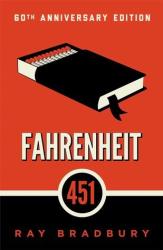
Reviewer's Name: AddisonFahrenheit 451 by Ray Bradbury delves into the dangers of a society where books are banned and critical thinking is discouraged. The novel follows protagonist Guy Montag, a fireman whose job is to burn books, as he begins to question the oppressive society he lives in and seeks to uncover the truth about the value of literature. The plot of Fahrenheit 451 is both compelling and thought-provoking- Bradbury’s dystopian world is entirely possible, and his exploration of the consequences of censorship and intellectual suppression can be easily applied to modern times. The story is driven by Montag’s journey of self-discovery, which is filled with twists and turns that keep the reader engaged until the very end. Bradbury’s writing style is poetic and evocative, bringing the world of Fahrenheit 451 to life with vivid descriptions and metaphorical language. His use of symbolism is particularly effective, as he weaves in recurring motifs such as fire, the mechanical hound, and the phoenix to add depth and complexity to the story. The novel is also structured in a way that mirrors Montag’s journey, with the pace and tone shifting as he becomes more aware of the world around him. Overall, Fahrenheit 451 is a very thought-provoking and symbolic classic that really makes you rethink the value of intellectual freedom and education. Every time I read it, I recognize more symbols, hidden meanings, and references that really enrich my experience. I enjoyed this book very much and would recommend it to anyone interested in dystopian, mind boggling novels.
Reviewer Grade: 11.
Genres:
Review:
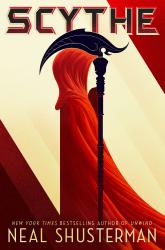
Reviewer's Name: XzavierScythe is the start of the Arc of a Scythe trilogy, set in the far future, humanity has overcome any and all problems. Except one, death, humans no longer keel over to illness, accidents, or war, but the Earth's population must be kept in check, thus humans must die. And so only the most humble and moral are put to the task. But of course humanity is fallible and the words humble and moral start to become rare words to describe the dealers of death. This book kept me constantly reading and wanting more (also had me checking my holds for the next in the trilogy), by far one of my best and most entertaining reads.
Awards:
Genres:
Review:
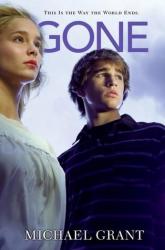
Reviewer's Name: AddisonGone, written by Michael Grant, is an action-packed dystopian novel that explores the struggle for survival in a world where all adults have vanished. The story takes place in a small California town, where everyone over the age of 15 has disappeared, leaving the children and teenagers to fend for themselves. The protagonist, Sam, is a relatable and sympathetic character who is thrust into a leadership role as he tries to keep the remaining kids safe and find out what has happened to their families. The world-building in Gone is impressive, with the small town and surrounding wilderness being vividly realized and full of danger. The supernatural elements of the story, such as the strange powers that some of the children possess, add an extra layer of intrigue and mystery to the plot that I very much enjoyed. Additionally, the novel explores a number of themes including moral and power struggles that the characters must face head on, and the shifting of the narration between several characters allows for some really good insight into how the characters' fight for survival has affected them each. Overall, Gone is a well-written and engaging novel that is sure to appeal to fans of dystopian and action-packed stories, and leaves off on a cliffhanger that encourages readers to read the remaining eight novels in the series. I personally enjoyed the plot and its many twists very much, and have read the rest of the series as a result. Reviewer Grade: 11.
Review:
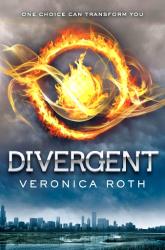
Reviewer's Name: AbigailDivergent is a book that really drew me in as I was reading. The story starts from Beatrice Prior’s (also known as Tris) point of view. Within the world that she lives in, there are five factions. These factions being dauntless, candor, erudite, abnegation, and amity. Tris ends up choosing to go into the dauntless (the fearless) faction. Among being placed into the dauntless faction, Tris Prior meets Four. Four and Tris “hit it off” after seeing each other and the fall in love quickly. The two have different personalities which seems to click. The novel follows Beatrice and Four as they laugh, love, keep secrets, butt heads, and much much more.
I really like the variety in genres of this book. The book does have romance, humor, fantasy, but it also has action and mysterious elements to it. The short chapters make this book really good at keep the reader’s attention span. The scenes described in vivid detail allow you to feel like part of the story and envision it in your mind. This book is the first of three books. The three books were turned into movies and the first one being Divergent. If you’re looking for a read that is compelling enough to keep your attention span, have a little of every genre, and describes scenes in extreme detail, this book is for you!
Reviewer Grade: 8
Review:
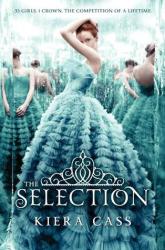
Reviewer's Name: MackenzieThe Selection was a very fun book for me to read, because it was a quick read fantasy book. It incorporates all the elements a romance lover looks for in a book. It is a love triangle, enemies to lovers, and friends to lovers novel all in one. America is a very strong and independent character, but we see her become more open minded and willing to work with others instead of fighting them. It is cool to see her perspective on the life she wants change as she gets to know Maxon, but she never forgets the change she wants to make for the people of her past life. The book was not my all time favorite, because the plot can be a little more predictable at times, and some parts are slower. Although, it is definitely worth reading.
Genres:
Review:
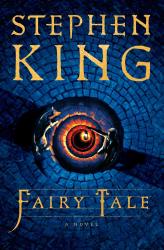
Reviewer's Name: OleksandraThe Lord of The Rings, Harry Potter, Hobbit and The Chronicles of Narnia have already won the hearts of millions of readers of all ages. Fantasy novels with complex plots, written in the understandable even for the youngest readers language, keep older generations excited and thrilled as well. The Fairy Tale by Stephen King can definitely be included in this honorable list. Describing the incredible adventures of Charlie Reade, it takes us to the mystical world and introduces to the ancient evil monsters and brave fighters for freedom.
Everything starts simple enough. The characters are living their ordinary enough lives and dealing with their down-to-earth duties and routines. But everything changes when a 17-year-old Charlie Reade decides to help his old grumpy neighbor. He discovers the door to the hidden world, where life is paralyzed by a curse that erases people’s faces and takes their sensations away from them. An evil tyrant Flight Killer and is the one who stands behind it. And, as it normally happens in fairy tales, Charlie turns out to be the one, whose mission is to defeat the evil, liberate the city of Lilimar and save the fallen princess. Is it truly up to a high-schooler to beat the powerful monster? And what does it have to do with an old ill German shepherd? The Fairy Tale has the answers for all these questions.
The audience gets a chance to dive into the exciting and cozy atmosphere of the good old stories, heard in childhood, and, at the same time, enjoy the complicity of created by King universe and charm of human feelings and behaviors. Classical fairy tale plot and motives make the novel easy and pleasant to read, however, as any fairy tale, it contains hidden moral and promotes eternal values.
Reviewer Grade: 12
Genres:
Review:
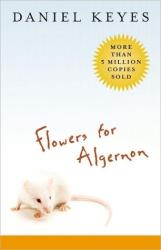
Reviewer's Name: SamahFlowers for Algernon is stunning commentary on the way society perceives intelligence and its connection to personal value. The creative liberties taken with this book to modify diction to match Charlie Gordon's knowledge create a more personal connection with the beloved narrator. I found myself celebrating the first time he used a comma or a metaphor. Although this book was difficult to read at first, I understand that those creative choices enhance the impact of the story later on in the book. The reason I wouldn't call Flowers for Algernon perfect is I feel some of the development in the middle diverted from his climactic conversations with the doctor and professor. The story seems to split into two at once: one of Charlie's emotional intelligence struggling to keep up with his knowledge, and one of his environment's reactions to his sudden genius. Though I enjoy both perspectives, I feel the conjunction creates clutter in what could be one flawlessly streamlined story. However, both stories are executed beautifully, and the journey of Charlie Gordon is both profound and emotionally charged. Flowers for Algernon is certainly a novel I'll mull over in years to come.
Genres:
Review:
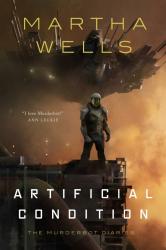
Reviewer's Name: BenjaminAfter being disappointed with the length of the first entry in the Murderbot Diaries series, I'm glad that I stuck with it and read the second book, Artificial Condition. While All Systems Red was necessary to introduce the concept of a sentient (and pacifist) murderbot, this book was much more interesting from a narrative perspective. At this point, I'm used to the short length of these stories, but after reading this book now I have to know how the rest of the series plays out.
The titular murderbot in this book felt much more fleshed out (ha ha) as a character. Having moved past the phase where it recognizes that its sentience is an anomaly, the challenge of fitting into society as a murderbot or as a human as the circumstances warranted was much more enthralling. The interactions with other AI like ART were much more entertaining than merely hearing about how the murderbot liked to binge TV shows. Perhaps the fact that much of the exposition covered in the first book is now out of the way, I felt this book didn't feel as much like an info dump.
Now that the murderbot is on its own, the goal of learning about its past is something that is not only interesting to read but provides a lot of opportunities for great action sequences. The author expertly puts the main character in situations where it has to use its AI advantages to make life-saving decisions despite the core code of its being originally designed to kill humans. The amount of character growth from the first book to the end of this one is definitely what will bring me back to finish out this series.
An improvement from the first book in the Murderbot novella series, I give Artificial Condition 4.5 stars out of 5.
Genres:
Review:
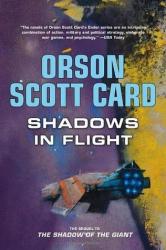
Reviewer's Name: BenjaminYou know how sometimes a series has overstayed its welcome? How, even though the author has wrapped up most of the loose ends, there's another story afterward that only exists to extend the series even farther than it has already come? The only times I can forgive these extensions is if the story in question isn't particularly long. For instance, the "epilogue" story in Marissa Meyer's Stars Above is a great way to show the characters settling into normal life after the main conflict ends. Shadows in Flight is almost unnecessary, but at least it's short.
Shadow of the Giant was a satisfying conclusion to the Ender's Shadow saga, so the fact that Shadows in Flight exists is merely to wrap up Bean's story even if the rest of the world had already reached its peaceful conclusion. After all, one question remained from this series: can those with Anton's Key be cured of their premature death and still keep their incredible gifts? This story sets out to answer that question and give Bean the (second) send-off he deserved. Fortunately, it's a relatively short book, since there isn't much else to say on the matter.
The problem is, there's nothing particularly new in this book when compared to the other eight books in both the Speaker for the Dead and Ender's Shadow series. This is perhaps because the three new characters (Bean's children) were repeated archetypes from their respective namesakes. It's always nice to have a little more content in the Ender universe, but even I think this feels like a post-it note scribbled on the back of the end of the series.
Wrapping up the final loose ends of the Ender's Shadow saga, I give Shadows in Flight 3.0 stars out of 5.
Genres:
Review:
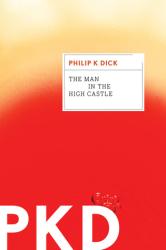
Reviewer's Name: Benjamin W. While I haven't seen the Amazon TV series based on this book, I had enough awareness of the basic premise going in. An alternate reality where the Allies lost World War II felt like such an interesting concept, I had to read the book that spawned this idea. Of course, I also enjoy Philip K. Dick's writing for the same reasons: he has novel ideas that he executes well. Unfortunately, I found The Man in the High Castle to be underwhelming.
To Dick's credit, his world-building for a history where Japan took over part of the United States after World War II felt quite thorough. Little subtle ways that people act, economies based on American antiques, as well as other differences that made sense with such a drastic change to history. The problem is, Dick was so focused on world-building that he forgot to write an actual story. None of the characters really stick out, and the titular Man in the High Castle is a Maguffin at best. I was left disappointed, which is rare for a Philip K. Dick story for me.
Maybe modern action thrillers have ruined this story for me, but when there are vast swaths of text dedicated to counterfeit antiques instead of forced cultural changes for the residents of the United States, a story like this can get boring quite quickly. If I had to pinpoint the worst part about this book, it's that the ending was not at all satisfying. There should have been something that better explained the book that told of an alternate history, considering how provocative the rest of this book made it seem.
An underwhelming execution for a top-notch idea, I give The Man in the High Castle 2.5 stars out of 5.
Awards:
Genres:
Review:
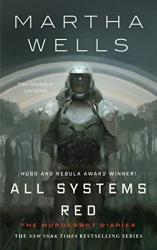
Reviewer's Name: Benjamin W. Sentient artificial intelligence is a topic that science fiction has covered for decades. Somehow, in all that time, I haven't really come across many stories from the perspective of the newly sentient AI. All Systems Red scratches that itch in a way that's intriguing but merely feels like a prologue to something much more interesting. Perhaps I'm just used to longer-form stories that explore such a complex topic like this. Still, to so densely convey what it's like to be a robot now in control of its destiny takes a certain level of skill.
The problem is, it's been about six months since I listened to this audiobook and I can't recall much about it other than it's in first person via the "Murderbot" point-of-view. I guess there was some humor involved with this robot describing things that we as humans almost take for granted—using the external observer to point out the quirks in our species. And maybe the bigger reason it hasn't stuck with me very much is that the titular Murderbot decides to be a lazy human with its freedom.
I understand that this novella is still early in the series, so I haven't read far enough to get invested yet. I just wonder if it would have worked better as a "book one" in a combined volume of three or four novellas. Once I can get my hands on the other "Diaries" in this series, I might change my opinion about this first entry. As it stands right now, it's short enough that I think others should read it for the unique point-of-view, regardless of how deep it gets into the larger story of the series.
A short but interesting take on an AI who gained their sentience, I give All Systems Red 3.5 stars out of 5.
Awards:
Genres:

Review:
Reviewer's Name: JaalaA Thousand Pieces of You by Claudia Gray is a science fiction and adventure novel that anybody would love. This easy read quickly starts off with our main character, Marguerite, jumping into an alternate reality chasing her friend who killed her father. She catches him, but before he slips out of her grasp, she is conflicted with the question if he really did it or not. This book mixes physics for any math lovers, adventure for any aspiring traveler, and just a little bit of romance that makes it difficult to grasp onto what is real or fake. I would recommend this book to anybody who is in a reading slump and needs a good pick me up.
Jaala 12
Genres:
Review:
Reviewer's Name: Benjamin W. The strength of Andy Weir's hard sci-fi storytelling was evident in The Martian . He sets up a problem, shows us a solution, then does everything in his author-ly power to prevent the main character from achieving that solution. His scientific explanations might get a little dry, but they are necessary to understand the situation without diving too deep into details. While his sophomore effort with Artemis showed me he struggles with writing women, he came back to his roots and knocked it out of the park with Project Hail Mary.
There are many similarities between The Martian and Project Hail Mary, which is probably why I like both books equally. Sure, the stakes are higher in Project Hail Mary—with the survival of humanity on the line instead of just one astronaut—but the explanation of the science follows the same format he used in The Martian. Specifically, a problem derails all the progress made so far, and it requires more science (often jury-rigged) to fix. The twist that gives this book a slight edge over The Martian is how science is a universal concept.
I came into this book blind, which helped me fully appreciate the "buddy" dynamic between the two main characters. The flashbacks felt a little like an exposition cop-out due to Ryland Grace's amnesia, but they were necessary to ground the motivation of his character. Without Ryland's "friend" that he found on the journey, it's difficult to know if the result of the last-ditch effort to save Earth would have had the same outcome. There are strong comparisons to Ted Chiang's short story, Story of Your Life (and its film adaptation of Arrival (2016)) here, which just shows how well-thought-out this book was.
Another perfect hard sci-fi adventure by Andy Weir, I give Project Hail Mary 5.0 stars out of 5.
Genres:
Review:
Reviewer's Name: Benjamin W. 'll admit that watching the Expanse television show spoiled this book for me. I already knew what was going to happen, so there weren't too many surprises in this book because the show kept close to the source material. Even with this a priori knowledge going in, I found Abaddon's Gate to be my favorite book of the series so far. The plot felt like it was actually getting somewhere instead of just dancing on the edges of the important series arc that finally solidified in this book.
Some of my favorite moments of the series were retained in the written form of this book, including the description of the first "sudden stop" when someone tried entering the alien portal. The human drama was also interesting because it wasn't entirely geopolitical but wove in elements of religious beliefs as well. It helped that the crew members of the Rocinante are fully fleshed out characters by this point in the series, since these books really are about how they react to being in the middle of this interplanetary (and now intergalactic) alien conspiracy. And while it might be nice to have the "character of the day" stick around for more than one book, I understand the decision to only focus on the Rocinante throughout the series.
As with previous books in the Expanse series, Abaddon's Gate excels in its depiction of realistic science in a fictional setting. Unlike more traditional hard sci-fi, this book uses these moments of real science sparingly to drive the plot forward instead of stopping at every instance and lecturing the reader as to the mathematical physics behind what is happening. This is so effortless in its execution that it never distracts from the action, which keeps the pacing at a nice, brisk action-based pace.
An exciting turning point in the Expanse series, I give Abaddon's Gate 4.0 stars out of 5.
Genres:
Review:
Reviewer's Name: Benjamin W. When I read Sleeping Giants , the narrative technique used to tell this story blew me away. I was hooked, and it pleased me to learn there were two more books in this Themis Files trilogy. Sure, I still had some qualms with the first book, but it was mostly from an "omniscient exposition dump." It took me a while to get back to this series, but I was looking forward to reading the second book, Waking Gods. In that time, something changed, and I did not enjoy this book.
Despite loving this indirect narrative approach in the first book, the technique showed its cracks as it reached past its limitations in Waking Gods. Interviews and recording transcripts can only show so much, and it's difficult to get into the characters when they're at arm's length. And perhaps this was the other thing I didn't like about this book: the characters. None of them are particularly likable or logical—especially the main character of Dr. Rose Franklin. The odd twist that was introduced at the end of the first book didn't help either. None of the characters could catch a break, save one mistake that led to the twist ending that propels the reader into book three.
Maybe all these weaknesses were in Sleeping Giants, but the excitement of finding an extra-terrestrial robot distracted me too much to care. In Waking Gods, there were more questions than answers. It didn't help that the plotlines that had the most focus were the ones I didn't feel added anything to the story. I can still appreciate the science fiction in this series, but I'm only going to continue to the last book in this trilogy just to see how it all ends.
A significant downgrade from its predecessor, I give Waking Gods 2.5 stars out of 5.
Genres:
Review:
Reviewer's Name: AshleyI started reading this book in 2012, just a few years before the movie was released. This book is a personal favorite of mine that I have read over and over again. This dystopian story follows a boy who was placed in the center of a maze with several other boys and follows his journey as he uncovers dark truths and attempts to escape the maze. Personally, I love the attention to detail in this book and how it keeps you on your seat throughout the story all the way to the end. In no way was this book predictable. When I first read this book I wasn't aware that it was of a series, so I was delighted to find out there were more books because of how great of a story it was. I would recommend this book to tweens and up since there is some mature material such as fighting and dying (it doesn't go into gory detail). Overall, this is a great read that I would personally highly recommend!
Genres:
Review:
Reviewer's Name: EveLeviathan Wakes is set in a time where humanity has reached the edges of the solar system, desperate to grow past the confines of Earth. Jim Holden is on a ship meant to drag ice from asteroids when he discovers a secret that kills most of his crew and puts the rest of them in horrible danger. Detective Miller has just been assigned to a throwaway missing persons case that is far more than it seems. The two men will find their stories colliding in a way that could either create a new, starward path for humanity...or end it for good.
This was one of the first serious, in-depth science fiction books I've read in a long time, since those types of books usually wear me out. But this one blew me away. The first surprise was the world building. Most science fiction has complex world building, its a staple of the genre. But this was beyond insane world building that still stuck itself between the lines, in small observations or bits of daily life. It hardly ever had to derail the story to go in depth about the mechanics of this world, but by the end my brain was still clogged with what felt like endless information about this fascinating future for humanity. The second surprise was in the characters. No one felt like a staple science fiction character. Detective Miller at first seemed like the stereotypical sad grizzled cop, but the complexity of his character blew everything I was expecting out of the water. Jim Holden at first looked like the paragon leader type, but he often gets things wrongs or makes bad choices in a way that still endeared us to his endlessly moral character. The side characters also deliver, with memorable personalities and motivations. The third surprise was in the plot. It starts slow, meandering its way through the characters, but then it takes off like a shot. There will be huge chunks of action and long bits of calm, but the two are well balanced. The twists are also wonderful, because they aren't trying to be surprising or upsetting. They just want to tell a good story. And it does that job well.
All in all, this book is wonderful in so many ways. I'd recommend it to anyone who loves complex science fiction, well-written characters, breathtaking action, and a twisting mystery alongside!
Reviewer Grade: 12
Genres:
Review:
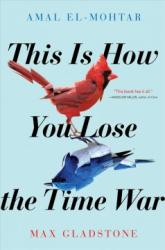
Reviewer's Name: EveThis Is How You Lose the Time War is a correspondence set throughout the whole of time, between two people on opposite sides of an eternal war. Red is a member of the Agency, a stark, metallic technotopia wielding bionic creations to tear time into place. Blue is a part of the Garden, an organic monolith determined to sink its roots into every part of time. The two of them are the best of the best, clashing invisibly over and over through time and space. When one of them leaves a letter, it begins a conversation throughout time, one that will change both of them, and the world, forever.
This book was a phenomenal read. It was a difficult thing to work through, something that refused to hold your hand and guide you through the sudden shifts and strange situations. But after drowning for a little while, everything starts falling into place, and soon you can't tear yourself away from the pages. The prose was brilliant, bringing every place and century and emotion vividly into focus. The characters are endearing and heartbreaking, and their development as they grow to understand and care for each other is profound. The storylines were vivid and fascinating, creating a whole new meaning to "the butterfly effect." Even the world building, as intentionally vague as it is, is still understandable and entrancing. I honestly don't know what it is that made me obsess over this book. Maybe it was the evolution of the characters, transforming from hellbent killers to cautious friends. Maybe it was the distinctiveness of the two characters voices, made all the more special since both sides of the story are written only by their given author. Maybe its the fascinating world around the characters, the future dystopias and steampunk cities and sand swept temples. I don't know what it is, but its one beautiful, wild ride.
From what I can tell, most people either love or hate this story. The ones who love it give gushing reviews not dissimilar to mine. The ones who hate it call it confusing, obtuse hogwash that doesn't properly develop its world or characters enough to be compelling. I can't tell what side of the spectrum anyone is going to fall on, but I know that everyone should give this a chance. All in all, I recommend this book for anyone in the mood for strangely poetic science fiction, star-crossed enemies, or an examination of a universe that can be forever changed by the beating of wings.
Reviewer Grade: 12
Genres:
Review:
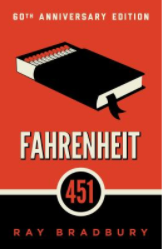
Reviewer's Name: LuciaFahrenheit 451 by Ray Bradbury is a dystopian novel written in 1953. Although some of the concepts and references are harder to understand due to when the story is written, it still holds many good messages relevant today. In this novel, books are banned, and firefighters burn houses with books inside instead of saving them. They are the protectors of happiness because books make people unhappy. Fahrenheit 451 follows a fireman, Guy Montag, as he starts asking questions about his job and society. This novel has many hidden meanings and is worth the time to read. The author does a beautiful job of keeping the writing and concepts simple enough for younger audiences. Overall, I would give it a five out of five stars.
Genres:
Review:
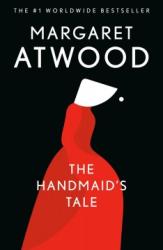
Reviewer's Name: FinnThe Handmaid's Tale, written by Margaret Atwood, is a fictional account of Offred, who is a handmaid that lives in a dystopian society. A handmaid is a woman whose purpose is to have a child. Offred is conflicted with her job; she is separated from her lover, Luke and her child, thinking that they are dead but hoping they are alive. The new government slowly took away power from females until the females are essentially powerless. I chose the book because my Aunt recommended it to me. One thing I liked about the book was that the ending was essentially left to the reader's judgment. As a male, it gave me helpful insights to events that are happening right now that I never would have thought about.
Awards:
Genres:
Review:
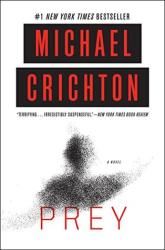
Reviewer's Name: AntwaanHere, you follow Jack Forman as he wages through his wife's unusual behavior and the nanotechnology her company created and developed.
For my first Crichton novel, I really enjoyed it. Watching Jack as he waded through his suspicious and the dangers he faces was a thrill to watch. While the characters themselves felt a bit bland, the plot, scientific mystery, and thriller aspects of the story make up for it. Learning about nanotechnology and different parts of programming was also fun to read, even if I didn't understand all of it. The pacing of the novel was done pretty well, from the beginning with Jack's wife, to the her place of work later in the novel. The way the danger was presented and changed was done well and kept me on my toes until the resolution. I recommend this for those who like thrillers and/or sci-fi.
Reader's Grade: 11
Genres:
Review:
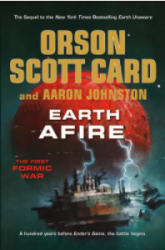
Reviewer's Name: Benjamin W.It's odd how the main ideas presented in the original Ender Saga have almost no depictions of combat or war in them at all. It is then appropriate that the second book in this prequel trilogy pulls out all the stops and shows what a horrific battle against ant-like aliens would be like in the not-to-distant future. After all, war is hell, and the atrocities committed by a species trying to terraform Earth to their specifications are quite gruesome.
Fortunately, Earth Afire does not focus too much on the gory details of war. There are still subplots being explored that bring realism to this doomsday scenario—like needing to go against orders and bureaucracy to save people. The reader finally gets to spend some significant time with Mazer Rackham, who is absolutely the most interesting character in this prequel trilogy. His story is where Earth Afire really shines. Sure, there are still some leftover characters from Earth Unaware who stick around to continue their plotlines, but the events happening on the ground are much more interesting than outer space sabotage.
While I feel Earth Afire has some strengths over its Earth Unaware, ultimately it's the downbeat middle book in a trilogy that focuses on the destruction of Earth. There is still hope for humanity with a few last-ditch efforts, but it's clear the Formics have the advantage on so many levels. Also, being a prequel book, Earth Afire suffers somewhat from the fact that we know what will happen to some of the main characters. They can't be killed off because they must ultimately win the day and stall the Formics long enough for Earth to launch their own counterattack.
A visceral image of alien war on Earth, I give Earth Afire 4.0 stars out of 5.
Awards:
Genres:
Review:
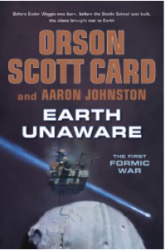
Reviewer's Name: Benjamin W.Prequels sometimes get a bad rap because they often feel unnecessary. If the story was important enough to start at the very beginning, then that's where the series should have started. Still, there is a comfort in prequels that comes from knowing what will happen. Little details that the reader knows will become important for the main part of the series act as subtle nods in the early stages of the series' lore. Earth Unaware is the first book in the Ender's Game prequel trilogy and flawlessly introduces the events that lead to the Earth's drastic response.
Orson Scott Card co-wrote Earth Unaware over a decade after publishing the first books in the Ender Saga. In that time, science advanced to the point where a near-future scenario like the one presented in Earth Unaware could be plausible. All the reader ever knew about the first Formic War from the original series was that the Formics invaded our planet without warning. The beautiful twist in this book is how a few miners out in the Kuiper Belt knew this threat was coming but had unexpected challenges that prevented them from warning Earth.
Unfortunately, the most realistic parts of this book had to do with corporate greed and an ignorant public (much like the plot for Don't Look Up (2021)). The action is certainly exciting and the stakes are quite high since Ender's Game already lets us know what will eventually happen. The only thing I'm disappointed in with this book is how little Mazer Rackham was involved. It was like the authors only mentioned him in passing to introduce him, even if he's arguably the most interesting character out of all the lore presented in Ender's Game.
A plausible, action-packed start to the Ender's Game prequel trilogy, I give Earth Unaware 4.0 stars out of 5.
Genres:
Review:
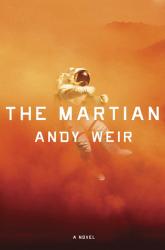
Reviewer's Name: LockeThe Martian is a novel by Andy Weir about a lone astronaut trapped on a foreign planet, surviving solely off of his wits and knowledge. Andy Weir's premiere story is a tale of persistence, ingenuity, and the human need to help one another.
Mark Watney is an incredibly charismatic protagonist, and the fact that this is so obvious even without direct dialogue between him and other characters makes Weir's writing even more impressive. The format of the novel is unique, with Watney mostly speaking through logs of his time on Mars, before the perspective switches to his colleagues on Earth in a more common third person perspective. Although this format doesn't sound like it could be exciting, the book can be thrilling at times, as problems continue to stack up, making Watney's return to Earth more unlikely each time.
Overall, The Martian is a gripping story and a treat to adult fans of science fiction.
Genres:
Review:
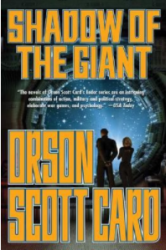
Reviewer's Name: Benjamin W.I'm glad Ender Wiggin's crewmates had this side series to explore their identities. While most of these characters were in the background of the Shadow series until now, Shadow of the Giant finally gives them time to shine on their own. After all, after three books focusing on Bean, it's nice to see the geopolitical drama unfold between these young tactical geniuses. I can definitely appreciate the storytelling that fills in the gaps between Ender's Game and Speaker for the Dead .
With Achilles being killed off in the previous book, Shadow Puppets , the principal antagonist of the series left a vacuum on the world stage that was inevitably going to be filled by Ender's Jeesh. And while these individuals had aged to the point of young adulthood, I can't deny the clever game they played with entire nations so they could position themselves in stations of power. It's entertaining to read about these military and political maneuvers in a fictional context, mostly because things would probably play out similarly in the real world if the situations presented themselves.
Still, Shadow of the Giant needs to include a side-plot with Bean. There's not much to say here other than it was an adequate stringing along that left room to conclude the series in the next two books. That being said, everything else about this series was so well wrapped up by the end of this volume that I'm sure Shadows in Flight won't have the same feel as the previous entries in this series without including Ender's Jeesh and Peter Wiggin's rule as Hegemon. If you want to stop reading the series here, I wouldn't blame you.
A great wrap-up of global affairs with room to continue Bean's story, I give Shadow of the Giant 4.0 stars out of 5.
Awards:
Genres:
Review:
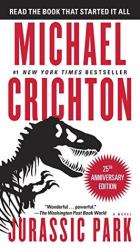
Reviewer's Name: LockeOne of the greatest science fiction novels of the past century, Jurassic Park is a genius blend of thrills, likable characters, and philosophy deep enough to interest more mature readers while allowing younger adults and teenagers to be invested as well. The story revolves around a group of temporary advisers to an eccentric millionaire who has created his own dinosaur theme park. The park becomes far more dangerous, however, when a series of events leave the beasts free to roam the island.
The main cast is a group of fully realized characters of a variety of backgrounds, working together from their respective roles of the island to ensure their survival along with the others. Far from being simple Godzilla style creatures of destruction, the dinosaurs feel like characters of their own, with intelligence (especially among the raptors) and capabilities that are both realistic and terrifying. The scenes involving both the human and dinosaur cast are tense but still controlled, and no situation feels contrived or forced.
Jurassic Park is a classic novel for young adults or older people, perfect for anyone interested in a book that will keep them turning the pages until it's over.
Awards:
Genres: