Book Reviews by Genre: Science Fiction
Review:
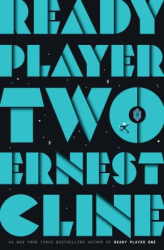
Reviewer's Name: Benjamin W. I understand that most sequels that weren't already planned as part of a larger series (or even a duology) are often just a cash grab for fans of the original work. Usually, I can forgive this if it allows me to spend more time in the world the author created in the first book. In the case of Ready Player Two, I think it goes so far into being a cash grab that it actually harms how I feel about the original Ready Player One .
While the internet and online culture has changed significantly in the nine years since the first book came out, there were only a few retroactive changes to the Oasis that recognized these shifts in modern technology. And while the main idea of the plot does take a natural next step from virtual reality to capturing a lived reality in digital space, none of the excitement of the original egg hunt is there because the ticking clock mechanic was mostly a consequence of the main character's poor decision making abilities. This, of course, is a huge carry over from the first book.
The biggest fault Ready Player Two commits is changing the character of Halliday from the awkward but well-meaning nerd into a full-blown incel villain. When this is combined with the tone-deaf and at times totally misogynistic Wade Watts, there's nothing in this book that makes me like the villain or the main character. And when solutions to dire circumstances don't feel earned, I just don't get the same magic out of this book like I did for the first one. Fortunately, if you're really curious enough to try this book, I've seen it sold at huge discount at a few different bookstores if you want to pick it up.
An egregious cash grab that ruins characters from Ready Player One, I give Ready Player Two 2.5 stars out of 5.
Genres:
Review:
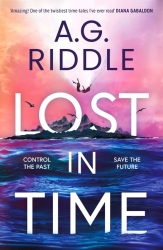
Reviewer's Name: MarieSolid time travel meets murder mystery. I was thinking about this book even when I wasn’t reading it.
Genres:
Review:
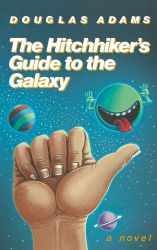
Reviewer's Name: DominicThe Hitchhiker's Guide to the Galaxy is an absurdist space adventure comedy about a man named Arthur Dent who is taken to space on a crazy adventure. I enjoyed this book because it had lots of weird humor and laughs. I think the author did a great job designing zany characters. The only flaw is that sometimes the ridiculous comedy makes the plot nonsensical. Otherwise, this is a hilarious and fun read that I recommend!
Reviewer grade: 8
Genres:
Review:
Reviewer's Name: DominicThe Hitchhiker's Guide to the Galaxy is an absurdist space adventure comedy about a man named Arthur Dent who is taken to space on a crazy adventure. I enjoyed this book because it had lots of weird humor and laughs. I think the author did a great job designing zany characters. The only flaw is that sometimes the ridiculous comedy makes the plot nonsensical. Otherwise, this is a hilarious and fun read that I recommend!
Awards:
Genres:
Review:
Reviewer's Name: Benjamin W. Much like Ajax Penumbra 1969 helped fill in some of the lore for Mr. Penumbra’s 24-Hour Bookstore, Robin Sloan expounded on his book Sourdough with The Suitcase Clone. This short story doesn’t necessarily share any of the main characters from Sourdough, but it gives some insight about the mysterious “creature” that’s in the sourdough while also providing an interesting look into intellectual property theft when it comes to specific wines—which itself is reason enough to read this short story.
Sloan takes a somewhat unorthodox approach to the point of view here, which took some getting used to. His language bordered on being too flowery, and it lost me as to what was happening at least a few times. But in terms of straight vibes, The Suitcase Clone successfully gives off that eerie, otherworldly feeling that helps add to the mystery of this almost microorganism entity. Reading this story is what I would imagine taking mind-altering drugs would be like as one travels the countryside of France. It’s not something I would do personally, but I can see the appeal of it.
As it’s a distinctly different feel when compared to the standard analog/digital style Sloan uses in his other, full-length books, I’m glad this backstory wasn’t forced into the main plotline for Sourdough. You don’t really gain any huge revelations as part of this prequel story, but rather have a context for the weirdness that ensues in the main book this stems from. As a fan of this author, I’ll always read anything he puts out, but The Suitcase Clone almost feels too experimental for me to get my head around.
A trippy vibe that sets up some of the weirdness in Sourdough, I give The Suitcase Clone 3.5 stars out of 5.
Genres:
Review:
Reviewer's Name: Benjamin W.Even though it was written in the 90s, the premise of Parable of the Sower intrigued me because it was set in our near past of 2024. That its themes focused on the end of the world being brought about by climate change and wealth inequality was also eerily prescient enough for me to want to read how Octavia E. Butler thought things would play out in the “future.” Perhaps part of me wanted some amount of optimism; but ultimately, it’s just a depressing examination of current failures.
The first half of Parable of the Sower really paints a picture of some scarily accurate predictions for the state of society today. Even if people deny the effects of climate change, this book shows an even more extreme world that could be in our future if we do nothing to reverse it. Of course, climate change is really the exacerbating force that drives the wealth disparity present in this book into apocalypse territory. The depressing part of this book is how the only realistic solution is to give up and start over.
With the onslaught of awful things that happened in this book, it lost its entertainment appeal as the hits kept coming. Perhaps it was my desire for escapism—that it would give a way to fix these broken things that we currently have no control over—that ultimately wasn’t met. And while I agree the current system should probably be demolished and built from the ground up with empathy (or even “hyper-empathy”), I still think there are things we can also do to fight what’s happening. Even if this book predicted a lot of bad things , I hope we can work to make some good.
A gauntlet of eerily prescient bad news for modern times, I give Parable of the Sower 3.5 stars out of 5.
Genres:
Review:
Reviewer's Name: Benjamin W. Some of the best science fiction ever written has its basis in reality. These “what-if” scenarios often pull from actual processes and procedures that help ground them while still being entertaining. Knowing that Michael Crichton always digs deep into the science of his stories, it’s no wonder that The Andromeda Strain is an engaging examination of what happens when an unknown pathogen comes to Earth and wreaks havoc on the biosphere in odd and mysterious ways. Of course, the core of this story is the safety steps it takes to combat a terrifying virus.
This book mostly splits into two stories: one about the tragic effects of the titular “Andromeda Strain” and one about the purification rituals the scientists need to perform in order to come up with a way to counter it. Half is hazmat suits performing autopsies to learn what happened, and half is multi-layer clean-room (and extreme contingency) protocols to ensure this deadly virus cannot escape the facility meant to research it. Both parts of this book are engaging in their own way, with their twists and reveals that drive the story forward.
My singular qualm with this book is that there’s all this build-up and tension as more details are revealed, only for the climax to be anticlimactic. That there’s ultimately no need for a vaccine or protocol to keep the population safe makes it feel like all that work was ultimately wasted. Still, I really enjoyed The Andromeda Strain for the peek into extremely competent individuals following highly detailed rules meant to keep everyone involved (and even the whole world) safe from the alien virus. It might come across as stiff and more non-fiction than many would like, but I’d almost consider this book as an early example of today’s hard sci-fi.
A journey of competence that lacks some payoff, I give The Andromeda Strain 4.5 stars out of 5.
Genres:
Review:
Reviewer's Name: DominicThe Lost World is a thrilling sequel to Jurassic Park that follows the returning Ian Malcolm and other scientists on a rescue mission for an arrogant scientist stuck on an island. I chose this book because I had already read Jurassic Park and loved it. I enjoyed the fast-paced, exciting second half. It is one of the best books I have read this year because it has lots of thrills and science. Overall, The Lost World is an amazing sequel that I highly recommend.
Genres:
Review:
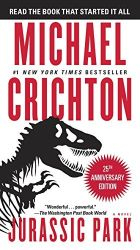
Reviewer's Name: DominicJurassic Park is a sci-fi thriller about a park that has figured out how to clone once-extinct dinosaurs and has invited two paleontologists to tour it. I chose to read this book because I love dinosaurs and have seen all the Jurassic movies. I enjoyed this book because it is an exciting thriller with lots of dinosaur action. I also appreciated how the author didn't hold back with the consequences of bringing back dinosaurs. Overall, this is a creative and masterful novel that I highly recommend.
Genres:
Review:
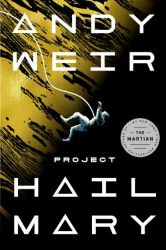
Reviewer's Name: Dominic, Grade 8Project Hail Mary is a sci-fi adventure book about a scientist and former schoolteacher, Ryland Grace, who has been tasked with a mission to explore another planetary system to discover the secrets of a sun-dimming microbe that threatens Earth. I enjoyed this book because it is filled with heart and comedy. I also appreciated how the author took time to explore the science of Grace's discoveries. It had a few flaws- sometimes the science distracted from the pacing, and some characters' choices didn't make sense. Overall, this is an amazing book that I enjoyed- I highly recommend it!
Awards:
Genres:
Review:
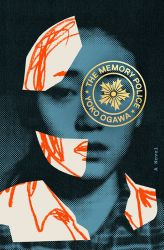
Reviewer's Name: AddisonThe Memory Police by Yoko Ogawa as a chilling yet heartwarming dystopia that dives into the intricacies of memory and identity. It follows the journey of the protagonist, an unnamed female novelist, as she navigates her changing world. The story is set on a remote island where objects and memories systematically disappear, leaving holes in the hearts and minds of the people. It leads the reader to question, alongside the protagonist, what role our pasts and our memories play in shaping our identities, and it masterfully taps into the fear of losing oneself. I have only rated this book three stars because although it was an enjoyable read, it got dull at times and I found some of the subplots to be more distracting than impactful.
Awards:
Genres:
Review:
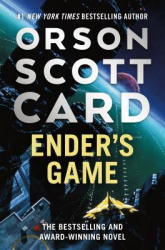
Reviewer's Name: CierraEnder’s Game is a sci-fi novel that takes place in a dystopian society where children are monitored for a certain amount of time before they are sent to a place called “Battle School” where they are trained as soldiers to prepare for the “Third Invasion.” The main character, Ender Wiggin, must learn his place in this strange society while also unraveling the government's secrets.
I read this book way back in 8th grade and had to read it again this year for class, but I’m glad I did because there were so many things that I missed the first time. For one, all the characters in this book are incredibly young. It makes the actions of the adults in the story all the more questionable. All of the kids, but especially Ender, are forced into situations where they are supposed to be acting almost two or three times their age. Ender is aware of this as he has the maturity of a kid who is much older, but he still has the emotional intelligence of a little kid. We see this during his various breakdowns throughout the book, as he doesn’t know how to deal with all the intense emotions he feels.
The worldbuilding of this book is also very good. It’s not super different from most Sci-Fi novels, but it feels very foundational in many of the choices it makes, such as the glowing pathways, the helmets, and the tablets.
The writing style of the book is also very interesting. I especially like the dialogue at the beginning of chapters, as it tends to foreshadow events that are yet to come, or explain things in a way that makes sense with the reader's newly acquired knowledge from previous chapters.
Overall, I would say this book is super awesome. Whether you love sci-fi or hate it, it’s a book I think everyone should read, as there are many things Ender’s Game does very well.
Genres:
Review:
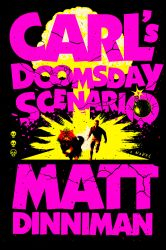
Reviewer's Name: Lucy, grade 8After mastering the first two floors in an 18 level Dungeon, things start to pick up as Carl and Donut reach the third floor. There, they can select classes and races. They can also complete quests. Though, as the title suggests, not all goes as plan. The Borant Company, controller of the Dungeon game show, keeps finding ways to make up new mobs, and the Dungeon AI is positively insane. Definitely an exciting read, and I personally am on the sixth book.
Review:
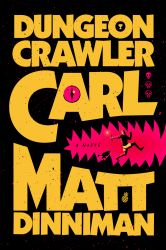
Reviewer's Name: LucyRight off the bat this book destroys the surface of Earth and turns the survivors into a deadly video game: Dungeon Crawlers: Earth Addition. This is not your average action book but instead an unpredictable battle for survival as Carl, and his cat Donut, enter the dungeon where they are forced to fight mobs, gain upgrades, and raise their level to survive. It's like a video game but all too real. If you are looking for a sweet book, maybe pass this one. I think it's a good book, but there is some language and adult jokes, so not for really young kids. Best of all, it is in a series, so once you put this one down, you can pick up another!
Awards:
Review:
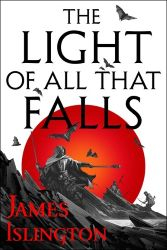
Reviewer's Name: DanielleThis book is really entertaining, especially in the second half. In this book, the Augurs go to the Boundary to try to fix it but end of going through and getting stuck, Wirr handles politics and preparing the capital for evacuation, Caeden discovers what he must do to save the world and struggles with his immortal friends, and Asha discover what she must do to help the Boundary effort with her new wealth of power. I really enjoyed the unique struggles Caeden went through with the friends he is enemies with but has loved for centuries, it is a very intriguing dynamic. Davian’s captivity was always exciting to read as it explored his new relationships and struggles to exist in a world they can’t survive in and Asha’s new responsibilities show important themes about the cost of power. The first half of the book can be a bit slow as the setup continues and the entire series in general can be a bit confusing with the timeline, but I think the confusion isn’t too much of an issue and the ending more than makes up for any slog in the first half. It is a somewhat sad but satisfying end that tied up any loose ends very nicely and made me want to read it again as soon as I was done.
Genres:
Review:
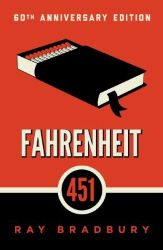
Reviewer's Name: Samuel, Grade 11Fahrenheit 451 by Ray Bradbury follows the story of a fireman named Guy Montag. While in our time a fireman might put out fires, in Fahrenheit 451 the fireman's job is to start them. In this time, all books are banned and any book found is burned. In this world knowledge is an enemy to the power of the government and they try to do everything to stop the spread of knowledge through books. Screens and advertisements are everywhere, there is no way to hide. Montag who originally is against books and enjoys his job meets a girl named Clarissa McClellan who talks to him about happiness and his job. Through the conversation Montag starts to question if what he is doing is right and starts to realize that books might not be as bad as he thought.
Fahrenheit 451 is a novel that everyone should read. Fahrenheit 451's theme about the importance of books and the preservation of knowledge cannot be understated. The characters and events in the book are very fleshed out and the development of Montag as a person makes you think. The setting, plot, and characters are all excellent and make for a novel that you do not want to put down.
Genres:
Review:
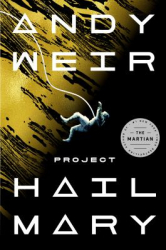
Reviewer's Name: Cara"Project Hail Mary" is a science fiction adventure telling the story of Ryland Grace, a man who wakes up with amnesia in a sterile room with no other human besides two corpses. Confused and terrified, Grace slowly pieces together the gravity of his situation: The world is ending, and he might be the only man capable of saving it.
This book was so good! I was nervous when starting the novel, as I did not enjoy Wier's previous books such as "The Martian," but I was surprised at how much better "Project Hail Mary" was! While it can be heavy on the scientific elements, Wier never strays from the plot, and I found the story was pretty easy to understand despite the science. Also, I really enjoyed how we, as the readers, work with Ryland Grace to learn the mission at the same pace he is. Since he starts the book with total amnesia, he gradually learns along the way of his purpose and the true motivation of his mission, and as such, the readers do as well. I feel like if I were more interested in science this book could've been even more amazing, but I just don't have the same understanding as I'm sure others do. So, I would recommend this book to anyone who loves or is interested in science, even if they do not like to read. I feel like it captures the elements of a standard novel and the science influence very well.
Awards:
Genres:
Review:
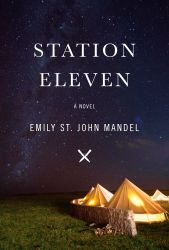
Reviewer's Name: Samuel, Grade 11What happens to the world if a deadly pandemic were to rush through the world? What happens when the world and civilization as we know it collapses? Station 11 attempts to answer that question by following the lives of many characters through the past and present. Arthur is a celebrity who can't seem to keep a marriage. Kirsten was only a child when the flu hit but now she is traveling in a traveling symphony sharing their love for the arts with the few towns that exist. The Prophet, obsessed with airplanes, wants to make the world normal again in... interesting ways.
The idea and the events behind Station 11 are amazing and the pandemic made me very interested in what this book could be. I find the characters to be interesting to learn about and see how they grow and change overtime. The themes of relationships, family, civilization, memory and reminiscing are powerful and make you think. Unfortunately I find that the plot of the book is nonexistent at times and can sometimes drag on. It also can feel very confusing at times as almost everything in the book is connected to every other thing making it hard to keep tract of the plentiful amount of characters and objects on top of the non linear format . Overall I would say that this novel is overall a good read with very captivating stories and themes but with some issues with plot.
Awards:
Genres:
Review:
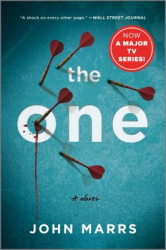
Reviewer's Name: AnnThe world of romance and dating has changed; with a simple submission of DNA, you can find the one meant for you. This is the purpose of Match Your DNA, a company that uses DNA to find someone's perfect other. Five different people with very different lives have been matched. As these strangers connect with their matches, secrets are revealed... and Match Your DNA may not be everything the world has come to believe it is.
"The One", although a very interesting concept, was difficult to get into. It did not feel like much of the thriller and took quite some time to get interesting. The ending was also somewhat disappointing and could have gone into more depth on what happened. Although it wasn't a favorite, it did explore interesting themes.
Genres:
Review:
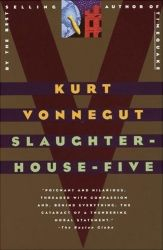
Reviewer's Name: Cierra, grade 12Slaughterhouse-Five is a semi-autobiographical historical fiction novel by Kurt Vonnegut. It follows the life of Billy Pilgrim as he becomes “unstuck” in time and is forced to live his life out of order for the rest of eternity.
This is by far the strangest and most unique book I’ve ever read. Vonnegut’s use of non-linear storytelling creates a feeling that I can only describe as…meta. It not only makes sense in the context of the story but is also an interesting writing choice that reflects the author's thought process.
The characters in this book are also, for lack of better words, interesting. They all seem to be either exaggerations of real people Vonnegut met or personifications of his post-war trauma.
This book makes a lot of references to itself, and while that isn’t odd for a book to do, it’s the way that it happens that makes it odd. For example, there’s a character who appears to be a reference to Kurt Vonnegut, which is odd because that is very similar to what Billy Pilgrim is supposed to be, which is even odder because Kurt Vonnegut himself is in the book. It’s things like this that make the novel such an interesting read.
The supernatural elements of this story are another aspect that might seem weird, but are surprisingly not, and that’s because this book's biggest strength is execution. It’s weird, creepy, and disturbing, while at the same time being deadpan, mundane, and even humorous at times. Vonnegut achieves all this while not making these shifts jarring or tone deaf, which takes an incredible amount of skill.
This book is very hard to talk about without spoiling anything, so I highly suggest you give it a try! It may be challenging and hard to follow at times, but unraveling the story is one of the most rewarding aspects of this book!
Genres:
Review:
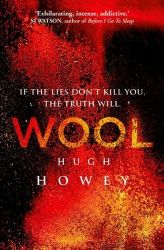
Reviewer's Name: LincolnWool is single-handedly the best politically dystopian book I have ever read, as well as #2 best book I have ever read. Howey masterfully extricates critical thought from the reader, not even mentioning some really deep aspects of what a political situation might fully manifest, causing the reader to add their own reasons they generated implied from this epic presentation of situations to more obvious reasons explicitly stated as an ever-present apex of human analysis in Wool. Consider satire -- presented simply and relatively easy to understand. Even slightly comical. But when analyzed and context is applied, it becomes a powerful tool, causing the reader to read in reverence at the wisdom of the author. Although not satire, Wool certainly gave me reverence toward Hugh Howey. If I were to see him walking down the street, a great effort would be made on my part to engage in conversation, second only to Ted Dekker. This critical thought and other implied assumptions left me feeling respected as a reader -- my intelligence is welcome for more than guessing the future plot: understanding the story. I believe the more intelligent the person, the more they will enjoy Wool.
Wool is book one of the Silo series. Book two is technically a prequel (to the perspective of the world, not Howey) but definitely read Wool before Shift. Incredibly powerful as a stand-alone, the Silo series collectively can move mountains. After finishing Dust, I began tearing up. I never tear up. For such a logical book where every decision is made rationally (until Juliet), Howey elicited an emotional response from me. The theme stressed across the Silo series is: "For so long we have chosen to do what is logical and rational. What statistically makes sense. But I fear the solution to this problem lies in doing what is right. Following the heart and not the brain." (NOT a quote from the Silo series).
As an aspiring engineer with straight As, this hit me hard. As someone who seeks efficiency and celebrates structure this broke me. In that moment when I realized what Howey was trying to drive through my logically intelligent but emotionally stubborn mind, I had to STOP reading. I read the paragraph three times. Respecting Howey for his political depth and logical nuance, I was offended for but one second when this dawned of me. And then I realized he was right.
Go make a realization.
Awards:
Genres:
Review:
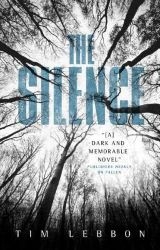
Reviewer's Name: Addelyn "The Silence" by Tim Lebbon follows the Andrews family as they are thrust into an apocolyptic world. Vesps, creatures that hunt using their unnaturally-sensitive hearing, have emerged from an isolated underground cave. As their deadly swarm spreads from country to country, the Andrews family must do whatever they can to survive. Told from Ally, a deaf teenager, and her father, Huw's perspectives, the world soon becomes unrecognizable and silence becomes safety.
I watched the movie "A Quiet Place" before reading the British book it was based off of - and I was pleasantly surprised at the differences between the two! "The Silence" is a jaw-dropping science-fiction book that will pull you in and lead you through its intriguing plot, each stunning and gruesome twist keeping you guessing from beginning to end! Lebbon did a great job of making a unique and believable horror story, and the characters in this book were relatable and easy to connect with. I would definitely recommend this book to everyone - it's very easy to read even if you aren't a huge fan of sci-fi or horror!
Genres:
Review:
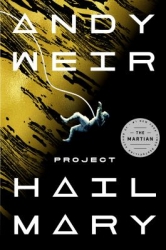
Reviewer's Name: ChaseThis book was absolutely amaze! It's a thought-provoking science fiction novel in which the protagonist has to find a solution to the world-ending microorganisms, Astrophage. It just so happens that this book was a required reading in one of my classes. The protagonist has a fantastic sense of humor and chemistry with the other character, Rocky. I loved how there were two timelines that progressively revealed more information about how our protagonist ended up in their current position, as the protagonist figures that out himself. All of the science in this book was well thought out and was explained in a mostly easy-to-understand way. It felt like every chapter was a cliffhanger, and every plot twist was surprising in a way that, when looking back, seems obvious. My one and only critique of the story is that the ending felt a bit rushed, and it seemed like the roadblocks during the end were solved without going into depth about the solutions. I highly recommend this book to people who enjoy science fiction; it was my all-time favorite.
Awards:
Genres:
Review:
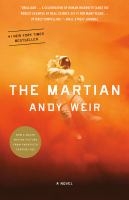
Reviewer's Name: AaronThe Martian follows the captivating story of Mark Watney, an astronaut left stranded on Mars. In the story, Watney has to figure out how to survive in the hostile environment of Mars with only a limited amount of supplies. All the while, NASA is working diligently to bring him back home.
I chose to read this book because I love science fiction and was intrigued by the position that Watney is placed in. I loved it because it shows the extent of human ingenuity and the things that one is able to do in extreme circumstances. The book also switches between the things that Watney is doing on Mars to try and stay alive and the things that NASA is doing to try and bring him back home safely, making the book hard to put down.
The only thing that I didn't like about the book is that there is a little bit of a lack of emotional depth in the book. Watney rarely shows signs of fear or despair despite being stranded on Mars for a long period of time, which is a bit unrealistic.
The Martian explores a possible future regarding space travel and exploration, and delves into some of the problems humanity may face while exploring. The book is very scientifically accurate and describes some processes in great detail, so if you're into STEM and are looking for a new book, you should definitely check out The Martian.
Genres:
Review:
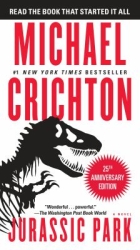
Reviewer's Name: Addelyn"Jurassic Park" by Michael Crichton follows Alan Grant (a paleontologist), Ellie Sattler (a paleobotanist), and Ian Malcom, (a mathematician) who have been invited to John Hammond's private island. But they are not prepared for what awaits them there; somehow, Hammond has found a way to bring back creatures that have been extinct for millions of years. Soon, Jurassic Park will be opened to the public, placing these newly-made dinosaurs on display for all to see. But the unpredictability of nature and the corruption within the park itself soon makes this adventure deadly. Now, the survivors on the island must find a way to escape - before it is too late.
I watched the movie adaptation of "Jurassic Park" before actually reading the book - and I was surprised to see that the original novel was even more chilling and captivating than the film had been. Normally, I don't read a lot of science fiction, but "Jurassic Park" has a completely different take on this genre. Not only is the possibility of scientific advancement - like genetically engineering dinosaurs - explored (which is especially relevant today!), but human nature and many deeper themes are also incorporated within this story. The disturbing and realistic notions and the page-turning plot makes this book an absolute must-read.
Awards:
Genres:
Review:
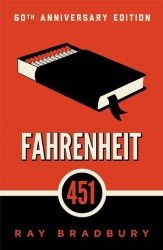
Reviewer's Name: Taryn"Fahrenheit 451" by Ray Bradbury is set in a futuristic world teetering on the edge of war. But for Guy Montag, the war feels like a distant problem compared to his own. He is a fireman, whose job is to burn any books and houses in which they were found. He does it without emotion, believing he is bettering society, until he meets a new neighbor, Clarisse McClellan, who changes his whole perspective on the world in which he lives, and makes him question everything he is told to believe. He begins to realize the true and terrible state of the world, and wonders if the books he destroys might be the solution. Guy Montag is a great character to watch develop, as he is relatable and flawed, but is still incredibly understandable, so you end up rooting for him to win. The writing style of the book is also amazing, full of convincing imagery and thought provoking ideas. I liked the book more as I read it and got to know the complex characters, and would recommend it to people looking for a short and interesting read.
Genres:
Review:
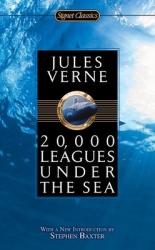
Reviewer's Name: ErichImagine being violently thrust overboard into the ocean and taken aboard a mysterious submersible inhabited by a man filled with vengeance and brilliance. This is exactly what happened to Pierre Aronnax, a french naturalist and assistant professor at the Paris Museum of Natural History in the book 20,000 Leagues Under the Sea. The book starts by describing very odd occurrences happening at sea thought to be caused by a massive sea creature. Aronnax and his friend Conseil set off on an expedition to find and kill the beast. What they don’t know is this is a much different kind of beast. One made of steel and brimming with the power and knowledge of its creator. This beast, the Nautilus, becomes their captor and their home as they journey through the ocean’s depths. This is a classic tale of adventure, excitement, and revenge. I really enjoyed how this novel is very quick to action. The story begins almost instantly. While this novel is among my top favorite books, I did not appreciate some of the racist depictions of the natives inhabiting Papau New Guinea, which did not age well. This book is a perfect quick read for kids or adults seeking a fun narrative about adventure. I believe that this book is a fantastic book, and my favorite classic. Overall, this book is a wonderful and insightful story full of imagination and excitement.
Genres:
Review:
Reviewer's Name: IsabelThis book was weird.
It felt like a windstorm of ideas blowing in my face; a mad prophet's ravings before catastrophe, and a tangled mess of actions and consequences - but somehow they all connected together? It was a bit of an experience.
Grasshopper Jungle is a story about the end of the world, but like many teen novels, it is simply a backdrop to Austin's personal dramas. One of its tags on Libby is "humor" but I think it's more of a tragedy if anything. The main character and his best friend inadvertently bring about an apocalypse by way of 6-foot tall, ravenous grasshoppers after accidentally breaking a jar they really shouldn't have broken.
The book weaves together the stories of Austin, his childhood experiences, as well as those of his brother, Polish ancestor, the mutant grasshoppers, and random strangers around town (such as his principal, his friend's mom's boyfriend, and a vulgar policeman being memorable ones). It's a lot.
I found this story's distinctive style very difficult to tear myself away from. It was authentic to the protagonist's personality, and it reminded me of the narration of classic epics. It stands out in its themes of memory, religious trauma, sexuality, and identity (and somehow being an apocalyptic story as well). The symbolism was uncanny, and the way the outside world and past timelines mirrored Austin's mental state was very artistic and unique.
Onto my criticisms and confusions: #1 has to be the male characters. I think that every single male character in this story thinks constantly about every other character in a grossly objectifying way. Honestly though, this applies to most of the female characters as well, who are just as lustfully self-interested. Very interesting, but it was a... strange experience to read the nuanced and morally grey portrayal of Austin's ancestor, a gay man who had not-consensual relations with a woman to see if he could "love" anyone other than his dead Communist lover.
Austin himself relates to this ancestor because he, too, is "confused". His gay best friend Robby continually makes advances on Austin, and Austin reciprocates because he is completely in love with Robby. He is also in love with his girlfriend, who doesn't take too kindly to the fact that Austin has kissed Robby during their relationship. Austin even documents the POV of the murderous, bi-curious, mutant grasshoppers.
The ending was extremely abrupt. I'll admit, I was glued to this book for the last quarter, and the ending made me stand up and think "what in the world did I just read". However, in all honesty, it very much suited the style of the book. It never deviates from being a chronicle of the end of the world, and the world around Austin certainly comes crashing down.
Grasshopper Jungle is a weird book that made me think, and I don't regret reading it. It is quite graphic, but if you're interested in this swarm of a book, I highly recommend reading it and forming your own opinion. I might read the sequel, but I'm a bit afraid of what it might hold.
Awards:
Review:
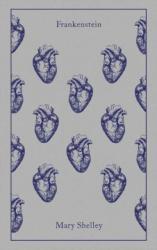
Reviewer's Name: MaxI really enjoyed reading this book! Mary Shelley's 'Frankenstein' is a classic novel that everyone knows. It's a tale about Victor Frankenstein, a scientist, and how he creates life. Except it's made from body parts. What I liked about reading this is that this is the original. Young readers don't really know about all the other complex parts of the story. It was so interesting to read and learn about a narrative I never knew before. More on the plot, it's about how Victor creates a creature and then the seemingly endless and terrifying consequences.
However, this book is incredibly hard to read. The old way it's written makes it easier to get lost or not completely understand what happened. There's a lot of words I had to look up, but the context also helps decipher it. One of my favorite parts of the book is the building suspense. Ultimately, I think this book has so much beauty, because of all the emotions I had while reading it and the message it carries about human nature.
Genres:
Review:
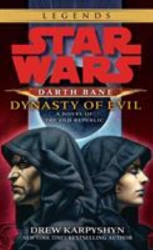
Reviewer's Name: Maverick Once already addicted to the previous two books of this series, the final book of the trio was a must have! Darth Bane: Dynasty of Evil keeps the readers on the edge of their seats! Bane has finally finished training his apprentice, Darth Zannah, in the ways of the Dark Side; However, she seems unwilling to take the title of master for her own. Bane must decide whether to wait longer for Zannah to overthrow him, or he much quickly choose a new apprentice. Which will he choose? Darth Bane, Dynasty of Evil is a perfect book for Star Wars fans, and is an epic ending to the Darth Bane Trilogy.
Genres: