Book Reviews by Genre: Science Fiction
Review:
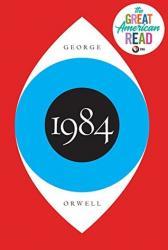
Reviewer's Name: Nam T1984 introduces Winston Smith as the primary character. Smith is a middle-aged man that lives within a dystopian society in April of 1984. Being nearly 4 decades after World War II and just a couple of years after the apparent Atomic Wars, Smith lives through the totalitarian state of Oceania, where is activity is consistently surveyed. At this point, Smith attempts to relocate himself from this totalitarian state in order to put him back to normal behavior.
1984 is another novel involving a dystopia, however, it stands out for its strong character development. The premise of the story is heavily shown through the setting, as it demonstrates a controlled and tyrannical lifestyle.
Reviewer Grade: 11
Awards:
Genres:
Review:
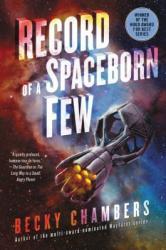
Reviewer's Name: Benjamin M. W.Considering that A Closed and Common Orbit was only loosely related to the first book in the Wayfarers series, I knew that I shouldn’t expect the third book in this series, Record of a Spaceborn Few, to have any significant connection to the previous books. Unfortunately, even the several different storylines in this book were hardly connected, seeming more like a series of short stories that were inter-cut between themselves. While Chambers’ world-building and dialogue are still top-notch, there isn’t anything in this book other than some boring characters living their boring lives.
I understand that any author worth their salt will develop vast amounts of details about the universe they create. However, most authors leave the aspects of the minutia and banal day-to-day lives out of their writing in favor of an actual plot with actual conflict. Instead, this book is filled with the details of world-building and nothing else. If these characters were better connected, or there was a stronger plot driving their stories, it would have maintained my interest. Unfortunately, most of the stories of these characters’ sub-plots are too generic and trope-like for me to care about any of them.
About the only reason I’m giving this book as high a rating as I am is due to the aforementioned writing on the part of the author. The actions and consequences are clearly thought out, and there is a realism to the dialogue that continues from the previous two books (but by this point makes a lot of the characters sound the same). If anything, this book should have been the first in the series. It should have introduced the universe and the stakes that anyone who ventures out into space is sure to face. The fact that it’s (in my opinion) the weakest in the series is probably why more exciting adventures were written for books one and two.
A disappointing and boring record of space, I give Record of a Spaceborn Few 2.5 stars out of 5.
Genres:
Review:
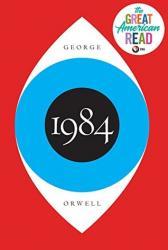
Reviewer's Name: Sophie LGeorge Orwell depicts a horrific and terrifying alternate reality of 1984.
After years of war and conflict, the world is governed by three totalitarian regimes. The one that our main character, Winston Smith, resides under is ruled by the “party” and its leader “Big Brother”. The narrative follows Winston as he meets a mysterious woman named Julia, and the two begin to secretly rebel.
When I first started reading this book, I was a little bit disappointed. I had such high expectations (I think that was the problem) ,and it just didn’t live up to them. In the beginning, I thought Winston’s character was somewhat flat, and I didn’t feel a lot of sympathy for what he was living through. I thought Julia was unrealistic and a bit obnoxious. But in the second half of the book, my opinions had changed. The book becomes quite disturbing, and it makes you question what is actually real and what is just a fabrication of the party. It’s terrifying to say the least. Despite the fact that I enjoyed parts of this book, I have to rate it 3 stars because I wasn’t engaged in the first half of the narrative.
Awards:
Genres:
Review:
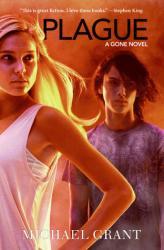
Reviewer's Name: John BThe thrilling Gone series continues with this fourth book, and Grant does not disappoint. This series has been one of my favorites and Plague is no exception. As a highly contagious, fatal illness spreads at an alarming rate and predatory insects terrorize Perdido Beach, morale continues to drop.
However, Sam, Astrid, and even Caine are determined to find a way to survive.
Everyone must make difficult decisions when it comes to saving themselves and those they love. Grant has written another phenomenal dystopian horror with suspense around every corner. I highly recommend this book to all high school aged readers.
Genres:
Review:
Reviewer's Name: Benjamin W.After my slight disappointment with Mecha Samurai Empire , I was pleased to find that a book that actually knows how to do "mecha" right already existed years before Mecha Samurai Empire was released. Taking a somewhat unique approach in its narrative structure, Sleeping Giants uses a series of interview transcripts to tell the story of discovering the parts of an ancient, giant robot and learning how to pilot this unique piece of equipment. There aren't any dialogue tags. There aren't any direct action sequences. There are just words describing the events as they happened. Somehow, it totally works.
I seriously couldn't get enough of this book and basically devoured every word. I was a little disappointed with the semi-cliffhanger ending, though. Just as everything was starting to finally come together, it just kind of ends. Sure, many of the large plot movements reached a momentary conclusion but now I really want to know what happens next. My only other qualm was the "exposition character" who was dropped into the narrative about half-way through to explain all the unexplainable bits of the story. It seemed like a cheap way to give information that wouldn't have been naturally revealed. What's perhaps the most interesting with the minimalist way the story is written in Sleeping Giants is how strong the characters come across. Even if it's only interview transcripts, the pauses, snark, and other personality traits are just as obvious as if I could see them talking across the table from me. Judging by the acknowledgments section of this book, I certainly can't wait for this to be made into a movie. I'm sure it will be just as exciting to see everything on the big screen as it was to read about it line-by-line.
A unique narrative method that had me ravenously reading, I give Sleeping Giants 4.5 stars out of 5.
Genres:
Review:
Reviewer's Name: Benjamin W.Back in college, my first introduction to Heinlein was Stranger in a Strange Land. I had to read this book for my “Science in Literature” course, and I found it moderately interesting. Since then, I’ve read other Heinlein books like Starship Troopers and The Moon is a Harsh Mistress, but I didn’t realize how dedicated Heinlein was to some of his “supernatural” themes until I read Assignment in Eternity. Sure, most authors will have some concept or idea that they like to revisit. Still, the fact that a majority of Assignment in Eternity ’s included short stories deal in some way with “superhumans” must mean something.
The whole concept of ESP and “evolved” humans isn’t interesting to me since I don’t think there’s much that can be done with the concept. While Stranger in a Strange Land covered most of the bases, Assignment in Eternity doesn’t really expand the ideas any further. If anything, Stranger in a Strange Land was the culmination of Heinlein’s obsession with this topic. I think, in the end, the whole idea of telepathy and other mind powers isn’t science fiction as much as the ideas explored by Ray Bradbury or Isaac Asimov.
Because Heinlein could fill a book with short stories mostly centering on this theme speaks volumes about the overall topics in his writing. If you’re into this kind of story, then Assignment in Eternity is an excellent addition to the classic that is Stranger in a Strange Land. If anything, Heinlein is consistent in his style, even if it makes short stories like this somewhat repetitive to the other stories and books he’s written. Like other short story collections, I would have liked to see some more variety in what was presented here, but I suppose beggars can’t be choosers.
More of the same Heinlein, just in smaller chunks, I give Assignment in Eternity 3.0 stars out of 5.
Genres:
Review:
Reviewer's Name: Benjamin W.As I’ve been working my way through Ian Doescher’s Shakespearean adaptations of pop culture movies, I think I’ve hit the point where the novelty has worn off. For whatever reason, I didn’t feel like The Force Doth Awaken had the same charm as other entries in this quirky mash-up series. I have a sneaking suspicion that this may be due to one of two factors: 1. The newer movies have more “modern” dialogue that seemed as if it was directly plopped into the Shakespearean format, or 2. The original trilogy had more time to be ingrained in my psyche, and the translation to Shakespearean felt appropriate.
I don’t want to downplay the novelty of this adaptation, though. The voice acting is still superb, and the sound effects add a little something extra that immersed me as I listened to this audiobook. Plus, it’s not like these books are that lengthy anyway. If anything, I’m out a little over an hour of my time to listen to it (since I listen at 2x speed). I did appreciate that Chewie finally received the internal monologue that R2-D2 originally had since these un-translatable individuals still have something to add. I was, however, disappointed that BB-8 didn’t have the same treatment.
One of the other factors with this “translation” that I wasn’t too keen on was the meta aspect that kept winking at the reader and saying, “See? Do you get that reference?” I understand that everything exists in the Star Wars universe, but I think most people who will pick up this book will already know those references anyway and don’t need the coy allusions to other parts of the series. Of course, I’ll still end up listening to the rest of these when I can get them from my library, but The Force Doth Awaken felt like a low point (at least until I get into the prequels).
An almost too modern and meta Shakespearean adaptation, I give The Force Doth Awaken 3.5 stars out of 5.
Genres:
Review:
Reviewer's Name: Benjamin W.It’s been a while since I’ve read a fantasy book with such a unique magic system in place. I truly enjoyed the amount of thought that went into a world where the main source of power was that of the earth itself. From magma to solid obelisks, the ability to control the vibrations of the planet (either to amplify or dampen) had an interesting and logical follow-through in its characters and storyline. I’m honestly looking forward to eventually starting the next book in the series since the world was built so well. It’s no wonder that it ended up winning the Hugo Award for that year.
While I suppose The Fifth Season is also partly a pseudo-post-apocalypse story, it was only shown in small snippets and references here and there. Consequently, this would make this story almost “modern fantasy” in comparison to some of the classics. Additionally, this would explain some of the character elements added with little to no explanation or relevance to the plot. It sometimes seems like the sexual encounters and fluid genders of these characters are included o merely hit a checkbox of “inclusivity.” Sure, people who relate to these characters feel like their represented, but if these traits don’t affect the plot, then it doesn’t matter about their sexuality at all.
I also found the bold choice of second-person POV to be a bit jarring when it spliced in the more traditional third-person narrative. Initially, I thought these segments were striking in the way that it pulled me into the story. That was until I was given a name and a purpose and any number of other traits that made the “you” in the story into a character that was basically repeated throughout. I get how these different characters interacted to tell a much broader story (which is again, part of the book’s strength) I just didn’t care for the reader’s identity to be given to them via the second person POV.
A uniquely written and crafted fantasy with one or two minor flaws, I give The Fifth Season 4.0 stars out of 5.
Genres:
Review:
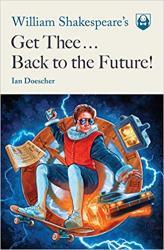
Reviewer's Name: Benjamin W.Having already listened to the audiobooks for the Shakespearean versions of the original Star Wars trilogy, I was curious to see how another beloved pop culture film would fare with the treatment. Get Thee…Back to the Future! had a bit more of a challenge when compared to the Star Wars stories. First, as the plot is set in (relatively) modern times, much of our technology had to be “explained” in Shakespearean format (e.g., a car is “a horseless carriage born on fumes of gas and flame”). At least the Star Wars stories seemed to fit in the Shakespearean timeframe a little better.
Despite this clash of modern and medieval, the transformation into Shakespearean form does end up working. I’d probably compare this to some of his comedies like The Taming of the Shrew , Twelfth Night , and Much Ado About Nothing , if for no other reason than the comedy of errors involved with Marty being hit on by his mother. I did appreciate some of the more heady references that were thrown in to make it seem more akin to something from Shakespeare’s era (the constant oedipal references were foremost among them).
One thing that seemed to be missing from the audiobook version of this was the sound effects and music that helped accentuate the Star Wars stories. Granted, Back to the Future didn’t have much in terms of sound effects. However, the music is iconic enough that it would have made a welcome addition. And by music, I mean Alan Silvestri’s score, since all the “pop songs” were addressed in the narrative and motif. Either way, it’s a short read and a fun little experiment to see how the “father of modern drama” can enhance (or ruin, depending on your tastes) our modern favorite films.
The Shakespearean comedy I didn’t know I needed, I give Get Thee…Back to the Future! 4.0 stars out of 5.
Genres:
Review:
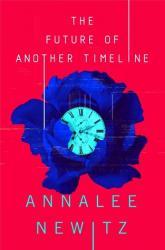
Reviewer's Name: BrittTess is a time traveling member of the Daughters of Harriet, a group that does it's best to make their present time, 2022, a safe place for women, whether cis or trans. There's a men's right's activist group from further in the future trying to undermine their efforts by erasing the Daughters of Harriet and women's rights folks from the timeline. Meanwhile, in 1992, teenager Beth, a friend from Tess' past, finds herself in a bit of a pickle. She and her friends kill a boy who was in the process of sexually assaulting their friend. This starts the girls down a murderous path that Tess will do her best to stop.
For the most part, I enjoyed this book. I usually enjoy time travel, unless its being used as a cheap plot device which was definitely not the case here. Newitz did a lot of homework for this one - the historical notes at the end were really interesting and trips to the past often include historical figures. The story alternates between Tess and Beth with a few other perspectives thrown in on occasion. Tess mainly splits her time between the late 1800s (easily my favorite parts), the early 1990s and her present in 2022, while Beth's story is firmly situated in 1992. While I enjoyed both stories, I never really felt compelled to read the book. Both perspectives were interesting, but not captivating or thought-provoking (though I suspect the book will provide plenty of thinking material for some readers). As a result, certain plot points felt unnecessary and the book felt overlong. I really hated the way Tess' story ended. Nonetheless, its an enjoyable read that makes a great point (women are people too, who knew?) that I would recommend to science fiction readers that are interested in women, women's and LGBT rights. There's also quite a bit of 90's punk rock that readers of a certain age will love. The ending is also quite optimistic, which I wasn't expecting, but did welcome.
TLDR: The Future of Another Timeline is interesting book full of time travel shenanigans that is plagued by the same issues that all time travel book face. Ultimately, while the book was fun, feminist and full of salient social commentary, it wasn't compelling.
3 stars - I liked it.
Thanks to Netgalley and Tor for the advance copy which I received in exchange for an unbiased review. The Future of Another Timeline will be available for purchase on 24 September, but you can put your copy on hold today!
Genres:
Review:
Reviewer's Name: Benjamin W.***THIS BOOK WAS RECEIVED FROM THE PUBLISHER***
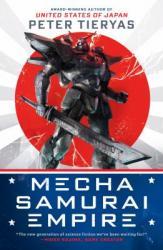
For a genre that’s usually associated with Japanese anime and manga, I haven’t seen many “mecha” novels (or movies, for that matter, with Pacific Rim (2013) being the only notable example). Consequently, when I received an advance reader copy of Mecha Samurai Empire, I was looking forward to reading it. While there were still a few grammatical and proofreading errors in this book—of which I’m sure have been fixed in the final version—portions of the plot didn’t sit well with me. My main qualm is the main character who really isn’t good at anything but still gets to pilot a huge and complicated piece of machinery just because he wants to.
A clear and obvious mix between The Man in the High Castle and Neon Genesis Evangelion, the few strong elements of this book were in the mecha battles themselves. The problem is that the references sprinkled throughout are so obvious (I had to roll my eyes at the Mega Man 2 reference) as to distract from the story. I don’t mind if other stories influence writers, but at least make their influence less obvious when crafting something “new.” At its worst, Mecha Samurai Empire holds to all the tropes and clichés present in mecha anime and manga. If you're into that kind of thing, this probably isn't a problem.
While I still enjoy the spectacle of giant robots fighting, a good story needs to come down to its characters. Since I didn’t particularly like the main character, I tried to grab onto some of the minor ones. Unfortunately, while some of the character arcs were highly predictable, most of the minor characters didn’t stand out either (and the one that did was super annoying). Just like Pacific Rim: Uprising (2018) made me lose faith that we’ll see live-action adaptations of mecha anime like Evangelion or Gurren Lagann, Mecha Samurai Empire shows we still have a way to go before novels of this genre are prevalent.
An obvious mashup with pretty good action, I give Mecha Samurai Empire 3.0 stars out of 5.
Awards:
Genres:

Review:
Reviewer's Name: Benjamin W.As I’ve been reading through the Tales of Alvin Maker series, I have found it interesting to see what big societal issues have been covered so far. While Seventh Son tackled religion and Red Prophet delved into politics and war, Prentice Alvin bit off a big chunk of racism and tried to address it in a way that’s half fantasy and half historical fiction. Sure, there’s still some semblance of the religion content present in this book that informs the racism dialogue. Still, these large issues end up taking a back seat to the more fascinating aspects of the titular character learning how to control his incredible powers.
In fact, this might be my favorite book of the series so far. It’s always more entertaining to watch a character come into the depth of their abilities, and Prentice Alvin has this in spades (both metaphorically and literally). While there weren’t many instances of Alvin directly being affected by a conflict that would require him to grow as a character, there were enough inevitable plot points that made me wonder how he would handle the situation. These twists helped to enforce the world-building that Orson Scott Card has excelled at for some time.
Perhaps the reason why I like this book as compared to its two predecessors comes down to how it focused more on the “magic” of this alternate history and less on the similarities to the American historical context. I’ve never been much of a fan of historical fiction, but I do appreciate explaining the events of the past through the lens of magical realism or fantasy. It’s likely why I’ll keep reading this series for the time being. At the very least, I’m curious how Alvin will grow from here, as he’s developed into a strong character who can basically do anything he wants.
A magical take on addressing the racism of America’s past, I give Prentice Alvin 4.5 stars out of 5.
Awards:
Genres:
Review:
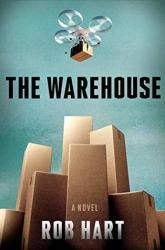
Reviewer's Name: BrittImagine a world where Amazon controls pretty much everything (its really not hard to do, right?). They are the only large employer, and they have managed to put just about every other retail company out of business. Most folks who need employment have to head to their nearest Cloud center (Amazon = Cloud), apply, and hope against hope they are accepted. This is the fate of our two main protagonists, Zinnia and Paxton. Paxton wants more than anything to keep his head down until he can get patent money for his invention, a business that was going well until Cloud forced him out of business. Zinnia’s reasons for working at Cloud are a bit more inspired (it would depend on your perspective) as she’s been hired to try to take Cloud down from the inside. As Paxton and Zinnia are thrown together, both will come to realize that the Cloud was more insidious than they thought and they’ll have to sacrifice more than they’re comfortable with the bring it down.
I read this book right after watching John Oliver’s sendup of this sort of corporate culture and dang, Rob Hart did his research. His version of Amazon matches quite closely with what Oliver presents as the actual version of Amazon. I mean, it’s not great. Its really fascinating to read this near-future take on what Amazon and their ilk could mean for our country and economy as, like I said, this is a future that is really easy to imagine.
The book takes turn between Zinnia, Paxton and Gibson Wells’ (think Jeff Bezos) narratives. The characters are believable and likable enough (save Wells, but that’s obviously intentional) that I was not overly fond of one perspective over the other and never found myself racing through one perspective to get to a different one. Nonetheless, the book ends up being a quick read. It was sort of John Grisham meets Brave New World, and I was not mad about it. It’d make a fantastic movie, and clearly someone agrees with me as the author thanks Ron Howard and Bryan Glazer in his afterword.
If you are looking for a quick summer read that’ll make you think (but not too hard), this dystopian thriller will suit your needs. 4 stars – I really liked it!
Thanks to Crown and Netgalley for the free eARC which I received in exchange for an unbiased review. The Warehouse will be release on 20 August, and you can put your copy on hold today!
Genres:
Review:
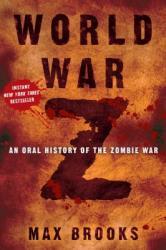
Reviewer's Name: Ryan P.Max Brooks is an agent of the United Nations, tasked with collecting the stories of those who lived through the Zombie War. Having broken out when a young Chinese boy was bitten while swimming, it spread through illegal organ and human trafficking, hidden by governments, until a massive outbreak occurs in South Africa, shining a light in a plague that would bring humanity to the brink of extinction. Max Brooks’ World War Z chronicles the stories of people from all walks of life, from military scientists, to blind old Japanese men, to astronauts aboard the ISS, and their stories of how they survived the terrors of the assault of the living dead.
Awards:
Genres:
Review:
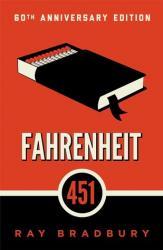
Reviewer's Name: Maddie KFahrenheit 451 is a classic book that most people have heard the title of. With a similar style to Aldous Huxley’s “Brave New World”, Fahrenheit 451 takes the reader into a future where books are outlawed and the people of this alternate future are basically mindless robots. The people of this future have an intake of mindless media that even surpasses that of us currently. The main character is a firefighter but different from what we are used to. These firefighters fight with fire, burning houses and books if they are found since they are against the law. But soon after meeting a girl who does not conform to this society’s media consumption, the main character begins to rebel and go against the norm. Fahrenheit 451 is a spooky prediction of what the future will hold and after reading it, I can already see us as a society heading on this path. A truly incredible read, Fahrenheit 451 is a novel that cannot be missed.
Awards:
Genres:
Review:
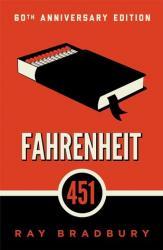
Reviewer's Name: McKenzie WI originally purchased Fahrenheit 451 because it was an option on a summer reading assignment; the book seemed interesting based on the description but it wasn’t a book I would normally pick up. Fahrenheit 451 takes place in a world where firefighters no longer put on fires but burn books. Guy Montag is one of these firefighters though he has never really considered why he became firefighter or why books are burned. On his usual way home Guy meets Clarisse, a young neighbor, who is curious about why thing are how they are.
Clarisse asks Guy why he became firefighter and if he has read a book. While at first Guy finds Clarisse’s curiosity foolish, he begins to realize he had been a the fool all along. This book has been eye opening, I have never thought about the subtle censoring in books, and the way many things are mindless, pointless, and short. While with many books are so action packed you can’t put them down, this is not the case with Fahrenheit 451. With this book I was able to slow down, imagining everything detail, and just think about the theme. This book is a classic for a reason, the message is meaningful. The events that created the setting of Fahrenheit 451 seemed a little too relatable, and it really got me thinking about censoring in our society. This on the shorter side and it is definitely worth your time.
Awards:
Genres:
Review:
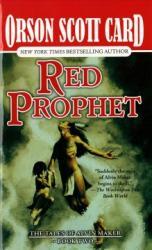
Reviewer's Name: Benjamin W.Continuing from the previous book in the Alvin Maker series, Red Prophet flashes back and shows certain events from a different point of view before driving forward into some fascinating alternate history. I continue to enjoy the fantastical elements brought into American history, even to the point of explaining how certain famous historical figures were the way they were. Although, if you know enough history, you’ll realize the fates of some of the characters presented in Red Prophet (William Henry Harrison, for instance) might not need the foreshadowing missing from this text.
While Seventh Son managed to set up this alternate history and establish some of its rules, Red Prophet delves into the action and excitement that comes from some of the more “kinetic” talents of these characters. Once the plot catches up with where Seventh Son left off, I was hooked. The interactions between Alvin and the Native Americans were quite interesting, and I found everything up until the climactic battle to be top-notch storytelling. Sure, it took a little while to get there, having to first set up the eponymous “Red Prophet” and his powers of observation, but it was worth it in the end.
My one qualm with this book lies in some of its more peculiar metaphor, allegory, and allusion. Near the end of the book, several scenes and sections feel entirely disjointed from the narrative. Perhaps they were to serve some “higher purpose” to lay out the moral of the story—or even the series as a whole. These scenes had characters who suddenly were ripped out of their normal behavior and put into a completely different context. And for what? To show that the history of the Native Americans is rich and varied while also infused with war and darkness? There had to be some other way to convey this than the way it was done here.
An action-packed follow-on to Seventh Son that gets a little too “heady” at times, I give Red Prophet 4.0 stars out of 5.
Awards:
Genres:
Review:
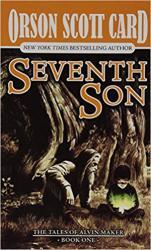
Reviewer's Name: Benjamin W.Having loved Orson Scott Card's Ender Saga, I decided to start into another of his series, Tales of Alvin Maker. I was used to his science fiction writing, so I thought it would be interesting to see how he handled semi-historical fiction. For the first book in a series, Seventh Son certainly has its strengths and weaknesses. It’s clear this book came on the heels of the Ender Saga, as there are a lot of parallels between characters and motifs that I just couldn’t ignore. Not that that’s necessarily a bad thing by any means.
While the history of colonial America is the setting of Seventh Son, the fantasy elements added to it made for an interesting read. I did appreciate the distinctive “good vs. evil” conflict between the Makers and the Unmaker, even if it’s a little too tried and true. At the very least, while the religious characters had some amount of strawman characterization set against them, they were well rounded enough not to make the whole story seem too anti-Christian. They weren’t necessarily the enemies, but their ignorance factored into the enemy’s tactics.
Perhaps the little snippets of American history sprinkled throughout this book were what intrigued me the most. Sure, the superstition and “magic” involved in creating an alternate timeline of history made quite a bit of sense. However, without at least a cursory knowledge of these events and historical figures, then readers could potentially miss a lot of substance. As with the Ender Saga, Card uses his writing to dive into different theologies and philosophies that do more than merely entertain. The fact that books like this can be thought-provoking through solid characters is a testament to his talent as a writer.
An adequate start to a series with plenty of potential, I give Seventh Son 4.0 stars out of 5.
Awards:
Genres:
Review:
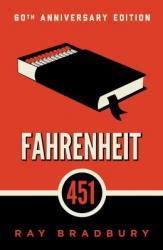
Reviewer's Name: MilesGuy Montag, a fireman who lives in the future where all books are banned, is required to burn them all. Guy then meets a strange girl who explains how books aren't so bad. He begins to spend more time with her and as more fire calls end up worse and worse, his point of view on books is eventually changed. Guy becomes a rebel to the fire company, as he tries to stand up to what is right. He later meets with an ex-professor who helps him generate a plan. Will he succeed? Read this book to find out. I would recommend this to anyone who wants to read about an alternate point of view on the future and readers who like technology as well as robots.
Awards:
Genres:
Review:
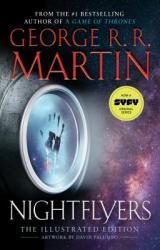
Reviewer's Name: Benjamin W.Those who are familiar with George R.R. Martin's Song of Ice and Fire fantasy series may be lamenting the end of the semi-faithful Game of Thrones television show. In the time we’ll all have to wait until the next Song of Ice and Fire book comes out, there are other little stories from this author to satiate our appetite. Nightflyers is a short novella by Martin that also seems to be hinging itself on the success of Game of Thrones, albeit in the science fiction genre instead of high fantasy.
Considering how verbose Martin can get with his works, it was almost refreshing to read a story that was so focused and short. Granted, even though Nightflyers is science fiction, all of the notable George R.R. Martin elements were present: mainly, sex and violence. Depending on your tolerance of these elements, I can say that they’re at least naturally integrated with this novella. Martin certainly seemed to have an adequate grasp of sci-fi to give this story a satisfying twist that drove the plot into the denouement.
Without giving too much away, I did appreciate the science (and pseudo-science) that was used to create an interesting story. Or, at least, the story was written in such a way—with a dash of horror sprinkled in to engage the reader—that prevented me from being bored with it. If it had been expanded out into a full-size book, I’m sure I could see where plenty of fluff could have been added in to reach the required word count. In the end, I’m glad that Martin kept this short, which works primarily to the story’s benefit.
A quintessential George R.R. Martin sci-fi novella, I give Nightflyers 4.0 stars out of 5.
Genres:
Review:
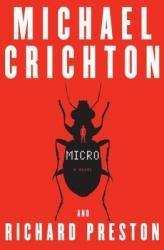
Reviewer's Name: Benjamin W.I liked Michael Crichton's writing. And what I mean by this is that I liked Jurassic Park (and to a lesser extent, The Lost World). Recently, I’ve been delving into a few of his other works, like Timeline and Micro. I understand that authors like Crichton excel in their genre—in this case, the technological thriller—but at what point does it just become the same old song and dance? Sure, I know a different author completed Micro and released posthumously. However, it mostly just felt like another re-hash of Jurassic Park mixed with Honey, I Shrunk the Kids (1989).
To Crichton’s credit, I feel his exploration of complex scientific principles in his writing are easy to understand and mostly accurate. For Micro, each bit of information that drove the plot seemed to make sense from a scientific standpoint. This was a plus considering how often the “shrink ray” sci-fi trope is done incorrectly. Of course, most places were pretty obvious where the science was being inserted since they didn’t necessarily flow as well as the other parts of the book.
My main qualm with Micro, aside from it containing all the standard Crichton tropes (e.g., “evil corporations”), is how the characters were practically indistinguishable from each other. The fact that they all primarily came from the same scientific laboratory and were thrust into the dangerous world of the microscopic didn’t help to keep track of who died and who lived. It was almost as if the author needed a large group of faceless characters to feed into the “drama” of trying to survive and return to standard size. None of their demises stuck with me other than being particularly grotesque and cringe-worthy.
A semi-unoriginal mashup of Jurassic Park and Honey, I Shrunk the Kids, I give Micro 3.0 stars out of 5.
Genres:
Review:
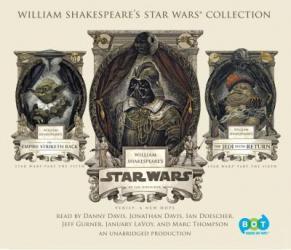
Reviewer's Name: Benjamin W.Of the original Star Wars trilogy, Return of the Jedi has been my favorite for as long as I can remember. I enjoyed how there was some finality to the stories started back in A New Hope, and Empire Strikes Back. Plus, there were a ton of neat creatures (like the Rancor and Sarlacc) and machines (like the Speeder bikes and AT-STs) that grabbed my attention from a young age. Sure, I can understand the depth of Empire Strikes Back now that I’m an adult, but Return of the Jedi always holds that element of nostalgia for me.
So, how does the Shakespearean version of my favorite Star Wars story stack up? If anything, Shakespeare’s The Jedi Doth Return is consistent with its predecessors, Verily, a New Hope and The Empire Striketh Back . I enjoyed the voice acting and the little changes that made the audiobook more than just a Shakespearean reading of the screenplay. Of course, having listened to three books of this fantastic mashup, it has almost overstayed its welcome. Almost. I still think it’s a genius fusion of two pop culture masterpieces, but at what point does it lose its originality?
Sure, The Jedi Doth Return adds some new bits like songs (which land just about as well as the “added” songs in the 1997 Special Edition re-release). Overall, though, I was a little taken aback at how little dialogue there was in it. Most of the action was described either in chorus or soliloquy, which merely highlighted how much action was present in the original movie. This is great for an action-packed conclusion on the big screen, but it doesn’t land quite as well on the printed page (or audiobook). Despite this, I still think fans of either Star Wars or Shakespeare (or both) should give it a read.
Another consistently funny mash-up of archaic speech and futuristic sci-fi, I give Shakespeare’s The Jedi Doth Return 4.5 stars out of 5.
Genres:
Review:
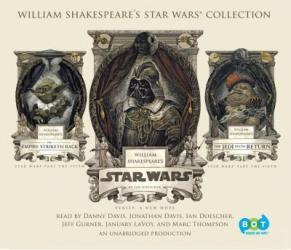
Reviewer's Name: Benjamin W.I said it for my review of Shakespeare’s Star Wars , and I’ll say it again: this combination of old verbiage and meter with popular science fiction is a match made in heaven. The follow-up to the first part of the original trilogy, Shakespeare’s The Empire Striketh Back continues to be an amusing exercise that anyone who loves Shakespeare and/or Star Wars will enjoy. Some consider Empire to be the best part of the original trilogy, and its adherence to the plot won’t disappoint. Additionally, the audiobook version continues to use music, sound effects, and voice acting to recreate an experience as close to the source material as possible.
While the audiobook did provide a robust experience of the text (especially the voice actors who recreated Han Solo and C-3PO’s speech patterns), the author’s explanation at the end made me realize there were some aspects that weren’t quite as clear as they would have been if I had just read the book normally. For instance, Yoda’s typically backward speech wasn’t as backward as I would have thought—mostly because the Shakespearean cadence sounds a little backward. Instead, Yoda spoke in haiku, which I’m sure would have been more evident if I was reading the words on the page.
As I mentioned above, Empire is the favorite of many Star Wars fans. However, I’m one of the rare few (like the author) who find Return of the Jedi to be their favorite of these first three films. Consequently, since this book held close to the original plot, it seemed to sag a little between the opening act on Hoth and the third act in Cloud City. At least the added soliloquies from ancillary characters like the AT-AT walkers, random Stormtroopers, and the dangerous creatures of the universe added in some humorous elements to the narrative that weren’t strictly canon.
A fantastic audiobook that still might require a read-through, I give Shakespeare’s The Empire Striketh Back 4.5 stars out of 5.
Awards:
Genres:
Review:
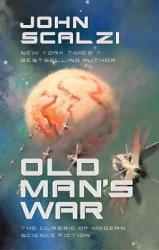
Reviewer's Name: KyleAn excellent adult Sci-Fi novel in a future where to join humanity's military, the CDF, you must be 75 years old. Interesting takes on aliens, human interactions with other species, and combat. Be warned, there are sections of this book that go quite in depth about the background of certain story elements and they can seem long winded, but they all contribute to the story at large. Great read and hard to put down once you've found a little traction.
Awards:
Genres:
Review:
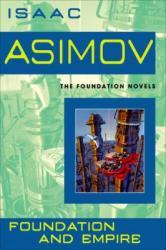
Reviewer's Name: Benjamin W.One of my qualms with the start of Isaac Asimov’s Foundation series was how different the stories were from each other. Each was set in the same universe but failed to have much of a cohesive narrative that tied them all together. While Foundation covered five different short stories, its sequel, Foundation and Empire managed to whittle this method of storytelling down to twonovellas. The result was a clear improvement in clarity and focus as each half of this book only covered a single plot each.
In Foundation and Empire, I finally was able to read a story that stuck with me in this series. Up until this point, I probably couldn’t tell you the premise of any of the short stories in Foundation, let alone the plot of the first half of this book. However, once this book transitioned over from topics that were more in line with science into ones that had a more fictional bend, I found the narrative to be much more enjoyable. It’s almost a shame that the whole book wasn’t an exploration of the universe presented in the second half.
Even if it took a book and a half for me to warm up to this series, I could honestly say that “The Mule” piqued my interest and will likely contribute to my continued reading of the Foundation series. This was probably because this particular half of the book introduced a clear antagonist to the story. It’s not that other stories in the series up until now didn’t have antagonists, it’s more that they weren’t an individual villain up until now. Now things are getting interesting!
A natural evolution of Foundation and an improvement on its predecessor, I give Foundation and Empire 3.5 stars out of 5.
Genres:
Review:
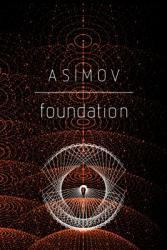
Reviewer's Name: Benjamin W.For years, people have asked whether or not I have read the penultimate science fiction series that is Isaac Asimov’s Foundation. Up until now, I could not say that I had. While I knew the series by its name, I hadn’t ever heard any comparisons or even knew what these books were about. This probably should have been my first indication of what to expect. I wasn’t expecting anything other than its notable status as a pillar of classic sci-fi. If anything, the fact each “section” of Foundation is its own short story says volumes about the origin of the genre.
Set within the same universe, Foundation follows five different groups across the timespan of a couple hundred years. Asimov explored a few different concepts and spent most of this book in world-building mode. I’ll applaud his ability to remain fairly consistent across these different stories, but the fact that there isn’t much that ties them together is the main issue I have with this book. Because they’re mostly five separate short stories, there’s not too much “action and consequence” between the different sections. This is what I would expect from a book with a standard three-act structure plot.
Additionally, I think the science fiction stories I tend to enjoy lean more on the “space opera” side than where Foundation lies. The fact that Foundation dives so deep into heady—and often controversial—topics like religion, politics, and economics is probably what lost my interest. Sure, there are some neat applications of technology that drives these topics. However, since it felt more like an academic lecture instead of an entertaining read, I glossed over a lot of the details. Maybe the other books in the series remedy this but for Foundation I just kind of felt “meh” about it.
An OK start to a highly-lauded science fiction series, I give Foundation 3.0 stars out of 5.
Genres:
Review:
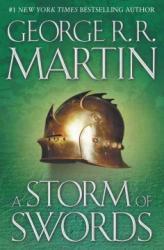
Reviewer's Name: Sabrina JIf things hadn’t already turned dark in Westeros, they certainly do in A Storm of Swords. The complicated political situation in the end of A Clash of Kings gets even more complicated as this third book dives into complex armies, weddings, wars, and so much more. George R. R. Martin’s writing may be dense, but I have never encountered a fantastical world as deeply developed as his. A Storm of Swords is jam-packed with intrigue and excitement, and it left me wanting more. I would recommend this book even if you have already seen the show; reading the books adds a whole new dimension to the characters, the plot, and the world.
Awards:
Genres:
Review:
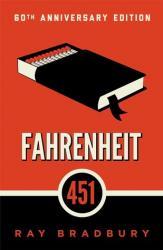
Reviewer's Name: Aiden FWith this dystopian society reversing positions in society, firefighters burn books and light houses on fire. Montag, a veteran firefighter, soon meets a girl who changes his mind about life, books, and his job. Soon, this mystery girl disappears and Montag soon sets out on a risky adventure to solve the mystery of his lost friend. With him betraying society, reading intriguing literature, and meeting new friends, the society is out to find Montag. Will he escape into the unknown world or will he be caught with his fate unknown? This book is an adventure worth reading!
Reviewer Grade: 9th
Awards:
Genres:
Review:
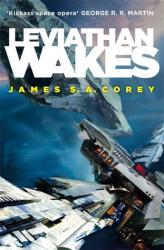
Reviewer's Name: Peter CLeviathan Wakes is the first novel in the science fiction series, the Expanse. It follows the stories of Jim Holden and Detective Miller as they attempt to uncover a plot to start a war within the planets. This book is incredible. Every character feels alive and unique, and you really begin to connect with them as the plot moves forward. The plot itself is stellar, and is relentless in its suspense, intrigue, and action. I would highly, highly recommend to anyone who loves science fiction, or is just looking for an amazing book to read.
Genres:
Review:
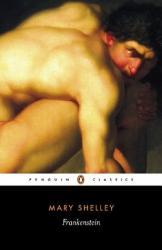
Reviewer's Name: Gillian P.In Mary Shelley's classic novel "Frankenstein", a young ambitious scientist decides to play God and, in the process, creates a monster. As the monster struggles with self-identity and the meaning of his life, he enacts revenge on his creator by destroying everything he loves. Any time you dive into a classic novel, it can be difficult to keep your expectations from getting too high. This novel met pretty much all of mine -- the rich character development of both Frankenstein and the monster, the excellent use of suspense and foreboding to create tension, and the well-paced action. There were definitely some slow parts, but that's mostly because the writing style has changed so much between then and now. However, the multiple perspectives helped keep things moving when they began to slow down. I really enjoyed this novel but I had one fairly big complaint: the ending felt rushed. I felt that we were building up to a much more action-packed ending, but things fizzle out very quickly and the novel ends on a strangely unsatisfying note. I think that there could've been more time spent creating a strong conclusion to a really strong story. Besides that, this classic is excellent and definitely worth a read.
Grade: 12
Awards:
Genres: