Book Reviews by Genre: Classics
Review:
Reviewer's Name: StevenVillette is an incredibly hard read. The novel follows Lucy Snowe in her escape from England. She reminisces on her life's story and the overall storyline is intriguing. The side characters play their parts well, and certain tragedies in the story do leave hard-hitting impacts. Nevertheless, the book is over four-hundred pages of intricate literature with an incredible range of advanced vocabulary. However, the complexity of the read does add a bit of fun to the book, despite drawing attention away from the story itself. Looking up advanced English and French vocabulary almost makes the novel a neat, theatrical dictionary. While hard to understand and read, it allows the reader to dive deeper into each character and develop them more on a personal level. Overall, I would only recommend this book to people looking for a challenging read and with time on their hands.
Genres:
Review:
Reviewer's Name: StevenA Tale of Two Cities is a grand novel by Charles Dickens that details the events of Charles Darnay and Sydney Carton, along with many other characters, throughout the beginning the middle of the French Revolution. The book starts off a little slow, but after getting through most of the exposition, the book turns into an undoubtable classic. The main characters are detailed thoroughly, and their motivations fuel their bond and the plot beautifully. The inner conflicts they face all fit into place like pieces of a puzzle over the course of the novel, which leaves the reader both satisfied and distraught at the same time. The sub-plots also tie the story together well, and the heroic ending is written perfectly. The setting of the French Revolution, romance, and character development throughout the story creates a captivating bond with the reader and always leaves one in a state of suspense. The themes relating to the greater scale of humanity and sacrifice also leave a lasting message. Although it is a decently long read, I would recommend A Tale of Two Cities to anyone as a must read.
Genres:
Review:
Reviewer's Name: Rowan K.1984 by George Orwell is a phenomenal piece of dystopian literature that comments on the role of government and what freedom really is. The book follows the story of a lower ranking party member named Winston Smith who begins to defy the ideals of Ingsoc or "English Socialism" and the thought police. 1984 imagines what the world would have been like if the Axis powers in World War II had won/ if the war had never ended. I highly suggest this book be read along with Brave New World by Aldous Huxley because the juxtaposition between the two is fascinating. I recommend any reader who enjoys dystopian, philosophical, political, historical, or science fiction to read this book as it encapsulates all of those genres.
Awards:
Genres:
Review:
Reviewer's Name: LanaThe Narrative of the Life of Frederick Douglass, an American Slave by Frederick Douglass illustrates Douglass's life during slavery in Maryland and his attempts to make it to freedom. This narrative demonstrates the horrific situations/events and the terrible way slaves were treated throughout the time period of slavery way deeper than the average history text book. The narrative is extremely informative about life's of slaves since it goes into specifics about slaves being born, their living quarters, amounts of food, the masters, etc. It is very difficult to relate to or know exactly how a slave was treated in this time period; however, this book allows readers to understand the hideous and fearful actions that were taken against these human beings. This narrative brought tears to my eyes and shocking expressions to my face when reading certain real events that took place. Overall, I really enjoyed this book and it was extremely well written because it allowed me to see more than what is taught in an American History class because Frederick Douglass goes so in-depth about his experiences in slavery throughout the narrative.
Reviewer grade: 11
Genres:

Review:
Reviewer's Name: EmaniI read this book because it’s my mom’s favorite book of all time. It follows a young boy named Pip as he grows up. It’s a love story, and a pretty good one. Though it’s a little hard to read because of the old style English writing that Dickens used, it’s definitely worth reading. Overall, I would highly recommend this book!
grade: 11th
Awards:
Genres:
Review:
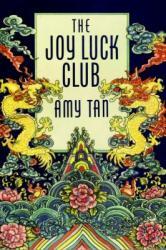
Reviewer's Name: Jenna W.This book expresses the powerful spirits of four Chinese American mothers and daughters. The four mothers formed the Joy Luck Club after creating a strong bond with one another over mahjong after all four moved from China to San Francisco. Each mother holds her own unique struggle while living in China and while raising their "Americanized" children. As the daughters grow they realize that they shouldn't have rejected their Chinese heritage when they were young. Their mothers also wonder if they raised their daughters the right or wrong way because they were able to gift them with the independent spirit of an American, but may have disconnected them from their Chinese culture. While the book describes the lives of each mother and daughter, the plot mainly focuses on Jing-mei (June) Woo who, after her
mother passes away, travels to China to reconnect with the twin daughters her mother was forced to leave in China. Though this story follows the tales of Chinese women, I believe that anyone can find a connection to the struggles and conflicts these women faced.
Genres:
Review:
Reviewer's Name: Emani K.I read this book in English class my junior year of high school. I find the Salem Witch Trials interesting, so I was excited to read this book. While this book is based on actual events, there are some added fictional parts. I thought it was interesting how rumors and blame could cause the deaths of so many people who did nothing wrong. Overall if you find the Salem Witch Trials interesting, I would highly recommend this book!
Awards:
Genres:
Review:
Reviewer's Name: Ethan Kon-Tiki is a novel about a group of men who sail across the ocean on a polynesian raft with the bare necessities for life. Using barely any modern resources, like a GPS or Emergency SOS, they set sail in the early 1950’s. They wanted to prove that it is possible to sail to polynesia in a raft. The beginning was a little rough for me, as it was about the preparation, the, and the support behind the project. I disliked them going into so much detail about the raft they were trying to copy. They were trying to copy the exact rope, the exact bamboo, the exact position of launch, and the exact shape. If you are a story lover like me, it starts out rough, but it turns into a fabulous journey towards the middle. I enjoyed this book because of the sense of adventure and the sense of
exploration. It describes the adventure of meeting the Whale Shark with a passionate sense of adventure, describing the people on board being panicked at first, then treating it as a kind of puppy. This is a favorite of mine, due to the fact that the adventure was both interesting and thrilling. I recommend this book to anyone that is looking for an adventure on the sea.
Genres:
Review:
Reviewer's Name: MarkThis Shakespeare classic tells the story of two star crossed lovers. While the story is well known, the play script is still rewarding to read. While the writing style can take a bit of time to become accustomed to, the thoughtfulness of the dialogue can be appreciated much better than while watching the play. While the ending of the book is somewhat spoiled in the prologue, the story telling is almost more important than the story. The writing is filled with word play and jokes in addition to the famous lines of eloquent iambic pentameter. Sometimes a translation is needed to fully understand what Shakespeare means in certain lines, but this book will leave readers with a new appreciation for poetry and writing.
Genres:
Review:
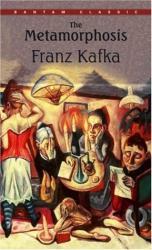
Reviewer's Name: MarkAfter turning into a bug, Gregor realizes he is late for work. However, it soon becomes apparent that Gregor will no longer be able to work. His family's view of him quickly changes as his previous contributions to it are quickly forgotten. This thought provoking book questions people's worth after they are lo longer able to contribute to society. Although the writing style is dry, the book is filled with allegories and symbolism that comment on the nature of individuals in society. This leaves readers to examine their own views on an individual's worth to society.
Genres:
Review:
Reviewer's Name: EmilyTwelfth Night is a play written by William Shakespeare. It is about multiple love triangles that take place in Illyria. The main problem is that two twins both think the other is dead and are mistaken for each other which creates many problems.
Twelfth Night is a horrible play/book. It is very dull and extremely confusing as people's names are changed throughout the play and people are constantly being mistaken for each other. Unless you have to read this, I would not recommend this book to anyone unless they want to sit through a very confusing, dull play.
Genres:
Review:
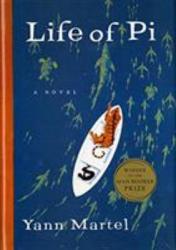
Reviewer's Name: Mark T. Life of Pi starts off slowly, with a lot of details that I thought were irrelevant to the story. While Pi is moving with his family and their zoo, their ship sinks in a storm. Pi makes it to a life boat, but there are also four animals from the zoo on it. One of the animals is a tiger, which Pi must learn to control. He must also get food, water, and protection from the sun and sea in order to survive. This book shows the struggles to survive while isolated from society and also shows the fight to retain one's humanity throughout this struggle.
Awards:
Genres:
Review:
Reviewer's Name: Sam W.I chose to read Dune in anticipation of the coming movie, and as a much appreciated suggestion from my father. Dune follows the adventures of a young boy Paul as he enters manhood. He fights to keep the planet of Arrakis, and then goes on to fight for the title of emperor. It addresses a group of people, the Fremen and their religion of turning Arrakis, the desert planet, into a beautiful land through terraformation. This book draws you in and keeps you hooked, telling a story of becoming a man, while also making it a book worthy of praise, always surprising you with one twist or another.
Awards:
Genres:
Review:
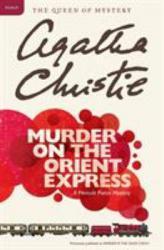
Reviewer's Name: Emily S. Murder on the Orient Express is the story of detective Hercule Poirot who is taking the train the Orient Express when a man gets murdered on board. With the help of the the doctor and other staff members on board, Poirot plans to solve the murder before the train arrives at its destination and the murder is free to walk away.
This book is very well written and has many plot twists so you are constantly looking forward to what comes next. I would recommend this book to anyone who likes a good mystery. It is fairly easy to understand and could be easily read by anyone 5th grade and up.
Awards:
Genres:
Review:
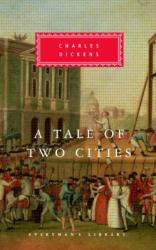
Reviewer's Name: Mark T.A Tale of Two Cities is a captivating book. Set during the period leading up to and during the French Revolution, the book details how the French aristocracy and the French Revolution affected the rich and the poor through the stories of Charles Darnay and Alexandre Monette. It also shows the angry and vengeful side of the Revolution through the Defarge's and their wine shop. A scene where a wine cask is dropped demonstrates the desperation and poverty experienced by the citizens of Paris that led to the anger behind the revolution. Dickens also brings the book to life through life-like characters that emotionally invest readers in the story. Alexandre Monette exhibits fatherly care for his daughter, yet he also struggles to deal with his time in prison, leading him to rely on his daughter for support. Sydney Carton contains likeable aspects mixed with relatable flaws that make him instantly lovable. Dickens expertly connects each scene to develop the story and foreshadows multiple aspects of the climactic ending throughout the book.
Genres:
Review:
Reviewer's Name: Alexa H.The Waves is an astounding novel by Virginia Woolf, known as her most experimental work. The novel is split into nine sections, each separated by a short passage describing the sea at a certain time of day; as the book progresses, these intercalaries move from sunrise to sunset to mirror the lives of the characters as they age in the succeeding chapters. The Waves is unique because Woolf uses a stream of consciousness writing style to capture the thoughts of her characters rather than dialogue, enhancing her characterization and creating her own take on fiction. The novel follows the lives of six friends, beginning with their childhood together. It explores the depths of human thought and as they grow older, and dives into questions of mortality and purpose. Each of the characters is starkly different from the rest, shedding light on the complexities of life through multiple perspectives.
Woolf does an amazing job of creating emotional depth in this short yet vast novel. I found everything from her descriptions of the ocean and the earth to the nuances of ordinary life to be very beautiful. Woolf's questioning of existence through her characters led me to consider my own life, and I found myself often completely immersed in her vivid imagery and rich writing style.
This novel is realistic in that the characters are all flawed in some way, and have their own fears and dreams. The illumination of their internal conflicts through stream of consciousness makes the book very personal and intimate, which is a rare experience.
I can't even begin to do justice to The Waves, so I strongly recommend that all young adults and adults read it for themselves. It has been one of of the most thought-provoking books I've ever read, and there is something in it for everyone. Virginia Woolf's The Waves is a wise commentary on humanity and a magnificent work of art; it should be read to be believed.
Genres:
Review:
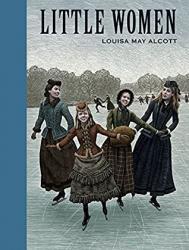
Reviewer's Name: Alexa H.Louisa May Alcott's well-known classic Little Women tells the story of four sisters in the time of the Civil War: Meg, who longs for a life without poverty; Jo, a tomboy and writer; Beth, quiet and kind; and Amy, who has elegant taste in art and life. These four girls, with the help of their mother, learn lessons that help them carry their burdens with thankful hearts and lean on each other throughout the trials they face. The novel spans ten years, and follows the lives of the March family and their friends. It highlights the small joys of childhood, adventures at home and abroad, growing up, loss, and falling in love.
Alcott's writing is insightful, touching, and humorous; she draws the reader in emotionally and offers her wisdom generously. Little Women is an important narrative of ordinary life which both amuses and grieves, and should be read by all teens. Not only does it put life into perspective; it also relates to teenagers today despite being written nearly two-hundred years ago. Any audience will be able to connect with at least one of the March sisters--especially young women. Meg, Jo, Beth, and Amy become as dear to readers as family throughout their journey to adulthood. If you enjoy heartwarming stories and historical fiction, this book is for you!
Genres:
Review:
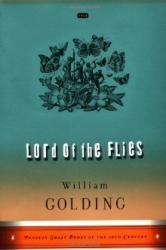
Reviewer's Name: Jaime P.This book begins with the crashing of a schoolboy's evacuation plane, which leaves them stranded on an island and left to fend for themselves. It is rich in figurative language, although it may be hard for some people to understand because it is written in old-style English. Symbolism is a strong component as well, considering that this book is an allegory, so paying attention to every detail and symbol is important. The author wrote the characters to display a mental change, which emphasizes how the lack of civilization transforms these young schoolboys into feral beasts. The ending of this novel sums it up perfectly and explains any actions that might've confused the readers when enjoying this book.
Genres:
Review:
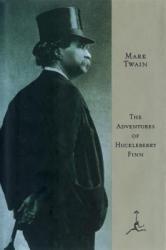
Reviewer's Name: Naomi K.I really enjoyed reading Huckleberry Finn. I think that Mark Twain portrayed everything very well. The only part I did not like is how often Twain used the N-word for Slave. Overall great book!
Genres:
Review:
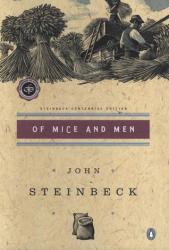
Reviewer's Name: EmaniI read this book my Freshman year of high school for English class. I know that Steinbeck is a very famous author, but I just didn’t really care for this book. I thought the story, which is about two men looking for work during the Great Depression is rather boring. I cry while reading sad parts in books all the time, but for some reason the sad ending in Mice and Men just wasn’t as sad as people made it out to be. Overall, I wouldn’t recommend this book, I didn’t like the plot or Steinbeck’s writing style.
Awards:
Genres:
Review:
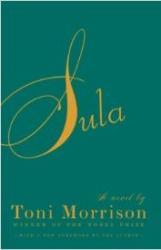
Reviewer's Name: MalachiSula, by Toni Morrison, was published in 1973. The book focuses on a black neighborhood and a friendship that develops between proper and traditionally raised Nelly and free spirited Sula. The two become very close; going on adventures and making huge mistakes throughout their adolescence, until they eventually grow apart. The novel, written by a Nobel Prize winner, is a star example of enriching African-American literature. Beautifully written, shocking, and yet also endearing, it takes readers on an insightful trip to Medallion, Ohio - one full of excitement and symbolism for modern themes.
Genres:
Review:
Reviewer's Name: AlexaBrave New World is a classic dystopian novel, written in the early 1930s by Aldous Huxley. Set in a society in which humans are manufactured and programmed depending on their assigned social class, it addresses individualism, conformity, and the dangers of complete government control. Citizens in this dystopia frequently take a drug to subdue their emotions, living in a state of ignorance and 'bliss' as they go through the motions unquestioningly. In order to keep the system of manufacturing people running smoothly, certain things are considered taboo--such as literature, religion, and family--while what we typically consider unorthodox is commonplace in this society.
The story follow several central characters who don't completely fit in or believe there could be more to life than what they experience every day. Huxley takes readers to a 'Savage Camp' where John, the protagonist (whose ideals are completely different from everyone else's), is introduced, and the other characters experience an extreme contrast to their advanced and ordered society. Readers experience John's intense internal conflict as he attempts to find his place in the new world into which he is thrust; they also learn more about the ideology of the dystopia, and what goes on behind its 'perfect' facade.
I enjoyed most aspects of Brave New World, and would recommend it to dystopian readers who appreciate a deeper meaning. However, there were some parts of this novel that I found disturbing, as what's considered taboo is the opposite of how we view things in our world. Sometimes I had trouble connecting with the story emotionally, and I would've liked more specifics about how the dystopia came to be. But looking past the negatives, the themes Huxley brings up are very important, and even pertinent to society today. His characters have depth, the underlying themes make readers think, and overall it is an interesting concept of a future world with complete dictatorship. Brave New World is a classic that I believe everyone should read.
Genres:
Review:
Reviewer's Name: HarrisonThings Fall Apart by Chinua Achebe is an amazing description of pre-colonial African culture as well as a detailed description of the initial consequences and longer-term impacts of colonization. It follows Okonkwo, a man who was the most powerful member of his village up until the arrival of the colonists. Okonkwo is the manliest of men and believes he must show no weakness. Okonkwo is a representation of the African culture as the colonists arrive. His personal feelings and reactions are very similar to those of all Africans during this strange period. I would recommend this book to anyone who wants to learn more about African culture, but I think everyone should try it because it is an important piece of history, telling the story of a people trying to survive against the colonial onslaught through the story of a man trying to find his way in the world.
Genres:
Review:
Reviewer's Name: HarrisonOf Mice and Men by John Steinbeck is a tale of grief and hope in the midst of the great depression. It begins with two men, George and Lennie, who are searching for work on a farm. George is witty and small while Lennie is mentally handicapped but enormous and physically strong. Both George and Lennie, as well as the other workers they meet, begin to represent the nation as a whole during the depression. Showing the struggles of every person in those horrible times. I think the novel is a sad story but it is a good representation of the personal and societal impacts of the depression and I think everybody should read it at least once.
Awards:
Genres:
Review:
Reviewer's Name: HarrisonAnimal Farm by George Orwell was published in 1945 16 years after Joseph Stalin came to power in the Soviet Union. The book chronicles the formation of the Soviet Union as well as major historical soviet events. The on twist, all Soviet leaders and classes of citizens are represented by farm animals! I love this book because the reader must infer who each animal represents. Once you have that figured out, there are many events in the book that can be tied to real-world events! I enjoyed this book a great deal and I would recommend it to anyone who has a desire to learn about Soviet history or enjoys books that make the reader piece together missing story elements.
Awards:
Genres:
Review:
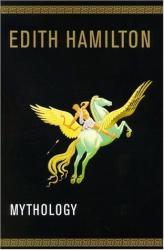
Reviewer's Name: NneomaEdith Hamilton's collection of Greek and Roman stories covers the gods, creation, and earliest heroes; stories of love and adventure, the great heroes before the Trojan War, the heroes of the Trojan War, the great families of Mythology, the 'less important' myths, and the mythology of the Norsemen. There are over 100 Greek/Roman/Norse stories, and a family tree and glossary of all the gods and goddesses included. A bonus was the illustrations which were really detailed. I read this book because I wanted an introduction to the Greek gods and goddesses before reading the PercyJackson and Olympians series, and I think it's a great book to gain somefamiliarity with the mythological characters.
My favorite short stories were: The Underworld, Cupid and Psyche, Pyramus and Thisbe, Perseus, Theseus, Hercules, and Antigone.
Genres:
Review:
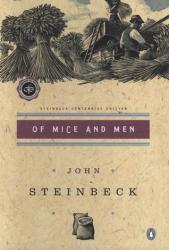
Reviewer's Name: NneomaGeorge and Lennie are two laborers searching for work in California. While George is small and quick, Lennie is a man of tremendous size and has the mind of a young child. Despite their differences, they have formed a "family", clinging to their dream of owning an acre of land and producing their own produce. When they find a job at a ranch in the Salinas Valley, fulfilling their dream seems to be within their grasp, but conflict arises when Lennie begins a flirtatious relationship with the ranch owner's wife, and even George can't protect him from that.
I liked this book! Lennie and George's relationship is heartwarming, and it shows that having close friends can make even the hardest life bearable. My favorite characters were Crooks and Lennie. Crooks, who lives by himself because he is the only black man on the ranch, shows how discrimination affects mental well-being. Like Lennie, Crooks has been outcasted and looked down upon by society for something he can't control, and I liked how Steinbeck brought two very different characters together by sharing their shared loneliness. George is a complicated character because, at the end of the book, he does what he believes is 'best for Lennie' but it begs the question of how far a friend should go if it's in 'your best interest'. I watched the movie as well, as it was also really good!
Awards:
Genres:
Review:
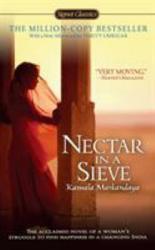
Reviewer's Name: NneomaThis novel follows the life of a young Indian girl named Rukmani, who is married off at the age of twelve. She marries a poor farmer, Nathan: because she has three older sisters and is not as "desirable" by Indian standards, her parents cannot find a better suiter besides a poor farmer. Throughout their marriage, Rukmani and Nathan struggle with poverty, and misfortune. In addition, British colonizers have set up posts in their town, further destroying Rukmani and her family's sense of community and opportunity.
My favorite character is Rukmani because of her complexity. She is a flawed and interesting character because, on one hand, she breaks the gender norms of her culture and often finds ways to support the family even when Nathan can. However, I will argue that Rukmani is complacent in her poverty and accepts things as the way they are knowing she could do better. I also really liked how this book touched on intergenerational conflicts. Rukmani often finds herself detached from her children because they're growing up in westernized society. Nathan is my least favorite character because he's just...there. Overall, this was a good book because it exposed me to a different culture.
Genres:
Review:
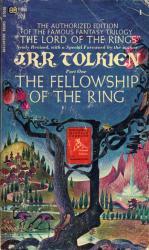
Reviewer's Name: GurmanThe Fellowship of the Ring is about a company of people of different sizes, shapes, and cultures, living in an imaginary world: Middle Earth. These people come together when Bilbo Baggins, a hobbit, runs away from his house after his 111th birthday, but he leaves behind the Ring of Power. Hobbits are short people who live in Hobbiton, a place in Middle Earth. The Ring of Power is a ring that one of the antagonists, Sauron, created for the destruction of Middle Earth.
The company now comes together to destroy this Ring, but it can’t be destroyed with ordinary means, like stomping on it or casting it into fire. The ring can only be destroyed if it is thrown into the place it was created at, Mount Doom, a volcano in Sauron's evil layer known as Mordor. The company knows that Sauron will search all of Middle Earth for the Ring, so the company decides to take it to Mount Doom.
At a petrifying moment, the company goes over a mountain range, but it is too cold for people to survive, so they head to the Mines of Moria, an underground series of tunnels. Everything was going fine until a person accidentally made noise by throwing something down a well. Then, they have to run to the exit because they awakened their evil pursuers, like the Balrog of Moria, a giant humanoid creature with a whip. The Balrog drags a member of the company down a cliff, and they fall for over 8 whole days.
This book is full of fantasies, and it really holds a grip and is hard to put down, and for that reason, I'm going to go with 4/5 stars for The Fellowship of the Ring.
Review:
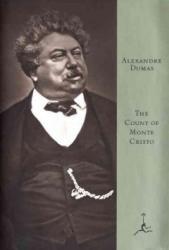
Reviewer's Name: Harrison B.The Count of Monte Cristo by Alexandre Dumas is an amazing novel about betrayal and revenge. It follows the life of Edmond Dantès, a young first officer of a shipping company in Marseille, France, as he draws into port, ready to greet his enchanting fiancée Mercedes. However, Dantès’ happiness is short lived as he is betrayed by his closest friends and his life is upended for several decades. When Edmond finally returns as the Count of Monte Cristo, he is determined and set on vengeance, and he has the money and intelligence to annihilate those who dared to betray him. The Count of Monte Cristo is without a doubt my favorite book as it vividly describes the manipulations of the count and how his enemies struggle to break free of his grasp. I would recommend this book to everyone, especially those who enjoy complex stories where not all actions of the characters are written on the page but must be deduced by the reader.