Book Reviews by Genre: Fantasy
Review:
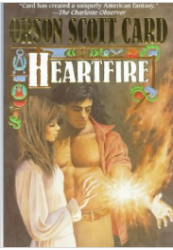
Reviewer's Name: Benjamin W.It’s been a while since I read this far into a series, and I can start to see why I like trilogies and stand-alone books. If I didn’t know any better, I’d think this series had evolved into a courtroom drama instead of a historical fantasy. At this point, the whole premise of this series seems to have veered off course and has lost its focus to tackle unrelated issues that were somewhat prominent at the time. Or, at least it’s merely acting as a chance to name drop historical figures and take the side of history against well-known issues that haven’t aged well over time. If anything, Heartfire could have easily been the fourth book in the series, since Alvin Journeyman added nothing to the story. Even so, Heartfire didn’t feel as strong as earlier books in the series. It almost seems like there’s more of a focus on world-building. There is less focus on actually progressing the story—like the path toward the Crystal City. Certain plot elements were almost entirely forgotten as well, even if there was a whole legal battle in the last book to re-hash how Alvin came into possession of a sentient golden plow (which itself is still unclear why it’s important).
By now, I’m merely reading the series on autopilot just to see if there is any conclusion to the alternate history presented here. I still think there are clever takes on historical figures, but by now, they seem added in as a heavy winking nod to the reader, most of whom will already know the referenced individual. Perhaps the lack of overall character growth in this book is what made it such a so-so read for me. Sure, there were baby steps toward some redemption arc, but in the end, nothing ended up changing the drive of the overarching story.
Another weak link in the Alvin Journeyman series, I give Heartfire 3.0 stars out of 5.
Genres:
Review:
Reviewer's Name: Nam TTitle: Harry Potter and the Prisoner of Azkaban
Author: J.K. Rowling
Rating: 4 stars = Really Good
Review:
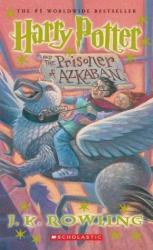
The third installment of the Harry Potter series, the Prisoner of Azkaban, continues his story at Hogwarts and the expected trouble with various fantasies and legends that are brought to life. Being his third year at Hogwarts, Harry Potter experiences the mystery of a known Azkaban prison and is curious to find out more of this particular myth. As Harry dives deeper into this myth, he will ultimately find out a surprising truth.
With more character involvement for the protagonists and antagonists, the Prisoner of Azkaban truly envelopes the feeling of mystery within the fantasy world. Bringing out a deep universe and lore to the series, it encapsulates the attention of both casual and avid readers.
Reviewer Grade: 11

Review:
Reviewer's Name: Benjamin W.Up until now, I had only read one other book by Naomi Novik. I had loved Spinning Silver and the unique take on a classic fairy tale it presented. While I understand Tongues of Serpents is the sixth book in the Temeraire series, I found it to be inferior to Spinning Silver in many ways. I will also grant that I’m not necessarily the target audience for this genre of historical fantasy when it takes a more nautical tilt (like Far Side of the World does). Still, there was enough of a standalone element to Tongues of Serpents that I was able to pull a story out of it and write a review of it.
Some things I had trouble getting used to in this book were the fact that the dragons all spoke in the same English as the human characters. I had a tough time identifying which characters were dragons and which were humans, and I didn’t know why they sounded so similar (I’m sure a previous book explains this). Additionally, I eventually gained a slight sense of the overarching goal of the series (I think it’s to get to China), but I didn’t feel like the characters’ motives were very clear in this book.
I almost gave up reading this book until the end of part one when something interesting happened, but even that sub-plot felt like it never went anywhere and was only an excuse to use a lot more words to describe very few actions. In the end, there was a lot of fluff in this book, and I’ll chalk it up to the way authors write these historical nautical books. Perhaps if it were slanted more toward fantasy or more tied to history (like in the Alvin Maker series), I would have enjoyed it more. As it was, I just kind of skimmed through it and donated it to the next person who might like to read about dragons in Australia.
A historical fantasy that was too light in both history and fantasy, I give Tongues of Serpents 2.5 stars out of 5.
Genres:
Review:
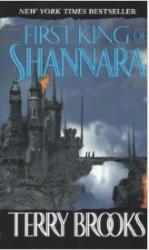
Reviewer's Name: Benjamin W.While this prequel to the original Shannara trilogy was written well after completing the first three books, First King of Shannara failed to re-capture the magic that made me adore Wishsong of Shannara . If anything, this book seemed unnecessary. It told a story that already had a fixed ending as described in the exposition of The Sword of Shannara (which itself had a pretty un-climactic ending if I remember correctly). Sure, there’s a lot more world-building in this book, but only avid fans of the series will find any of it interesting.
Perhaps my main gripe with this book is how I failed to care for any of the characters. Most of their interactions felt cliché and trite, and there was a smidge too many of them for me to want to take the time to know who they were. If anything, the characters were flat stereotypes with no personality. This was also not helped by the plot, which most of the time sounded like a condensed and bulletized list of events instead of an actual story. Sure, the writing may have been more polished since The Sword of Shannara , but this book merely highlighted elements of the series I never really liked to begin with.
I think some of the navel-gazing that occurs in these high fantasy series is what turns me off from exploring the huge tomes filled with so many words but signifying little. Some of the action (including the war at the end) was exciting, and some of the descriptions of certain events (like the forging of the sword) was creative and flowery, but these few bright points do little to distract from the fact that a lot of the book was bloated word count for inflated word count’s sake.
An unnecessary prequel, I give First King of Shannara 2.5 stars out of 5.
Review:
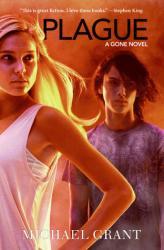
Reviewer's Name: John BThe thrilling Gone series continues with this fourth book, and Grant does not disappoint. This series has been one of my favorites and Plague is no exception. As a highly contagious, fatal illness spreads at an alarming rate and predatory insects terrorize Perdido Beach, morale continues to drop.
However, Sam, Astrid, and even Caine are determined to find a way to survive.
Everyone must make difficult decisions when it comes to saving themselves and those they love. Grant has written another phenomenal dystopian horror with suspense around every corner. I highly recommend this book to all high school aged readers.
Genres:
Review:
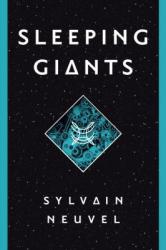
Reviewer's Name: Benjamin W.After my slight disappointment with Mecha Samurai Empire , I was pleased to find that a book that actually knows how to do "mecha" right already existed years before Mecha Samurai Empire was released. Taking a somewhat unique approach in its narrative structure, Sleeping Giants uses a series of interview transcripts to tell the story of discovering the parts of an ancient, giant robot and learning how to pilot this unique piece of equipment. There aren't any dialogue tags. There aren't any direct action sequences. There are just words describing the events as they happened. Somehow, it totally works.
I seriously couldn't get enough of this book and basically devoured every word. I was a little disappointed with the semi-cliffhanger ending, though. Just as everything was starting to finally come together, it just kind of ends. Sure, many of the large plot movements reached a momentary conclusion but now I really want to know what happens next. My only other qualm was the "exposition character" who was dropped into the narrative about half-way through to explain all the unexplainable bits of the story. It seemed like a cheap way to give information that wouldn't have been naturally revealed. What's perhaps the most interesting with the minimalist way the story is written in Sleeping Giants is how strong the characters come across. Even if it's only interview transcripts, the pauses, snark, and other personality traits are just as obvious as if I could see them talking across the table from me. Judging by the acknowledgments section of this book, I certainly can't wait for this to be made into a movie. I'm sure it will be just as exciting to see everything on the big screen as it was to read about it line-by-line.
A unique narrative method that had me ravenously reading, I give Sleeping Giants 4.5 stars out of 5.
Genres:
Review:
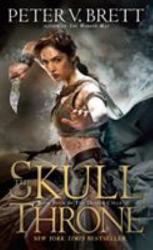
Reviewer's Name: Benjamin W.You’d think a book with (what I assume is) Renna Bales (nee Tanner) on the cover would follow her and the group of people she’s traveling with. You’d think a book titled “The Skull Throne” would spend a lot of time addressing the now-empty Skull Throne. Instead, we only got brief mentions of these two sub-plots. While I’m happy that the latter didn’t have many pages dedicated to it, I’m disappointed that the former was addressed for only a few scant sections at the beginning and end. Instead, the majority of this book spent time in places that didn’t advance the overall story at all.
Having read all the books (and the “3.5” novella) up until now, my concerns that arose during Messenger’s Legacy seem to have materialized. Sure, I do enjoy following the three main characters from The Warded Man , but there were certainly moments where I thought I was reading something from the Song of Ice and Fire series than The Demon Cycle series. This might be high praise for some, but I felt George R.R. Martin’s series was a little bloated and too concerned with relationship drama than actual dragons.
Additionally, I’m still having trouble caring about the Krasians. The fact that there are so many terms and titles for everyday things and people makes it confusing to follow at times. I understand its origins in Middle-eastern culture, but at some point, it goes too far (xkcd had a comic about the number of made-up words in a fantasy book reducing its quality). The culture clash between the Krasians and everyone else has persisted for three books now, and it’s quite tiring to keep highlighting how different and backward their thinking it sometimes. I can only hope we get to see some demon battles in The Core since this book left me unsatisfied.
A weak link that could have spent more time on more exciting subplots, I give The Skull Throne 3.0 stars out of 5.
Review:
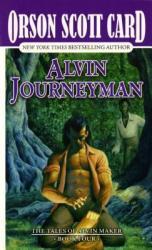
Reviewer's Name: Benjamin W.With this fourth book in the Alvin Maker series, I’m starting to see why a
lot of writers like to stick to trilogies. If anything, I think most readers
can probably skip this volume and move on to the next one because there
wasn’t anything too new or interesting that happened in it. If anything, it
was a re-hash of events in the previous book with a few new characters added
to it. I will concede that Alvin Journeyman did finally develop a fitting
antagonist for Alvin. Still, so few pages were dedicated to this sub-plot
that I’m wondering if it should have just been pulled out and made into its
own novella that would span the gap between book three and book five.
Once again, the strength of the series as a whole carries through here, and
some loose character arcs are tied up before moving on to more important
things. However, spending the majority of the book hashing over what astute
readers (or even readers who were moderately paying attention in the last few
books) already knew as truth just to confirm to the rest of the characters
around Alvin that he wasn’t lying seemed like a waste of words.
If anything, using the delay in Alvin’s journey to develop Calvin’s
“making” abilities did provide a bit of contrast between the two and will
likely pay off when the forces of good and evil clash in future volumes. I
still appreciate the way Orson Scott Card integrates actual history with a
fantasy explanation, though. Despite the missed step here, I’ll continue
with the series to see how it resolves. At the very least, volumes like this
show me why it’s not as notable as the Ender Saga, which was a solid four
book set (that’s really just three books with the third split into two
parts).
A weak link in the Alvin Maker series, I give Alvin Journeyman 3.0 stars out
of 5.
Awards:
Genres:
Review:
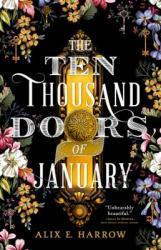
Reviewer's Name: Tawnie M.This beautiful work of art, is a love letter to stories and bibliophile’s everywhere. I loved Harrow’s intoxicating magical debut so much that I blew through it in 4 days! I read it back in March but it still sticks with me to this day! But I have to admit, I have been a hard time finding words to describe this magical beautiful experience of a book because it grabbed my heart so completely and did so much to me, that to try to express it in words and to remember all the intricate details has been difficult. But I am happy to report I am currently doing a re reading and so far it is just as magical, heartbreakingly tender and beautiful as the first time. I am so excited that it has finally come out and more people get to experience this epic journey into unknown worlds. This should be on everyone’s reading lists!
Meet January Scaller, a brown girl, an in between sort of thing some call her, growing up in the 1900’s a time rife with social change, and colonialism. A difficult time where the world is in transition and nothing is at it seems. January is the ward of a wealthy white benefactor, Mr. Locke, who spends his waking moments hunting for the worlds artifacts and then selling them to the highest bidder. Or more truthfully, employing people like January’s father to hunt down these treasures, so he can sell them. As a result, his sprawling estate resembles a museum decorated with treasures and all sort of odd things from around the world. Being taught to always be the good girl, she is tollerated in Mr Locke’s society but still she feels like a artifact herself.
With her father gone for months at a time and Mr. Locke attending to meetings, January grows up alone, content with wandering the lonely grounds and halls to be among it’s treasures and discover its secrets. One day when she was 7, playing amidst the wide open fields of the estate, she discovered a door, a blue ragedy door that hadn’t looked like it had been used in ages, and she wished for it to lead to elsewhere, using a old diary she had found. Next thing she new, she was stepping from the familiar into a new world unknown. When she was was older, in the same place she found the diary, she discovered a mysterious book that spoke of secret doors, other worlds, and adventure. As the pages keep turning January discovers connections and truths to her own story, that she never would have imagined and is led into a adventure of a lifetime.
Full of beautiful imagery and entrancing atmospheric prose, this story exhibits the best things I love about books and fantasy in general. Prose that flower off the page and into the reader’s imagination, a coming of age tale, a magic system based in words and stories, other lands, a wild, beautiful, strong heroine who has trouble fitting in and conforming to standards, dastardly villains, sweet friendships, and a heart of love and family at it’s center.
Stories have a way of communicating deeper truths that can’t be understood and communicated in any other way. And their is so much in this book! A imaginative tender hearted lonely adventuresome girl full of all the desires that young girls have, the yearning to be loved both romantically and by a father, and the desire to be part of a grand adventure in unknown new exciting places. This story communicates hope for better things and the understanding that their is something more. It communicates love and the need for family and belonging, it communicates the importance of discovering identity and sticking to your truths no matter what. And it communicates so many other truths that are at once both universal but at the same time, personal as stories speak to each of us differently and discovering what they say, is part of the adventure.
And everyone should go on this adventure! Everyone should read this intricate, tender hearted, complex, magical, tale that will sweep your heart between it’s pages and not let it go, even after the last page is turned.
Thank you to Orbit publisher for my ARC of this wonderful tale for review!
Awards:
Genres:
Review:
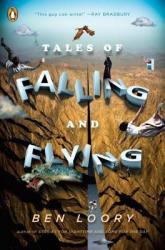
Reviewer's Name: Kyle YThis book is a compilation of short stories, which are filled with humorous tales and great short stories. I personally really liked this book because of how every story was a perfect duration. I often find it hard to commit to a book for more than a week, with this book, I was constantly entertained by the fun theme of all the stories. If you're looking for a great compilation of bed time stories, or just don't have the time to commit to a long chapter book, this book is perfect for you. If you are looking for one great story to start the adventure, my favorite was The Squid Who Fell in Love With The Sun.
Reviewer Grade: 8
Genres:
Review:
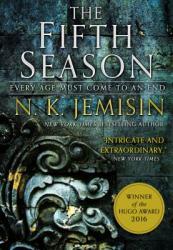
Reviewer's Name: Benjamin W.It’s been a while since I’ve read a fantasy book with such a unique magic system in place. I truly enjoyed the amount of thought that went into a world where the main source of power was that of the earth itself. From magma to solid obelisks, the ability to control the vibrations of the planet (either to amplify or dampen) had an interesting and logical follow-through in its characters and storyline. I’m honestly looking forward to eventually starting the next book in the series since the world was built so well. It’s no wonder that it ended up winning the Hugo Award for that year.
While I suppose The Fifth Season is also partly a pseudo-post-apocalypse story, it was only shown in small snippets and references here and there. Consequently, this would make this story almost “modern fantasy” in comparison to some of the classics. Additionally, this would explain some of the character elements added with little to no explanation or relevance to the plot. It sometimes seems like the sexual encounters and fluid genders of these characters are included o merely hit a checkbox of “inclusivity.” Sure, people who relate to these characters feel like their represented, but if these traits don’t affect the plot, then it doesn’t matter about their sexuality at all.
I also found the bold choice of second-person POV to be a bit jarring when it spliced in the more traditional third-person narrative. Initially, I thought these segments were striking in the way that it pulled me into the story. That was until I was given a name and a purpose and any number of other traits that made the “you” in the story into a character that was basically repeated throughout. I get how these different characters interacted to tell a much broader story (which is again, part of the book’s strength) I just didn’t care for the reader’s identity to be given to them via the second person POV.
A uniquely written and crafted fantasy with one or two minor flaws, I give The Fifth Season 4.0 stars out of 5.
Genres:
Review:
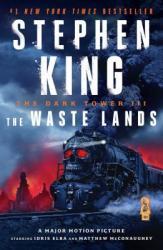
Reviewer's Name: Benjamin W.Before I got into reading the Dark Tower series, I saw the movie adaptation. It’s honestly what inspired me to get into the books. While I was a little disappointed with The Gunslinger , The Drawing of the Three showed me the series’ true potential. Moving on from my favorite book in the series, we have The Waste Lands. It's sort of a mash-up of the two earlier books in terms of characters and plot points. However, it's ultimately less than the sum of their parts (and that’s mostly due to the ending). What strikes me with The Waste Lands is how it could have been better than it was.
Those who have seen the movie version of The Dark Tower will recognize a lot of scenes, if not a huge chunk of them. I can see why they cut the two most interesting characters from the film, especially since everyone ends up splitting off to go on their own journeys almost as soon as everyone finally comes together. And while I did appreciate the weird “robot animals” and the riddle motif, I was ultimately frustrated that this core group of four characters didn’t have more time to show what their inter-personal dynamic would evolve into.
At the very least, the strength of the overall series and the thorough and vivid descriptions of this fantasy world were enough to overcome my misgivings about this book. It’s still well done on a technical level, even if some of its better moments are likely to be explored in future volumes. The cliffhanger ending was a bit of a bummer, though, especially since it might be a while before I can get the next book in the series from my library any time soon. I’ll still read it eventually, though, if for no other reason than to see how these characters fare in their travels.
A great book with some wasted potential, I give The Waste Lands 4.0 stars out of 5.
Review:
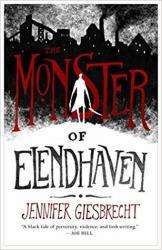
Reviewer's Name: BrittThe Monster of Elendhaven follows two characters – Johann, the eponymous monster, and Florian, a mage that ultimately forces him to do his bidding. Mages are forbidden to exist in Elendhaven, and the locals in power kill Florian’s family, so Florian is out for revenge. And he’ll use Johann to ensure he gets it.
It’s rare that I wish a book was longer, but that’s definitely the case here. The worldbuilding was spectacular, as was the prose, but the plot was pretty basic, and the end jarring. I could have spent much longer in this dark, twisted world with our dark, twisted characters. I kept thinking of Patrick Suskind’s book, Perfume: A Story of a Murderer, as both of our characters were somewhat similar to the protagonist of that book. There’s a romance that I wouldn’t have minded so much, but again, it wasn’t given time to breathe in this short little novel.
TLDR: This book is nasty in that deliciously evil sort of way. If that’s your thing, you’ll love it. I wish it were a bit longer.
3.5 stars. Thanks to NetGalley and Tor for the eARC, which I received in exchange for an unbiased review.
Review:
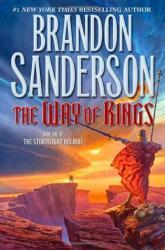
Reviewer's Name: Evan TThe highlight of The Way of Kings is assuredly the masterful world building. Sanderson manages to craft a fantastical and believable world with unique quirks and mountains of lore. With an exciting narrative to boot, this book (over a thousand pages long) tends to threaten other menial activities such as sleep. Though occasionally losing momentum through its frequent shift of character viewpoints, The Way of Kings is definitely a worthwhile read with compelling characters and gripping action.

Review:
Reviewer's Name: Alexa HThe Odyssey is an epic poem written by Homer, and it is a literary classic about two great quests. Ten years after the fall of Troy, Odysseus still hasn't returned home to Ithaca, and his house is plagued with suitors wanting to marry his wife, Penelope. His son, Telemachus, feels overwhelmed but is sure that Odysseus isn't dead. With the help of the goddess Athena, he sets off to search for his father as the reader learns more about Odysseus's previous journey and resulting enslavement. Telemachus encounters many obstacles which shape him and build his confidence by the end of the story.
Although this book is a classic and was probably very popular in ancient Greece, it is not an enjoyable book to read. There is too much unnecessary dialogue, and the plot is excessively long. Due to the old language and lengthy descriptions, reading The Odyssey is a very strenuous task.
Genres:
Review:
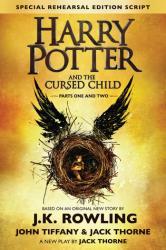
Reviewer's Name: Alexa HTo all readers wondering what happens after Harry leaves Hogwarts, Harry Potter and the Cursed Child gives an interesting take on the idea. This is a play script, written by J.K. Rowling, Jack Thorne, and John Tiffany. It is about Harry's son, Albus--who is sorted into Slytherin--and his best friend, Scorpius Malfoy. In an effort to bring back someone from Harry's past, they travel through time and make some major mistakes--even bringing back the darkness that Harry vanquished. This book is about the bond between friends and family. Although it is creative and definitely makes an effort to continue the Harry Potter legacy, the story seemed forced the plot wasn't enjoyable.
Review:
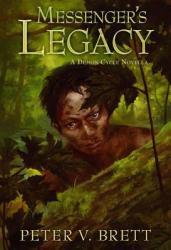
Reviewer's Name: Benjamin W.In a series that’s full of exposition and backstory, I found it a little odd that these extraneous details weren’t relegated to side-story novellas so the plot of the main series of books could focus on the current action. What’s even more curious is that Messenger’s Legacy, a side-story novella in this series, doesn’t explore anything new or interesting that hadn’t already been covered in the main books. The only new information I learned in this novella was slightly more detail about bog and swamp demons, which seems unnecessary with all things considered.
Following somewhat minor characters from The Warded Man (who haven’t appeared in the series since), Messenger’s Legacy shows it is easier to survive in demon-infested nights than the series initially indicated. While I’m not sure if any of these details will come into play in the main-line books, it does help expand the world-building just a little bit more than if this story hadn’t been included at all. As always, the demon-infused action is exciting and a strength of the author’s writing.
I’m sure there are much more interesting backstories and side-stories to tell in this series, so it’s curious that this one was written about at all. I’d much rather read about the original Deliverer or the society that crumbled away in the desert (leaving behind powerful wards in the process). Sure, there’s some personality explored in this story that helps pull the reader back to less god-like individuals and their struggles against the demons. However, with so many more interesting stories to tell, I’d suggest that anyone reading this series can skip this novella and not miss anything important.
A curious side-story that doesn’t add anything to the series, I give Messenger’s Legacy 2.5 stars out of 5.
Genres:
Review:
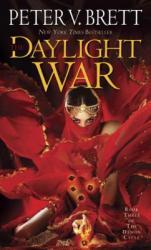
Reviewer's Name: Benjamin W.I’m glad to see that it only took two books for Peter V. Brett to cut down on some of the extraneous flashbacks and exposition in the Demon Cycle series. While whole chunks of The Warded Man could have been cut with nothing significant lost in the process, and The Desert Spear had what appeared to be an unrelated storyline that weaved through the narrative, The Daylight War has a minimal amount of this “fluff.” Granted, there is still some amount of world-building that helped to explain yet another aspect of this setting, but it’s minimal in comparison to its predecessors.
Additionally, I already knew this series was an adult fantasy from my experience with The Warded Man and The Desert Spear. These are tame when compared to the third entry in the series. The sex in this book made the previous two look like nuns in comparison. Sure, it could be argued that it “adds to the plot” in a few spots, but I’m just used to it at this point. At any rate, the differences between the two different cultures hearken back to the European and Middle-eastern cultures that undoubtedly influenced them, which also would explain the adult nature of these books.
As for the plot, the first two books seemed to set up the far superior plot in this book. While The Warded Man followed one deliverer’s path, and The Desert Spear explored an equally-gifted deliverer from a different culture, The Daylight War revealed how similar—and how different—these two men are. I don’t know if I liked the “mindreading” aspect of these individuals’ new power, as it seemed a little like lazy writing at times, but the addition of the warded skills to take on a severe threat from the demons was entertaining as always.
An adult fantasy that has finally cut a lot of the fluff of its predecessors, I give The Daylight War 4.0 stars out of 5.
Review:
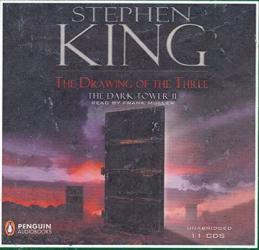
Reviewer's Name: Benjamin W.While it took me a while to get used to The Gunslinger , I was able to dive right in with The Drawing of the Three as I continue reading this Dark Tower series. Personally, I think the simplicity of the story and the immediacy of the danger helped to hook me from the start. Unlike the first book in the series, The Drawing of the Three has a solid set of relatable characters that are introduced just fast enough to get used to their unique personal challenges. If anything, these individuals piqued my interest, and I’m curious to see where their story goes from here.
One aspect of this book I found to be extremely entertaining was the action sequences. When there were stakes on the line, and things had to happen, the resulting action in these plot-moving points was both intense and hilarious. Generally, I am not much of a fan of the “fish out of water” approach to characters, but King makes it work here with The Gunslinger traveling back and forth between the worlds to take advantage of our modern wonders that help him survive in the fantastical world of the Dark Tower.
I also have to give kudos to the narrator of this work, Frank Muller, as his voice acting brought every character to vibrant life via their accents and verbal tics. I had no doubt who was speaking as he wove the story through his reading. Although, the one qualm I had with this book was that one of the characters was a bit grating on the nerves. While this added some excellent conflict to the story, it was annoying having to hear their manic voice for as long as I had to. I’m just glad that they weren’t the first character pulled into the Gunslinger’s world. Otherwise, I don’t know how I could have kept listening.
A superior and straightforward story in the Dark Tower series, I give The Drawing of the Three 4.5 stars out of 5.

Review:
Reviewer's Name: Benjamin W.As I’ve been reading through the Tales of Alvin Maker series, I have found it interesting to see what big societal issues have been covered so far. While Seventh Son tackled religion and Red Prophet delved into politics and war, Prentice Alvin bit off a big chunk of racism and tried to address it in a way that’s half fantasy and half historical fiction. Sure, there’s still some semblance of the religion content present in this book that informs the racism dialogue. Still, these large issues end up taking a back seat to the more fascinating aspects of the titular character learning how to control his incredible powers.
In fact, this might be my favorite book of the series so far. It’s always more entertaining to watch a character come into the depth of their abilities, and Prentice Alvin has this in spades (both metaphorically and literally). While there weren’t many instances of Alvin directly being affected by a conflict that would require him to grow as a character, there were enough inevitable plot points that made me wonder how he would handle the situation. These twists helped to enforce the world-building that Orson Scott Card has excelled at for some time.
Perhaps the reason why I like this book as compared to its two predecessors comes down to how it focused more on the “magic” of this alternate history and less on the similarities to the American historical context. I’ve never been much of a fan of historical fiction, but I do appreciate explaining the events of the past through the lens of magical realism or fantasy. It’s likely why I’ll keep reading this series for the time being. At the very least, I’m curious how Alvin will grow from here, as he’s developed into a strong character who can basically do anything he wants.
A magical take on addressing the racism of America’s past, I give Prentice Alvin 4.5 stars out of 5.
Awards:
Genres:
Review:
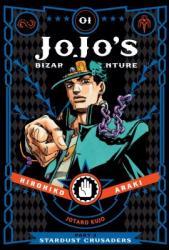
Reviewer's Name: William W.The continuation of Jojo's Bizarre Adventure brings back old characters with a fresh take and introduces us to new characters that make Jotaro's group feel rounded. It is definitely different, but 100% recommend it.
Genres:
Review:
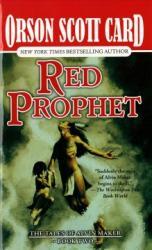
Reviewer's Name: Benjamin W.Continuing from the previous book in the Alvin Maker series, Red Prophet flashes back and shows certain events from a different point of view before driving forward into some fascinating alternate history. I continue to enjoy the fantastical elements brought into American history, even to the point of explaining how certain famous historical figures were the way they were. Although, if you know enough history, you’ll realize the fates of some of the characters presented in Red Prophet (William Henry Harrison, for instance) might not need the foreshadowing missing from this text.
While Seventh Son managed to set up this alternate history and establish some of its rules, Red Prophet delves into the action and excitement that comes from some of the more “kinetic” talents of these characters. Once the plot catches up with where Seventh Son left off, I was hooked. The interactions between Alvin and the Native Americans were quite interesting, and I found everything up until the climactic battle to be top-notch storytelling. Sure, it took a little while to get there, having to first set up the eponymous “Red Prophet” and his powers of observation, but it was worth it in the end.
My one qualm with this book lies in some of its more peculiar metaphor, allegory, and allusion. Near the end of the book, several scenes and sections feel entirely disjointed from the narrative. Perhaps they were to serve some “higher purpose” to lay out the moral of the story—or even the series as a whole. These scenes had characters who suddenly were ripped out of their normal behavior and put into a completely different context. And for what? To show that the history of the Native Americans is rich and varied while also infused with war and darkness? There had to be some other way to convey this than the way it was done here.
An action-packed follow-on to Seventh Son that gets a little too “heady” at times, I give Red Prophet 4.0 stars out of 5.
Awards:
Genres:
Review:
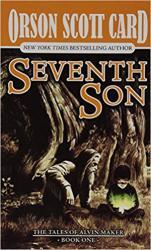
Reviewer's Name: Benjamin W.Having loved Orson Scott Card's Ender Saga, I decided to start into another of his series, Tales of Alvin Maker. I was used to his science fiction writing, so I thought it would be interesting to see how he handled semi-historical fiction. For the first book in a series, Seventh Son certainly has its strengths and weaknesses. It’s clear this book came on the heels of the Ender Saga, as there are a lot of parallels between characters and motifs that I just couldn’t ignore. Not that that’s necessarily a bad thing by any means.
While the history of colonial America is the setting of Seventh Son, the fantasy elements added to it made for an interesting read. I did appreciate the distinctive “good vs. evil” conflict between the Makers and the Unmaker, even if it’s a little too tried and true. At the very least, while the religious characters had some amount of strawman characterization set against them, they were well rounded enough not to make the whole story seem too anti-Christian. They weren’t necessarily the enemies, but their ignorance factored into the enemy’s tactics.
Perhaps the little snippets of American history sprinkled throughout this book were what intrigued me the most. Sure, the superstition and “magic” involved in creating an alternate timeline of history made quite a bit of sense. However, without at least a cursory knowledge of these events and historical figures, then readers could potentially miss a lot of substance. As with the Ender Saga, Card uses his writing to dive into different theologies and philosophies that do more than merely entertain. The fact that books like this can be thought-provoking through solid characters is a testament to his talent as a writer.
An adequate start to a series with plenty of potential, I give Seventh Son 4.0 stars out of 5.
Awards:
Genres:
Review:
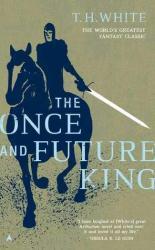
Reviewer's Name: Steven LThe Once and Future King, by T. H. White, is a great fantasy classic that is a retelling of the saga of King Arthur. The novel is stuffed with a mix of wonderful emotions that blend together to make a very unique fantasy story. The characters are all developed very well, especially the protagonist, and the plot fits them very well. The book has some very sorrowful scenes, but does a fantastic job of spacing them out with its humor. The only downside to the book is that it is for high-level readers.
If the story was put into a bit simpler language, it would relate to more people and reduce the amount of strain placed on the readers' mind while trying to interpret it. Overall, The Once and Future King is a great fantasy novel, but its use of complicated language takes away from the world it creates.
Review:
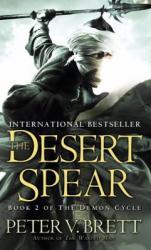
Reviewer's Name: Benjamin W.The second book in the Demon Cycle series, The Desert Spear practically proves my point that its predecessor, The Warded Man , started in the wrong place. In fact, if there weren’t an awesome battle sequence at the end of The Warded Man, I’d suggest just skipping to The Desert Spear since all the key moments from the first book were referenced in this sequel. That being said, this book has some of its own issues, some of which are gripes I continue to have about this series—which makes me think this is just the way these books are going to be.
Before I get too far down the criticism hole, I do want to say that I truly enjoy the magic system in these books. The Desert Spear doesn’t necessarily do anything new with it, but there’s at least a little more world building that happens in terms of the demons that I would have liked to see integrated more fully into the story. I like the idea of wards essentially being “computer programs” in a fantasy space, which is probably why I’ll continue to read this series. I’ll also say that the depth of the cultures presented in this book are top-notch and the action is expertly-described.
All this being said, there’s a lot of fluff in this book. The entire first third was practically a prologue to the meeting of the “desert” forces and the “forest” people, most of which could have easily been condensed. Even what I thought was a side story seemed to be only added as a way to integrate a short piece of essential plot near the end of the book. Despite being wordy, these moments were slightly necessary. Additionally, the “modern” sensibilities of Leesha are admirable for a woman in a fantasy setting but most of the time just pulled me out of the story because they didn’t necessarily match the timeframe where it was set.
A book that continues with great world building but in far too many words, I give The Desert Spear 3.5 stars out of 5.
Review:
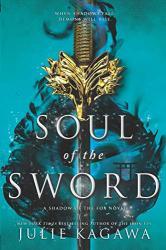
Reviewer's Name: BrittSoul of the Sword picks up directly at the end of the events of the first book in the series, Shadow of the Fox. If you haven’t read Shadow of the Fox, and you like Japanese mythology, what are you waiting for? Pick it up now! Also, skip this review, because spoilers.
If you liked the first book, you’ll like this one too. I did not remember the first book that well as I read it last summer, but Kagawa writes this in such a way that it’s easy for the reader to jump right back in. Most of our characters (save Tatsumi, because he’s mostly a demon now) get further development, and Yumeko in particular really seems to have grown a lot throughout the course of the book. My favorite character, the ronin Okame, has an exceptionally fun development. The worldbuilding, which was fantastic in the first book, continues to be alluring as Kagawa further fleshes out what was already a well-drawn world. The plot, like the first book, is fast-paced and while this is definitely something of a bridge book, it’s a bridge book that is really fun to read.
Readers of Rick Riordan who are looking for something a little more grown-up, or folks who like their fantasy to be steeped in mythology, you won’t go wrong with this series. I’m excited for the next one to come out. 4 stars – I really liked it!
Thanks to Harlequin Teen & Netgalley for the advance copy which I received in exchange for an unbiased review. Soul of the Sword will be available for purchase on 18 June or you can put your copy on hold today!
Review:
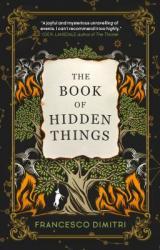
Reviewer's Name: Mahati 'The Book of Hidden Things' is a fantasy story of 4 friends Tony, Fabio, Art, and Mauro. These friends from a small town Casalfranca in Italy, make a pact to meet every year. When Art doesn't show up this year, Tony, Fabio, and Mauro decide to check what happened to him.
While they search for him, they learn mysterious information about Art, his life, his research, and things become more complicated and confusing. When Mauro gets fired by Art's ex-girlfriend, they all step back thinking about the risk they are taking to find Art. At last, Art shows up, reveals information about his research and forces them to trust him and take an important decision with their lives.
There are no words to explain how good this book is! The narration is very gripping and the mystery lingers till the end of the book and even after finishing the book. Characterization is simply superb. While Art is a unique character, Tony is a wonderful mate, Mauro, a responsible husband and friend who is guilty of leaving behind his favorite hobby of playing guitar and Fabio is a person with his insecurities and money problems.
I could get a glimpse of Southern Italy, the weather, the scenery, and the cuisine as well through this book. The book cover and the name are apt.
If you love mystery and fantasy, you will like this book. But, fantasy and mystery feel very real.
Review:
Reviewer's Name: Sabrina JIf things hadn’t already turned dark in Westeros, they certainly do in A Storm of Swords. The complicated political situation in the end of A Clash of Kings gets even more complicated as this third book dives into complex armies, weddings, wars, and so much more. George R. R. Martin’s writing may be dense, but I have never encountered a fantastical world as deeply developed as his. A Storm of Swords is jam-packed with intrigue and excitement, and it left me wanting more. I would recommend this book even if you have already seen the show; reading the books adds a whole new dimension to the characters, the plot, and the world.
Awards:
Genres:
Review:
Reviewer's Name: Sabrina JThe Alchemist is the story of Santiago, a shepherd boy, who goes on a journey to find treasure he saw in a dream. It is a story of philosophy and self-discovery, and its open-ended style leaves a lot of room for interpretation. That is the beauty of this book; every reader will get something different out of it. I found The Alchemist to be very inspirational and calming, as well as immensely interesting. This quick read is great food for the soul.
Awards:
Review:
Reviewer's Name: Benjamin W.One thing that was made clear to me when I read The Elfstones of Shannara was that this trilogy (that started with The Sword of Shannara ) didn’t follow the same characters from book to book, per se. Sure, there were character like Allanon the Druid who managed to span all three volumes, but overall I didn’t find that I needed to have read the previous book in the trilogy to understand what was going on in the story. This was quite beneficial when I started reading The Wishsong of Shannara, as it quickly grew to be my favorite in the series so far.
While I had high hopes for the “main quest” of this book, the fact that it’s put into side-story status almost from the beginning was a little frustrating. Don’t make me follow the journey of the character who needs to grow the most! Show me the thrilling adventures of a magical girl and her Highlander and druid escorts. Regardless, I did find Jair’s journey to be a bit more interesting once it was clear that’s who we were following through the majority of the book. Sure, we touched back with Brin occasionally, and her adventures were neat, too—just not nearly as interesting as Jair’s ended up being.
I have previously complained that The Sword of Shannara seemed like a bit of a Lord of the Rings knockoff. Additionally, The Wishsong of Shannara does have some similarities to The Two Towers. Not necessarily being tied to an overarching story arc did help to make this book quite interesting in terms of what minor characters could be developed to advance the story. This is on top of the excellent growth of both Ohmsfords as they learn the true power of the magic that lies within them. If you’re interested in any of the original Shannara books, I’d suggest you give this one a read first.
A relatively original high fantasy, and my favorite of the Shannara trilogy, I give The Wishsong of Shannara 4.5 stars out of 5.