Staff Book Reviews by Genre: Fantasy
Review:
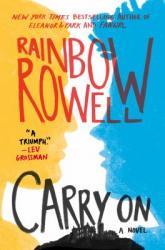
Reviewer's Name: KateRainbow Rowell's "Carry On" had me laughing and tearing up and cheering along the protagonists like a crazy person, which -- as I listened to the audiobook in my car -- I'm hoping didn't concern my fellow drivers. This book is not only a clever love letter to the Harry Potter universe/the concept of a "chosen one" narrative, it's one of the cutest teen fiction romances I've read in a long time. I'm going to try not to spoil anything, which is why this review is so very, very short, but... Awww. What a simultaneously goofy and emotional book.
As you may or may not know, "Carry On" takes place in the universe Cath is fangirl-ing over in Rowell's other novel, "Fangirl," but I'd say it works very well as its own independent story. You could read it as a set with "Fangirl," or just read it for its own sake, I imagine both ways are fun and interesting for different reasons.
Categories: Teen Fantasy, Just Plain (?) Fantasy (if you love the Harry Potter books, this is kind of intended for you, I think, regardless of age), GLBTQ Fiction, Humor (?), Romance, Satire/Reinterpretation
Review:
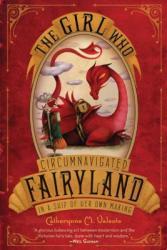
Reviewer's Name: KateI've yet to read something by Catherynne M. Valente that isn't absolutely gorgeous -- admittedly I may be a little bit biased, as I definitely think folkloric stories are the best, and folkloric stories with lovely playful twists are the BEST best... But when it comes to evocative and clever prose, as far as I'm concerned Valente is on a level all her own. At the moment, I happen to be reading her "Fairyland" series, and so... Behold, the first book -- "The Girl who Circumnavigated Fairyland in a Ship of her Own Making!" It's just as whimsical as it sounds.
So there's this little girl named September, living in a lonely house and washing a bunch of lonely teacups all the time and feeling very trapped. A quirky and talkative Green Wind -- apparently a defiant and spirited sort of wind -- riding a leopard shows up to spirit her away to Fairyland if she likes. This book is very much like "Alice's Adventures in Wonderland" for the modern age: September has loads more authority over herself and her destiny, for one, and she grows dramatically as a human being over the course of the series. Fairyland helps that along of course, despite being a wild and alien place, complete with folkloric and/or mythological figures both eternal and re-imagined, petulant tyrants with very impressive hats, and interesting twists and turns aplenty that I can say I definitely didn't see coming. Valente's world is simultaneously familiar and wonderfully fresh, like she's composed words to go along to the tune of a well-beloved song, shifting its meaning in unexpected ways while still keeping true to the soul of something timeless.
Genres:
Review:
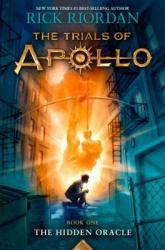
Reviewer's Name: KateOh my goodness, Apollo, you strange and beautiful basket case. I was laughing all through this book, marking pages to shove at my friends... You know the drill. The Greek-mythology-centric Percy Jackson series as a whole helped me through some dark times when I was younger, and this first book of Rick Riordan's new "Trials of Apollo" series is delightful, just as I remember "The Lightning Thief" to have been back when I really, really needed it. (It's only missing Mr. D -- I've always especially liked Mr. D. Maybe he'll show up in the next one?)
Anyway. You know how in Greek folklore, Apollo gets stripped of his powers sometimes when he gets his king/dad, Zeus, angry? That's happened again in this series, only now it's all happening in modern day New York... Where the rules to everything are way different than what Apollo's used to... Annnnd he's not used to acne or helplessness, either, both of which he has to deal with as an awkward teen apparently named "Lester." It's the sparkly god of the sun/music/so many things's turn to go on actual quests again instead of waving demigods off on them... And he's very, very sad about it.
Some familiar faces from the Percy Jackson series have appeared so far in "The Hidden Oracle," but I would say it's definitely its own series with unique sources of pathos. Something I always loved about the Percy Jackson books is their empathy, the way people can redeem themselves, the way characters can still be heroic despite/because of their flaws... And that is STILL HERE, operating now through the protagonist, given the centuries worth of mistakes a now-human Apollo has to grapple with. I definitely liked "Magnus Chase and the Gods of Asgard: The Sword of Summer" -- the Riordan book that came out a bit before this one -- but it didn't click with me in nearly the same way as Apollo's shenanigans. "The Hidden Oracle" felt like a fresh and self-aware remix of old ideas and settings from Percy Jackson, all told through a recently fallen god's wonderful, WONDERFUL narration. Yes, if you want something completely different than Percy Jackson this might not be the best place to look. But if you want to see the Percy Jackson universe through refreshingly new and oh-so-Olympus-y eyes, this may be perfect for you!
To sort of sum things up: I think this is a great kids' book, engaging and fast-paced and written with a light and goofy sense of humor, just like those original Percy Jackson books. (Sometimes the humor does get VERY goofy, so go in warned, but other times it's clever and tongue-in-cheek. Funny guy, that Apollo. Versatile.) Beyond that, though, I...a grown adult...am 100% buying the next book for myself just as soon as it comes out. I know that doesn't necessarily mean EVERY mythology-loving adult equipped with a suitably goofy sense of humor would also enjoy this book, but I know for a fact plenty of others have the same plan.
Awards:
Review:
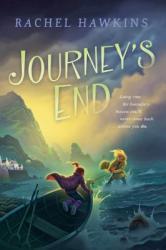
Reviewer's Name: BrittAfter her parents split, Georgia girl Nolie Stanhope finds herself spending her summer in a mysterious town called "Journey's End" in Scotland while her father investigates a mysterious fog (known as The Boundary) that's plagued the local village folk for centuries. Nolie is pretty excited - in addition to some sweet international travel, she's an avid ghost enthusiast, and feels like the summer might be promising in that department. And she is pretty immediately proven right! When Nolie and her new Scottish friend Bel see a weird dude walking down the beach, they think they've seen a ghost. Have they? And why is the Boundary suddenly moving closer to shore?
This was a pretty great MG ghost story. The setting is wonderful - Scotland sort of lends itself to mystery, and Hawkins imbues the village of Journey's End with a ton of charm, personality, and a touch of creepiness. Both of the lead characters, Bel and Nolie, were pretty well fleshed out with distinctive and likable personalities. Their friendship, while quickly formed, was believable and would be a great example for young girls. There's a bit of bullying and some exposition about the effects of divorce, so some important relatable issues are addressed. The Boundary itself is a fantastic and appropriately creepy mystery centerpiece. Really, my only complaint is that there was a ton of build-up to a mystery/ghost story that was pretty quickly and too easily resolved. But I'm a tough customer when it comes to middle grade reads, and overall, this one was pretty great so I'll go with the 4 star rating. I'll definitely be booktalking this one with sixth graders in the fall.
Review:
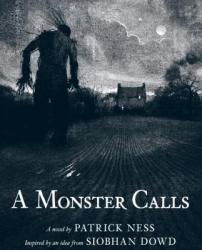
Reviewer's Name: Jenny G.A Monster Calls is an award winning, simple, easy to read book about a very complicated, emotional issue. A young boy, Conor, faces the stark reality of his mother’s terminal illness. He has been suffering from a recurring nightmare and suddenly a new dream-like monster comes to him to see him through this upheaval. It is a short book that will have you emotionally tied up in knots written for young adults, but applicable to all people that are dealing with loss, closure and guilt. Conor’s internal struggle vividly comes to life in the form of the monster in this book. If you’re looking for a quick read that will pull you in and hold you, this is the book for you.
Awards:
Genres:
Review:
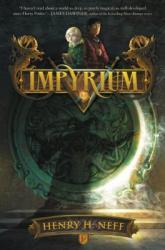
Reviewer's Name: Britt3000 years ago (aka present day), the earth suffered from "the Cataclysm" - an apocalyptic event that changed the literal shape of the earth (because earthquakes) as well as all of its political structures. In this future version of earth, technology has been all but outlawed, and magical folks are treated in a vastly superior way to those without magic. Hob Smythe is a non-magical miner living in the Dusk (outside of present-day Vancouver) who is recruited by a secret society called The Fellowship that wants non-magic folks to have the same rights as magic folks. He is quickly whisked away to the capital (Impyrium) where he is to spy on Hazel Faeregrine - the princess third in line to the throne that the Fellowship suspects is massively powerful. Meanwhile, Hazel is trying to learn how to wield her great magical power, while maneuvering and investigating interesting goings on in the palace.
As you can probably tell from that description, there is a lot of world-building that happens in this book. As a result, the beginning is a little slow, but after a few chapters, I found myself engrossed. Neff creates a dynamic world full of magic, demons, and dragons. The characters themselves are intelligent, likable (if a little gullible), and independent. If you like your heroes with pluck, you'll love Hazel and Hob. The story, once it gets going, is fairly complex, but in a really great way. There's a lot of plotting and conspiracies and it's really fun to try to figure out what is happening along with Hazel and Hob. A lot of little threads are introduced, and many plot points are tied up in the end while still paving the way for the next installment in the story. Additionally, there is fun social commentary in terms of non-magic vs. magic folks and their respective treatments.
I liked this enough that I immediately put the author's companion series, which is called The Tapestry and tells about the events of the Cataclysm, on hold. This is probably my favorite non-sequel middle grade read of the year. Recommended for fantasy readers of all ages. 4 stars.
Review:
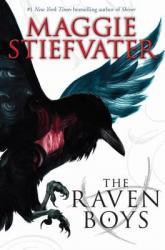
Reviewer's Name: K. S.Blue Sargent has unusual name, but she is an unusual girl. She lives in the small town of Henrietta, in a house filled with psychics, including her mother. Ever since she can remember she has been told that she if she kisses her true love he will die. Up until now Blue has tried to stay away from boys, especially the preppy rich ones that go to the boarding school in town. But when she gets involved with four boys from the Aglionby School who are searching for the burial site of a mythical Welsh king, Blue’s plans go out the window. As the hunt for the grave becomes more dangerous (ghosts and Latin speaking trees included), so too does Blue’s relationship with one of the boys named Gansey. Will Blue be able to be part of the quest without killing one of the Raven boys?
The Raven Boys is a dark and gritty fantasy, which turns the ‘true love’s kiss’ cliché on its head. For anyone looking for a more modern take on the fantasy genre or are interested in the paranormal, this is the book for them.
Awards:
Genres:
Review:
Reviewer's Name: BrittThis was just delightful.
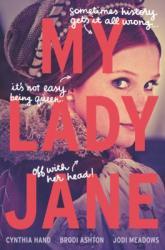
My Lady Jane is a semi-historical semi-fantastical look at the life of Lady Jane Grey, cousin to King Edward VI, who was queen for 9 days and then swiftly deposed and subsequently beheaded by Mary I (aka Bloody Mary). The book looks at the events through the perspectives of Edward, Jane, and Jane's new husband, Gifford Dudley (call him G). The authors decided to rewrite history a bit to give some folks shapeshifting powers and to give our Lady Jane a happy ending. The result was a charming, whimsical read written in the sarcastic and snarky prose of today, and it was marvelous.
The book is even more impressive when you consider that it has three authors, but felt as though it could have been written by one person (I'm sure that each author wrote from a different character's perspective, but it was never jarring). The characters were well fleshed out, each perspective was funny and interesting, and I never felt myself racing through one character's chapter to get to a character I liked better (because I liked them all). I'm a big sucker for court intrigue, and there is obviously a lot of that here. The fantasy elements are pretty small, and honestly, the book could've sort of been done without them, but they do give the authors an out for some of the less historical aspects of the book (like Edward's survival, for example).
I gave the book four stars instead of five as, though I loved the tone for most of the book, by the end it was feeling a bit twee. The book was also a bit overlong. Overall though, this is a great read that I would recommend to people who like quirky, well-written books about strong women with a touch of fantasy. I hope these authors team up to write another alternate history, because I'd so be there. 4 stars.
Genres:
Review:
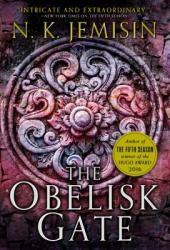
Reviewer's Name: LaurenI previously reviewed the first book in this series, The Fifth Season (http://ppld.org/book-reviews/fifth-season). This was a strong second entry, and on reflection I ended up liking it even more than the original book. The plot is far more linear than in The Fifth Season, but there are still unexpected twists and turns, and for me the characters really came into their own here. You will see some old, familiar faces along with a number of new additions to the cast from regions of the world we hadn't previously been exposed to. There was one character in particular whose story-line took a surprising turn that caused me to do a complete 180 on how I saw them. For me, it hit all the right notes: deeper world-building, strong characterization, and a complex plot that held up to closer scrutiny.
If you haven't finished the first book, the next part of this review will include minor spoilers. The Obelisk Gate picks up where The Fifth Season started, with Essun discovering her murdered son just as the Season hits. While the previous book then went back and forth in time to explore how she had arrived at that point, this one moves us into the future as she sets off in pursuit of her husband (Jija) and daughter (Nassun), hoping to rescue Nassun before she meets the same fate as her brother. The chapters alternate between Damaya/Syenite/Essun's journey and her daughter's, with the odd interlude featuring someone else. The narration is still in its distinctive second person format, but in this book we finally learn who the speaker is. In my opinion, Jemisin answered just enough questions from the first book while still leaving mysteries for the finale, and I can't wait for the third and final entry in the series (projected release in 2017). Highly recommended to lovers of fantasy!
Genres:
Review:
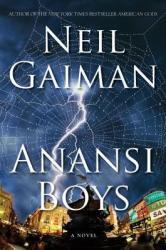
Reviewer's Name: BrittI'm not going to try to describe this book, because there is a lot going on and I wouldn't really know where to start. Here's what you need to know:
It's a companion novel to American Gods, but you do not need to read American Gods first. In fact, I found this book to be vastly superior to American Gods, though the internet does not necessarily agree with me on that one.
Do you like Loki? Or like, the idea of Loki? Or just trickster gods in general? Anansi is the African trickster god, and this book is a TRICKSTER god of a novel: its clever, tricky and pure fun.
I listened to this book, and the narration was stellar. Lenny Henry nails the Caribbean accents, the humor, the eeriness, and well, all of it. I'd strongly recommend consuming this in audiobook format.
Oh, and while the characters never felt super fleshed out to me, it didn't matter, because this book was all about stories. And Anansi's stories are the best stories.
The villain was absotively the worst in the best kind of way.
Anyway, if you are looking for a funny, fast, excellently crafted mythological type of read, look no further. 5 stars.
Awards:
Review:
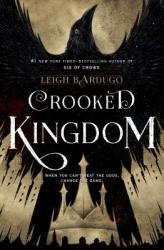
Reviewer's Name: BrittWOW. This was awesome. Spoilers ahead for Six of Crows.
Crooked Kingdom picks up right where Six of Crows left off. Kaz and crew have just been pulled off the heist of a lifetime and then were subsequently stiffed 30 million kruge. Van Eck, the double crosser, stole not only their money, but their comrade/crew member Inej as well. Needless to say, the crew is mad and ready for revenge. The question is...just how far are they willing to go to bring down Van Eck and his cronies?
The answer: pretty far. And it is fantastic.
Bardugo hits all of the right beats in this novel. The heisty stuff is twisty and surprising. The intensity level is insanely high for the duration of the novel. The emotional beats are EMOTIONAL. Like in Six of Crows, each chapter is told from a different character's perspective, and Bardugo uses this technique to develop a rich backstory for each character. I found myself vacillating between loving the characters for who they are and wanting to adopt them off the mean streets of Ketterdam to fix them and give them a loving, safe home. They've all been through a lot, and it informs their lives and choices in a believable way. The villains are semi-developed as the book progresses, and Van Eck at one point does something so terrible that I just sat there and thought WHAT? NO. for like 10 minutes. Bardugo also does a really great job of introducing the very real horrors of human trafficking into a fantasy novel. I hope the book raises some awareness about this very real, terrible issue.
Oh, and a fun bonus: If you've read Bardugo's other series, there are a couple of exciting cameos in store.
Anyway, for me, this was a practically perfect fantasy novel. It made me laugh, cry, and will be something that I'll come back to and re-read every few years. If I could give it more than 5 stars, I would.
Review:
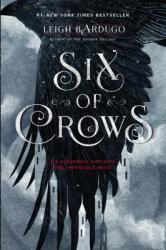
Reviewer's Name: BrittIn the city of Ketterdam (imagine an alternate Amsterdam), Kaz is the first lieutenant of one of Ketterdam's most notorious and successful gangs. He's is approached by a city government official with an impossible task - rescue a scientist from the world's most well protected prison. And the prize? 30 million kruge. Kaz, of course, accepts. And he assembles a team of six to pull off what amounts to the world's most ambitious heist.
The story alternates between the POV of five of the six team members, and each character's story is gripping. All characters are developed throughout the course of the books, and each has their own distinct, fascinating voice and story. There's a sharpshooter, a magician, a traitorous solider, a demolitions expert, a wraith (read and find out!) and of course, the fearless leader, Kaz. And, to make things even better, they are a diverse group of people hailing from all over the world.
This book was really fun, and I've never really read anything quite like it. I will be booktalking this one and forcefully shoving it into the hands of anyone who comes into the teen center (I kid. I'll lovingly hand it to them while gushing effusively.). 5 stars
Review:
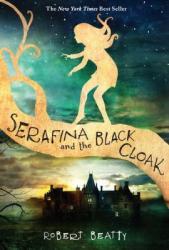
Reviewer's Name: BrittSerafina is the Chief Rat Catcher at Biltmore Estate in Asheville, NC in 1899. She and her Pa secretly live in the basement, where he is basically the electrical engineer of the place. Serafina's presence in the house is a secret so she mostly traverses the estate through tunnels and doesn't go outside. One night, she witnesses a man in a black coat magically abducting a child, which changes everything.
I listened to this book, and the narrator didn't really do it any favors. Her Southern accent was pretty terrible, but thankfully, she kept forgetting to use it. Narration aside though, this book had some problems. The author took a cool premise and an even cooler setting and then wrote a really boring book. There were kind of two main things going on that should have been really interesting, but weren't. The first thing was the identity of the man in the black coat, which was painfully obvious from the start. Had Beatty done a kiddo type version of an Agatha Christie novel (these are the people at the Biltmore estate...and one of them is guilty of MURDER MOST FOUL), I'd probably be typing a really different review right now. Alternatively, he could've played up Serafina's secret a bit more, and that might have made things more interesting. As it was, even though there was a lot going on, nothing of importance ever seemed to really happen.
I also found myself getting annoyed by a fictional Vanderbilt named Braedan (weird name for a kid of Dutch origins in 1899, dontcha think?) who is a bit of a love interest. Every part featuring him was pretty painful as Serafina basically becomes a useless quivering mess when he's around. Blegh. Oh, and at one point, a character says something along the lines of "you don't call girls heroes, you call them heroines" which, just, are you trying to say that girls can't be heroes? Because if so, gross. I'm paraphrasing, but that's what I took away from the statement.
But on the other hand... look at that cover! Gorgeous.
If 1.5 stars was an option, that's what we'd be doing here. I liked the beginning, the premise and the setting, but wish the author had done more with the latter two elements.
Awards:
Review:
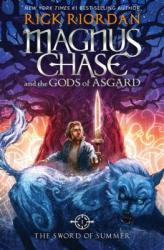
Reviewer's Name: NicolePopular mythology author Rick Riordan strikes again! He has series delving into Greek, Roman, Egyptian, and now NORSE mythology. This series follows Magnus Chase, son of a Norse god. Which god, you ask? Read the book and find out!
Riordan’s writing style is very distinct, playing to his youthful audience. The chapter titles were humorous and made no sense until I reached those parts of the book. (I read through them initially and thought, “What the…?!”)
Magnus Chase was vaguely--well, maybe more like strongly--reminiscent of Percy Jackson for me. Although Magnus has had a much rougher life so far, his voice is very similar to that of Percy. Magnus Chase is barely 16 years old, but he has been living on the streets for the past 2 years since his mother’s death. After an...interesting encounter with a fire giant, he finds himself gracing the halls of Valhalla with other Norse warriors killed in battle. Along with his valkyrie, a dwarf, and an elf, he goes on a quest to retrieve the Sword of Summer and stop the wolf Fenrir from escaping his bindings.
A interesting read for those die-hard Riordan fans or anyone who loves mythology interpretations. I was very entertained by the story, as I always am with Riordan’s mythologies, but despite the gods changing, the stories are starting to run together. The overlap of stories definitely doesn’t help the blurring of the lines. (Oh, hi Annabeth!) Crossing over from the Percy Jackson series, Annabeth, last name Chase--I guess we could have seen this one coming--has a couple nice little cameos in this book, foreshadowing a larger role later in the series. I’ll be interested to see where this goes.
Awards:
Review:
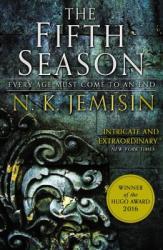
Reviewer's Name: LaurenI loved this book. I've been looking for a new fantasy series for a long time now, but I haven't come across anything recently that's caught my eye. I almost gave up on The Fifth Season too, in part because the narration is in second person, which I found jarring at first, and in part because Jemisin drops you in the middle of the action with little explanation and no hand-holding. It took me a few chapters to get into the story and figure out what was going on, but I'm glad I stuck it out because the plot and characters ended up being great. Despite what I just said, I think it's almost better to go into this blind, but I'll try to describe it without giving too much away.
The continent our characters live on, "The Stillness," is a post-apocalyptic hellscape. There is near-constant seismic activity that triggers a new catastrophe (called a "Fifth Season") every few centuries -- sometimes in the form of massive crop-failures, sometimes in the form of volcanic eruptions, sometimes massive earthquakes that destroy whole regions (she includes a helpful appendix of these disasters if you're curious). In this world, there is a group of people known as orogenes (or more derogatorily as "roggas") who have some degree of control over seismic activity -- they can "sess" earthquakes, and, with training, prevent them from being too destructive. But they're also powerful, extremely dangerous, and widely despised -- many people kill their own children when they discover what they are, and it's often a race against time to see if a Guardian (their mysterious and sinister keepers) can arrive to collect the child before the family or the community has killed them. The plot isn't chronological; it moves around from chapter to chapter in order to tell three stories at three points in time: 20-odd years ago, when a young girl is taken to the capital to be trained as an orogene; some 10 years after that when a mid-level orogene goes off on a mission with her senior to investigate a disturbance in a coastal community; and "now," in the immediate aftermath of the latest apocalypse, when we follow a woman who is struggling to cope with her son's murder just as the quake hits.
I'm not going to say that it's an entirely original idea, but I think the execution was solid and I loved the dialogue and cast of characters. There's no lack of action, but Jemisin also takes the time to dig into her characters' emotional lives, and after a while the use of "you" starts to fade into the background. There's a strong focus on discrimination, both in terms of how orogenes are viewed in society and in terms of the treatment of subordinate nations and peoples by the Sanzed Empire that has conquered the continent. A lot of fantasy is set in pseudo-Europe (and often just pseudo-England), so it was refreshing to read something more diverse, and there's a wide variety of representation in terms of race, gender, and sexuality throughout. I would give this 4.5/5 stars if that were possible, but since it isn't I've left it at 4. It wasn't perfect, but it was a very strong start to the series, and I look forward to starting the second book, The Obelisk Gate, which just released this September. I would definitely recommend this to fans of fantasy.
Genres:

Review:
Reviewer's Name: BrittBook 5 (Empire of Storms hereafter EoS) picks up right where book 4 left off, and the action quickly ramps up. At the beginning of EoS, most of our heroes are together after the events that unfolded at Rifthold, and, to a lesser extent, Morath. After defeating and destroying the King of Alderan, Aelin travels to Terrasen, and after receiving no help or support from the various Dukes/Earls or whatever, Aelin opts for some different kind of support. The kind of support that comes from pirates. So Aelin and her merry band of heroes (well, some of them are pretty angsty, actually) depart to get support from Aelin's old "friend", the Pirate Lord Rolfe.
I was kind of expecting to not like this book as I seem to only like every other Throne of Glass book (I really like 2 and 4 and didn't care much for 1 and 3), but this entry in the series defied my expectations in a good way. The action is fairly constant, and the characters continue to develop and act in ways consistent with their current development. Things that annoy me about Aelin continue to annoy me - she makes really key decisions without informing or soliciting advice from her much more seasoned travel companions/court, but a reveal at the end made Aelin a more compelling character (although still, girl, COMMUNICATE). The real fun in the books, for me at least, comes from Aelin's surrounding cast of characters. Even though many of them took a back seat to Aelin in this book (Chaol is unheard from) their interactions were delightful to read, and I will never be sorry spending time with my favorite, Manon. Lysandra also gets a time to shine, and Elide starts to come into her own as well. There are some new characters that wouldn't be new to those that read the prequel novellas, so if you have not read those yet, I strongly suggest reading them before you embark on the 700 pages of awesomeness that is EoS.
On the downside, there was a bit too much romance in the book for me. Like, EVERY character doesn't need to pair up. Especially since they are all hetero-normative (even though there is some discussion of characters being bi). Also, the sex scenes were fairly repetitive and at times unintentionally hilarious (a character literally BURSTS INTO FLAME). I mean, there was a ton of:
Claiming of mouths (what does that even mean and ew)
Going over the edge
"Maleness" (I'm not sure about this one either but probably ew)
Heating at one's core (I'm pretty sure your core is your abs, but whatever)
Nipping at necks
Right. So that all happens a lot.
Oh, and consider yourself warned, this book ends on a cliffhanger.
Anyway, overall, EoS was a great entry in the series and a strong fantasy story. I really really really cannot WAIT for the last one. 4 stars.
Review:
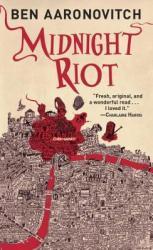
Reviewer's Name: BrittPeter Grant has just finished training to be a PC (police constable) in London. Right as he's about to get assigned to the paperwork unit (not his first choice) he chats up a ghost witness to a gruesome murder. After that, he discovers that he has some magical ability, and begins training to be a wizard copper whilst trying to solve the murder.
This was so fun! If I were to describe it, I'd say it's like the Dresden Files (both are urban fantasy series about crime solving wizards) but like a billion times better. It's fairly similar in premise, but different in most other ways. It has a lighter tone, a more likable protagonist, diverse characters, and was just a more enjoyable reading experience for me. The author used to write for Doctor Who, so fans of that show may also like this read. My only complaint is that it read like an ARC. Did anyone bother to edit this thing? The grammar was terrible (some of which was probably intentional, but some of it clearly wasn't), and occasionally character names were just wrong. Like, all of a sudden, a character who wasn't in a scene would "say" something and it was clear that her name was just transposed with the other lady main character - this happened at least twice.
Anyway, lack of editing aside, this book was an absolute joy to read. I've already checked out the next in the series and would strongly recommend this to urban fantasy readers. 4 stars.
Awards:
Genres:
Review:
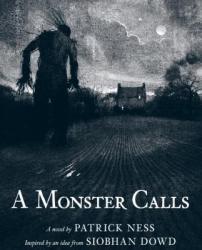
Reviewer's Name: MeaganPatrick Ness keeps writing books that resonate with me. His work tends to focus on emotional journeys with characters either growing from a painful experience or coming to accept something about themselves. This book is no different. At a glance, this book appears to be a horror story. "A Monster Calls" is a cryptic title and the description implies a monster is after a teenage boy. The story follows Conor, a boy who has nightmares about one monster but is visited by another. The other monster wants to tell him 3 true stories and, when the third story is done, Conor must tell it a 4th...or else the reality Conor fears will happen.
In actuality, this book is not scary - at least not in a horror sense. It contains a few unsettling moments and any scary moments come from human fears we carry with us throughout our lives - fears of loss or change or the unknown. It examines them in such a way that is poetic and compassionate, particularly as it relates to grief. Ultimately this book is about learning to cope - it just happens to explore this concept with monsters, nightmares, and a tree. This book made me cry at work - which is a good thing, but you know...kind of awkward nonetheless. Would recommend to lovers of reality based fiction, modern faerie-tales (in a way), unsettling stories, or emotional stories.
And seriously, have the tissues at the ready.
Genres:
Review:
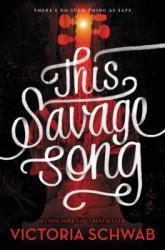
Reviewer's Name: BrittThree monsters plague the US in the future: the zombie like Corsai, the vampiric Malchai, and the soul-stealing Sunai. Kate Harker has always been safe from the monsters - her father is the man who controls the monsters in the northern part of Verity City. After her mother died when she was a young child, Kate's father has done all he can do to keep Kate out of town to keep her safe from the monsters in Verity. But Kate wanted to come home, and so she made sure to get kicked out of every boarding school possible, until the only one left is Verity's own Colton Academy. On her first day at Colton, she befriends a fellow new student named August. Unbeknownst to Kate, August is a Sunai. His father is in charge of southern Verity City, and is working to eliminate all of the Corsai and Malchai in the area. After a botched assassination attempt at Colton, Kate and August find themselves on the run from monsters - but which of their fathers sent the monsters after them? Or was it BOTH fathers? Or could it somehow be neither?
Phew, that was hard to explain. Clearly there is some pretty complex and creative world-building happening in this book, but I would expect nothing less from Schwab. I picked up This Savage Song because I've been reading Schwab's Shades of Magic series (if you are reading this review, just stop and check out A Darker Shade of Magic, you can thank me later), and in both series the world building is quite well done. In fact, the first third or so of This Savage Song was spent on world building, and I found that part to be the most enjoyable. It seemed like the book might then start to veer into "do they like each other" sort of romance territory, but my fears about having to read about teenage angst for the next 300 pages or so were pretty quickly assuaged as Kate and August find themselves running for their lives. For me, the "running from the monsters" parts of the book were ok - there wasn't a ton of new ground covered and it read as a fairly standard on the run type of novel. The mystery of who, exactly, put the hit out on them was interesting and made the running parts of the book more enjoyable. Neither character seemed to have a ton of personality or got a lot of development, but I definitely liked August more than Kate, and feel that I got to know him a bit better over the course of the book.
While this book was not without its problems, the last page or so was AMAZING. Like, ensures you'll read the next book in the series AMAZING. Well played, Schwab.
3 stars. I liked it.
Genres:
Review:
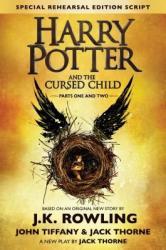
Reviewer's Name: PhilipHarry Potter made a return to the forefront of pop culture at the end of July with the release of Harry Potter and the Cursed Child, a screenplay of the new stage play that takes us back to the magical wizarding world. It’s a bold new direction for the story, taking place nineteen years after the events of Harry Potter and the Deathly Hallows (please note that this review will assume that you have read or, at the very least, watched the final entry in the series), and the world is a very different place for Harry and his friends.
Almost two decades have passed since the Battle of Hogwarts. Since Voldemort’s defeat, our original heroes have attempted to move on with their lives. Harry is a Ministry of Magic official now, head of the Office of Magical Law Enforcement. He’s happily married to Ginny, and father of three children. Hermione is Minister of Magic, and married to Ron, who has taken over operation of Weasley’s Wizard Wheezes. At the outset of the play, Harry and Ginny’s second child, Albus, is bound for his first year at Hogwarts. While on the train, he meets his fellow first year, Scorpius Malfoy, and despite their fathers’ history, they become fast friends. In short order, the boys arrive at school and are both sorted into Slytherin, much to Albus’s surprise.
The following years pass quickly (we are only shown hints of events during the first three years that Albus and Scorpius are in school), showing the lack of real communication between Albus and his father. Being the son of The Boy Who Lived, it turns out, is not easy. Albus has Scorpius as a friend, but neither of them seem to be the children their fathers hoped they would be. You see, a rumor has been flying about the wizarding world that Draco Malfoy isn’t actually Scorpius’s dad. Gossip is that Malfoy wasn’t able to have a child, and so he illegally used a Time Turner in order for his wife to conceive a son with Lord Voldemort. This rumor is given more credence when the Ministry of Magic confiscates what is believed to be the last Time Turner in existence, one that doesn’t appear to have the one-hour-back limit of previous ones. But if someone could go back more than one hour in time, what would they seek to do with that power?
In their fourth year, Albus and Scorpius learn about the existence of the Time Turner and ask themselves that question. When Amos Diggory arrives at the Ministry to implore Harry to go back and save his son, Cedric from Voldemort, Harry refuses, for fear of what disrupting the past might do. When given the opportunity, though, Albus and Scorpius leap at a chance to change the world in the hopes of finding their place within it. However, the threat of Lord Voldemort doesn’t only linger in the past.
Harry Potter and the Cursed Child isn’t a Harry Potter novel. It’s a play based on a story by J.K. Rowling, but the heavy lifting of the writing was done by Jack Thorne and John Tiffany. It’s a vastly different sort of read because of that, and we don’t get anywhere near the level of insight into each character. It doesn’t move in quite the same way, but it is no less magical. Cursed Child is to the Harry Potter series what The Force Awakens was to Star Wars: a return to a beloved world that retreads some familiar moments while still laying the groundwork for a younger generation. New perspectives on classic moments left me feeling more connected to the characters than I had since first finishing Deathly Hallows.
Having read through the entirety of the screenplay, I only want one more thing from Harry Potter and the Cursed Child. I want to see it on stage.
(Note: This review orignally appeared here: https://swordsoftheancients.com/2016/08/10/harry-potter-and-the-cursed-… )
Review:
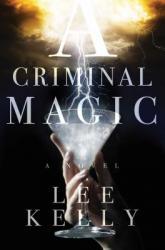
Reviewer's Name: BrittAfter the 18th amendment passed, magic became illegal. Shine, an addictive hallucinogen created as a by-product of sorcery, is the main reason behind the prohibition. So, of course, a seedy underworld of gangsters trafficking in shine immediately springs up, and it is embroiled in this underworld that our two main protagonists, Joan and Alex, accidentally and not-so-accidentally find themselves. As they are both sorcerers, Joan and Alex must figure out how to use their sorcery to survive the crime syndicate and it's machinations.
This is a fun fantasy read that is fairly original in it's premise and setting, with likable and believable characters. The premise does most of the heavy lifting, as gangs set in the 1920s trafficking magic gives Kelly lot to work with. She doesn't disappoint. The gangsters are pretty fearsome and the body count ratchets up quickly. The pacing is tight, and the magic is both deadly and beautiful. Joan is a performer, and the descriptions of the performances themselves are somewhat bewitching.
I did have a few problems with the book. First, while the two main characters were fleshed out and developed, almost none of the other characters got any development, and those that did were then basically ignored for the rest of the book. So when the secondary characters started dying, I didn't really care all that much. And then there's the relationship between Joan and Alex. I didn't mind it at first, but it did that thing that relationships in books often do of getting too serious too fast. It's not instalove, but it's instalove's cousin or something. I also felt that aspects of the 20s were wasted on this book - I wanted more flappers, insane clothing, and awesome music. We really only got the gangsters and the cigarette smoking.
For all it's problems, this fantasy novel was ultimately a great read. The ending was pitch perfect, and left the door open for a sequel. I'd recommend it to light fantasy readers looking for something without a ton of substance that is endlessly entertaining and a little different. I'd probably give it something like 3.5 stars, but since that's not an option, we'll go with 4. I quite liked it.
Genres:
Review:
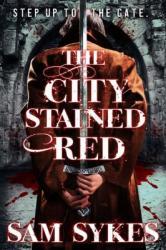
Reviewer's Name: PhilipI’ve been following Sam Sykes on twitter for a while, and given my affinity for both well-crafted fantasy worlds and action-adventure stories, it was only a matter of time before I picked up a copy of The City Stained Red, the first book in Sam’s Bring Down Heaven series.
At almost 650 pages, The City Stained Red is a doorstopper of a book, but a fast, fun, vicious read. The book follows Lenk, an adventurer that some readers may recognize from Sykes’ previous series, The Aeon’s Gate Trilogy (though reading that series first is by no means a prerequisite for Bring Down Heaven). Lenk has finally decided that he’s done with killing, and wants to put aside his sword and pick up what he believes will be a normal life in the trade hub city of Cier’Djall. He and his friends, Denaos the thief, young wizard Dreadaeleon, khoshicht (Sykes’ clever take on elves) archer Kataria, healer/priestess Asper, and dragonman Gariath have killed scores of people and monsters. With the money owed to them for their services, they could happily retire from their violent lives. However, the man who owes them is not so easily found.
Cier’Djall is a massive, sprawling city, and the wealthy who rule over it have made their gold by selling silk produced by enormous spiders. However, the beautiful silk-draped spire that towers over the city leaves long shadows. In darker corners of the city, some of the poor are disappearing, and the ruling fashas may be to blame. Two rival churches seek to position their armies within the city, and tensions are running high as negotiations between them loom. Then, there’s the small matter of the local thieves guild and their ongoing conflict with a new but powerful cult that claims to have demons backing them. This is reality in the city where Lenk hopes to find Miron Evenhands, the priest at whose behest they have been doing what they do best. Cier’Djall is a bonfire piled high, drenched in oil, and awaiting a spark, and Lenk and his friends are unwittingly bringing lit torches through the gates.
The City Stained Red takes a page from A Song of Ice and Fire by presenting chapters from the perspectives of each member of Lenk’s band of adventurers. After arriving in Cier’Djall, they split up to try to located Miron, each using their unique skills and connections to make their way through the city. Denaos has connections from his previous life in the thieves guild, the Jackals. Dreadaeleon seeks the assistance of the Venarium, the wizard’s alliance. Asper, a follower of the same church as Miron, travels to the various temples in the city. Kataria finds herself in Shichttown, a slum where the non-humans try to live out of the way of the fiercely racist upper class. Gariath attempts to gather information from another dragonman who works as a bodyguard for one of the fashsas. Lenk is trying to cope with the fact that his pursuit of retirement may lose him the closest thing he’s ever known to a family. None of them are remotely ready for what they find.
After a footwar between the Jackals and the Khovura cult spills from the back alleys into the streets, every faction with an interest in controlling the silk trade comes out of their corners swinging, and Lenk and company can do little more than hope to survive.
I absolutely loved this book. Sykes blends dark humor and trope deconstruction beautifully. I’m already reading the sequel, The Mortal Tally, because I couldn’t wait to see what happens to these folks next. Reading about these characters is like watching my college Dungeons and Dragons group in action. There’s violence and bloodshed, but also fervent emotion. It’s a wonderful thing.
Review:
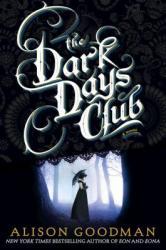
Reviewer's Name: BrittLady Helen has lived almost her entire life in the shadow of her dead, treasonous mother. Because her mother did some shady stuff before she died, Helen has had to be the perfect demur lady, no small task for a quick witted woman in the Regency period. But as new information comes to light surrounding her mother's life and death, Lady Helen realizes that her mother had magical powers...that she passed along to her daughter. Soon, Lady Helen finds herself pulled into the dark underbelly of London as she works with the Dark Days Club to try to keep Londoners safe from a group of demons.
I really enjoyed the beginning of this book. There's a lot of world building, and Lady Helen is a very likable character who I think behaves in ways that make sense given the time period. There's a great build up to the reveal of the demons, and the mystery of Helen's mother and her powers unfolds very slowly and deliciously. The problem arises when the demons themselves are revealed. While I'll give Goodman points for originality with the demons and how they interact with humans, really, as villains go, they were pretty low-stakes and unfortunately kind of lame. I don't know, I mean, most of them follow rules and don't do anything bad, but they are hated by humans in the know just by virtue of the fact that they are human parasites, which really, isn't their fault. Things get a little more high stakes by the end, but I really couldn't make myself care. I actually put the book down for a week or so because I wasn't dying to know what happens, which is pretty rare for me.
I liked the setting, world-building, and the characters, and would maybe give the next book in the series a shot as the villains get a bit more villainous and less lame by the end. That and Goodman can write. She also clearly did her Regency homework. Overall though, for me this was just ok. 2 stars.
Genres:
Review:
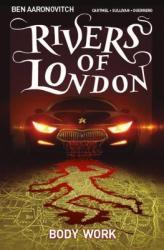
Reviewer's Name: BrittPeter Grant is part of the Special Assessment Unit, a police group in London that is called in to investigate the weirder cases. And the first case is pretty weird - it seems like there are a few cars in London that have developed a murderous bent. Grant and crew do their best to figure out what is going on...before someone else finds themself dead at the hands of their car.
This was really fun! The mystery was different from anything I've ever read, the world building happened quickly but thoroughly, and the characters were likable. While not spectacular, the art was pretty and made the story easy to follow. Oh, and major bonus, the characters were diverse! I liked this one enough that I just put the regular novel Peter Grant books on hold, and I'll definitely be checking out all future graphic novel installments. Harry Dresden fans, check this series out ASAP!
Genres:

Review:
Reviewer's Name: BrittEvery year in different countries in Erdas, children of the age of ~12 get a chance to call a spirit animal - an animals that will be attached to them forever, and gives them the chance to join a group of folks called the "green cloaks" who use their spirit animals to protect Erdas from threats: especially the conquerors. Our four protagonists all call spirit animals - but they aren't just any spirit animals. They are four of the fallen: spirit animals that helped the green cloaks during the last time the conquerors threatened Erdas. As the conquerors begin to attack Erdas anew, the four children must pick a side and learn to fight.
This was quite fun! It was a little generic, and the writing was a little simple, but hey, this IS a book for middle grade readers. I listened to it as I was running, and I've continued listening to the series on long runs as it is easy to follow even when you zone out, its extremely entertaining and at times it manages to be quite clever. It also seems like no one side (green cloaks vs. conquerors) is completely good or evil, and I appreciate that kind of complexity.
Is your family going on a road trip this summer? This would be a great choice to listen to, as I would think the material would be appropriate for all ages. The narration, while not fantastic, is perfectly serviceable. If you want a great middle grade series for your kids, this could be the perfect one to start them with - the entire series has been published, and there are like 10 books in it, so it should keep them busy for a while. That, and it's pretty captivating from the start. Or hey, if, like me, you like to listen to books on long runs, this series is perfect for that sort of thing.
Review:
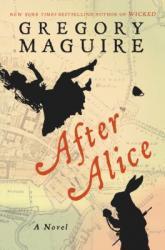
Reviewer's Name: BrittThe book follows Ada (Alice's friend who does rate a mention in the original) as she tumbles down the rabbit hole after Alice (see what Maguire did there?). In between chapters about Ada in Wonderland, we follow the goings on of Ada and Alice's families above ground. I wanted the book to be Alice in Wonderland meets Downton Abbey, and that is definitely not what I got. The parts in Wonderland were ok, though Ada's character was never developed, and as such, I didn't actually care if she was stuck in a zoo forever with the White Queen or whatever. The above ground parts were painfully boring - even though Maguire added Darwin as a character, which could have been fascinating! We basically follow various housekeepers and Alice's sister Lydia as they traipse around searching for the lost children. Exciting it was not. There was also a ton of completely pointless social commentary - for example, its not exactly shocking that there would be lots of racists in Victorian England.
Oh, and to add insult to injury, Maguire writes as though he's just ingested a thesaurus.
This is the second Maguire book that I've read and hated (I was not very fond of Wicked either), so I believe it will be my last. 1 star.
Genres:
Review:
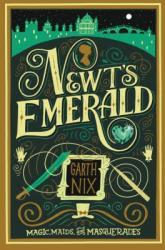
Reviewer's Name: BrittGarth Nix wrote a regency romance with a touch of fantasy back in the 90s, and it's finally been published! It's adorable. It falls somewhere in the middle of Jane Austen and Gail Carringer - it's closer to Austen than Carringer as the fantasy elements are pretty light. The main character is spunky and extremely likable, the love interest is perfectly serviceable, and the dialogue is punchy. Also, there's cross-dressing. A super fun read - 4 stars.
Awards:
Genres:
Review:
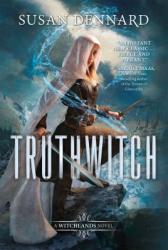
Reviewer's Name: BrittMany people in the Witchlands are witches - folks born with magic. Most have some sort of elemental magic (water, wind, fire, earth), although some have powers based in the "aether" or the "void". Our two protagonists are a Truthwitch - she can tell if someone is telling the truth or not, and this is super rare/desired in this mythology - and a Threadwitch, which is someone who can see connections between people. At the start of the book, they upset a very powerful and rare Bloodwitch, these witches can control other peoples' blood, and spend the rest of the book on the run from him and other nefarious foes out to exploit the Truthwitch's rare powers.
This is a perfectly good fantasy series opener. It's got a very conventional system of magic (elemental magics aren't exactly a new concept), and while one of the main characters was one of those magical beings that men just die over, which, ick, I did enjoy the two main characters. Their strong female friendship was at the heart of the story, and I think that's great modelling for young women. The magic wasn't inventive, but there were a few fun new critters (sea foxes!) that I really enjoyed reading about. Fairly standard fantasy fare, but a solid first outing. I'd check out the sequel, and would expect the series to improve going forward. For the most part, I liked it.
Genres:
Review:
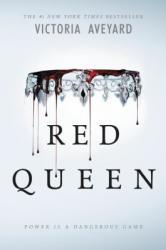
Reviewer's Name: BrittMare Bellow's blood is red, which marks her for a life in poverty at best, and a brutal death on the front lines of a war she didn't ask for, at worst. She lives under the harsh rule of the Silvers, folks with special powers (mostly elemental, though some are X-men like). Later, surprise surprise, she finds out that she has special powers too and her life is upended.
Confession: I tried to read this book like 5 times. I finally got through it. I should've stopped trying. This book is one big, cliched, full of plot holes mess, there's a seriously stupid, unlikable, mean (and not even in a fun way) main character. In addition to an unoriginal plot and vapid characters, the writing is not stellar. I can see a certain type of reader enjoying it, but it certainly wasn't for me.
Awards:
Genres:
Review:
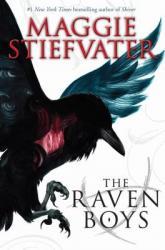
Reviewer's Name: BrittBlue Sargent is not a psychic. Her mom is a psychic. Her aunts are all psychics. But Blue has another skill - she can amplify psychic power. So every year on St. Mark's Eve, she accompanies one of the "real" psychics to
greet the ghosts of the people who will die in the next year. Usually, she sees nothing. But this year, she sees the ghost of a boy: Gansey. Later, Blue and Gansey have a meet-not-cute, and Blue finds herself swept along with Gansey and his friends Noah, Adam and Ronan on an epic quest to find a long lost Welsh king...because Blue thinks that this king might be the only thing that can save Gansey.
First, I love the way Stiefvater writes. She manages to imbue whimsy and/or something otherworldly (and often slightly sinister) into almost every paragraph, and her descriptions are often at once hilarious and spot on. For example:
April was a bad time for the Aglionby boys; as it warmed up, the convertibles appeared bearing boys in shorts so tacky that only the rich would dare to wear them.
or
Ronan kept staring at Whelk. He was good at staring. There was something about his stare that took something from the other person.
Great, unique descriptions. I just love her writing and her ability to make the reader feel like they've known the characters forever.
On top of that, the plot is simply and uniquely marvelous. I had never heard of Glendower (our long lost Welsh king), and this story felt really fresh, even though I was reading it for the third time. A colleague thought it was boring, and I will concede that it gets off to a bit of a slow start to allow
for world-building and character development, but I DARE you to try to read the last 100 pages or so in more than one sitting.
It's just soooooooooooooooo goooooooooooooooooooooooooood.
5 unreserved stars. J'dore.
Awards:
Genres: