Staff Book Reviews by Genre: Historical
Review:
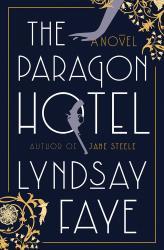
Reviewer's Name: Britt1922. Alice James finds herself on a westbound train with two bullets in her stomach and $50,000 worth of counterfeit cash. On the run from the mob, she befriends a black porter who saves her life by taking her to his doctor friend in the only black hotel in Portland, Oregon. When a mixed race child goes missing from the hotel, the residents panic as KKK activity in Portland has been escalating. This excellent novel switches back and forth from the events leading up to Alice’s shooting and then her experiences at the hotel after arriving.
Alice James is one of my favorite characters in recent memory – she’s flawed, but self-aware, whip-smart and most importantly compassionate. Her empathy gets her into the trouble and she knows it, but she’s the sort who is willing to sacrifice herself for the greater cause. The supporting characters, especially Blossom, are equally flawed but lovable, especially as their truths slowly come to light. I’m a sucker for a 20s setting, and we get a lot of the good stuff here, especially linguistically. Our Alice has quite the endearing way of explaining herself in 20s style aphorisms.
In addition to being a charming read, the book covers some really important issues around race, gender and sexuality. The author has a deft enough hand at covering these issues that she manages to make the commentary work for the 20s as well as present day. If you decide to read this book, you’ll laught, cry and rage along with the characters at the injustices handed to them based on their gender, race or sexuality. My one complaint is that the middle sagged a bit – this is book that’s largely focused on character development and the mystery really just served to get Alice to learn things about her new friends.
I don’t read a lot of historical fiction, but the promise of mob-excitement, mystery and racial commentary brought me to this book, and I’m so glad it did. Richly drawn characters and a fascinating setting pretty much guarantee that most fiction (historical or otherwise) readers will enjoy this one, and I’ll be pre-ordering a copy for my mother. 5 stars – I adored it.
Thanks to Netgalley and G.P. Putnam’s Sons for the advance copy, which I received in exchange for an unbiased review. The Paragon Hotel goes on sale on 08 January, but you can put your copy on hold today!
Genres:
Review:
Reviewer's Name: Chris W.Ever since I saw the inimitable Richard E. Grant in the "The Scarlet Pimpernel" TV series, I have been enamored by these tales from Baroness Orczy. As the cliche goes though, the book is far superior to any adaptation I've seen thus far. After the French Revolution, the new government of France established the "Reign of Terror", where the citizens of France took out their anger and vengeance on any of the old aristocracy that they could find - whether they were guilty of oppressing the people, or not. Enter The Scarlet Pimpernel(!), an elusive daredevil, whose secret league of Englishmen risk their lives to save the aristocratic victims of the people of France. When the government of France charges their agent, Citizen Chauvelin, with discovering the identity of their mysterious enemy, he blackmails Lady Blakeney, a pinnacle of London society, into aiding him in his treacherous task. Who will she turn to, to help save her only brother - her insipidly foppish husband, Sir Percy Blakeney? He may be rich, and the leader of fashion in London's high society, but he's certainly not a "man of action" for something so perilous and vital. Lady Blakeney must face her inner struggles to try to find the hero who she admires so much, only to betray him. Meanwhile, the infamous guillotine awaits her next victims...
Published in 1905, "The Scarlet Pimpernel" established many of the hero tropes that are familiar today, such as having a secret identity, and using disguises and intelligence to outwit one's enemies. This is truly one of my favorite series. If you like this book, there are follow-up chapters, such as "I Will Repay", and "The Elusive Pimpernel", that are worth your attention as well!
Genres:
Review:
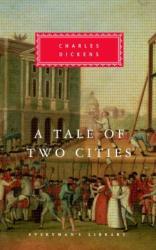
Reviewer's Name: Chris W.“It was the best of times, it was the worst of times…” The opening lines say it all. I do enjoy Dickens, but this is by far, my favorite novel of his. This book follows the effects and far-reaching ramifications of the arrogant cruelty of the French aristocracy before their Revolution. A man is saved from an unfair imprisonment, but must regain himself through his devoted daughter and friends. They build a new life in England, where we get to know an array of complex characters – each with their own foibles and narratives. Meanwhile the fervor of the people of France veers towards the inevitable overthrow of the tyrannical aristocracy, and as often happens, the oppressed become the new oppressors. Destiny drives our main characters into the French turmoil where they find chaos, danger, and ultimately redemption.
Genres:
Review:
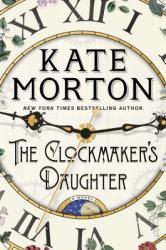
Reviewer's Name: TawnieThis story centers around an impassioned artist and his dreams, a mysterious murder, an enchanting English manor and all that went on their throughout its many years, a ghost that stands outside of time witness to it all, a vanished girl, an archivist and her discovery of a priceless artifacts, and how what went on there all those years ago effects who she is today.
In the past, the 1860’s to be exact, this story begins with a talented artist Edward Radcliffe and a group of artists that spend a summer at the house of his dreams Birchwood Manor. But shortly after arriving a mysterious murder is committed, a priceless artifact disappears and one of the women vanishes. A hundred years later in the present an archivist, named Elodie, finds a satchel which contains an unrelated photograph and a sketchbook that contains a drawing of Birchwood Manor. As she digs deeper into the mystery she is pulled into a story that has her questioning her past and who she truly is. This beautiful atmospheric mystery spans the length of time, and is told by the many voices and people all living within and around the Manor’s walls.
Before I go any further, first, let me say this. Kate Morton is the master of atmospheric beautiful Gothic mysteries and I am a big fan of hers and have loved every one of her past books. Her intricate and deeply rooted stories her beautiful prose, and her enchanting settings are the reasons why she is simply one of the best in her genre. That being said, this work, was a bit of a disappointment. While all the elements of what I love about Kate Morton’s books were there; an intricate story steeped in history, an old vast English manor with a secret or two to hide within its walls, old families with long pedigrees, a family mystery, an enchanting setting, this book fell short for me mainly because of its intricacy and complexity. I also believe the ending was a bit weak. I really wanted to love it, I just couldn’t.
Morton, I believe, really attempted to tell a challenging story, but simply had to many voices trying to tell it. While I like a good dual timeline novel, this one, with at least four voices and timelines was simply too much. There were times that, because of how she bounced around among the numerous timelines, when I got completely lost in which timeline I was following. This combined with how many characters and voices there were throughout the novel, made the story overall a whole lot less enjoyable. I’ll admit, this story took me a good while to get through and I do recommend, if reading this, keeping a list of who everyone is and which timeline goes where. It’s definitely a book you have to think through. That being said the story itself was beautiful and it makes me wonder, if it wouldn’t be better as an audio book where each of the voices are sounded out. Overall a 2.5-3 star read for me. However, if you are a Kate Morton fan and if you love atmospheric Gothic mysteries, I couldn’t count this one out, I would still give this one a go, just maybe as an audio book. Place your copy on hold today!
Thank you to Netgalley, Atria books, and Simon and Schuster for a DRC of this book in exchange for an honest review.
Genres:
Review:
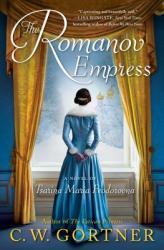
Reviewer's Name: KristaFabulous. If you are at all interested in the Romanovs as a whole (beyond Nicholas and Alexandra), this is a wonderful introduction. This book expands the story of the Romanovs from the point of view of Empress Maria Feodorovna who married the Russian Tsarevich and was the mother of the ill-fated Russian monarch Nicholas II (she was also the sister of Queen Alexandra of the U.K., King Frederick VIII of Denmark, and King George I of Greece - luckily there is a handy family tree in the front of the book for you to refer to!) Beautifully written and engrossing.
Awards:
Genres:
Review:
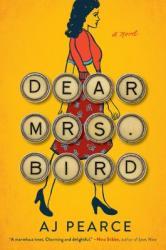
Reviewer's Name: Krista M.This book took me on an emotional roller-coaster! The beginning bits were so funny, I figured it was going to be more of a slapstick comedy (which I was okay with), and then the reality that this was set in London during the Blitz set in, and I found myself gasping. Plucky Emmaline is such a lovable character, I would love if the author would consider revisiting her life in the future! Strongly recommend for those who enjoyed The Guernsey Literary and Potato Peel Pie Society. While it is not written in letters, Dear Mrs. Bird packs a similar emotional punch.
Awards:
Genres:

Review:
Reviewer's Name: Krista M.Loved this dual-timeline novel. Both stories were strong enough that they could have stood on their own, but together they were wonderful. The descriptions of a small town in Tuscany were so vivid that I felt like I was there, and the food in particular made me hungry! I've only ever read the Royal Spyness mysteries by Rhys Bowen, but they are among my favorite lighthearted mystery series. Now, I'm definitely going to have to pick up In Farleigh Field and her other mysteries!!!
Genres:
Review:
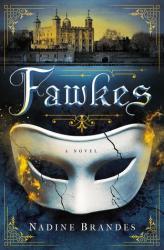
Reviewer's Name: BrittIf you aren’t familiar with Guy Fawkes Day, every year in England on 05 November, citizens burn Fawkes’ effigy to celebrate his failed attempt to blow up Parliament in 1605. Fawkes tells the story of Thomas Fawkes, Guy’s son, with a fantasy twist. In this world, folks have powers based on colors. Some folks can manipulate some colors, others all colors, which leads to different magical schools of thought and serves as a stand in for the Catholic-Protestant tensions of the time.
If you know anything about my reading preferences (I read mostly fantasy), this next thought is a bit shocking: the fantasy elements really ruin this book. Unfortunately, the worldbuilding is really shallow. You’ll be left with loads of questions about color power like: What if something is more than one color? Paint? How does that work? Why can’t someone who can control Green also control Blue and Yellow? Or vice versa? And so on.
I really wish the book had been written as straight historical fiction. A point about religious persecution could have been made (that was perhaps attempted, but for me it didn’t land). The story might not have dragged for the first three quarters of the book. Add to the weird pacing and lackluster worldbuilding the fact the main character manages both to be extremely judgmental and lack any convictions for most of the book, and you’ve got a book that really isn’t fun to read. I found myself skimming just to get through it.
With that being said, I did enjoy the last quarter of the book. The pacing picks up, Thomas develops a backbone, we get to spend some time with my favorite character (Emma!), and Guy Fawkes gets a tiny bit of development.
This wasn’t for me, but perhaps some folks will be swept away by the romance and intrigue. For fans of historical fiction that can look past the weak fantasy elements. 2 stars. Meh.
Thanks to Thomas Nelson, HarperCollins Christian Publishing and Netgalley for the free eARC, which I received for review consideration. Fawkes will be available for purchase on 10 July, but you can put your copy on hold today!
Genres:
Review:
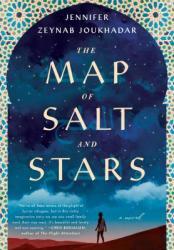
Reviewer's Name: TawnieYou know you have come across an extraordinary book when you find yourself thinking about its beautiful story and characters several months after you have first read it. I first read this beautiful novel back in February when I received an ARC of it from the publisher, and today I still think of the book and its beautiful characters of Nour and her family as they flee their homeland, Syria in 2011, and become refugees venturing across several middle eastern countries as the situation becomes more and more unstable and the violence ever more brutal. Shifting between past and present, in a second duel story-line that takes places more than 800 years earlier in Medieval Syria, Jennifer Zeynab also tells a harrowing tale of a girl named Rawiya, her desire to see the world, her very real clash with supernatural myth, and her adventures with a famous cartographer.
Jennifer Joukhadar through the fictional characters of Nour and her family, discusses a relevant and timely topic of the experience of many refugees that flee persecution and violence. She also does it in a way, that is, for the most part, unbiased choosing to focus instead on the everyday human experience of a family, instead of political ideology, which is very refreshing in today’s global climate.
The atmospheric and beautiful prose are a delight to read as we get to experience the world the way Nour and Rawiya saw it through beauty, sorrow, color and light. The character development of Nour, as her personal identity and her idea of what home is shifts as her journey progresses through time and years, is especially strong as she reflects on all she has lost and gained. Though the character development of Rawiya, shows a progression and change as her journeys around the world challenges and changes her perspective on life, I do not think it was as strong as the story of Nour and her family. And though Rawiya’s story-line was beautiful and entertaining, I felt it sometimes took away, from what I think of, as the central story-line of Nour and her family’s refugee experience.
That issue aside, this novel which is rich with historical and mythical detail, was in my opinion, several steps above the rest as it tackled a relevant, continuous, and difficult issue with beauty, grace and a truly memorable story. This novel, it has been said, does for Syrian Refugees what the Kite Runner did for Afghan refugees and in my opinion, it is a fair and correct comparison.
Thank you to the publisher Touchstone Books for an ARC of this beautiful novel for review! If you have not yet, please put this book on your holds list, it is so beautiful!
Genres:
Review:
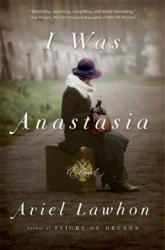
Reviewer's Name: KristaThis dual-timeline story novel twists and turns until you are racing to the finish line. It tells the story of the Romanov family from the point of view of Anastasia. You travel with her from the revolution in 1917 to the family's assassination in July 1918. At the same time, you meet an elderly Anna Anderson, who is still trying to prove that she is the surviving Grand Duchess Anastasia. Anna's story is in reverse so as you are reading, she is moving back through her travels, various sponsors, lawsuits, and incarceration. The two stories meet at the end, solving the mystery as to what exactly happened to Grand Duchess Anastasia. The author is a beautiful writer and you will be transfixed by the story, no matter how well you know history! Another great title from Ariel Lawhon (if you haven't read her previous title, Flight of Dreams which is about the Hindenburg, I highly recommend it!).
Genres:
Review:
Reviewer's Name: Britt"Let me show you
what a woman can do."
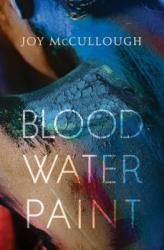
Artemisia Gentileschi is a painter. But because she's a painter in Rome in the early 1600s, she cannot take credit for her work. All of the credit goes to her father, who is a painter himself, though not a good one. When her father solicits the help of fellow painter Agostino Tassi to develop Artemisia's perspective, she thinks that finally her work might get taken seriously. But after Tassi brutally rapes her, Artemisia must decide whether she wants her life to continue as close to "normal" as possible, or if she wants to speak her truth and risk her painting career or worse: death.
Unbeknownst to me until about halfway through the book, this story is actually based on a true one, which makes what is already a beautifully written gut-wrenching book all the more poignant. Artemisia is a woman unhappy with her unfair lot in life, and she uses her art to express that by depicting Biblical women (primarily Susana and Judith) realistically instead of through the male gaze. Judith and Susana's stories as told to Artemisia by her late mother are sprinkled throughout the book, and are the only parts not written in verse.
Blood Water Paint is so timely. It's primarily about a woman's ability to speak her truth, and as we live in the time of the #MeToo movement it all feels so horribly relevant. As terrible things are happening in the book, you can see them mirrored in today's society. But ultimately, even as it's depressing (and it is brutal), the book is empowering and inspirational, and Artemisia is the quintessential example of a strong female character - her strength in the face of insane adversity is even more affecting given that it's based on a real woman.
I can think of no better book to read for National Women's History Month (or really, at any time). I'd strongly recommend this to both teens and adults, and I won't be surprised should it garner several nominations and/or wins when book award season rolls back around. This is one that is not to be missed. 5 stars.
Thanks to Netgalley and Dutton Books for Young Readers for the eARC, which I received for review consideration. Blood Water Paint is available now!
Genres:
Review:
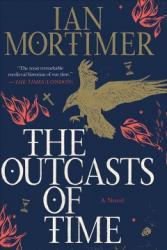
Reviewer's Name: Tawnie M.This book follows the story of two brothers John and William in 1340’s Medieval England who are suffering from the Black Death. But as their end draws near, they are given a choice that changes the course of their lives forever. They are told that they have six days left to live, which they can either spend with their loved ones, or search for salvation and redemption for their lives across the centuries; spending each one of their remaining days 99 years after the last. So, each day takes places one century after the last. The brothers choose the latter and are launched into an adventure that spans centuries in the time frame of a few days.
Observers of the world across centuries, John and William hardly recognize the world around them each day they wake up, and as their journey for salvation progresses, questions the world around them in a way that has readers questioning humanities true motives. Rather than focusing on the good things and advancements the world has made through the centuries, the characters, especially John, ponder how these advancements have brought humanity farther and farther away from God. As the years and days progress, the novel asks the question what is true salvation really and examines the idea of what is good verses bad?
When I received an ARC of this book in the mail from the publisher at first, I wasn’t exactly sure what to make of it, but as I read the back, I became excited, because this book deals with a sci-fi like subject of time travel in a way I haven’t seen before. This book took me a while to get through and it also is a book that really makes you think. Warning! If you are looking for only a traditional time travel sci-fi book, this book is probably not for you however, if you like historical fiction this book is probably more for you. This book deals with time travel in a highly conceptual way. It is a time travel book written by a very noted historian and reads very much like a historical novel with all the historical details you would find in a history book. But it is also very philosophical as the main character questions the world and the ideas in it. As this quote from John shows when he is discussing, with the family he is staying with, the bad things done by others around them.
“I myself wish for nothing more than to spend the rest of my days engaged in good deeds,’ I say. But how can I tell what a good deed is in this day and age? What is “good” and “bad” if God’s law is constantly changing? How can we do good if the meaning of “good” and “bad” are dependent on who wins the war? How can a man go through this world in sure knowledge that he is doing the right and proper thing?”
This is just one of many philosophical musings that the author poses through the book that seek to answer difficult questions and these details really make the reader think and ponder the difficult answers to questions like, what is good verses bad. These details I think also give the book a conceptual quality that puts it above the norm and makes it more than just another sci-fi book about time travel.
Ian Mortimer is an excellent historian and the historical detail in this book are incredible! He weaves together history and time travel in a highly original and interesting way that makes readers both question the world and presents readers with a clear picture of England’s evolution from a small underdeveloped town to a large industrial country that leads the world in more ways than one. I highly recommend this book for readers of historical fiction or anyone who likes highly conceptual, philosophical books that question the world and everything in it. I give this book a solid 5 out of 5 stars!
Thank you to the publisher Pegasus Books for an ARC of this book for review.
Genres:
Review:
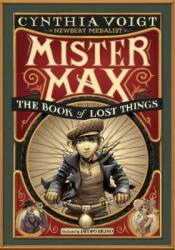
Reviewer's Name: BarbMax's parents have dashed off on an unexpected adventure and left their 12 year old son Max behind, alone...well, his grandmother is around to watch over him, but she is busy being a librarian. Max has to fend for himself and picks up a part time job as a solutioneer (sounds like engineer, but much more mysterious). His first task is to find a lost pet and this snowballs into many intricately involved adventures that will keep readers turning pages with anticipation to find out what this determined young man will do next. The Book of Lost Things, by Cynthia Voigt, is sure to please children 9 - 13 who enjoy a good mystery.
Genres:

Review:
Reviewer's Name: Krista This was a very difficult book to read, but it was so beautifully written. Dual timelines tell the story of sisters separated by war. You will learn Hana's story from 1943 in Korea when she is taken by Japanese soldiers to become a "comfort woman" in Manchuria (the details of which are haunting).
Hana's sacrifice allows her younger sister, Emi, to stay on their island home off the coast of South Korea, but she is also tormented by the effects of World War II and the Korean War. We meet Emi as an older woman in 2011, still trying to find out what happened to her sister. Both stories are compelling and heartbreaking, but showcase the strength of these women to survive. Highly recommended.
Awards:
Genres:
Review:
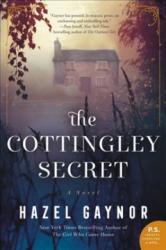
Reviewer's Name: Tawnie“ I said my story had many beginnings, and the day the camera arrived was one of them. After all, without the camera, there wouldn’t have been any photographs. Without the camera, I wouldn’t have a story to tell...”
The Cottingley Secret is a story about fairies, Sir Arthur Conan Doyle, and an old bookshop in a Irish harbor town, what is not to love about this book.
This story is a modern retelling of the real historical legend of the Cottingley Fairies. After coming to live with her cousin Elsie Wright in Cottingley England, during the height of the first world war, Frances Griffiths and her cousin both claim to see real live fairies at the bottom of the garden. The cousins soon prove their claims by photographing the fairies in the garden. These real live photos soon catches the attention of Sir Arthur Conan Doyle, who wholeheartedly believes the girls and proceeds to publish several of these photos in a magazine. Soon after, the girls and the fairies became a national sensation and through the country into the grip of fairy fever. This marks the beginning of a time that would define their lives and have them keeping secrets until the day of their deaths.
Meanwhile in modern day Ireland, Olivia Cavanaugh inherits her grandfather’s bookshop and soon discovers a manuscript that recounts the story of Elsie Wright and Frances Griffiths. As she reads through the manuscript, written by Frances, she soon discovers she has more in common with her than she ever imagined.
Hazel Gaynor connects past and present in a way that is both modern and extremely touching. I really connected with Olivia in this book. As she, and the reader, reads through Frances and Elsie’s story, she finds strength to face her painful past and let go of a life that has always been planned out for her to pursue a life that connects her to the desires of her heart.
Filled with amazing literary prose, a beautiful atmospheric environment and strong characters, this story is historical literary fantasy at it’s best.
Genres:
Review:
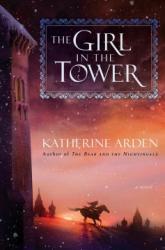
Reviewer's Name: Tawnie M.Katherine Arden's The Girl In The Tower is just as good, if not better, than the first book, The Bear and The Nightingale. Filled with more Russian Fairy tales, atmospheric literary prose, rich and strong characters, and the same enchanting setting of Medieval Russia, this book picks up right where the first one left off. It follows the story of Vasya, now a grown up woman she, instead of conforming to the role woman in her day usually play, of marriage or life in a convent, chooses instead a life of adventure. Leaving her home and traveling the vast Russian Wilderness while dressed as a boy, she soon is called upon to defend the city of Moscow and finds the threat greater and more deadly than she imagined. While fighting this threat, only she can stop, she is also forced to protect her secret as she comes upon her brother and attracts the attention of the Grand Prince of Moscow.
Part of what drew me to this book is the fairy tales, yes, but also the historical setting of Medieval Russia. Katherine Arden does a masterful job of weaving fantasy elements with real life historical details only a great historian would discover. Blurring the line between history, fantasy, and reality this book and, more importantly this series, is contemporary historical fantasy at its best. It is a sketch not only of real life in Medieval Russia, but also displays the power of story and demonstrates the importance of fairy tales and the lessons they can teach us.
Awards:
Review:
Reviewer's Name: Johana P.If you like castles, medieval stories and a bit of supernatural I recommend this you!
Set in the 13th century, this novel whisks you back in time. The misadventures of this "cripple" build up from a puddle to a daring rescuing of a wanted madman. While it may seem to drag out sometimes, its worth the wait.
Genres:
Review:
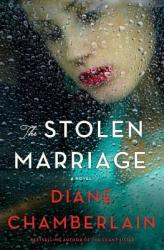
Reviewer's Name: KristaAbout halfway through this book, I wanted to throttle the main character and give up on the book as I saw it heading in an utterly predictable direction. Tess makes so many bad decisions that it is hard to feel sorry for her being in such a miserable situation. It was also difficult to read the characters' attitudes about racially mixed couples in a time and place when it was not only socially unacceptable, but illegal. However, I'm glad I stuck with it, as about 2/3 of the way through it turned around and ended on a very unexpected note, which I enjoyed!
Awards:
Genres:
Review:
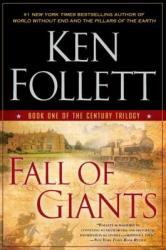
Reviewer's Name: MerryFall of Giants is a long but worthwhile book to read. I "read" this via audio-book and enjoyed the narration very much. Ken Follett never fails to write in a historically accurate method and this is no exception. The introduction to the characters takes a bit of time to get through, but it's worth it due to the intricate nature of their lives and how they will intersect later in the book and the following related novels. This book combines elements of politics, revolution, war, love, social injustices and reforms, and insight into daily lives of people living in WWI era Russia, England, Germany, Wales and America.
Awards:
Genres:
Review:
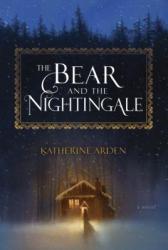
Reviewer's Name: TawnieA perfect winter read! A beautiful atmospheric retelling of the fairytale Jack Frost set in a wintry town on the edge of the Russian wilderness in Medieval Russia. Plus a strong independent female protagonist who risks everything to save her family from the evil forces all around her! What's not to love! Katherine Arden's The Bear and the Nightingale is a must read! This novel has it all mystery, magic, adventure, and love! With well developed characters and beautiful, atmospheric, lyrical writing that makes you almost feel the cold wind on your skin and see the snow flakes falling this book cannot be passed up! I cannot wait for the next book in the series to come out, The Girl in The Tower!
Genres:
Review:
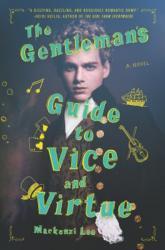
Reviewer's Name: PhilipIn the 18th century, it was rather common for young wealthy English folks to embark on a Grand Tour of continental Europe between their school years and their careers or higher education. Henry “Monty” Montague’s Grand Tour, however, is anything but common. Monty’s formal education at Eton ended rather abruptly, due to being caught in a rather compromising situation with another one of the boys. Now his future as his father’s heir is in jeopardy, and his tour is his last chance to redeem himself.
So it is that Monty departs for the continent, knowing that if he doesn’t manage to behave himself (at least in his father’s eyes), he’ll be left penniless. He’s accompanied by his younger sister, Felicity, herself off to a school in France, and his best friend Percy, who will be leaving England for law school at the end of their tour.
Monty naturally feels a bit overwhelmed by the mounting pressure on him to completely turn his own life around. However, understanding the plights of others isn’t something he’s ever been good at, and Felicity and Percy each have their own deep concerns about what awaits each of them at the end of their trip. None of them expect Monty’s knack for attracting trouble to draw them into a web of intrigue that leads them from France to Spain to Italy, pursued by highwaymen, pirates, and vengeful nobles. And none of them, least of all Monty, expected him to fall desperately in love with Percy along the way…
The Gentleman’s Guide to Vice and Virtue by Mackenzi Lee was everything I wanted it to be and more. Adventure, mystery, and romance all fall neatly into place in this YA treasure. It’s available now, so do yourself a favor and pick it up.
Genres:
Review:
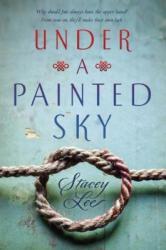
Reviewer's Name: MelissaUnder a Painted Sky was just okay for me. The book was probably very similar to being on the Oregon Trail - every once in a while something exciting would happen but for the most part, you're on the trail with a long stretch of boring ahead of you! That being said, I really do like the fact that Stacey Lee used a "historical" setting to present two strong, multicultural female characters. Annamae (African-American) and Samantha(Chinese) came into each others lives at a critical time and in the end, they realize that you can choose your family. Also being accepted for who you are was a central theme. But I felt Under a Painted Sky was a historical novel with not much history. The story takes place on the Oregon Trail, and we do hear of some of the hardships of traveling that the pioneers faced, but Stacey Lee only did one mention of Native Americans in the book. One sentence about the Cheyenne. It's hard to believe that on the trail, they didn't encounter any Native Americans. I think this book will be popular with teen girls. They will love the romance!
Awards:
Genres:
Review:
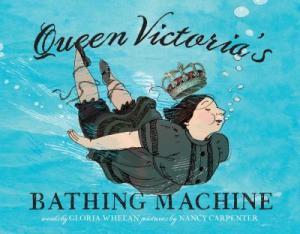
Reviewer's Name: Kristin BrownA great, rolling doggerel accompanies this story about finding a way to allow the queen to enter the sea without any part of her being “seen!” Funny and factual, this will be a fun read for you and yours.
Genres:
Review:
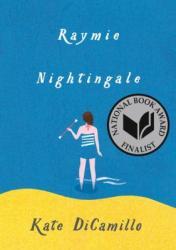
Reviewer's Name: KristinThe best way I can describe Raymie Nightingale is to say that it is a book you can fall into. Kate DiCamillo is a master of characters and story, and Raymie Nightengale is no exception. This author weaves magic through words. We enter Raymie’s life mid-stream; she is ten years old and floundering a little. Through some new, strong friendships, she discovers strength in numbers – and in herself. The subject matter might be a bit much for some. Raymie’s dad has “run off” with a dental hygienist. But DiCamillo is never heavy-handed with the details and navigates the discomfort with aplomb.
Genres:
Review:
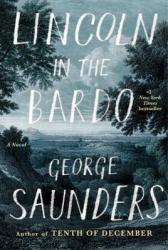
Reviewer's Name: BrittHans Vollman died shorty before getting to consummate his marriage with his young wife. His spirit, full of regrets, stuck around the graveyard. The same is true for Mr. Blevins, who committed suicide because of his sexuality. No one really knows why the Reverend chose to stay in what amounts to purgatory, but he's there, and he mostly hangs around with Vollman and Blevins. Every night, those ghosts and more come out of their "sick boxes" to congregate. Until one night, a very special ghost arrives, and everything changes. Willie Lincoln arrives in the graveyard, and instead of immediately transferring to the "next place" as most young children do, he sticks around. Lincoln in the Bardo follows the ghosts and their reactions to the younger Lincoln and his very special visitor, his father, the living sitting president, Abraham Lincoln.
First, I listened to this book, and while the audio performances were stunning, it was initially extremely confusing for this listener. I had no idea what was happening for the first disk, and considered quitting the book entirely. However, after reading the synopsis on the back and a few online reviews, I stuck with it, and I'm glad I did. Like I said, the audio performances were stunning. Nick Offerman (Vollman) and David Sedaris (Blevins), in particular, deliver masterful performances. Along with exposition from the ghosts, there are interstitial segments that use actual quotes from newspapers and other sources from the time , and it's here that the narration goes into overkill. The audiobook features 160 narrators, and I think that instead of having a different person read each quote, the story would've flowed a little better had our narrator just read the quotes.
The book itself is an interesting paranormal postmodern story that has elements of historical fiction that also takes a long hard look at death, grief, and coming to terms with one's lot in life. There's a lot going on, but after the first sixth of the story, I was hooked, and I really started to care about Blevins and particularly Vollman. This book is short on plot, but that's not the point. This is a character study that also examines life, death, and whatever might lie in-between. As the book is set at the beginning of the civil war, there are some heartrending accounts from the ghosts of slaves, and some maddening accounts from dead confederate soldiers. The book is a bit of an emotional roller coaster, but as I like books that make me feel things, that wasn't a problem for me. This book will make most people feel something, be it ire, or sadness, or confusion (it's been a while since I've read a postmodern book, and the format was occasionally jarring).
While this was at first a difficult listen, I ultimately ended up enjoying it. I would recommend reading the book, and then revisiting it as an audiobook to enjoy the fabulous performances. A challenging, but worthy read. 3 stars - I liked it.
Genres:

Review:
Reviewer's Name: RebeccaOctavia Butler's Kindred broke so much ground both as a flawless time travel novel and visceral retelling of the slave experience. As an African-American author writing science fiction, her body of work changed the field while winning its top honors -- the Nebula and Hugo awards -- and the author herself was awarded a MacArthur genius grant. This graphic novel is an excellent introduction to her work, and is highly recommended for YA and adult readers alike.
Review:
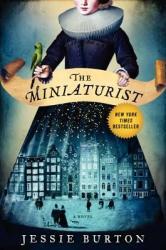
Reviewer's Name: KatieSet in 17th-century Amsterdam, the book follows the life of young bride, Nella Oortma, and her marriage to the wealthy merchant trader, Johannes Brandt. Johannes is kind but distant, leaving Nella feeling alone in his large estate. Nella receives an elaborate wedding gift from Johannes—a cabinet-sized dollhouse replica of the Brandt estate. Nella’s life takes a mysterious turn after she employs a local miniaturist to furnish the tiny house with replicas of the residents of the estate. I enjoyed the book and found it to be a fast read. The author’s rich description of people and places made the Old World setting come alive. Every chapter, the reader is reminded that not everything is what it appears to be.
Genres:
Review:
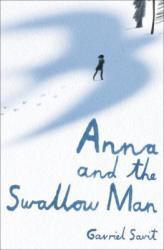
Reviewer's Name: BrittIn Poland in 1939, seven year old Anna's father went to work one day, never to return. As such, she finds herself learning to survive under the care of a stranger that she knows only as "the swallow man". Together, they escape Russian and German soldiers and travel the Eastern European countryside as they try to survive and make sense of the world that seems to be crumbling around them.
As this won the Odyssey Award (excellence in audio production) last year, I decided to give it a listen and I'm so glad that I did. The narration was excellent, but it would've been great even with a lesser narrator. This is a brilliantly written book that covers so much ground physically, metaphysically and metaphorically. Many things the Swallow man says or that Anna thinks are steeped in rich allegory and open for interpretation. Some of the things said are merely simple truths. Almost all of it feels somehow important and relevant. For example:
“The world as it exists is a very, very dangerous place.”
and
“Human beings are the best hope in the world of other human beings to survive.”
and
“Normally, her mind was like a busy beach - all day long she would run back and forth, leaving footprints, building small mounds and castles, writing out ideas and diagrams with her fingers in the sand, but when the night tide came in, she would close her eyes and allow each wave of rhythmic breath to wash in and out over her day's accumulation, and before long the beach would be clear and empty, and she would drift off to sleep.”
That, folks, is how you write prose. Insert clapping emoji here.
Plotting takes the background as this book is all about character development and parables and life lessons. It's about the importance of language, and people, and what it takes to stay alive when there's a war on. It's about being human and growing up. It's about family and love and necessity. It's about war. It's brutal and human and tender all at same time. And it's very, very good. 4 stars.
Awards:
Genres:
Review:
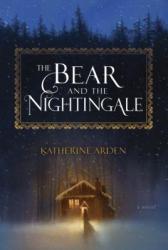
Reviewer's Name: BrittThe Bear and the Nightingale is a Russian fairy tale(s) retelling that follows Vasilisa (Vasya) as she comes of age in the harshly beautiful Russian countryside. After her mother dies in childbirth, Vasya develops a kinship with the house spirits that protect her home, village and the surrounding countryside from any evils that lurk in the woods. All is well until her father decides to remarry. Her new stepmother is deeply religious and sees the house spirits as demons; a newly arrived monk further enforces these believes. The townsfolk become afraid, and stop minding the house spirits. This leads to disaster and death as the evil lurking in the woods begins to creep ever closer. Vasya must work with the spirits to restore balance to her town, lest her town be completely consumed by evil.
As someone who grew up on a steady diet of Disney and fantasy books, I am a sucker for a good fairytale and this one hits the mark. It's very much a fairy tale for adult(ish) readers and the writing was so lovely and hauntingly atmospheric that it sometimes felt like I was the one traipsing through the Russian countryside. Vasya was a very likable character - headstrong and intelligent in a time where women were still viewed as a commodity, Vasya is not ok with her lot in life. She wants more than to just pop out babies for some lord; she wants to live her own life on her own terms. That struggle, set against the wintry backdrop of a magical Russian countryside, made for a very entertaining read.
While the writing and most of the characters were fantastic, I did have a few issues with the book. I loved the beginning and ending, but struggled mightily with the middle. Many side plots that barely had anything to do with the story were introduced and never resolved. This is explained by the fact that this book is the first in a series, but I feel like the story would've been better served to focus on the main plot.
Meandering middle aside, this was a great read. This book demands to be read under blankets or near a fireplace on a cold day. Pick it up and prepare to be transported to the snowy fields of the Russia of yore. 3 stars.
Genres:
Review:
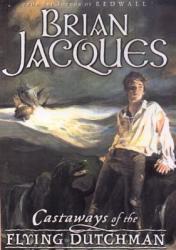
Reviewer's Name: BruceTo be honest, I wasn't sure I was going to finish this book. It was hovering around a 2 (Meh) when all of a sudden the author gave it a left turn and I found myself in a good old fashion treasure hunt story. Like the 'Gold Bug' by Poe, it's full of great and cryptic clues to unravel. Fantastic!! The author gives us a taste of the 'Flying Dutchman' legend and then joins us with a young boy and his dog who are traveling a strange road through life. There's three books in this series so if you like the adventure - enjoy.
Genres: