Book Reviews by Genre: Literature
Review:
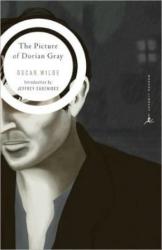
Reviewer's Name: OleksandraImagine what could happen, if people possessed magic mirrors that reflected not their faces, but their souls? Dorian Gray, from the novel by Oscar Wilde, gets a chance to fully experience it.
An artist, Basil Hallward, paints an incredibly realistic portrait of an even more incredibly handsome young man. As he’s still innocent, the picture reflects just his appearance, but later, when Dorian starts doing cruel and ugly things, the portrait begins changing too. Every sin, every crime against the other human reflects on the face on the canvas, adding more and more ugly wrinkles, spots and ulcers. His own face, however, stays unaltered, always fresh and young. The portrait shows not what he looks like, but what he truly is. Finally, when Dorian kills the artist, he reveals the picture and the face of an old disgusting man on it.
The entire transformation proves what a high price one has to pay in order to realize his wish to stay young and attractive all the time. Under the influence of his old friend, Dorian loses his life guides and devotes his time to looking for new enjoyments. He does not understand that true beauty comes from the inside. It’s not necessarily visible. It’s not on your face, it’s in your thoughts, words and actions.
The novel is written in magical realism, so even the most incredible plot turns feel like something natural. It involves from the first page and makes the readers go through all the transformations together with the main characters.
Reviewer Grade: 11
Genres:
Review:
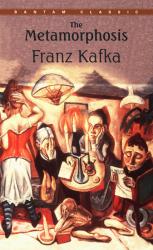
Reviewer's Name: OleksandraOne morning he woke up and discovered himself being a beetle. Not the best beginning of the day for sure. The worst part was that he had to live in the insect's body till the end of his life.
The immediate problems that Gregor faced, such as being unable to get out of his bed, would’ve perhaps been amusing, if he was not afraid of his family’s and boss’s reaction that much. “I will be late for my train to work!” I wish that was my biggest worry if I turned into a beetle. Panic, helplessness and pettiness that he exuded were so strong that I could feel it surrounding me. Written in Kafka’s original style, all the emotions and perceptions are strong and relatable, which makes even the most impossible action seem realistic.
The novel starts hurting, when Gregor notices how strongly his family’s attitude towards him has changed. They all are disgusted with a new creature in Gregor’s bedroom (which we can’t really judge them for). Grete, his sister, seems to be the only one who still believes that her brother’s mind and soul are captured in the beetle’s body and tries her best to take care of the huge insect. As the time goes, Gregor’s behavior changes a lot. His thoughts become more of beetle’s as well as his tastes. Having some rotten food for dinner? Delicious!
The way that he describes the new vision of the world around him, opens a lot of hidden information and evokes true sympathy and sorrow for his fate.
The novella leaves a lot to think about. The transformation that happened to the main character can be interpreted in different ways as well as the changes that his family members go through, trying to adjust to a new life with a human-size beetle living in their house.
Metamorphosis is a great choice for those who feel like they’re living an insect life and their routine is just a big dung ball that they have to push forward all the time.
Reviewer Grade: 11
Genres:
Review:
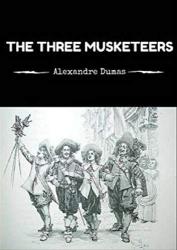
Reviewer's Name: SamahDespite its lack of general theme, Dumas' The Three Musketeers is a beloved classic. The story follows a young man D'Artagnan as he serves under M. de Treville, the head of the French king's musketeers (Athos, Porthos, and Aramis). As he spends more time with the musketeers, D'Artagnan is caught up in the convoluted politics of the king and jealous cardinal. Somehow, however, in the epic tale of adventure, companionship, romance, and betrayal, Dumas' message is lost to the fast-paced plot. His use of dialogue is masterful in creating realistic suspense between characters; not in all 600+ pages is there a dull moment. Overall, however, The Three Musketeers is best read for an interesting story and nothing else. The main cast is well-developed and serve as contrasts to each other. Although the plot itself is well-constructed, the events lack any greater relationship to each other beyond causation. When I picked this book up, I expected the adventure to follow some sort of formula to parallel D'Artagnan's personality; his personality, however, has little impact on the general plot. Dumas' talent in diction and ability to tell a story is evident, and The Three Musketeers was an enjoyable read, as long as you know what to expect.
Grade: 11
Genres:
Review:
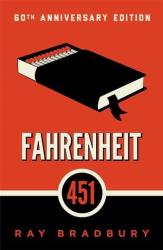
Reviewer's Name: Oleksandra451͒ Fahrenheit is the temperature when paper starts burning. Guy Monteg knows it for sure. He’s a fireman. However, his job is not to put out the fire, but to make it and burn the books. He likes his job, but there is something that he hides from everyone, including his wife.
From every fire, Guy saves a book. In his society, books are forbidden, as they are considered to make people unhappy, evolving complicated emotions and making the readers think. No books means no worries, but a careless life, full of joy and simple entertainment.
One day, Guy Monteg decides that he does not want to live like he used to anymore. He finds a former English professor and asks to teach him to understand what he reads about. Together, they make a plan to save more books in the hope that war will destroy the existing system that they have to live in.
But any secret becomes clear, and the next night Guy gets an order to burn his own house. He destroys it with a flamethrower, as well as his captain, co-workers and the Mechanical Hound.
Monteg escapes. He does not know though, that after all the dangers on his way, he will finally find his destination and meet those whom he will belong to.
It may be hard to feel, but the book is sharp and straightforward. Through the adventure in a fictional universe, Ray Bradbury shows us what might happen, if humanity keeps moving in a direction that will only satisfy basic needs and bring momentary pleasures. I’m sure, some of us can already recognize ourselves with shame in Beatty or Mildred. We’ve already made that first step on the path to the world, where people burn books. This dystopia teaches us that we can always make a difference in the world and change our lives the way that we believe is right. There will be those who will try to destroy you, but there will also be those, whom you will be able to rely on.
The novel creates a tense engaging atmosphere, where you can smell threat in the air and hear the chase behind your back. It does not let the reader go till the very end and stays in mind days after.
Reviewer Grade: 11
Genres:
Review:
Reviewer's Name: OleksandraHysteria, spreading throughout Salem, Massachusetts in the 17th century. Teenage girls, being accused of witchcraft for dancing in the woods. A puppet with a needle that can cost someone’s life. Agreeing on execution in order to protect the good name for your family. Mass trials on people being suspected of doing magic. Sounds crazy? Welcome to the world of The Crucible.
The play by Arthur Miller takes us to Salem in a period of witch trials. Everything starts pretty prosaic: a girl named Abigail wants to get love from a local farmer, John Proctor. As it often happens, she finds a love potion the easiest way to reach the desirable goal, however, she, her friends and the family slave Tituba get caught on doing this ritual late at night.
Nobody wants to be punished. Nobody will believe a slave over his own daughter or niece. Considering these two statements, Abigail decides to avoid a punishment by accusing Tituba and the entire list of other women in a town of being witches.
And here is when things start to go heels overhead. Like a huge snowball that captures everything that is on its way, panic enhances more and more people around. Men and women are being executed for no true reason. Even an expert in demonology is invited to take part in the case. And in all this chaos Abigail makes another attempt to get a chance for a future together with John Proctor.
The action develops dynamically in the play, and the characters add more tension to the plot with their bright personalities. You can’t stay indifferent. You either love or, more likely, hate them. A lot of situation are ironic and absurd, however, the play tastes bitter, when you realize how many people had to struggle because of someone’s stupid wish and lack of responsibility.
The book refers a lot to the time of McCarthyism, which had impacted the author’s life in particular. It makes a strong impact on the audience, especially, in the end, and leaves the readers with a lot of questions: Do people change? Is reputation worth sacrificing your life? Whom to believe and what to deny?
Reviewer Grade: 11
Genres:
Review:
Reviewer's Name: OleksandraAn attempt to create an independent sovereign state, liquidate domestic and foreign enemies and get rid of vestiges of the past, made by… animals. The only fact of animals ruling and managing their own lives sounds absurd enough, but what if under the masks of pigs, horses and dogs real historical figures are hiding?
George Orwell showed brightly the allegorical reality of totalitarianism and communism in his novel Animal Farm. A fairy tale for grown up readers, the book offers an opportunity to observe the story of animals who tried to get independence from their owner and build a society where everyone’s needs and desires would be equally satisfied (sounds a little utopical, doesn’t it?)
Inspired by the Old Major, two pigs, Napoleon and Snowball, supported by all the residents of the farm, carry out a coup d’etat and banish the farmer Mr. Jones. They take the lead and create the laws of the newly created state, the most important of which is “All animals are equal”. However, as the time flows, it turns out that ruling a society is not as easy as it seems to be, especially if at the same time you are trying to benefit from the power that you possess. The animals have to go through propaganda, repressions, socialist competition, ideological pressure and several other social and political changes. Most of them believe their government blindly, and only a few trust their own eyes more than the media. Napoleon, now the only ruler of Animal Farm, discovers that fear and lies are not the worst tools to use, if you want to keep a state in order, especially when the majority of the population consists of sheeps. He goes father and father from where he began and, like many leaders before and after him, becomes a tyrant trying to keep his position and privileges. At the end, he brings the animals back to what they tried to destroy: a totalitarian system where one stands above everyone else. “All animals are equal, but some animals are more equal than others”, the new Commandment says.
The book is written in a simple language and the allegory and similes make the story easy to understand even for the younger readers. All the processes and events mentioned in the novel repeat one of the darkest and most tangled periods of history. But, shown on the example of animals, they make the readers wonder how people, who faced them in real life, could not notice that they were being trapped and fooled.
Compared to some other novels by George Orwell, Animal Farm is pretty easy to read. It would be a perfect choice for those who want to get a better understanding of political and historical processes and enjoy a fictional story at the same time.
Reviewer Grade: 11
Genres:
Review:
Reviewer's Name: Oleksandra The story of Win and Loss, one of Ernest Hemingway’s most famous works, The Old Man and the Sea introduces us to a fisherman Santiago. He is old, but he has determination and a goal. He wants to catch his Big Fish. He does not give up even after eighty four days of failure and on the eighty-fifth day luck finally smiles at him. Big Fish is on the hook. Three days of confrontation between the fishermen and the fish reveal Santiago’s incredible inner strength and will power. But when he finally comes back to his hut, exhausted and barely alive, he’s left only with a skeleton of his dream and a poor illusion of a better life.
The deep symbols that the story contains can be interpreted in many different ways. Some of the readers may find the old man’s hunt as a waste of effort on a goal that is not worth risking his life. Others, however, will discover Santiago as their role model and an example of undefeatable human nature and endurance on the way to the dream. But this controversy and ambiguity is exactly what makes the book so unique and attractive to the generations of readers.
The language of the novella is typical for all Hemingway's books, simple and straightforward, however, this time the symbolic meaning is hidden under the coat of realistic story. It encourages the reader to think and reflect on the pages that he’s read and on his own life as well and find his own interpretation of the fisherman’s story.
Genres:
Review:
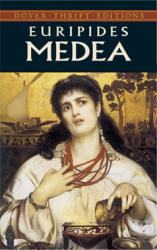
Reviewer's Name: JaalaMedea by Euripides is a play about a princess in Greek mythology. She is betrayed by her husband when he weds another woman and Medea vows to take revenge. She plans to hurt everyone who hurt her, but by doing this she puts people who did her no wrong at risk. Will she end up getting revenge and living out her days or will she join the same fate that she curses down upon? I recommend this book to anybody who is into Greek mythology or would like to get into it. This is a fast read of about 50 pages.
Jaala 12
Genres:
Review:
Reviewer's Name: JaalaOedipus the King by Sophocles is a Greek play that follows the tragedy and downfall of this King. He is presented by a messenger that a disease has spread across his land and he needs to save his people. He sets out in search of this issue, but slowly comes to the realization that this something is a someone within his borders. What if this someone who needs to be eradicated is one who governs it? I would recommend this book to anybody who likes Greek mythology or the adventure genre.
Jaala 12
Genres:
Review:
Reviewer's Name: JaalaThe Awakening by Kate Chopin is a fictional novel that questions what it is to be an independent woman in a male dominant society. Edna lives in the Creole society in New Orleans that values the idea of women being a housewife. Edna strays away from this ideal and attempts to break the boundaries of what women think and can do. Is Edna strong enough to break these barriers or will the barriers break her? I recommend this novel to anybody who loves twists and turns and what it truly means to be independent.
Jaala 12
Genres:
Review:
Reviewer's Name: MauriceGreat book! It's actually so hilarious because of the love triangle. Highly recommended!!
Genres:
Review:
Reviewer's Name: Susan Q.I don't understand why this is a classic. I only vagally understand the book. the main character, Holden Caufield, doesn't learn anything. I can't see any reason to read.
Genres:
Review:
Reviewer's Name: Lucy This book is a about a family. More specifically their mother and the life she has. While reading this book you are learning about the mom and how the connections she had to different people. This book has so many twists and turns that will keep you on your toes. I choose to read this book because it seemed interesting to uncover all the mysteries that were going on in the book. It seemed fun to piece together a story. In this book I really liked the element where the characters also didn't know everything about their mom. They were learning it along with you. I didn't like that the timeline was hard to follow along because sometimes it would randomly say something from a different part of the story which sort of confused me. I think you would enjoy this book if you like piecing together things to find out the whole story of what happened to someone you would really enjoy this book.
Genres:
Review:
Reviewer's Name: Lena R. This book tells an amazing story. Picoult is an amazing author who has a way of keeping readers on the edge of their seat. And this book is no exception. It's an emotional rollercoaster but at the end, you've really enjoyed the ride.
Genres:
Review:
Reviewer's Name: MaggieThe Things They Carried is an interesting narrative about a group of soldiers as they navigate the horrors of the Vietnam War. Each chapter is fairly short and tends to have a lot of action or interesting commentary, so it was pretty engaging. What I didn't love, though, was the author's combination of realism and fiction. He used his own name as the main character, but experienced fake scenarios with people who never existed. It was sometimes frustrating, not knowing what was real or not. O'Brien was a soldier in the war, but he said that fictional war stories are a way for him to convey important messages of courage without reliving the trauma of his actual experiences. This is a unique genre, so it's worth a try if you like realistic fiction.
Grade 12
Genres:
Review:
Reviewer's Name: MalachiBreasts and Eggs, lengthened from its original version, is a breakthrough piece for Mieko Kawakami, but also for the literary world. Her masterful prose is able to capture the attention of any reader, and draw anyone into the worlds she creates. The book is centered around a family of low-income Japanese women, battling their way through life and facing poverty, the image of their bodies, each other, and their desires for the future. Each conversation is written as if it's taking place in the readers' living room, and each sense is captured on every page. Kawakami works through seemingly every contemporary issue effortlessly, putting each piece into place within the story, instead of unnaturally breaking the flow of her storytelling She plays with issues of fertility through a character whose journey should, on paper, be shocking and different than anything readers have seen, but does it in a way that makes it feel real and beyond possible. The book is so fantastic that it could be read in a day if readers can't make themselves put it down, but it would be a rollercoaster of a day.
Genres:
Review:
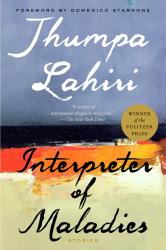
Reviewer's Name: LuciaInterpreter of Maladies by Jhumpa Lahiri is a collection of nine short stories about cultural differences. In each of the nine stories, the beautifully composed characters are taken through inspirational journeys, whether conflicts about romance, communication, cultural differences between India and America, or separation. Not all endings are happy, but a lesson can be learned from each story. It is a must-read book that challenges cultural differences and will transform a mindful reader's perspective. Overall, I would rate the book five out of five stars.
Awards:
Genres:

Review:
Reviewer's Name: MichelleAnimal Farm by George Orwell is a novel following a group of farm animals who want to topple their human farmer's regime, creating a society that is perfect for themselves. While Animal Farm starts off a bit ridiculous, using pigs and other farm animals as the main characters of the story, I think that Orwell using farm animals to explain the message of his story was actually very imaginative, and made the story much more intriguing and unique. Since Animal Farm's main theme is about revolution and the obstruction of democracy, I enjoyed analyzing the symbolism that was placed in the novel, seeing the hidden parallels between the farm animals and the historical events that were occurring during that time. I liked being able to link events from the story to real historical events, such as the communist movement, the Soviet Union, and World War 2. Personally, I think that Orwell's technique in linking his novel to these historical events by using only symbolism was very creative and was written in a very thoughtful and intelligent way. Seeing how some of the book events contrasted with historical events was very strange and interesting for me, and it made me wonder how Orwell could have even thought of linking the two subject matters by only using farm animals.
Overall, I would recommend this classic novel to anyone who is open to an interesting and thought-provoking read.
Awards:
Genres:
Review:
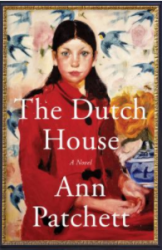
Reviewer's Name: K.H.I enjoyed this audiobook quite a bit during long commutes - Tom Hanks' soothing voice envelops you as he tells the story of Danny & Maeve as they grow and experience many of life's common hardships, and the many lines that can be traced back to The Dutch House. I am partial to books with observable character development, and I felt that was seen for a few characters within the novel. I would recommend this book.
Genres:
Review:
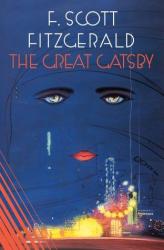
Reviewer's Name: MichelleA classic novel about the "American Dream," and the qualms of social classes, this 1925 based story is centered around four main characters. Nick Carraway, Jay Gatsby, and Daisy and Tom Buchanan. This novel was written in a way, where all four of these characters come from different social classes and walks of life. We are given insight into the personal lives, fears, and secrets that each of these characters carries with them, and as we slowly begin to know all of these characters' stories, Fitzgerald immediately throws us for a loop. The Great Gatsby unearths every little dirty secret every character in this novel hides and turns all of our familiar characters into something much more sinister. The Great Gatsby speaks volumes on the importance and issues of social classes, and the so-called "American Dream." All in all, a highly renowned classic, The Great Gatsby lives up to its fame and delivers beautifully written lines and shocking twists.
Reviewer Grade: 11
Genres:
Review:
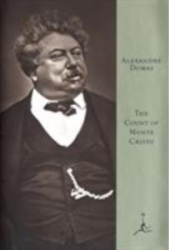
Reviewer's Name: U.ashwinThe Count of Monte Cristo" by Alexandre Dumas is a fantastic whirl-wind of unforgettable characters and interweaving story-lines that left me awestruck and yearning for an even deeper glimpse into this world of treachery, romance, adventure, and mystery. This book is as deceivingly witty as it is over-flowing charisma and has nestled its way to a special place in my heart as one of my favorite novels of all time.
The novel starts out with a scenic over-look of an Italian waterway in Marseilles as it carries along a lofty ship named Pharaon with one passenger in particular who is unlike any other named Edmond Dantès. A dashing young and honest man dawning with potential who has just returned with news that will change the course of his life, and the lives of many others, forever. He is falsely accused of traitorous activity and is sentenced to life on a prison located on an island off the coasts of Marseilles forcing him to leave behind his family, his friends, and the love of his life Mercédès. This marvelous tale unfolds within the walls of this prison and among its outer-walls as Dantès attempts to make a dashing escape with a kind mannered preacher. But, this is only the beginning of his tale. As the life of Dantès unfolds, so does the life of the many others who have been lucky enough to fall into his life.
This novel is truly unforgettable as it follows not only the life of Edmond Dantès, but also the lives of his lover, best friend, family, and even his partners from his shipping company. Filled to the brim with treacherous plots, revenge, heartache, mystery, and pirating; it also contains young love, faith that knows no bounds, and families filled with the knowledge that blood truly is thicker than water.
I would recommend this book to anyone looking to fall in love with not only a menagerie of unforgettable characters, but to a reader who is looking to fall head-first into a world that they will find themselves cherishing forever. Many blessings and happy reading : ),
Reviewer Grade Level 11.
Genres:
Review:
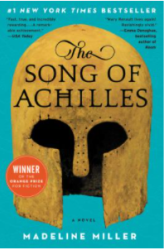
Reviewer's Name: Sarah T.I initially picked this book after seeing all the clout it was getting, as I'm sure many have noticed, it's popularity is unmatched. I walked into reading the story with a raised eyebrow, unsure if it would live up to its hype. It did. The story closely follows the Greek invasion of Troy after Helen is swept away by Paris, and if you have read the Iliad, then I am sure you already understand the plot. What differs from the work of Homer, however, is the pace at which Miller writes and the story she pushes. It is a beautiful rendition of war, love, and heartbreak. Between fighting battles and training with Chiron, Miller shows the sides of these famous heroes we all guessed at but never saw-- from running along a sun-warmed beach to tearing out hair, you will never be as deeply connected to characters as you will while reading this. My favorite part about this book was how beautiful Miller's incredible prose and the scenes that are forever engraved in my head: Thetis touching the chin of Achilles, Patroclus's hands on the gold of well-known armor, and a stone memorial built on the greatest hill, two figures standing side by side nearby it. This is not only one of the top book's I've read this year, but nearly the best book I've read in my entire life.
Junior-11
Awards:
Genres:
Review:
Reviewer's Name: IvanaReview of Book R. Crusoe
Genres:
Review:
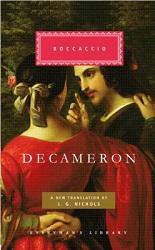
Reviewer's Name: ValkyrieIn plague struck Italy around the 1350s, 3 young adult boys and 7 teenage girls as well as their servants hide out in various castles while telling each other stories to pass the time. Each of them has to tell one story per day. For each day there is a new theme decided by the"ruler" of that day. These themes include; Misadventures with happy endings,Tragic loves, Bawdy loves, Munificence, and Avoiding Misfortune with witty remarks.
Though this is a good and classic book it is not for everyone due to it having mature sexual themes, so if you do not like such things either dont read this book or stick to the days that arent about things like those... also watch out for Dioneo's stories because he can say a story on whatever he likes. Alltogether a good book if not for everyone.
Genres:
Review:
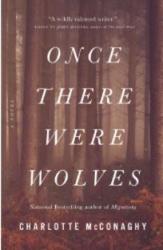
Reviewer's Name: Marika G.Once There Were Wolves is a story about a biologist leading a team of scientists trying to reintroduce wolves into the highlands of Scotland in order to heal the damaged ecosystem of the area.
Main character, Inti (the biologist), has mirror touch synesthesia which is a rare condition where a person feels a similar sensation in their body to the physical sensation another is actually feeling. Inti is independent, determined, and single-minded. When it comes to the reintroduction of the wolves to the area, she will not let the local farmers deter her, even as the wolves pose a serious threat to their animals. And things get a little hairy.
The present day scenes unfolding this story are interspersed with flashbacks of Inti's childhood and trauma she experienced as a young girl.
This is a beautifully told story with interesting characters, a strong environmental theme, and a bit of mystery. Once There Were Wolves was my first Charlotte McConaghy book and I will definitely look for more!
Awards:
Genres:
Review:
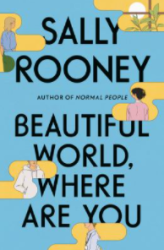
Reviewer's Name: Marika G.I have favorite authors, like anybody else. There are authors I don't care for, authors I just kinda like, and authors I get excited about. But, then there are authors that I have a certain warmth for that is different than just excitement or interest. That feeling can be hard to describe, but Sally Rooney pulls that feeling out of me. There is something in what she writes about and the way she writes it that just gives me those feels. That warmth started with Normal People and was solidified with her latest release, Beautiful World, Where Are You?
Beautiful World, Where Are You? is one of those pesky novels that has no quotation marks and minimal paragraphs, both of which lend to a stream-of- consciousness feel, so consider yourself warned.
It explores the daily life and thoughts of two friends, Alice and Eileen, told often through letters they write to one anotleor. Both of the women, and their love interests, are deeply flawed and true-to-life, working through relationships (even with one another) that are confusing, and messed up and imperfect. Part of the beauty of this book is that their issues are our issues, and their lives have an aimlessness that mirrors how real life can feel sometimes. There is a deep search for purpose and meaning in this book. It felt real, and in that sense, if you are looking for your books to help you escape reality, Rooney might not be the author for you.
But, the ways Sally Rooney is able to zoom her scenes out and beautifully describe the world surrounding her characters, is absolutely lovely.
Of note is that this is the first book of fiction I've read that has addressed daily life during the pandemic, and, after reading it, I look forward to reading more books with that backdrop.
Awards:
Genres:
Review:
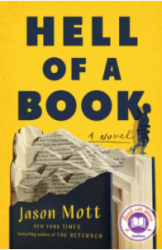
Reviewer's Name: Marika G.The premise of the book Hell of a Book by Jason Mott is as follows: an African American author has written a book and is touring the country to promote it. On his tour, he keeps encountering the same small child everywhere he goes. I can't say much beyond that without giving too much away.
This book recently won the 2021 National Book Award for fiction and I just don't think my review of it will do it justice. Not only that, but I hate writing overly exuberant reviews of books that are this unusual, because not everybody is going to love this book. Or understand it. But, that's the whole point, I think.
It's unusual. It's transcendent. It's elusive. It's ironic. It's deep. It's moving. It gives you tons to think about but very little to grasp onto.
I absolutely loved it. And I already want to read it again.
Genres:
Review:
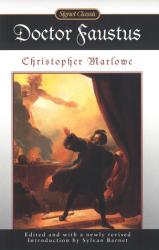
Reviewer's Name: HarrisonDoctor Faustus by Christopher Marlowe is an amazing study of enlightenment views on religion, morality, and social structure, all wrapped up in a fascinating tale of the supernatural. Doctor Faustus makes a deal with the Devil in exchange for power and knowledge, but, as a result, he constantly wars with himself. On one side, Faustus wants to repent his actions and avoid damnation, however, Faustus also is driven on by his greed and arrogance to pursue his dark arts and continue fulfilling his desires, visiting places such as the Papal and Imperial courts, leaving only after he has achieved his mischief. The story is amazing when considered within the historical context of its writing, the enlightenment philosophy and religious teachings show throughout the book, pitting the Old Testament views of damnation and repentance against the more forgiving views of the New Testament. I would highly recommend Doctor Faustus to those seeking to learn about the enlightenment and 16th century culture.
Harrison
Grade 12
Genres:
Review:
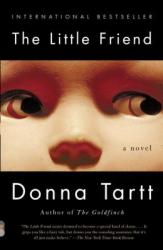
Reviewer's Name: EveThe Little Friend is a story about family, loss, remembrance, and childhood. It all rotates around a mysterious tragedy in the Dufresnes family, where the youngest boy, Robin, was found strangled and hung in a tree out back. Years later, his precocious younger sister Harriet is determined to find the killer. In her quest, she tangles with snakes and water towers and drugs and family trauma, all shown through the eyes of a bright and, for now, innocent child.
The reason this book gets a three is not because it is a so-so book, mediocre in all avenues but largely strung together enough to earn the title "Pretty Good". This book was fantastic. And bad. And thrilling. And boring. And gloriously written. And horribly structured. I read this because Donna Tartt wrote it, and I love her writing style. This style came alive in her book undoubtedly, but any future readers should be warned that the writing, and the characters, are the only things of substance in this story. The writing is prosaic and setting appropriate and beautiful and heart wrenching and perfect. The characters are so fleshed out and developed that when you're reading you can hear them breath. But that is it. The plot is nearly insubstantial, or at least insignificant. On one hand, I read this whole book and found no story of relevance. On the other hand, through the writing and the characters and the subtle morals and stories along the way, I was pulled through an entire book where I found no story of relevance. Would I recommend this? It all depends on you. If you want a story that all ties up loosely and leaves you happy and fulfilled at the end, I would say no. But if you want a tale that is so realistic and magical that you can't take your hands off the strange, wonderful pages, then I would say go for it. All in all, this book earns three stars for being nearly incomprehensible, and yet, one of the most meaningful books I've ever read. I loved it, and I will never read it again.
Reviewer grade: 11
Awards:
Genres:
Review:
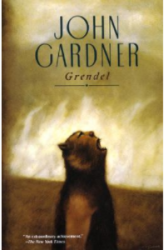
Reviewer's Name: Grendelit was the worst book ever. pointless.
*spoiler alert* Beowulf is ugly and mean and rude and abusive and does not understand the concept of consent it made me cry for days what's the point of a book if it has the stupidest ending ever created.
Awards:
Genres: