Staff Book Reviews
Fiction
Nonfiction
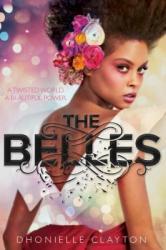
Camellia is a Belle - a person in the fantastical world of Orleans who has magical powers that allow her to change the appearance of others. These powers, and the way she uses them, puts her in high demand, and rich folks clamor to use the Belles' services. There is one Belle, the favorite, who serves royalty. Camellia's dearest ambition is to be the favorite, like her mother. After a few mishaps, she achieves this goal only to discover that the position is not all it's cracked up to be. Royalty is demanding, and Camellia soon finds herself being asked to do morally reprehensible things - things she can refuse only at her own peril. She must decide what means more: fame and beauty, or doing what is right.
To call the worldbuilding in this book "lush" or "complex" would be a disservice. The author invents a unique new world and mythology that, for me, were the strongest point of the book. If you've seen a Baz Luhrman movie, this world is set in that kind of magnificent, wondrous, almost over-the-top opulence that delight's one's imagination. The luxuriant worldbuilding does lead to something of a slow start, but if you are like me, you'll be so immersed in the marvelous new world that you won't care the the story takes a minute to get going. Once the story does get going, several quandaries and mysteries and introduced, and I found myself racing towards the conclusion. Camellia is a likable character that I think a ton of young women will relate to as she's very much a sixteen year old trying to make her place in a big scary world. She's a bit naive, but has deep seated convictions and is constantly rebelling against rules and regulations to show case her creativity and do her absolute best.
I went into this book with extremely high expectations based on a number of positive reviews from Goodreads, professional journals and the like, and I think those expectations may have hampered my enjoyment of the read, at least somewhat. Not to say this isn't an enjoyable read - it absolutely is. I had to physically stop myself from devouring it all in one go. It just felt more like a guilty pleasure read instead of a read of substance. The book should have been really creepy. When the Belles change a person, they change everything. We're talking like body shape/size, shaving off bones, eyeballs out of sockets, and other sorts really gross stuff that should have been horrific. For whatever reason, the creepiness factor never connected with me, but if it had, I think I would've loved this one. There's a female friendship in here that also didn't really land - we're told more than shown that the girls are close. It never felt believable. There are a few plot points that are introduced that are seemingly abandoned or never fully realized though I imagine they'll factor into future installments. I saw where the romance was going immediately, and also figured out the mystery of the sick princess early on in the story. On the whole, I found the book to be rather predictable.
I did enjoy this one, and I'll definitely be coming back for the sequel. I hope it provides a bit more substance, but either way, I'm sure I'll enjoy it. I'd recommend this to readers who liked The Selection, Caraval or The Red Queen (although let me be clear: this book is better written and conceived than any of those), and I'll be adding it to several reading lists as well as booktalking it. 3 stars - I liked it!
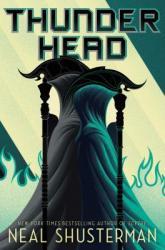
Hey y’all. It’s been a while since my last book review, so I’m going to talk to you for a minute about Neal Shusterman’s Thunderhead. Minor spoilers for Scythe will likely occur throughout, given that this is book #2 in trilogy.
Thunderhead is set in a future world of plenty, where death and poverty and illness and war have been eliminated by the Thunderhead, an artificial intelligence developed from what we currently call “the cloud.” Every human has nanites in their blood that reduce pain from any injury, and slowly repair any damage. And if by some unfortunate accident, you happen to die, a drone will recover your body and take you to the nearest facility where you can be revived (your first one’s free!).
However, in order to curb overpopulation, the Thunderhead allows for the Scythes. Scythes are an order of highly skilled assassins (of sorts) who exist to keep humanity’s numbers in check. They maintain a quota of gleanings, permanent deaths for a chosen few to remind people of the mortality that the entire race once faced. Anyone who is gleaned by a Scythe earns immunity for their family for a year.
Book one in the series, Scythe, follows Rowan and Citra, two young teens who are chosen as apprentices to Scythe Faraday, who intends for one of them to become his successor. Their training leads to the widening of schisms within the Scythedom, and soon they find themselves pitted against each other over the right and wrong ways to go about their duties of gleaning.
Thunderhead picks up several months after the events of Scythe, with Citra now serving as Scythe Anastasia, and Rowan operating in the shadows, gleaning other Scythes who he deems to be immoral and corrupt. Dubbed Scythe Lucifer, he lives a life on the run while Anastasia is honored for her rather benevolent take on gleaning (giving her victims a month’s warning, and allowing them to choose the means by which they will die).
This book introduces more perspectives from the Thunderhead itself, giving the reader powerful insight into the all-powerful AI’s thoughts and concerns. We also meet Greyson Tolliver, a young man who has devoted his entire life to serving the Thunderhead, and has his loyalty tested to the extreme. While this can feel like it’s drawing attention away from Rowan and Citra, it contributes to the worldbuilding. And while Scythe had a phenomenal dystopian feeling, there were many questions left unanswered that are picked up in these chapters and monologues.
Now Anastasia and her current mentor, Scythe Curie, have been targeted by a mysterious attacker who seems intent on ending them both permanently, while Rowan grapples with the consequences of his actions as Scythe Lucifer. The Thunderhead muses on the Separation of Scythe and State, lamenting its decision to refrain from interfering with the actions taken by members of the Scythedom, finding clever ways to work around the various safeguards that it has installed in society (and maybe finding out more than it was ever meant to know).
All in all, Thunderhead is a powerful followup to Scythe, a worthy companion and, to my simultaneous joy and rage, the second book in a trilogy. Book three is due in 2019, and I can’t wait to see how this all wraps up.
"Let me show you
what a woman can do."
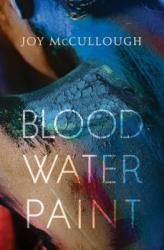
Artemisia Gentileschi is a painter. But because she's a painter in Rome in the early 1600s, she cannot take credit for her work. All of the credit goes to her father, who is a painter himself, though not a good one. When her father solicits the help of fellow painter Agostino Tassi to develop Artemisia's perspective, she thinks that finally her work might get taken seriously. But after Tassi brutally rapes her, Artemisia must decide whether she wants her life to continue as close to "normal" as possible, or if she wants to speak her truth and risk her painting career or worse: death.
Unbeknownst to me until about halfway through the book, this story is actually based on a true one, which makes what is already a beautifully written gut-wrenching book all the more poignant. Artemisia is a woman unhappy with her unfair lot in life, and she uses her art to express that by depicting Biblical women (primarily Susana and Judith) realistically instead of through the male gaze. Judith and Susana's stories as told to Artemisia by her late mother are sprinkled throughout the book, and are the only parts not written in verse.
Blood Water Paint is so timely. It's primarily about a woman's ability to speak her truth, and as we live in the time of the #MeToo movement it all feels so horribly relevant. As terrible things are happening in the book, you can see them mirrored in today's society. But ultimately, even as it's depressing (and it is brutal), the book is empowering and inspirational, and Artemisia is the quintessential example of a strong female character - her strength in the face of insane adversity is even more affecting given that it's based on a real woman.
I can think of no better book to read for National Women's History Month (or really, at any time). I'd strongly recommend this to both teens and adults, and I won't be surprised should it garner several nominations and/or wins when book award season rolls back around. This is one that is not to be missed. 5 stars.
Thanks to Netgalley and Dutton Books for Young Readers for the eARC, which I received for review consideration. Blood Water Paint is available now!
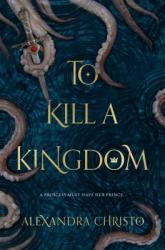
Lira steal's princes' hearts. Literally. She lures them into a trance-like state with her siren song, and drags them down to the bottom of ocean where she rips out their hearts. After failing to steal Prince Elian's heart, the pirate prince also known as the "siren killer", Lira's mother, the Sea Queen, turns her into a human in punishment, and commands that she retrieve Elian's heart, or stay a human forever.
Are you getting Little Mermaid vibes from that description? Good, because there is a definitely Little Mermaid inspiration here, though it's definitely more Anderson than Disney (for examples, sirens turn into sea foam a few moments after they are killed). There's also some Greek mythology (I feel like this is the origin of sirens, but I only say that because of the Odyssey), but the influences, while noticeable, are integrated nicely, and the world-building game in this book is super strong. Elian and Lira travel to several different kingdoms, and each kingdom has its own flavor and customs. There's also some cool mythology around sirens vs. mermaids vs. mermen, and I really loved where she went with the mermaids in particular. It was a version of mermaids that I had never read before.
Elian and Lira are both complex but likable characters (if you like your heroes of anti- or bloodthirsty variety, which, I DO). Initially, Lira is a stone-cold killer. She was raised to be one, and the fact that she could be anything but a stone-cold killer after her upbringing is kind of magical. As the book develops, she learns more about humans and begins to *gasp* kind of like them. Her character development and growth are a main theme throughout the book, and Lira's maturation is slow enough to develop seems plausible.
Elian was also fine; he mostly serves as a foil to Lira, and it's fun to see his opinion of her change as he slowly learns more about her. There is a bit of romance between them, but as they are at odds for most of the book, its kind of a forbidden romance which is a trope that I love when done right (needless to say, it was done right here).
Amazing worldbuilding, great characters, no sequel - what's not to love here? If you are into pirates or mermaids or lux worldbuilding, you'll enjoy this book. 4 stars - I really liked it!
Thanks to Feiwel & Friends and Netgalley for the eARC for review consideration. To Kill a Kingdom will be released on 06 March, but you can put your copy on hold today!
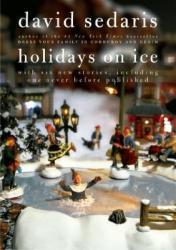
I listened to this book, most of which was read in a nasally, whiny voice. The initial stories about working as an elf at Christmas-time had tears of laughter pouring out of my eyes, Unfortunately, the book rapidly went downhill. This satire started out funny, but it kept going too long as if the author didn't know when to end the story. There were also some disturbing images that added absolutely nothing. The stories were sarcastic, but the bitterness in them really turned me off. Can't recommend it.
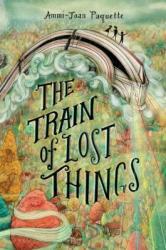
Where to start? This book was poignant, beautiful, lovely and dealt with the subject of loss, through a child’s eyes, in a way that pulled at my heart strings, big time. This beautiful tale follows a young kid named Marty as he deals with the pain and loss that comes when someone close is dying and there is nothing you feel you can do about it. When Marty’s precious possession is lost, his jean jacket scattered with buttons that represent his fondest memories with this person, at first he is devastated, but then he hears the tale of the train of lost things and he goes on a quest to find it and retrieve the precious thing he lost. Along the way he comes across two others, both on similar journeys, and discovers that what matters is not the objects themselves but the memories they represent and the love that he shares with his loved ones.
Paquette’s character Marty, approaches the subject of loss and death with a childlike curiosity. Yet throughout the story, Marty also displays the strong denial that comes with facing loss and death, questioning whether or not what is happening is really true. Marty’s love for his loved one and his need that, retrieving this jacket would make things all better, is what kept his character going. Yet in the end he realizes that life and death are not always that simple. But memories and love have a stronger power over death and loss and sometimes to overcome them you just need to escape reality to really understand that.
I don't usually pick up kids books but I picked up and read this book in one day! That is how good it was! I love this book in every way and I highly recommend it! Even though this book is for kids, I also recommend it for older people, or anyone dealing with loss, as the lessons learned can be applicable for anyone.
Thank you to the publisher Philomel Books for a ARC of this book in exchange for an honest review. This book doesn't come out till March 20 but you can put it on your hold list today!
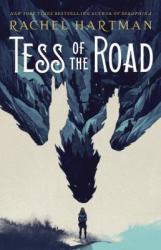
Tess Dombegh is ruined. When she was quite young, she met an ambitious young scholar who took advantage of her and left her in the family way. Since then, her main goal has been to find her twin sister, Jeanne, a husband that will save their family from their dire financial straits. Tess successfully finds Jeanne a husband, and after getting extremely drunk at their wedding and embarrassing herself and their entire family, she decides to run away.
Notice that I got through this description with nary a mention of dragons? There are dragons in this world. But only barely, hence the reason I didn't need to mention them in my synopsis. This is actually, I think, the weakest point of the book, but I'll come back to that later.
I am more conflicted about this book than I've been about any other book in recent memory. Tess, our main character, is insanely unlikable and unsympathetic, especially at the beginning. However, she's intentionally unlikable and its entirely because of the circumstances of her world are similar to that of Edwardian England in terms of how the ladies are treated. As Tess travels further down the road - often painstakingly slowly, the unnecessary and at times boring digressions in this book are legion - she learns more about who she is, who she wants to be, and how she can make her way in a world that sees her as less than a person because of her gender.
Those parts, the introspective philosophical parts, I liked. Unfortunately, they were few and far between and were including in those aforementioned digressions that had nothing to do with the plot at large. My interest in the book would wax and wane in huge swings. I did finish it, and I even liked the ending, but wow, this was often a slog.
The thing that bothered me the most about the book was almost the complete waste of the worldbuilding. There were dragons and quigutl (sic), which are like the small, less ferocious cousins of dragons, and while a quigutl was a main character, that character could have easily been a jaded staff member, or really anything else. The fantasy world didn't add to the story, and sometimes, it distracted from Tess' character development, which, at the end of the day was the point of the entire novel. I think making this book pure historical fiction (and I loved the worldbuilding and fantasy setting in Seraphina, the companion series) would've made it a more impactful, better book.
Anyway, complaints aside, at times, I found myself really loving this book, mostly on the strength of Hartman's writing and the very important messaging regarding women's rights. Overall, though, the execution left something to be desired, at least for this reader. I won't be coming back for the sequel if there is one (everything was tied up nicely, but there definitely is room for another book), but I would definitely read another book by this author. 2 stars - it was ok.
Thanks to Random House Children's and Netgalley for the eARC that I received for review consideration. Tess of the Road is released on 27 February, but you can put your copy on hold today!

James Rubart has been one of my favorite Christian authors for a long time, and his latest, The Man He Never Was, does not disappoint. This is not just “a modern re imagining of Jekyll and Hyde,” it is a story of one man’s radical journey to discover what true love really looks like and the freedom we find through redemption.
Torren Daniels is a regular guy pursuing the career of his dreams. A football star with a loving family and everything to lose. He lives for the game, taking out his anger and frustration like most guys on the football field, through the game. But one day when he goes to far, his perfect life and career fall apart and he is left with nothing but his anger, frustration and rage at himself and his family.
Fast forward eight months, Torren has disappeared and everyone, including his wife and family, believe he is dead. Until one day he shows up in a hotel room with nothing but his wallet, the clothes on his back, and no memory of his life for the past eight months. But one thing he does know, he has come back different. More different than he has ever been before. The anger and frustration he has dealt with all of his life, seems to be gone. Instead being replaced with love, patience, and kindness, but are these changes truly real or are they simply an illusion?
What follows in the preceding days, is not only a physical journey to discover what happened to him, but a spiritual one that reveals the struggle of good and evil we all face inside ourselves and the redemptive freedom we can experience when Christ’s true love is set free within us.
Rubart’s storytelling gets down to the issues in a fast-paced way that does not dwell on flourishes and world building, as much as it does on character development. Torren is not a likeable character especially at the beginning of the book, but as the book progresses, and he goes on this journey, we see how the other relationships in his life, shape how his character responds. The other character’s in the book likewise are shaped by, and changed by, how his character responds to them, especially Torren’s wife.
Rubart’s story is highly complex, and as the story unfolds and the layers are peeled back, we see the struggle that is really going on inside Torren. Rubart approaches issues such as broken relationships, anger, loss, forgiveness, and abandonment in a way that is both realistic and extremely relatable. These issues and how they shape his character’s lives, also help shape the timber and tone of the overall story and come to a head in the conclusion of the story in an important and life changing way.
Rubart’s stories have always been complex and interesting. But one of the things I have always loved about him as an author and continue to love about him, evident in this book and the others I have read, is the way he has a way of presenting spiritual truths in a highly complex and original way but within the real world and in a way that is not overbearing, and is extremely relatable. The Man He Never Was, does not just present an updated version of the story of Jekyll and Hyde but takes the story and makes it real in a way that I never considered or imagined. Rubart takes the characters of Jekyll and Hyde and presents them as allegories as he explores the battle of good versus evil that is constantly going on inside each one of us.
Thank you to Netgalley and Thomas Nelson Fiction for an E-Arc of this book for review. This book is out February 20 but you can put your copy on hold today!
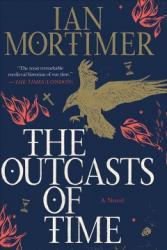
This book follows the story of two brothers John and William in 1340’s Medieval England who are suffering from the Black Death. But as their end draws near, they are given a choice that changes the course of their lives forever. They are told that they have six days left to live, which they can either spend with their loved ones, or search for salvation and redemption for their lives across the centuries; spending each one of their remaining days 99 years after the last. So, each day takes places one century after the last. The brothers choose the latter and are launched into an adventure that spans centuries in the time frame of a few days.
Observers of the world across centuries, John and William hardly recognize the world around them each day they wake up, and as their journey for salvation progresses, questions the world around them in a way that has readers questioning humanities true motives. Rather than focusing on the good things and advancements the world has made through the centuries, the characters, especially John, ponder how these advancements have brought humanity farther and farther away from God. As the years and days progress, the novel asks the question what is true salvation really and examines the idea of what is good verses bad?
When I received an ARC of this book in the mail from the publisher at first, I wasn’t exactly sure what to make of it, but as I read the back, I became excited, because this book deals with a sci-fi like subject of time travel in a way I haven’t seen before. This book took me a while to get through and it also is a book that really makes you think. Warning! If you are looking for only a traditional time travel sci-fi book, this book is probably not for you however, if you like historical fiction this book is probably more for you. This book deals with time travel in a highly conceptual way. It is a time travel book written by a very noted historian and reads very much like a historical novel with all the historical details you would find in a history book. But it is also very philosophical as the main character questions the world and the ideas in it. As this quote from John shows when he is discussing, with the family he is staying with, the bad things done by others around them.
“I myself wish for nothing more than to spend the rest of my days engaged in good deeds,’ I say. But how can I tell what a good deed is in this day and age? What is “good” and “bad” if God’s law is constantly changing? How can we do good if the meaning of “good” and “bad” are dependent on who wins the war? How can a man go through this world in sure knowledge that he is doing the right and proper thing?”
This is just one of many philosophical musings that the author poses through the book that seek to answer difficult questions and these details really make the reader think and ponder the difficult answers to questions like, what is good verses bad. These details I think also give the book a conceptual quality that puts it above the norm and makes it more than just another sci-fi book about time travel.
Ian Mortimer is an excellent historian and the historical detail in this book are incredible! He weaves together history and time travel in a highly original and interesting way that makes readers both question the world and presents readers with a clear picture of England’s evolution from a small underdeveloped town to a large industrial country that leads the world in more ways than one. I highly recommend this book for readers of historical fiction or anyone who likes highly conceptual, philosophical books that question the world and everything in it. I give this book a solid 5 out of 5 stars!
Thank you to the publisher Pegasus Books for an ARC of this book for review.
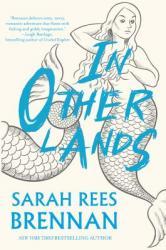
In Other Lands follows young Elliot Schafer as he tumbles through a wall (well, his teacher bribed a weird lady to let him through the wall, but whatever) into another land at age 13. He's given the opportunity to go home or go to magic school, and, like any bright young kid who has ever read, like, any book ever, he decides to go to magic school. There, he befriends golden boy warrior Luke and stoic elf warrior Serene (our fearful nerd Elliot decides to take the council course as he is deathly allergic to exercise and also, killing), and the book follows their exploits throughout the duration of their time in school.
Ok, so, that synopsis does not even begin to do this book justice. I will be forcing this into the hands of any person that walks into the teen center that says that they have even a remote interest in fantasy. Because this was so good. The best thing I've read so far this year for sure (and I've already read like 20 things this year, so that's not nothing). Anyway, on to actual information about the book.
Elliot is kind of a jerk. On purpose. But his jerkiness is mostly hilarious, and a lot of the book is his witty, spot on assessments of himself, the world, and the people around him. Luke and Serene are equally nuanced as characters and are quite lovable despite their flaws. One of my favorite parts of the book was that elf culture has the same messed up gender roles and sexism that we humans do...but the male and female roles are reversed. It makes not just for some of the most hilarious passages that I've ever read, but also serves as probably the most effective argument against said gender roles being a part of any society. It was, quite frankly, brilliant. For example: “Do not have a catfight, boys, even if it is that time of the month,” said Serene, and when she saw them staring at her, she explained: “You know—women shed their dark feelings with their menses every month? But men, robbed of that outlet, have strange moodswings and become hysterical at a certain phase of the moon?”
Insanely great egalitarian commentary aside, this was an excellent coming of age novel. The relationship and friendship between our three main characters is complex, but they all love each other and grow so much together throughout the book. And at the end of the day, this book is not really about other lands, it's about the peoples that occupy them. As an added bonus, it demonstrates that communication and shared experiences amongst peoples could almost always lead to peace. In doing that, it also effectively skewers nationalism.
I really liked the romance in the book, but you figure out Elliot's end game partner (yes, Elliot is bisexual!) at about 50% of the way through the book. They don't actually get together until the end and its one of those situations where you want to knock their heads together and yell COMMUNICATE DANG IT at them until they realize they like each other and just make out or whatever. Speaking of which, there is a lot of sex in this one. It's mostly off camera, but the one scene that makes it in is really sweet.
I obviously loved this book. If I were to try to compare it to something, it's most like Carry On by Rainbow Rowell in that it's kind of a love letter to classic fantasy (it's more Tortall to Carry On's Harry Potter) that then transcends the original source material. It's quirky enough that it won't be for everybody, but I think a lot of readers will love it. I just purchased my own copy. Like, without waiting for a Goodreads deal. It's that good. Or, in PPLD parlance, it was Bohemian Rhapsody Awesome! 5 stars.
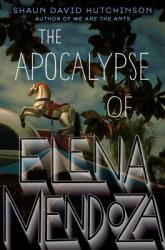
Elena is not your average teen. As the only human proven to be birthed as a result of parthenogenesis (you might know this as a “virgin birth”), she’s been hearing voices from signs and inanimate objects. But things are about to go to the next level. One day, at work, the Starbucks Siren tells her to heal her crush, Freddie, who looks fine. But then, a kid they know comes out of nowhere and shoots Freddie. Then he disappears into the sky in a flash of light. And Elena DOES heal Freddie. And then, somehow, things get even crazier as the Siren tells Elena she has to keep healing people (which leads to more disappearances) or start the apocalypse.
Personally, I’m a huge fan of unique, quirky books that are more than a little strange (I call them wonderfully weird), and so this one was right up my alley. Elena is an extremely likable character, and we get to listen to most of her thought processes as she thinks about the mundane (her crush, her relationship with her ne’er do well stepfather) and the existential (why she has the powers, and should she use them?). The supporting cast is also pretty great: Freddie, the popular art student who didn’t even know Elena’s name before she got shot, was probably my favorite character. After getting killed, she really doesn’t care so much about what people think of her, and as a result her commentary was extremely snarky, sometimes hurtful and almost always spot on. Fadil, Elena’s best friend, was a good foil as the devout teen, but he also served to demonstrate a powerful male/female friendship. Because of the philosophical nature of the book, the plot takes a backseat to character development and metaphysical conversations. I probably highlighted more in this book than I have in any other in recent memory. The downside to this, though, is that the plot sags a little in the middle and the ending left me wanting a bit more as a lot of plot lines were left dangling.
Another big selling point of the book for me was that the premise immediately made think of this show called Wonderfalls which is a bit of a cult classic from the early aughts. Later on in the book, it’s pretty clear that the author had likely just binged all of Bryan Fuller’s early shows like Dead Like Me, Pushing Daisies, and yes, Wonderfalls as this book contains elements of each of those shows, and there is a straight up name drop of a location that delighted me to no end. If you are a fan of Bryan Fuller’s properties (including recent hits like American Gods), this is a read you should definitely pick up.
If you like to think about the ethics and the big questions – why are we here, what matters, how can you decide the value of one life over another – then you will love this book. It’s a wonderfully weird thought provoking read, and while it’s not perfect, the diverse, likable cast and philosophical quandaries make it something of a rare gem of a book. 4 stars. I really liked it.
Thanks to Edelweiss and Simon Pulse for the eARC, which I received for review consideration.
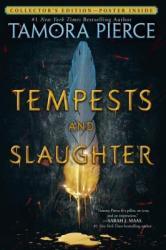
In Arram Draper’s first year at Carthak’s School for Mages, his work ethic and raw power make him something of child prodigy. As such, he is singled out for individual studies with two other similarly passionate and hard-working students: Varice and Orzone. Varice is a charming young lady with a gift for cooking magic and charm for days, and Arram quickly finds himself drawn to her, perhaps as more than a friend. Orzone is the leftover prince which means that he’s the fourth of four in line for the Emperor’s throne, though that list seems to be shortening quickly. The three soon learn that they will not just have to contend with their studies, but a growing struggle for power and control of the Empire that is threatening to change Carthak forever.
If you’ve read some of Tamora Pierce’s other works (if you haven’t, stop reading this review and pick up The Song of the Lioness quartet RIGHT NOW – it is apparently awesome in audio format as well), the lead character of this story will be familiar to you. I read and re-read her books continually in my youth, but while there was a huge nostalgia factor in reading this for me (so many easter eggs!), I absolutely would have still enjoyed it if I were totally new to the character. While you certainly should read her other works, you don’t need to have read them to enjoy this one.
Tempests and Slaughter starts when Arram is just 10. Precocious little bugger that he is, Arram started school a full year early. Because he’s so young at the beginning, the start of the book read as very middle grade to me, which wasn’t a bad thing; it just wasn’t what I was expecting. As in her other series, Pierce perfectly captures the pain and biological changes that come with puberty and I found myself transported back to those awkward times in the best of ways. After Arram gets a little older and meets up with Varice and Orzone, the book begins to pick up as all three characters get developed and the worldbuilding picks up. This is definitely a book that’s primarily focused on character development and worldbuilding, but as Arram is a lovable character and the worldbuilding is rich, the almost total lack of plot did not bother me too much. A very interesting mystery appears later in the book, though it felt a little rushed and the conclusion a bit forced. However, it nicely sets things up for the next installment which I will unquestionably be pre-ordering.
All in all, this was a great read. If you like your fantasy with a healthy dose of complex characters and intricate world building, you’ll really enjoy this one. I’m going to go re-read some backlist Tamora Pierce now, and I suggest you do the same. 4 stars.
Thank you to Random House and Netgalley for the free electronic copy for review consideration. Tempests and Slaughter is released on 06 February, but you can put your copy on hold today!
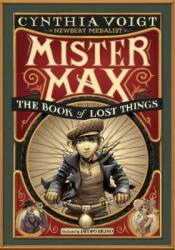
Max's parents have dashed off on an unexpected adventure and left their 12 year old son Max behind, alone...well, his grandmother is around to watch over him, but she is busy being a librarian. Max has to fend for himself and picks up a part time job as a solutioneer (sounds like engineer, but much more mysterious). His first task is to find a lost pet and this snowballs into many intricately involved adventures that will keep readers turning pages with anticipation to find out what this determined young man will do next. The Book of Lost Things, by Cynthia Voigt, is sure to please children 9 - 13 who enjoy a good mystery.
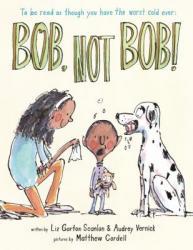
For the parent, teacher or librarian who loves a good read aloud that can only be done with "the voices" - this is your book. A boy with a cold in his head calls for his mom, but it sounds like "Bob," and of course his dog, Bob, comes running instead. Hilarious situations will tickle reader and listener alike in Bob, Not Bob! by Liz Garton Scanlon and Audrey Vernick with pictures by Matthew Cordell. For ages 3 - 7.
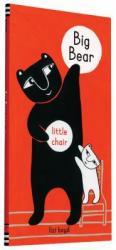
Big Bear Little Chair by Lizi Boyd is reminiscent of the block cut, three color art children's books of the 40's and 50's. Very simple text accompanies the beautiful illustrations depicting size comparison. Each page is a story unto itself, and children will love filling in the details of why the big zebra has such a little broom or why the big bird is carrying a little red umbrella. Perfect for ages 2 - 5.
Stevie Bell loves all things crime, true or otherwise. She loves to dive into the fictional encounters of the likes of Hercule Poroit and Sherlock Holmes almost as much as she loves to solve cold cases. So when she gets the opportunity to study at Ellingham Academy, site of one of the most famous unsolved murder/kidnapping cases of all time, she jumps at the chance. She doesn't get too far into her murder investigation, however, when a fellow student is found dead in the same tunnel as a murdered girl from before.
For the most part, this is just a straight-up mystery with a quirky setting and side characters, but it really works. The book goes back and forth from the events of the 1939 Ellingham murders to present day, and I found myself equally interested in both stories. Our main character, Stevie, is extremely likable, and gives us some smart, biting commentary about her life and her classmates along with a lot of interesting tidbits about past crimes and mystery authors. Stevie's classmates all have distinct personalities and are quite the diverse cast of characters. Students at Ellingham are selected for having some sort of ability or interest, and her roommates are an artist, an inventor, a coder, a writer and a YouTube star which makes for some fun interactions and conversation in the group. There's a bit of a meh romance, but it didn't detract from the rest of the book and it will be interesting to see where that heads in the sequel.
The main appeal here is the dual mysteries. Both were a lot of fun to read, and I was dead wrong about the identity of the present day killer which is always fun. Really, the only downside for me was the ending. It ends on a massive cliffhanger, and I actually wish a few things were a bit more tied up. I found it to be jarring and a bit off-putting. That said, I'll probably check out the sequel.
If you are looking for a really solid mystery featuring clever and engaging characters, then this is for you! You can put Truly Devious on hold now - thanks to Edelweiss and HarperCollins for the electronic review copy. If it weren't for that ending it'd be a 4 star read for me, but...3 stars.
When I picked up this book, I have to admit, I was surprised, because sci fy steam punk fantasy stories is not the type of book I usually read, yet it ended up being so much more than I had imagined. The Clockwork Dynasty is not just a book about a race of humanlike mechanical creatures or avtomats that secretly live among us and are fighting a war that has raged for centuries, but it’s a story about life and the constant search for meaning and purpose.
This book waffles back and forth between present day Orgon, Washington and other places, and the 1700’s beginning in Russia and taking the reader on a journey through history and time. And while this may bother some people, the non-linear storytelling I think, adds so much more to the book and allows the author to unfold the story in a deeper more meaningful way.
In present time it follows the story of June someone who has made a career in ancient technology, ever since an encounter she had a child with her grandpa changed her perception of the world and started her fascination with this avtomat technology. A couple years after her grandfather’s death she receives a avtomat artifact that will cause her to team up with an avtomat named Peter, launch her into a great adventure in the secret avtomat
world, and ultimately determine this race’s extinction or survival. In
the 1700’s it follows the story of brother (Peter) and sister (Elena) two humanlike avtomats that were resurrected by a Russian clock maker using something called an anime which serves as the Avtomat’s heart and soul. As they live through the years they spend it hiding their secret, trying to blend into society, and fighting a war that has been raging among their own race for centuries.
This story explores the character’s constant search for meaning in a way that is both at times sad and extremely insightful. In the book each avtomat’s anime is marked with a Pravda or a special word that is their bond and command. As long as they satisfy their Pravda, they are at peace, otherwise they suffer. In Peter’s case this word is justice. As the book progresses we see his idea of justice shift and change as he lives through the years. Through a fascinating inner dialogue, Peter perception shifts from gaining justice simply by serving rulers in war to something far deeper and more moving, as this quote, when he encounters a dying soldier on the enemy’s side in the battlefield, suggests:
“Once Pravda was clear to me. By obeying my emperor all was well. But what was simple is becoming complex. I can see no evil inside this grievously wounded man, only honor. And though no clockwork flutters beneath his throat, I can see the inevitable forces that led him here, through no fault of his own, fating him to die in the shadow of this crumbling wall.”
As the book progresses a new perspective of right and wrong emerges leaving him questioning not only who he is but why he was made.
Another major theme this story also explores is the theme of war. As Peter recounts from his past, countless experiences on various battlefields throughout his life, and in the present, his own thoughts on his own race’s war; the reality of war is pressed heavy on the reader making this book at times very depressing, sad, and dark.
This reality is made even more real by the moving prose and incredible worldbuilding that takes place throughout the book. Another reason I love this book is the incredible character development between Peter and Elena.
How she is treated by him as a little sister at the beginning of the book, and how he sees her changes through the book from a little girl needing his protection to a sophisticated, wise learned, woman who’s one desire is to make her own way in the world is absolutely incredible. Daniel H Wilson does an amazing job of weaving together past and present into an engaging literary story that has something for everyone. Thank you to Doubleday books and Netgalley for an e- ARC in exchange for an honest review!

This was a very difficult book to read, but it was so beautifully written. Dual timelines tell the story of sisters separated by war. You will learn Hana's story from 1943 in Korea when she is taken by Japanese soldiers to become a "comfort woman" in Manchuria (the details of which are haunting).
Hana's sacrifice allows her younger sister, Emi, to stay on their island home off the coast of South Korea, but she is also tormented by the effects of World War II and the Korean War. We meet Emi as an older woman in 2011, still trying to find out what happened to her sister. Both stories are compelling and heartbreaking, but showcase the strength of these women to survive. Highly recommended.
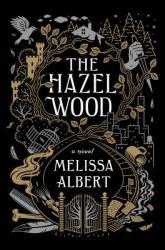
Alice and her mom, it seems, have always been plagued by bad luck no matter where they go. One day when Alice’s mom disappears she and a friend set out on a journey to find her. This journey, they soon discover, takes them on an adventure to a place called the Hinterland. It's a place which she has only read about in her grandmother’s stories -- a reclusive authoress with a cult following who published a volume of pitch-dark fairy-tales and then quietly disappeared along with most of her books. This place, she soon discovers, is also much more than meets the eye. It’s a place where fairy-tales are real, fantastical and frightening monsters roam freely, and stories are woven into the fabric of its reality.
Melissa Albert’s tale is filled with dark and vivid writing, and its reliance on the power of stories is something that drew me into this book. It grabbed hold of me and never let me go. A page turner with twist and turns every which way, it has become one of my all-time favorite reads this year. Filled with Original Fairy Tales, a frightening adventure, and one young girl's fantastical journey into the heart of story itself, The Hazel Wood is destined to become a classic in fantasy literature that will leave an impression for generations to come.
Definitely put it on your to read list. It isn't out until January 30, but you can put your copy on hold today! Thank you to Netgalley, Flatiron Books, and Macmillan for an ARC of this book in exchange for an honest review.
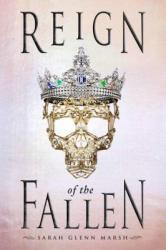
Odessa is a rare type of mage: a necromancer. She can resurrect the dead. But not without a price – if any part of the dead’s body is seen by the living, the dead person turns into a Shade (think of an unholy combination between a Demogorgon and Venom, or, if you must, a zombie). When Odessa’s mentor mage turns up brutally murdered by a Shade, and other murders quickly follow, Odessa knows she has to do something before the Shades kill everyone she holds dear.
I have extremely mixed feelings about this book. There were things I really liked, and things that didn’t work for me at all. One of my issues was the severe lack of character development – Odessa and two other characters get some level of development, everyone else is more or less a name on a page. So when people started dying, I didn’t really care. Odessa, however, cares a lot and spends a lot of time addicted to pain medication and grieving, which would have been a lot more interesting to read if I knew her at all as a character. For me, this plot line would’ve been better in a future series installment. There’s a lot of romance, and I liked some of it (Simeon and Danial for LIFE), and some of it annoyed me (Odessa and Evander, I’m looking at you). There’s a romance at the end that was excellent, but began a bit too soon for me – I could’ve done with the characters not getting together in this book, especially given their circumstances. I did like the diversity in the ethnicities of the characters as well as in the relationships.
I really enjoyed the worldbuilding. None of it was particularly new, per say, but it was all sort of assembled in a way that I thought was really rich and creative. I just wish that worldbuilding had been backed up by stronger
characters and plot. Odessa spends a ton of time grieving, which makes sense, but didn’t exactly make for an exciting plot. That, and the deaths and twists were pretty transparently telegraphed. The identity of the proverbial “bad guy” was pretty obvious as soon as they appeared on the scene.
While this book didn’t work for me on a lot of levels, I think most readers will love it. There’s action, romance (LGBT+), diversity, and some seriously cool worldbuilding. I’ll be recommending this one to a lot of teens, even though it wasn’t necessarily my thing. 2.5 stars.
Reign of the Fallen will be released on 23 January, but you can put your copy on hold today! Thanks to Razorbill and Netgalley for providing the eARC for review consideration.
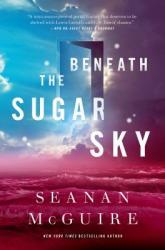
This series, the Wayward Children series, has become one of my favorite series this year and Beneath the Sugar Sky, Seanan McGuire’s third installment is no different, it has stolen my heart. This series center’s around a school Eleanor West’s home for Wayward Children. It is a boarding school for children, who have found themselves in magical worlds of all types and then had to come back to “the real world”, to become reintroduced to society. But, to the children, the school is a waiting place, a holding cell, a place to stay until they find their door back into the magical world from which they came. This series explores the curiosity of children, their adventurous spirit, and their willingness to believe in the impossible.
In this story, we join our heroes right after the events that took place in Every Heart a Doorway. Right at the beginning we meet Sumi’s daughter Rinni, who comes from one of these magical lands. In it her mother, Sumi, was foretold to birth a daughter that would save their magical land from great evil, but Sumi died in our world before she could fulfill her destiny. But Rinni is born anyway and comes back to our world to bring her mother back from our world, a world without magic. Our heroes then embark on an adventure through many dangerous, intriguing, and beautiful worlds to bring back Sumi and right the wrong that has been committed.
I love Seanan Mcguire’s writing style. It is dark, whimsical, and at times serious and sad, with a touch of magic thrown in. She tackles issues such as how families and children relate to each other, and obesity with grace and clarity. I really enjoyed the fact that one of the main characters in this book, Cora, was overweight and portrayed as a hero. While I do agree with others that have read the ARC of this book, that the character of Cora does, I think, dwell too much on her status as “the fat girl”, it seems like every other page; I also think the character’s inner dialogue of the subject is a good portrayal of how many teens who deal with this issue, think about their weight. I also love the world building in this series and in this book, particularly the world of Confection, the world Sumi and Rinni come from. It is particularly atmospheric, alluring and to be honest, a child’s dream. Finally I really enjoy the diversity of characters in this book from a Mexican American to a child with a broken arm, to a bisexual character, it has a character that is relatable in it for just about anyone.
Studded with beautiful worlds, engaging and believable characters, and atmospheric literary prose, Beneath the Sugar Sky is a diamond in the rough of YA fiction.
Thank you to Macmillan-Tor/Forge books and Netgalley for the E Galley of this book for review! This book isn't out till January 9th but you can put a copy on hold today.
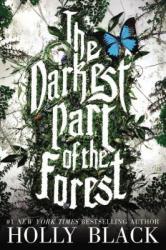
This was my first foray into Holly Black’s books, and I coming away from it not as impressed as I thought I would be. While I generally love fantasy and anything to do with faires, or fairy tales, there was just something about this book that made me not fully connect with the characters.
The general story line, I absolutely love! Of a small town forced to live in between two worlds that of fae and human and all the complications that comes with; Of a sleeping beauty like character waking after centuries of sleep; and of a hero that pledges her life to fighting the monsters in the middle of the forest. I also absolutely love the world building in this book, the description was beautiful, atmospheric, and haunting and made me wish fairy worlds were real. But the character development for me was just not as strong as it could have been, which is why rating this book was so difficult.
I am giving this one a solid 3.5 stars.
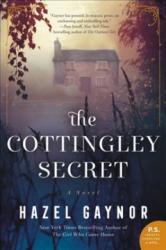
“ I said my story had many beginnings, and the day the camera arrived was one of them. After all, without the camera, there wouldn’t have been any photographs. Without the camera, I wouldn’t have a story to tell...”
The Cottingley Secret is a story about fairies, Sir Arthur Conan Doyle, and an old bookshop in a Irish harbor town, what is not to love about this book.
This story is a modern retelling of the real historical legend of the Cottingley Fairies. After coming to live with her cousin Elsie Wright in Cottingley England, during the height of the first world war, Frances Griffiths and her cousin both claim to see real live fairies at the bottom of the garden. The cousins soon prove their claims by photographing the fairies in the garden. These real live photos soon catches the attention of Sir Arthur Conan Doyle, who wholeheartedly believes the girls and proceeds to publish several of these photos in a magazine. Soon after, the girls and the fairies became a national sensation and through the country into the grip of fairy fever. This marks the beginning of a time that would define their lives and have them keeping secrets until the day of their deaths.
Meanwhile in modern day Ireland, Olivia Cavanaugh inherits her grandfather’s bookshop and soon discovers a manuscript that recounts the story of Elsie Wright and Frances Griffiths. As she reads through the manuscript, written by Frances, she soon discovers she has more in common with her than she ever imagined.
Hazel Gaynor connects past and present in a way that is both modern and extremely touching. I really connected with Olivia in this book. As she, and the reader, reads through Frances and Elsie’s story, she finds strength to face her painful past and let go of a life that has always been planned out for her to pursue a life that connects her to the desires of her heart.
Filled with amazing literary prose, a beautiful atmospheric environment and strong characters, this story is historical literary fantasy at it’s best.
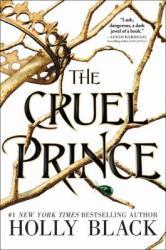
When Jude and Taryn were seven years old, a man who wasn’t a man came to their door and killed their parents. After murdering their parents, the man who was not a man but a fairy, secreted Jude, Taryn and their sister Viv away to Faerie, where they were raised as if they were fairies themselves (nevermind the inconvenient fact that fairies hate mortals). After ten years of living with fairies, Jude wants nothing so badly as to be as beautiful, powerful and immortal. But Jude is a human, so she’s ugly and weak and mortal and has been bullied by her peers who are not her peers her whole life. So when a chance to gain power comes, Jude grasps it with both hands, not knowing that the opportunity will embroil her in the dangerous machinations of power-hungry mad fairies. But even if she had known, Jude wouldn’t have cared. Because she doesn’t just want to be a fairy. She wants to best them all.
This was one of my favorite books of the year. After a crazy fast and brutal start (the book does, in fact, start with a seven year old witnessing the brutal murder of her two parents), the book skips ahead 10 years and seriously slows down to do some worldbuilding. As I’m familiar with the typical rules surrounding the fey, I didn’t find this part to be terribly compelling, but understand why it was necessary. And to be fair, these parts are still at least somewhat interesting – Jude is constantly struggling with love and hate for her adopted father, Madoc, who did kill her parents. Her fairy schoolmates are cruel to the point of not being scared of killing Jude or her sister. There’s a bit of romance (although, as is often the case, it annoyed me). The groundwork for future court intrigue is laid.
Eventually, Jude gets recruited to be a spy for the likely heir to the throne of Faerie and the book goes from pretty good to freakin’ great. The story and character development pick up, and all of sudden it’s all evil machinations, twists, power grabs, allies-turned-enemies and enemies-turned-allies. Jude herself is a very interesting character – she’s not a nice or even necessarily good person, but you will find yourself rooting for despite her willingness to kill or do some seriously shady stuff. Actually, there isn’t one character that you would single out as being “good”, and I have to admit, I loved that. It made an already delightfully twisty read a bit twistier. The second half of the book also brings us some fresh developments on the romance horizon, and I definitely did not hate them. I can’t wait to see where that goes. I can’t wait to see where any of it goes – the ending will definitely leave you waiting for more.
If you’ve read and enjoyed any of Black’s other books, you’ll love this one. She’s known as the “Queen of Faerie” and with this book, she’s earned her title. I buy a fairly small percentage of the books I read, but
I’ll be buying this one. It was AWESOME. 5 stars.
The Cruel Prince will be available on 02 January 2018, but you can put your copy on hold today. Thanks to Netgalley and Little, Brown Books for Young Readers for providing me with an advance electronic copy for review consideration.
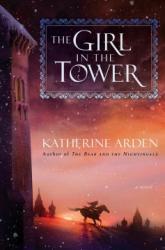
Katherine Arden's The Girl In The Tower is just as good, if not better, than the first book, The Bear and The Nightingale. Filled with more Russian Fairy tales, atmospheric literary prose, rich and strong characters, and the same enchanting setting of Medieval Russia, this book picks up right where the first one left off. It follows the story of Vasya, now a grown up woman she, instead of conforming to the role woman in her day usually play, of marriage or life in a convent, chooses instead a life of adventure. Leaving her home and traveling the vast Russian Wilderness while dressed as a boy, she soon is called upon to defend the city of Moscow and finds the threat greater and more deadly than she imagined. While fighting this threat, only she can stop, she is also forced to protect her secret as she comes upon her brother and attracts the attention of the Grand Prince of Moscow.
Part of what drew me to this book is the fairy tales, yes, but also the historical setting of Medieval Russia. Katherine Arden does a masterful job of weaving fantasy elements with real life historical details only a great historian would discover. Blurring the line between history, fantasy, and reality this book and, more importantly this series, is contemporary historical fantasy at its best. It is a sketch not only of real life in Medieval Russia, but also displays the power of story and demonstrates the importance of fairy tales and the lessons they can teach us.

Jo Jo and his mother Leonie have been living on a farm in rural Missisippi for their entire lives. Jo Jo's father, Michael, has been in jail for drug related crimes, and thus most of Jo Jo and his sister Kayla's upbringing has been done by their grandparents: the gruff but ultimately loving Pop and the cancer-ridden matriarch, Mam. Everyone's world is about to be upended, though, as time grows near for Michael to get out of prison.
Writing any sort of synopsis for this book was particularly challenging, as there's not much in the way of plot. I don't mean that in a bad way. I sometimes love books that focus solely character development, and that is absolutely what this is. The writing is insanely gorgeous and it's obvious from the gruesome beginning scene as to why this won the National Book Award.
Ward manages to make almost all of the characters relatable or lovable even as they do and say and think terrible things. She absolutely captures some of the wonderfully horrible aspects of the human condition, and here is a lot to love in this book.
That being said, I did not much care for certain aspects of the audiobook. First, by the time I got the book, I had forgotten what it was actually about. I did not remember that ghosts were a part of the story and was really confused for the first part of the book (are these flashbacks? how is that character here? I thought he was dead?), but I eventually figured it out. For me, the ghosts detracted from the story and I could have done without that element, even though magical realism is often my jam. The biggest problem for me, however, was Rutina Wesley's performance (which, hilariously enough, is why I went for this in audiobook format - I liked her in the few seasons I watched of True Blood). It was over enunciated especially given that Leonie is from Mississippi, and I found her parts to be melodramatic as there were a lot of weird pauses and words said breathlessly. It just didn't work for me, and I wanted to skip all of Leonie's parts.
If you would like to read a gorgeously written character study/family drama with a compelling setting, then this is a great bet. Just read it, don't listen to it. 3 stars.
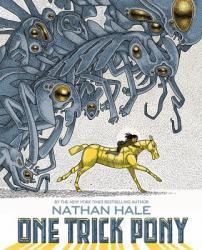
In this creative, futuristic graphic novel all technology has been stolen by a species known as the Pipers. When a young girl and two of her friends stumble into a hidden cache of robots, they become the targets of a wild chase. This book is exciting, unique, and includes a battle in outerspace! Recommended for grades 3-6.
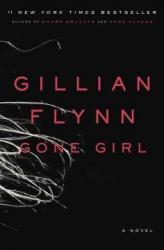
I loved reading this book. I loved everything about how it was written, how diabolical and shrewd the main character, Amy, was. Most of the book had me at the edge of my seat, eagerly lapping up the story as fast as I could. Then I got to the last quarter or so of the book. There came a point where Amy's plans and character changed a little to drastically to be consistent with who she was throughout the majority of the book. And after that, the quality of the writing also noticeably changed, as if a different author with a different writing style picked up where Flynn left off and finished the story from there. And THEN to add further insult to injury, the ending was just terrible, and somewhat unbelievable.
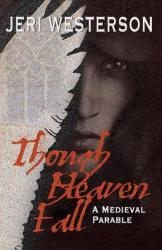
If you like castles, medieval stories and a bit of supernatural I recommend this you!
Set in the 13th century, this novel whisks you back in time. The misadventures of this "cripple" build up from a puddle to a daring rescuing of a wanted madman. While it may seem to drag out sometimes, its worth the wait.
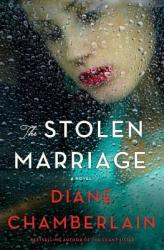
About halfway through this book, I wanted to throttle the main character and give up on the book as I saw it heading in an utterly predictable direction. Tess makes so many bad decisions that it is hard to feel sorry for her being in such a miserable situation. It was also difficult to read the characters' attitudes about racially mixed couples in a time and place when it was not only socially unacceptable, but illegal. However, I'm glad I stuck with it, as about 2/3 of the way through it turned around and ended on a very unexpected note, which I enjoyed!